TL;DR
Technology blogger Kev Quirk announced on 28 September 2026 that he has switched his default browser from Firefox to Brave after a roughly two-month trial. He cites recurring website compatibility problems in Firefox and disagreement with Mozilla’s AI strategy as his main reasons.
Technology blogger Kev Quirk announced on 28 September 2026 that he has switched his default browser from Firefox to Brave, concluding a trial of a couple of months that he says left him with no reason to open Firefox again. Quirk, who has documented his dissatisfaction with Mozilla publicly for nearly a year, said Brave “renders webpages, then gets out of my way” and works as expected on both Ubuntu and Android.

Get business pricing on monitors, keyboards and dev gear
- Business-only prices and quantity discounts
- Tax-exempt purchasing
- Multiple users, one account, clear invoices
Quirk wrote that his frustration with Firefox had two roots. The first was Mozilla’s AI strategy, which he first reacted to roughly a year ago and says the organisation subsequently “doubled-down” on, something he characterises as raising his “heckles even more”. The second was practical: an increasing number of websites simply did not work in Firefox, forcing him to open a backup browser more often over the last six months or so.
He was careful to assign blame for the breakage: “It’s worth stating that things not working isn’t the fault of Firefox,” he wrote. “It’s developers not testing their web apps with Firefox, since it has such a small market share.” Even so, he said, the workarounds became annoying enough to push him to look elsewhere.
Before settling on Brave, Quirk spent time with Vivaldi but could not adopt it full time. He found the browser “tries to do too much”, objected to its busy interface, and reported that automatic dark and light theme switching still did not work for him despite reportedly being fixed. With Brave, he said there was some initial set-up — he described hiding “all the crypto and AI nonsense” — but after that the browser behaved as expected, with a UI similar to Firefox and working dark mode switching. He has kept both Firefox and Vivaldi installed: Firefox as a secondary browser, and Vivaldi as something he will revisit periodically.
Why One Blogger’s Switch Resonates
Quirk’s post is a single personal account, but it touches on two pressures that observers of the browser market have tracked for some time. The first is Firefox’s declining market share, which Quirk identifies as the reason developers skip testing on it — a self-reinforcing cycle in which fewer users lead to less compatibility testing, which in turn pushes more users away. The second is user unease with Mozilla’s strategic direction, including its investments in AI, which have generated criticism from parts of Firefox’s long-standing user base.
The post also illustrates a broader pattern of users seeking browsers that deliberately do less. Quirk’s core requirement, as he states it, is a browser that “doesn’t try to boil the ocean” — no built-in email clients, RSS readers, or crowded toolbars. That preference has made leaner Chromium-based options such as Brave a common landing spot for departing Firefox users, though Brave carries its own controversies that Quirk addresses directly.
Products Worth Considering

Withings Body Scan Smart Scale with Segmental Body Composition and ECG, Black

Therabody Theragun Mini 3rd Generation Portable Massage Gun, Black
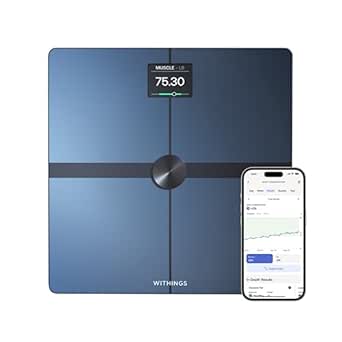
Withings Body Smart Wi-Fi and Bluetooth Smart Scale, Black
As an affiliate, we earn on qualifying purchases.
A Year of Public Firefox Complaints
Quirk’s switch did not come suddenly. According to his post, he had been complaining about wanting to leave Firefox for nearly a year, beginning with his initial reaction to Mozilla’s AI announcement, followed by a follow-up post when the strategy was expanded, and then a longer piece expressing doubt about Mozilla’s overall position. Those posts chart a progressive loss of confidence rather than a single breaking point.
In parallel, he evaluated Vivaldi as a possible replacement, installing it as a backup browser. Over roughly six months, he says he opened it more and more often to work around Firefox-specific site failures. Vivaldi remained unusable for him full time, mainly because of its interface complexity and the theme-switching issue, and it stays installed only as an occasional check-in. Brave was installed a couple of months before publication as an experiment, and its success in that trial prompted the announcement.
“It’s worth stating that things not working isn’t the fault of Firefox. It’s developers not testing their web apps with Firefox, since it has such a small market share.”
— Kev Quirk, blogger
What the Post Leaves Open
Quirk’s account is a personal opinion piece, and several things remain open. He does not specify which websites failed in Firefox or how often, so the severity of the compatibility problem cannot be independently weighed. His trial covers only a couple of months on Ubuntu and Android, and it is not clear how Brave would hold up over a longer period or on other platforms.
His framing of Brendan Eich, Brave’s co-founder and former Mozilla CEO, as a “scumbag” whose views he rejects is presented as his personal judgement, not a factual finding, and he explicitly invites readers to disagree with his decision to separate the software from its founder. Likewise, his claim that Brave is “objectively a good piece of software” is his assessment rather than a measured verdict, and his criticism of Vivaldi’s theme switching reflects his own setup, which may differ from other users’ experiences.
Whether the Switch Sticks
Quirk says he intends to keep Brave as his default “for the foreseeable future”, with two possible reversals. He would return to Firefox if Mozilla “get their act together and become relevant again”. And he will periodically re-test Vivaldi, saying he would make that switch if Vivaldi reaches parity with Brave on Linux — with automatic light and dark theme switching named as the main missing piece — because he feels Vivaldi’s “moral compass” aligns better with his own. Readers can follow any follow-up through the subscription options on his site, kevquirk.com, which offers RSS and email updates.
Key Questions
Who switched to Brave, and when?
Kev Quirk, a technology blogger, announced the switch on 28 September 2026 after using Brave for a couple of months as a trial on Ubuntu and Android.
Why did he leave Firefox?
He cites two reasons: dissatisfaction with Mozilla’s AI strategy, which he had criticised for nearly a year, and recurring website compatibility problems in Firefox that forced him to open a backup browser more often.
Does he blame Firefox itself for the broken websites?
No. He states the faults lie with developers who do not test their web apps in Firefox because of its small market share, though the practical impact still pushed him away.
What does he think about Brave’s founder?
He is sharply critical of co-founder Brendan Eich personally, but says using Brave does not mean he supports Eich’s views, treating the software and its founder as separate matters.
Could he switch browsers again?
Yes. He says he may return to Firefox if Mozilla changes course, and would consider Vivaldi — which he prefers on ethical grounds — if it fixes Linux theme switching and reaches parity with Brave.
Source: hn