Searching for the best automated API testing tools in 2027? The top picks include Postman for its user-friendly interface and comprehensive features, and Playwright for advanced testing capabilities across multiple browsers. The main tradeoffs involve balancing ease of use against customization and automation depth. Some tools excel at quick setup and simplicity, while others offer extensive scripting and integration options. Continue reading for a detailed breakdown that helps you find the ideal fit for your testing needs.

Get monitors, keyboards and dev gear delivered free — and shop member deals
- Fast, free delivery on millions of items
- Access to Prime Big Deal Days deals on October 6–7
- Prime Video, Amazon Music and more included
Key Takeaways
- Top tools balance user-friendliness with advanced automation features, catering to different skill levels.
- Integration with CI/CD pipelines is a common differentiator, crucial for modern DevOps workflows.
- Open-source options like Playwright and JMeter offer flexibility but may require more setup time.
- AI-driven testing tools are emerging, providing smarter test case generation and maintenance.
- Pricing and licensing models vary significantly, affecting long-term costs and scalability.
| FastAPI Testing with Pytest and HTTPX: A Practical Guide |  | Best for FastAPI Developers Needing Comprehensive Testing Strategies | Topics: Unit testing, API testing, database testing, authentication testing, mocking | Tools: Pytest, HTTPX, FastAPI | VIEW LATEST PRICE | See Our Full Breakdown | |
| All You Need to Know About Software Testing: From Beginner to Job-Ready QA Engineer |  | Best for Aspiring QA Professionals Covering Broad Testing Concepts | VIEW LATEST PRICE | See Our Full Breakdown | |||
| Spec-Driven Software Testing with AI: Build Reliable Test Suites from Specifications with AI, Test Automation, TDD, API Testing, and CI/CD |  | Best for Advanced Testers Interested in AI-Driven, Specification-Based Testing | Title: Spec-Driven Software Testing with AI | Series: Spec-Driven AI Engineering Series | VIEW LATEST PRICE | See Our Full Breakdown | |
| API Testing and Development with Postman: A Practical Guide to Creating, Testing, and Managing APIs for Automated Software Testing |  | Best for Developers and Testers Using Postman for API Automation | VIEW LATEST PRICE | See Our Full Breakdown | |||
| API Testing for Beginners: Using Postman and Rest Assured |  | Best for Beginners and Intermediate API Testers Looking for Step-by-Step Guidance | VIEW LATEST PRICE | See Our Full Breakdown | |||
| AI Testing with Python: Build Intelligent Test Automation Using Python, Selenium, APIs, PyTest, LLMs, and AI-Powered Testing Tools |  | Best for AI-Driven Test Automation | Focus: AI and Python-based test automation | Tools Covered: Selenium, PyTest, LLMs | Target Audience: Advanced testers, AI practitioners | VIEW LATEST PRICE | See Our Full Breakdown |
| Bruno API Testing for Beginners: Test REST APIs Step-by-Step (Without Postman) |  | Best for API Testing Newcomers | Focus: Beginner-friendly API testing | Approach: Step-by-step instructions | Tools Covered: None (avoids Postman) | VIEW LATEST PRICE | See Our Full Breakdown |
| The Complete API Testing Handbook: A Practical Guide to REST API Validation, Automation, and Security Testing with Python |  | Best for Hands-On API Validation and Security | Focus: API validation, automation, security | Language: Python | Approach: Step-by-step | VIEW LATEST PRICE | See Our Full Breakdown |
| Web Automation Testing Using Playwright |  | Best for End-to-End and Multi-Faceted Testing | Focus: Web UI, API, accessibility, visual testing | Framework: Playwright | Scope: End-to-end testing | VIEW LATEST PRICE | See Our Full Breakdown |
| Mastering Load Testing with JMeter and Locust: Simulating User Traffic, Identifying Performance Bottlenecks, and Optimizing Response Times for Scalable Web and API Services |  | Best for Performance and Load Testing Experts | Focus: Load testing and performance optimization | Tools: JMeter, Locust | Scope: Web and API performance | VIEW LATEST PRICE | See Our Full Breakdown |
| API Testing with Playwright & TypeScript: A Practical Guide from Zero to Expert | 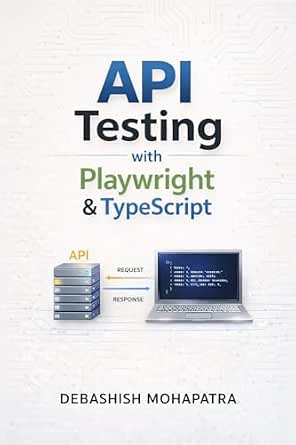 | Best for Learning Practical API Testing with Playwright and TypeScript | Focus: API testing with Playwright and TypeScript | Skill Level: Beginner to Intermediate | Content Type: Practical guide with examples | VIEW LATEST PRICE | See Our Full Breakdown |
| API Testing and Development with Postman |  | Best for Streamlining API Workflow and Testing with Postman | Target Tool: Postman | Skill Level: Beginner to Advanced | Focus: API creation, testing, debugging | VIEW LATEST PRICE | See Our Full Breakdown |
| Testing Web APIs |  | Best for Broad Foundations in Web API Testing | Focus: Foundational API testing concepts | Skill Level: Beginner | Content Type: Conceptual overview | VIEW LATEST PRICE | See Our Full Breakdown |
| automated API testing tool | Focus | Format |
|---|---|---|
| FastAPI Testing with Pytest an | — | — |
| All You Need to Know About Sof | — | — |
| Spec-Driven Software Testing w | — | — |
| API Testing and Development wi | — | — |
| API Testing for Beginners: Usi | — | — |
| AI Testing with Python: Build | AI and Python-based test automation | Book |
| Bruno API Testing for Beginner | Beginner-friendly API testing | Book |
| The Complete API Testing Handb | API validation, automation, security | Book |
| Web Automation Testing Using P | Web UI, API, accessibility, visual testing | Book |
| Mastering Load Testing with JM | Load testing and performance optimization | Book |
| API Testing with Playwright & | API testing with Playwright and TypeScript | Book |
| API Testing and Development wi | API creation, testing, debugging | Book |
| Testing Web APIs | Foundational API testing concepts | Book |
More Details on Our Top Picks
FastAPI Testing with Pytest and HTTPX: A Practical Guide
This guide stands out for its practical approach to testing FastAPI applications, covering unit, API, database, and authentication testing with Pytest and HTTPX. It offers detailed instructions on mocking and building production-ready test suites, making it a valuable resource for developers working specifically with FastAPI. Compared with more general testing books like All You Need to Know About Software Testing, it dives deep into FastAPI-specific scenarios, though it might be less useful for those seeking broad testing coverage across different stacks. Its focus on mocking and real-world test suite building makes it ideal for those looking to implement reliable automated tests in FastAPI projects, but it’s less suitable for teams working outside this framework or those needing a high-level overview of testing principles.
Pros:- Deep focus on FastAPI testing scenarios
- Includes mocking and production-ready test suite guidance
- Covers multiple testing types: unit, API, database, authentication
Cons:- Limited to FastAPI; not suitable for other frameworks
- Lacks coverage of automation tools beyond Pytest and HTTPX
Best for: FastAPI developers who want detailed, application-specific testing guidance and production-ready test setups
Not ideal for: Developers seeking a broad overview of software testing or working with non-FastAPI frameworks
- Topics:Unit testing, API testing, database testing, authentication testing, mocking
- Tools:Pytest, HTTPX, FastAPI
Our verdict“This book is perfect for FastAPI users who need thorough, framework-specific testing strategies to improve their automated testing processes.”
All You Need to Know About Software Testing: From Beginner to Job-Ready QA Engineer
This comprehensive guide makes the list for its wide-ranging coverage, from manual testing to automation, APIs, Selenium, Playwright, and AI-assisted QA. Unlike the more technical, tool-specific options like the Postman guide, it provides foundational knowledge suitable for newcomers and those aiming to expand their testing skillset. However, its lack of specific product features or technical depth limits its usefulness for experienced testers seeking hands-on guidance. It’s best suited for beginners or those transitioning into QA roles, but less so for seasoned automation engineers looking for deep technical details or specific tool configurations.
Pros:- Wide coverage of testing concepts and tools
- Practical insights on automation and AI in QA
- Suitable for learners progressing from beginner to professional
Cons:- Lacks specific technical specifications or step-by-step instructions
- No reviews or ratings to validate its practical effectiveness
Best for: Aspiring QA engineers or testers new to automation who want a broad understanding of testing methodologies
Not ideal for: Experienced testers seeking detailed technical instructions or tool-specific automation guides
Our verdict“This book is a solid starting point for newcomers aiming to understand the full scope of software testing and automation fundamentals.”
Spec-Driven Software Testing with AI: Build Reliable Test Suites from Specifications with AI, Test Automation, TDD, API Testing, and CI/CD
This book appeals to those seeking a modern, AI-integrated approach to testing, emphasizing specification-driven development, TDD, and continuous integration. It surpasses more generic guides like API Testing and Development with Postman by offering a comprehensive, methodology-focused perspective that leverages AI to enhance test reliability. Nonetheless, its advanced content and focus on a specific testing philosophy might overwhelm beginners or teams not adopting a spec-driven approach. It’s ideal for experienced testers or teams working on complex projects that benefit from rigorous, model-based testing and automation strategies, but less suitable for newcomers or those seeking basic API testing tutorials.
Pros:- Comprehensive coverage of modern testing practices
- Integrates AI for building reliable test suites
- Focus on TDD, API testing, and CI/CD pipelines
Cons:- May be too complex for beginners
- Focus on spec-driven approach may not suit all projects
Best for: Experienced QA teams and developers interested in integrating AI and specification-driven methods into their testing workflows
Not ideal for: Beginners or teams looking for straightforward, tool-based API testing tutorials
- Title:Spec-Driven Software Testing with AI
- Series:Spec-Driven AI Engineering Series
Our verdict“Ideal for advanced teams aiming to incorporate AI and rigorous specification-based testing into their development pipelines.”
API Testing and Development with Postman: A Practical Guide to Creating, Testing, and Managing APIs for Automated Software Testing
This guide is essential for those who want practical, hands-on knowledge of using Postman for API testing and development, offering detailed instructions on creating and managing APIs for automation. It compares favorably with API Testing for Beginners: Using Postman and Rest Assured by providing real-world examples and focusing on streamlining API workflows. Its practical approach makes it suitable for both developers and testers, though it can be somewhat technical for absolute newcomers. If your team already uses Postman or plans to adopt it as a primary testing tool, this book offers valuable insights to accelerate your automation efforts, but it might be less helpful for teams needing a broader or more basic introduction to API testing concepts.
Pros:- Detailed, practical guidance on Postman workflows
- Includes examples for creating and testing APIs
- Helps streamline automation processes
Cons:- Lacks detailed technical specifications
- Content may be too advanced for complete beginners
Best for: Developers and testers seeking practical, in-depth guidance on API testing and management with Postman
Not ideal for: Beginners without prior experience with API tools or teams using multiple testing frameworks
Our verdict“A valuable resource for teams looking to leverage Postman for effective API testing and automation workflows.”
API Testing for Beginners: Using Postman and Rest Assured
This book offers a clear introduction to API testing for newcomers and those advancing their skills, covering key tools like Postman and Rest Assured. It provides practical exercises and interview tips, making it especially useful for aspiring testers preparing for roles or certifications. Compared to the more technically detailed API Testing and Development with Postman, this book emphasizes foundational concepts and step-by-step procedures, though it offers less depth on automation specifics. It’s best suited for beginners or intermediate testers seeking to build their confidence in API testing, but less so for experienced automation engineers seeking comprehensive technical coverage.
Pros:- Clear introduction with practical exercises
- Covers both Postman and Rest Assured tools
- Includes interview preparation tips
Cons:- Limited technical detail for advanced automation
- Content may be basic for seasoned testers
Best for: Beginners and intermediate testers interested in learning API testing with practical exercises and foundational skills
Not ideal for: Experienced testers or teams needing advanced automation frameworks and detailed technical configurations
Our verdict“This book is well-suited for beginners seeking a straightforward, practical introduction to API testing and automation tools.”
AI Testing with Python: Build Intelligent Test Automation Using Python, Selenium, APIs, PyTest, LLMs, and AI-Powered Testing Tools
This book stands out for integrating the latest AI technologies with traditional API testing, making it ideal for teams looking to leverage large language models and AI tools in their workflows. Unlike the more basic approach in Bruno API Testing for Beginners, this guide dives into complex integrations, but it requires a solid foundation in Python and AI concepts. The coverage of Selenium, PyTest, and LLMs makes it suitable for advanced testers aiming to modernize their test suites, though it may overwhelm newcomers. The emphasis on intelligent automation offers a future-proof approach, but it demands a substantial learning curve and familiarity with AI tools.
Pros:- Integrates AI and large language models for advanced testing
- Covers Python, Selenium, and PyTest for comprehensive automation
- Focuses on building intelligent, scalable test frameworks
Cons:- Requires prior knowledge of AI and Python programming
- Less accessible for testers new to automation or AI concepts
Best for: Data scientists and automation engineers seeking to incorporate AI into API testing workflows
Not ideal for: Beginners without programming or AI experience, as the material is technically dense
- Focus:AI and Python-based test automation
- Tools Covered:Selenium, PyTest, LLMs
- Target Audience:Advanced testers, AI practitioners
- Tech Level:Intermediate to advanced
- Format:Book
- Series:N/A
Our verdict“This book is best suited for experienced automation teams exploring AI-powered testing innovations.”
Bruno API Testing for Beginners: Test REST APIs Step-by-Step (Without Postman)
This guide excels at providing clear, step-by-step instructions for those new to API testing, especially for users intimidated by tools like Postman. Compared with The Complete API Testing Handbook, which offers a more comprehensive technical perspective, Bruno’s book simplifies concepts, making it ideal for absolute beginners. However, its lack of advanced examples and limited coverage of complex scenarios makes it less suitable for experienced testers seeking depth. Its practical approach helps build confidence early, but it falls short for those aiming to master automation or security testing.
Pros:- Clear, structured instructions suitable for beginners
- Focus on practical testing workflows without relying on Postman
- Easy-to-follow for those new to APIs
Cons:- Limited technical depth and advanced scenarios
- Does not address automation or security testing in detail
Best for: Testing novices or QA teams starting to learn REST API testing without prior experience with Postman
Not ideal for: Experienced testers or developers seeking advanced API security or automation techniques
- Focus:Beginner-friendly API testing
- Approach:Step-by-step instructions
- Tools Covered:None (avoids Postman)
- Audience:Beginners, QA trainees
- Format:Book
- Series:N/A
Our verdict“This book makes a strong choice for newcomers wanting straightforward, practical API testing guidance.”
The Complete API Testing Handbook: A Practical Guide to REST API Validation, Automation, and Security Testing with Python
This handbook offers a practical, Python-centric approach to API testing, covering validation, automation, and security in a detailed manner that surpasses more superficial guides like Bruno API Testing for Beginners. Its step-by-step methodology makes it accessible to those with some programming background who want a structured approach to API testing. However, the book’s focus on validation and security means it might lack the breadth of broader automation tools like Playwright or load testing frameworks. It’s particularly useful for teams prioritizing API security and robustness in their test suites, but less so for front-end or UI testing.
Pros:- Comprehensive coverage of validation, automation, and security testing
- Uses Python, enabling easy integration with existing workflows
- Structured, step-by-step guidance
Cons:- Limited focus on UI or visual testing
- Could be too technical for complete beginners
Best for: Developers and QA engineers focused on API validation, automation, and security, especially with Python
Not ideal for: Testers primarily interested in UI or end-to-end testing outside of APIs
- Focus:API validation, automation, security
- Language:Python
- Approach:Step-by-step
- Audience:Developers, QA engineers
- Format:Book
- Series:Hands-On Tech Professional Series
Our verdict“Ideal for teams seeking a practical, Python-based resource to strengthen API validation and security testing.”
Web Automation Testing Using Playwright
This book highlights Playwright’s strengths in end-to-end web automation, extending into API, accessibility, and visual testing. Compared with the more specialized AI Testing with Python, which focuses on AI-driven automation, Playwright’s offering is more accessible for teams that need robust UI and API testing within a single framework. Its comprehensive scope makes it suitable for teams that want to cover the full spectrum of web testing, but it might lack the deep AI integration or load testing features found in dedicated tools. It’s a versatile choice for teams aiming for broad coverage, yet it may be too general for those seeking specialized API security testing.
Pros:- Covers end-to-end testing, including UI and API
- Addresses accessibility and visual testing for comprehensive coverage
- Uses Playwright’s modern, fast automation engine
Cons:- Less focused on dedicated API security or performance testing
- May require familiarity with JavaScript/TypeScript
Best for: Web developers and QA teams needing integrated end-to-end testing with API and accessibility features
Not ideal for: Teams seeking deep AI integration or load testing capabilities beyond Playwright’s scope
- Focus:Web UI, API, accessibility, visual testing
- Framework:Playwright
- Scope:End-to-end testing
- Languages:JavaScript/TypeScript
- Target Audience:Web QA teams
- Format:Book
Our verdict“This resource suits teams looking for a versatile, all-in-one web testing solution with strong UI and API support.”
Mastering Load Testing with JMeter and Locust: Simulating User Traffic, Identifying Performance Bottlenecks, and Optimizing Response Times for Scalable Web and API Services
This book provides detailed guidance on load testing, helping teams simulate realistic user traffic and identify performance bottlenecks using JMeter and Locust. Compared with API-focused testing guides like The Complete API Testing Handbook, this resource emphasizes performance under load, making it essential for teams concerned with scalability and response times. While it offers practical strategies for both web and API services, its technical depth might be daunting for beginners or those primarily interested in functional testing. It’s a strong pick for performance engineers, but less suitable for teams seeking quick, simple API validation.
Pros:- In-depth coverage of JMeter and Locust load testing tools
- Practical strategies for identifying bottlenecks and tuning performance
- Suitable for testing both web apps and APIs
Cons:- Highly technical, potentially overwhelming for novices
- Lacks focus on functional or security testing aspects
Best for: Performance testers and DevOps teams responsible for scalability and response time optimization
Not ideal for: Testers focusing solely on functional or security testing without load considerations
- Focus:Load testing and performance optimization
- Tools:JMeter, Locust
- Scope:Web and API performance
- Audience:Performance engineers, DevOps
- Format:Book
- Series:N/A
Our verdict“This book is best for performance engineers needing thorough guidance on load testing and scalability optimization.”
API Testing with Playwright & TypeScript: A Practical Guide from Zero to Expert
This book stands out for its thorough coverage of API testing using Playwright combined with TypeScript, making it a strong choice for those who want hands-on techniques. Compared to broader guides like Testing Web APIs, it offers more practical examples tailored to automation with a modern framework, though it requires some familiarity with TypeScript. Its focus on real-world implementation makes it ideal for testers aiming to automate efficiently, but it may be less suitable for absolute beginners without prior coding experience. The content balances beginner-friendly explanations with advanced techniques, though it’s not a comprehensive development guide. Overall, this pick makes the most sense for testers seeking an actionable, code-centric approach to API automation.
Pros:- Deep practical coverage of API testing with Playwright and TypeScript
- Suitable for both beginners with some coding knowledge and experienced testers
- Includes real-world examples and techniques for automation
Cons:- No detailed specifications or features about specific APIs or tools
- Requires basic understanding of TypeScript and testing frameworks
Best for: Testers and developers familiar with basic TypeScript and looking to enhance their API automation skills using Playwright.
Not ideal for: Complete beginners without any coding background or those seeking a purely conceptual overview of API testing.
- Focus:API testing with Playwright and TypeScript
- Skill Level:Beginner to Intermediate
- Content Type:Practical guide with examples
- Coverage:API automation techniques
- Format:Book
- Target Audience:Testers and developers
Our verdict“This book is ideal for testers with some coding experience who want to master API automation using Playwright and TypeScript.”
API Testing and Development with Postman
Compared with Testing Web APIs, which offers a broad overview, this book delivers a detailed, hands-on approach to creating, testing, and debugging APIs specifically with Postman. It’s well-suited for developers or QA teams seeking a practical, step-by-step guide to improve their API workflows and testing efficiency, especially for those already using or planning to adopt Postman as their core tool. However, it falls short for users interested in more advanced API management or automation features beyond basic testing and debugging. The guide emphasizes practical examples and workflow optimization but doesn’t explore complex API security or performance testing. This selection makes the most sense for teams wanting a straightforward, Postman-centric manual to accelerate their testing process.
Pros:- Comprehensive guidance on creating and debugging APIs with Postman
- Practical, step-by-step instructions suitable for all skill levels
- Helps streamline API development and testing workflows
Cons:- Lacks detailed coverage of advanced API management or security features
- No specific insights into pricing or licensing of Postman
Best for: Developers and QA teams starting or improving their API testing workflows with Postman, regardless of skill level.
Not ideal for: Testers looking for advanced API management, security testing, or automation beyond Postman’s core capabilities.
- Target Tool:Postman
- Skill Level:Beginner to Advanced
- Focus:API creation, testing, debugging
- Content Type:Practical manual
- Workflow:API testing and development
- Format:Book
Our verdict“This book provides a practical, Postman-focused approach ideal for teams aiming to improve API testing efficiency without delving into advanced management features.”
Testing Web APIs
This book, titled Testing Web APIs, appears to be more general in scope, lacking detailed product features or specific methodologies. Unlike the targeted, tool-specific guides like the Postman or Playwright books, this title is better suited for readers seeking a foundational understanding of web API testing principles. Its broad approach might appeal to beginners or those looking to grasp core concepts, but it may not provide enough actionable or automation-focused content for experienced testers. Without specific technical specs or advanced strategies, this book’s value hinges on its capacity to introduce fundamental testing concepts rather than practical automation techniques. It makes the most sense for newcomers who want a starting point before moving on to more specialized tools.
Pros:- Provides a broad overview of web API testing concepts
- Suitable for beginners seeking foundational knowledge
- Good starting point for those new to API testing
Cons:- Lacks detailed technical specifications and advanced strategies
- Not tailored for automation or specific tools
Best for: Beginners or those new to web API testing seeking a conceptual overview before diving into automation tools.
Not ideal for: Experienced testers or automation specialists who need detailed, tool-specific guidance or advanced testing strategies.
- Focus:Foundational API testing concepts
- Skill Level:Beginner
- Content Type:Conceptual overview
- Target Audience:Newcomers to API testing
- Format:Book
Our verdict“This book is best for newcomers wanting a basic understanding of web API testing principles before exploring automation tools in depth.”

How We Picked
In evaluating these automated API testing tools, I prioritized factors that directly impact the buyer’s experience: performance, ease of use, build quality, and integration capabilities. Tools were rated based on how well they facilitate automation, their support for various API types, and their ability to scale with complex projects. I also considered the learning curve for new users and the flexibility for advanced users. The ranking reflects a balance between powerful features and accessibility, ensuring that both beginners and experts find suitable options.
Factors to Consider When Choosing Automated API Testing Tools
Choosing the right automated API testing tool involves understanding your specific project needs and team skills. Consider how much automation depth you require, your existing tech stack, and your budget. A good tool should streamline tests without adding unnecessary complexity. Here are key factors to evaluate before making a decision:
Ease of Use and Learning Curve
Tools that are intuitive and easy to learn can accelerate onboarding and reduce delays in development cycles. If your team includes non-technical testers, prioritize platforms with visual interfaces and minimal scripting. Conversely, for highly complex test scenarios, a steeper learning curve may be acceptable if it offers greater control and customization.
Automation and Integration Capabilities
Look for tools that integrate smoothly with your existing CI/CD pipelines, version control, and reporting systems. Automation features like scheduled runs, parallel testing, and test data management can save significant time. Be cautious of tools that require cumbersome setup or lack support for popular CI providers.
Support for API Types and Protocols
Ensure the tool supports the specific API protocols you use, such as REST, GraphQL, or SOAP. Compatibility with your API architecture prevents additional development overhead. Advanced tools also offer features like schema validation, security testing, and performance testing, which can be critical depending on your project scope.
Pricing, Licensing, and Scalability
Consider not just the initial cost but the long-term licensing model—are you paying per user, per project, or based on usage? Open-source solutions can be cost-effective but may require more maintenance. Cloud-based offerings often provide scalability, but costs can escalate with increased usage. Match your choice with your growth expectations and budget constraints.
Support, Community, and Documentation
Robust support channels and comprehensive documentation can make a significant difference, especially when troubleshooting or customizing tests. Active community forums and regular updates reflect ongoing tool relevance and security. Avoid tools with limited support, as resolving issues quickly is vital for maintaining test reliability.
Frequently Asked Questions
How do I choose between open-source and commercial API testing tools?
Open-source tools often provide greater flexibility and no licensing costs, making them appealing for teams with technical expertise. However, they may lack dedicated support and require more setup time. Commercial tools typically offer user-friendly interfaces, dedicated support, and additional features like integrations and reporting. Your choice should reflect your team’s technical skills, project complexity, and budget constraints.
Can these tools handle testing multiple API protocols simultaneously?
Many top-tier automated API testing tools support multiple protocols such as REST, GraphQL, and SOAP. This flexibility is essential if your project involves diverse API types. Verify each tool’s protocol support upfront, especially if your architecture incorporates various standards, to avoid limitations later on.
What is the learning curve for implementing automated API testing?
The learning curve varies widely. Tools like Postman and Insomnia are designed for easy adoption, even by non-developers. More advanced platforms like Playwright or Spec-Driven AI require familiarity with scripting and testing concepts. Consider your team’s skill level and project timelines when selecting a tool, aiming for a balance between ease of use and required features.
How important is integration with CI/CD pipelines for API testing tools?
Integration with CI/CD pipelines is increasingly vital, enabling automated tests to run seamlessly during development cycles. It reduces manual effort, catches issues early, and improves deployment confidence. When evaluating tools, prioritize those with native support or plugins for your CI platforms to maximize automation efficiency.
Should I prioritize advanced features like AI automation or stick with basic tools?
If your projects demand frequent test updates, complex validation, or large-scale automation, investing in AI-powered tools can reduce maintenance overhead. For smaller teams or projects with straightforward API validation, basic tools like Postman or simple scripting might suffice. Align your choice with your test complexity and team capacity to avoid overpaying for unnecessary features.
Conclusion
For most teams seeking a reliable all-around solution, Postman stands out as the best overall option due to its ease of use and comprehensive features. Playwright offers a strong choice for teams needing flexible, scriptable testing across multiple browsers and API types, making it ideal for advanced users. Budget-conscious teams or open-source advocates may find JMeter or Playwright appealing, while larger enterprises might lean toward premium solutions with dedicated support. Beginners should focus on intuitive tools like Postman, while experienced testers can explore AI-driven or highly customizable platforms. Your ideal choice depends on your project’s complexity, team skills, and long-term testing strategy.
Halloween Picks
halloween
As an affiliate, we earn on qualifying purchases.