The best software testing resources for students in 2026 are, increasingly, books that teach both foundational QA concepts and hands-on tool skills like JUnit, Selenium, and AI-assisted test generation. My top overall pick is Foundations of Software Testing ISTQB Certification, 4th Edition, because the ISTQB credential remains the most recognized entry point into QA careers, and this edition maps directly to the current syllabus. Effective Software Testing: A Developer’s Guide stands out for students in computer science programs who need to write better tests inside real codebases, while Software Testing with Selenium is the fastest route to a demonstrable automation skill. The main tradeoff you will face is between certification-oriented theory and portfolio-building practical skills, plus the newer question of how much AI testing content you need before your first job. Keep reading for the full ranked breakdown and which pick matches your situation.

Get business pricing on monitors, keyboards and dev gear
- Business-only prices and quantity discounts
- Tax-exempt purchasing
- Multiple users, one account, clear invoices
Key Takeaways
- ISTQB-aligned material (Foundations of Software Testing) gives the clearest credential payoff, which matters most for students targeting formal QA analyst roles right after graduation.
- Books that teach a single tool deeply, like the JUnit 5 and Selenium titles, build portfolio skills faster than broad survey books, but only pay off if the tool matches your language stack.
- AI-era testing guides appeared three times in this lineup; the best of them, Full Stack Testing, treat AI as an accelerant for test design rather than a replacement for fundamentals.
- Context-driven and experience-based titles, such as Lessons Learned in Software Testing, are valuable second reads but frustrate absolute beginners who lack project context to map the advice onto.
- Price differences in this category are small, so the real cost is time: a 500-page certification guide demands weeks of study, while a tool-focused beginner book can produce a working demo project in days.
| All You Need to Know About Software Testing: From Beginner to Job-Ready QA Engineer |  | Best Overall for Students | Format: Book (digital/print) | Experience Level: Beginner to job-ready | Topics Covered: Manual testing, automation, APIs, Selenium, Playwright, CI/CD, AI-assisted QA | VIEW LATEST PRICE | See Our Full Breakdown |
| Lessons Learned in Software Testing: A Context-Driven Approach |  | Best for Building Tester Judgment | Format: Print book | Experience Level: Intermediate to advanced | Approach: Context-driven testing philosophy | VIEW LATEST PRICE | See Our Full Breakdown |
| Mastering Software Testing with JUnit 5: Comprehensive Guide to Develop High-Quality Java Applications |  | Best for Java Learners | Format: Print/digital book | Experience Level: Beginner to intermediate Java developers | Framework Covered: JUnit 5 | VIEW LATEST PRICE | See Our Full Breakdown |
| Elevating Software Testing with Artificial Intelligence |  | Best for Forward-Looking Specialization | Format: Book (digital/print) | Experience Level: Intermediate — assumes testing fundamentals | Core Technology: Artificial intelligence applied to software testing | VIEW LATEST PRICE | See Our Full Breakdown |
| Software Testing and Quality Assurance: Exploring Testing Levels, Test Tools, Automation, and Quality Metrics for Improved Software Quality |  | Best for Coursework and Exams | Format: Book (digital/print) | Experience Level: Intermediate students and professionals | Topics Covered: Testing levels, test tools, automation, quality metrics | VIEW LATEST PRICE | See Our Full Breakdown |
| Spec-Driven Software Testing with AI: Build Reliable Test Suites from Specifications with AI, Test Automation, TDD, API Testing, and CI/CD |  | Best for Advanced Students | Format: eBook/Print (Kindle available) | Focus Areas: Specification-driven testing, AI, TDD, API testing, CI/CD | Experience Level: Intermediate to advanced | VIEW LATEST PRICE | See Our Full Breakdown |
| Software Testing in the AI Era: A Complete Guide for Modern Testers |  | Best for AI-Focused Careers | Format: eBook (Kindle available) | Focus Areas: AI-era testing strategies, modern tools, best practices | Experience Level: Beginner to intermediate | VIEW LATEST PRICE | See Our Full Breakdown |
| Foundations of Software Testing ISTQB Certification, 4th Edition |  | Best for Certification Prep | Format: Paperback | Edition: 4th Edition | Focus Areas: ISTQB Foundation Level syllabus, testing techniques, best practices | VIEW LATEST PRICE | See Our Full Breakdown |
| Full Stack Testing: A Practical Guide for Delivering High Quality Software in the Age of AI |  | Best for Developer-Testers | Format: eBook (Kindle available) | Focus Areas: Full stack testing, AI-era quality practices, end-to-end strategy | Experience Level: Intermediate (assumed, not stated) | VIEW LATEST PRICE | See Our Full Breakdown |
| Introduction to Software Testing: A Practical Guide to Testing, Design, Automation, and Execution |  | Best for Beginners | Format: Paperback/eBook | Focus Areas: Testing strategies, test design, automation, execution | Experience Level: Beginner | VIEW LATEST PRICE | See Our Full Breakdown |
| Software Testing with Selenium Automated Testing Tool: Selenium Book for Beginners |  | Best for Automation Starters | Format: Paperback / Digital | Primary Tool Covered: Selenium | Skill Level: Beginner | VIEW LATEST PRICE | See Our Full Breakdown |
| Effective Software Testing: A Developer’s Guide |  | Best for Developer Mindsets | Format: Print / eBook | Target Audience: Developers and CS students | Approach: Strategy and best practices | VIEW LATEST PRICE | See Our Full Breakdown |
| Software Test Design: Write Comprehensive Test Plans to Uncover Critical Bugs in Web, Desktop, and Mobile Apps | 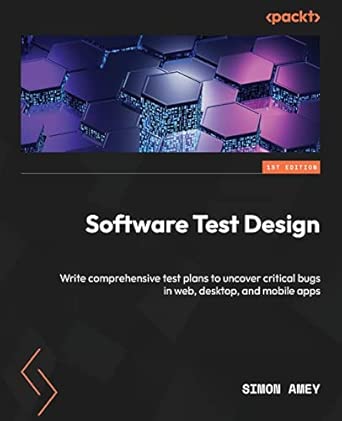 | Best for Test Planning Skills | Format: Print / eBook | Primary Skill Taught: Test plan design and documentation | Application Types: Web, desktop, and mobile | VIEW LATEST PRICE | See Our Full Breakdown |
| software testing tools for student | Format | Experience Level | Primary Audience |
|---|---|---|---|
| All You Need to Know About Sof | Book (digital/print) | Beginner to job-ready | Aspiring QA engineers and students |
| Lessons Learned in Software Te | Print book | Intermediate to advanced | Aspiring and practicing testers building judgment |
| Mastering Software Testing wit | Print/digital book | Beginner to intermediate Java developers | — |
| Elevating Software Testing wit | Book (digital/print) | Intermediate — assumes testing fundamentals | Testers exploring AI-augmented QA |
| Software Testing and Quality A | Book (digital/print) | Intermediate students and professionals | Software engineering students and QA professionals |
| Spec-Driven Software Testing w | eBook/Print (Kindle available) | Intermediate to advanced | CS students, QA engineers, developers |
| Software Testing in the AI Era | eBook (Kindle available) | Beginner to intermediate | Aspiring and current software testers |
| Foundations of Software Testin | Paperback | Beginner to intermediate (dense for newcomers) | ISTQB certification candidates |
| Full Stack Testing: A Practica | eBook (Kindle available) | Intermediate (assumed, not stated) | Developers and testers working across full applications |
| Introduction to Software Testi | Paperback/eBook | Beginner | Students, new testers, and developers |
| Software Testing with Selenium | Paperback / Digital | — | — |
| Effective Software Testing: A | Print / eBook | — | — |
| Software Test Design: Write Co | Print / eBook | — | — |
More Details on Our Top Picks
All You Need to Know About Software Testing: From Beginner to Job-Ready QA Engineer
This guide earns the top spot because it matches what students actually need: a single volume that runs from first principles to job-ready skills. Where most entry books stop at manual testing basics, this one pushes through Selenium, Playwright, APIs, CI/CD, and even AI-assisted QA — territory usually reserved for separate titles like Software Testing with Selenium Automated Testing Tool or Full Stack Testing. Compared with Elevating Software Testing with Artificial Intelligence, which jumps straight into AI concepts, this book builds the fundamentals first, so AI tools land on solid ground. The tradeoff is breadth over depth: each automation tool gets an introduction rather than exhaustive coverage, and it lacks reader reviews to validate quality. For a student choosing one book, though, this career-oriented framing beats narrower alternatives.
Pros:- Covers manual testing, automation, Selenium, Playwright, APIs, and CI/CD in one volume
- Explicitly structured around becoming a job-ready QA engineer
- Includes AI-assisted QA topics rarely found in beginner books
- Broad enough to serve as a long-term reference during studies
Cons:- Wide scope means limited depth on any single tool or framework
- No customer reviews or ratings to gauge real-world reception
- Lacks detailed technical specifications and edition information
Best for: Students and career-changers who want one affordable book covering the full QA skill set from basics to job interviews
Not ideal for: Experienced testers or developers wanting deep tool-specific mastery — a dedicated JUnit or Selenium title covers more ground per tool
- Format:Book (digital/print)
- Experience Level:Beginner to job-ready
- Topics Covered:Manual testing, automation, APIs, Selenium, Playwright, CI/CD, AI-assisted QA
- Primary Audience:Aspiring QA engineers and students
- Career Focus:Yes — beginner to job-ready progression
- Automation Tools Included:Selenium, Playwright
- Includes Modern AI Content:Yes
Our verdict“Buy this if you’re a student who wants one career-focused book instead of stacking five narrow ones.”
Lessons Learned in Software Testing: A Context-Driven Approach
Most books in this roundup teach how to run tools; this one teaches how to think like a tester. Its context-driven philosophy — the idea that there is no universal best practice, only practices that fit your situation — is exactly the mindset that separates students who memorize definitions from those who ace interviews and real projects. Compared with All You Need to Know About Software Testing, which prioritizes tool coverage, this book delivers hard-won real-world lessons that remain relevant long after a specific framework goes out of date. The tradeoff: it won’t teach you Selenium or JUnit at all, so it works best as a second book, not a first one. Pair it with a hands-on tutorial rather than expecting step-by-step exercises.
Pros:- Teaches judgment and context-driven thinking rather than rote procedures
- Lessons drawn from decades of real-world testing experience
- Content ages better than tool-specific tutorials
- Strong preparation for interview questions about testing philosophy
Cons:- No hands-on tool instruction or code examples
- Dense, idea-heavy writing that can frustrate beginners
- No customer ratings or updated edition information available
Best for: Students who already know the basics and want the critical-thinking skills that technical interviews and real projects demand
Not ideal for: Complete beginners seeking a step-by-step tutorial with tool walkthroughs — this book assumes you understand core testing concepts
- Format:Print book
- Experience Level:Intermediate to advanced
- Approach:Context-driven testing philosophy
- Content Type:Real-world lessons and strategies
- Hands-On Exercises:No — conceptual focus
- Primary Audience:Aspiring and practicing testers building judgment
- Tool Coverage:None — methodology only
Our verdict“This is the book that turns a student who knows tools into a tester who knows why — buy it second, not first.”
Mastering Software Testing with JUnit 5: Comprehensive Guide to Develop High-Quality Java Applications
For computer science students, unit testing is the skill that shows up first in coursework and internships, and JUnit 5 is the framework Java programs expect you to know. This book stands out for staying tightly focused: testing strategies, best practices, and practical examples aimed at producing reliable, maintainable Java applications. Compared with broader titles like All You Need to Know About Software Testing, it trades career-wide coverage for genuine depth in one framework — a worthwhile trade if your coursework is Java-based. Unlike Effective Software Testing: A Developer’s Guide, which stays language-agnostic, this gives you runnable, Java-specific code you can apply immediately to assignments. The catch is simple: if you don’t write Java, none of it applies, and the lack of reviews means quality is unverified by other readers.
Pros:- Deep, focused coverage of JUnit 5, the standard Java testing framework
- Practical examples directly applicable to coursework and projects
- Teaches maintainable test design, not just syntax
- Covers testing strategies and best practices alongside the framework
Cons:- Java-only — useless outside the Java ecosystem
- Narrow scope omits manual testing, QA processes, and web automation
- No customer reviews or ratings to confirm quality
Best for: Java students and CS undergraduates who need unit testing skills for coursework, projects, or internships
Not ideal for: Students working in Python, JavaScript, or non-Java stacks — every example assumes Java fluency
- Format:Print/digital book
- Experience Level:Beginner to intermediate Java developers
- Framework Covered:JUnit 5
- Language:Java
- Content Type:Best practices, strategies, practical examples
- Scope:Unit testing and application quality
- Hands-On Code Examples:Yes
Our verdict“If your degree or projects run on Java, this focused guide beats any broad QA overview for immediate, usable skills.”
Elevating Software Testing with Artificial Intelligence
AI is reshaping QA hiring, and this book targets students who want to specialize early in AI-driven testing to stand out from classmates with identical resumes. Its core promise — using AI to improve testing efficiency and accuracy — addresses a genuine gap, because most mainstream titles treat AI as a footnote. Compared with Software Testing in the AI Era, which surveys the landscape for working testers, this one zeroes in on applying AI to elevate existing test processes. However, the tradeoffs are real: with few published details and no reader reviews, it’s a higher-risk purchase than established titles like Lessons Learned in Software Testing. Students on a tight budget should borrow or sample it before committing, and it assumes you already understand conventional testing — it won’t teach fundamentals from scratch.
Pros:- Focused on AI-driven testing, a fast-growing niche in QA hiring
- Targets efficiency and accuracy improvements, not just theory
- Differentiates a student resume with emerging-tech knowledge
- Fills a gap left by traditional testing curricula
Cons:- Minimal published specifications or feature details
- No user reviews or ratings to validate quality
- Assumes prior testing knowledge — unsuitable as a first book
Best for: Students with solid testing basics who want an early edge in AI-augmented QA before the job market saturates
Not ideal for: Beginners needing fundamentals first, or cautious buyers who won’t purchase without reviews and detailed specs
- Format:Book (digital/print)
- Experience Level:Intermediate — assumes testing fundamentals
- Core Technology:Artificial intelligence applied to software testing
- Focus Areas:Testing efficiency and accuracy
- Fundamentals Coverage:No — specialization title
- Primary Audience:Testers exploring AI-augmented QA
- Reviews Available:None published
Our verdict“A calculated bet for students who already know the basics and want to specialize in AI testing before everyone else does.”
Software Testing and Quality Assurance: Exploring Testing Levels, Test Tools, Automation, and Quality Metrics for Improved Software Quality
When a syllabus lists testing levels, metrics, and QA processes, this is the book that maps most directly onto academic software engineering courses. Its structured walkthrough of testing levels, tools, automation, and quality metrics mirrors the theory-heavy content students face on exams, something hands-on titles like Mastering Software Testing with JUnit 5 deliberately skip. Compared with Foundations of Software Testing ISTQB Certification, it covers similar conceptual ground but extends into automation techniques and metrics, giving a slightly wider classroom-to-practice bridge. The tradeoff is tone: without reviews or edition details, buyers can’t verify currency, and the writing leans more technical and theoretical than beginner-friendly guides. Students who prefer step-by-step tutorials will find it dry; students preparing for exams and term projects will find it aligned.
Pros:- Systematic coverage of testing levels, from unit to acceptance
- One of the few titles here dedicated to quality metrics
- Includes automation techniques alongside theory
- Structure aligns well with standard university QA curricula
Cons:- Technical tone can overwhelm absolute beginners
- No edition details or user reviews to confirm content currency
- Theory-heavy with limited hands-on exercises
Best for: Students taking software engineering or QA courses who need structured theory on testing levels and quality metrics for exams
Not ideal for: Self-learners wanting project-based, hands-on practice with real tools and code
- Format:Book (digital/print)
- Experience Level:Intermediate students and professionals
- Topics Covered:Testing levels, test tools, automation, quality metrics
- Content Type:Theoretical and process-oriented
- Quality Metrics Coverage:Yes — dedicated focus
- Hands-On Exercises:Limited
- Primary Audience:Software engineering students and QA professionals
- Reviews Available:None published
Our verdict“Pick this when your course demands testing theory and metrics; skip it if you learn best by building projects.”
Spec-Driven Software Testing with AI: Build Reliable Test Suites from Specifications with AI, Test Automation, TDD, API Testing, and CI/CD
Spec-Driven Software Testing with AI is the most technically ambitious title in this lineup, and that cuts both ways. This pick makes the most sense for students who already understand basic QA concepts and want to connect specification-driven testing to modern pipelines like CI/CD and TDD. Compared with Introduction to Software Testing, which walks through fundamentals in a beginner-friendly way, this book assumes you can write tests and want a framework for deciding what to test and why. The payoff is real: students heading into internships or capstone projects will learn how AI tooling fits into automated suites, something Software Testing in the AI Era covers more conceptually. The tradeoff is a steep on-ramp and no reader feedback yet to validate clarity.
Pros:- Connects specification-driven testing to real workflows like TDD and CI/CD
- Covers API testing and AI-driven techniques rarely bundled together
- Directly builds portfolio-ready skills for internship applications
- Teaches test suite design logic, not just tool usage
Cons:- Requires prior knowledge of testing fundamentals and AI concepts
- No customer reviews or ratings available to gauge readability
Best for: Upper-level CS students and aspiring QA engineers who already know test basics and want AI, TDD, and CI/CD integration skills for internships
Not ideal for: First-semester students or complete beginners — it assumes prior testing and AI knowledge and will feel overwhelming without that foundation
- Format:eBook/Print (Kindle available)
- Focus Areas:Specification-driven testing, AI, TDD, API testing, CI/CD
- Experience Level:Intermediate to advanced
- Primary Audience:CS students, QA engineers, developers
- Practical Content:Automation strategies and pipeline integration
- Prerequisites:Basic testing and AI familiarity recommended
- Ratings:No customer reviews yet
Our verdict“Choose this only after you’ve mastered fundamentals — it’s the bridge from student tester to industry-ready engineer.”
Software Testing in the AI Era: A Complete Guide for Modern Testers
Where Spec-Driven Software Testing with AI gets narrow and technical about building test suites, Software Testing in the AI Era takes the wider view. This option stands out for students who want to understand how AI is reshaping the tester’s job — from testing AI-driven applications to adopting modern tooling — without needing to implement a CI/CD pipeline tomorrow. It sits somewhere between the beginner-friendly All You Need to Know About Software Testing and the specialist depth of Elevating Software Testing with Artificial Intelligence, making it a sensible middle path. The drawback is vagueness: without edition details, chapter structure, or reader feedback, it’s hard to know how hands-on the guidance actually gets. Students wanting concrete exercises may finish informed but under-practiced.
Pros:- Directly addresses testing AI-driven applications, a growing job market
- Balances strategy, tools, and best practices in one volume
- More accessible than highly technical AI testing titles
- Keeps content current with modern industry practices
Cons:- Lacks edition details and structured exercise content
- No user reviews or ratings to verify practical value
Best for: Career-switchers and students targeting QA roles at companies building AI products, who need current context on modern testing practices
Not ideal for: Learners who want step-by-step exercises or certification prep — the breadth here comes at the cost of hands-on depth
- Format:eBook (Kindle available)
- Focus Areas:AI-era testing strategies, modern tools, best practices
- Experience Level:Beginner to intermediate
- Primary Audience:Aspiring and current software testers
- Coverage Style:Broad conceptual guide
- Ratings:No customer reviews yet
Our verdict“A solid contextual read for AI-era career planning, but pair it with a hands-on title for real skill-building.”
Foundations of Software Testing ISTQB Certification, 4th Edition
If your goal is a credential that recruiters actually recognize, Foundations of Software Testing ISTQB Certification is the only pick in this roundup built around a formal exam syllabus. That single fact separates it from titles like Introduction to Software Testing, which teaches similar fundamentals but leaves you without certification to show for it. The 4th edition aligns with the current ISTQB Foundation Level curriculum, covering testing techniques, terminology, and industry practices in exam-ready order. The tradeoff is tone: this is a dense, structured study text, not an inspiring read. Students who enjoyed the conversational approach of Lessons Learned in Software Testing may find this one dry, and absolute beginners should expect to reread sections. Still, for resume value per dollar spent, nothing else here competes.
Pros:- Aligned directly with the ISTQB Foundation Level syllabus
- Industry-recognized certification pathway that boosts employability
- Systematic coverage of testing techniques and terminology
- Updated 4th edition reflects current exam content
Cons:- Dense, textbook-style writing that can slow beginners down
- No customer reviews available on this edition
- Little hands-on automation practice compared with tool-focused titles
Best for: Students who want the ISTQB Foundation Level certification to strengthen internship and first-job applications
Not ideal for: Casual learners or hobbyists — the exam-syllabus structure makes leisurely reading tedious and much of the terminology drilling unnecessary
- Format:Paperback
- Edition:4th Edition
- Focus Areas:ISTQB Foundation Level syllabus, testing techniques, best practices
- Experience Level:Beginner to intermediate (dense for newcomers)
- Primary Audience:ISTQB certification candidates
- Career Value:Globally recognized certification prep
- Ratings:No customer reviews listed for this listing
Our verdict“The clear choice if a certification line on your resume matters more than an entertaining read.”
Full Stack Testing: A Practical Guide for Delivering High Quality Software in the Age of AI
Full Stack Testing occupies a distinct niche: it’s written for people who test across the entire stack — front end, back end, APIs, and everything AI touches — rather than specializing in one layer. This pick makes the most sense for students on software engineering tracks who own their code’s quality end to end. Compared with Mastering Software Testing with JUnit 5, which goes deep on one Java framework, this title trades depth for breadth, showing how testing strategy fits across a whole application. That breadth is also its weakness: students expecting tutorial-style walkthroughs of specific tools will find the guidance more strategic than step-by-step, and the unclear target experience level means some chapters may be too basic while others assume too much.
Pros:- Covers testing across the full application stack, not isolated layers
- Addresses quality strategies specific to AI-era development
- Practical orientation suits both developers and testers
- Teaches end-to-end thinking valued on modern dev teams
Cons:- Breadth over depth limits mastery of any single testing tool
- Unclear target experience level makes pacing inconsistent
- No edition or publication details provided
Best for: Engineering students and junior developers responsible for quality across entire projects, including AI-assisted features
Not ideal for: Students seeking mastery of a single tool or framework — the stack-wide scope means less depth per technology than specialized titles
- Format:eBook (Kindle available)
- Focus Areas:Full stack testing, AI-era quality practices, end-to-end strategy
- Experience Level:Intermediate (assumed, not stated)
- Primary Audience:Developers and testers working across full applications
- Coverage Style:Strategic and practical, cross-stack
- Ratings:No customer reviews yet
Our verdict“Pick this if you’re building whole applications and need quality strategy across every layer, not just one tool.”
Introduction to Software Testing: A Practical Guide to Testing, Design, Automation, and Execution
For a first book on the subject, Introduction to Software Testing is the gentlest entry point in this lineup. It walks through testing strategies, design, automation, and execution in a sequence that builds naturally, which matters when you’re learning terminology from scratch. Compared with Foundations of Software Testing ISTQB Certification, this guide is less exam-focused and more about building working intuition — you’ll learn how testers think, not just what a certification body wants you to memorize. It also sets you up well for Software Testing with Selenium Automated Testing Tool later, since the automation fundamentals here translate directly. The gap is currency: unlike the AI-era titles in this roundup, it doesn’t address modern AI-assisted testing, and without reader ratings it’s hard to confirm the exercises land well for total newcomers.
Pros:- Logical progression from concepts to automation and execution
- Practical framing builds real tester intuition, not just theory
- Beginner-friendly without assuming prior QA knowledge
- Good springboard before tool-specific books like Selenium guides
Cons:- No coverage of AI-driven or modern emerging testing approaches
- No customer ratings available to validate clarity
- Automation coverage is introductory rather than framework-specific
Best for: First-year students and self-taught beginners who need a structured, jargon-light foundation before touching specialized tools
Not ideal for: Job-hunting students who need certification prep or AI-era skills — this covers timeless fundamentals but nothing cutting-edge
- Format:Paperback/eBook
- Focus Areas:Testing strategies, test design, automation, execution
- Experience Level:Beginner
- Primary Audience:Students, new testers, and developers
- Prerequisites:None — starts from fundamentals
- Coverage Style:Practical guide with structured progression
- Ratings:No customer ratings listed
Our verdict“The right first book if you’re starting from zero — just plan to follow it with a specialized or certification title.”
Software Testing with Selenium Automated Testing Tool: Selenium Book for Beginners
Most software testing books for students stay stuck in theory, but this one gets hands-on fast with Selenium, the automation tool that dominates job listings for junior QA roles. That single focus is its greatest strength and its biggest limitation. Where Effective Software Testing: A Developer’s Guide casts a wide net across methodologies, this book drills into one tool with practical examples students can actually type out and run, which matters when you’re building a portfolio. Compared with the broader Software Testing and Quality Assurance title in this roundup, it trades breadth for depth, and that tradeoff works in a beginner’s favor. The catch: once you finish it, you’ll still need a second book for advanced topics and test design fundamentals, and the lack of a recent updated edition means some content may lag behind current Selenium versions.
Pros:- Hands-on Selenium exercises you can run immediately, not just abstract theory
- Highly relevant to real junior QA job requirements
- Beginner-friendly pacing that assumes no prior automation experience
- Practical examples translate directly into portfolio projects
Cons:- Narrow scope — covers one tool rather than testing as a discipline
- No updated edition, so some material may not match the latest Selenium release
Best for: Students who want to add a marketable automation skill to their resume before applying for internships or junior QA roles
Not ideal for: Learners preparing for ISTQB-style certification or anyone who needs broad testing theory first — the single-tool focus leaves big gaps
- Format:Paperback / Digital
- Primary Tool Covered:Selenium
- Skill Level:Beginner
- Focus:Automated testing fundamentals
- Includes Examples:Yes, practical implementation exercises
- Advanced Coverage:No
- Edition Updates:Not specified
Our verdict“Buy this if your goal is a job-ready automation skill in weeks rather than a complete education in software testing.”
Effective Software Testing: A Developer’s Guide
This pick makes the most sense for computer science students who write code and want testing woven into how they build, rather than treated as a separate QA activity. Unlike Software Testing with Selenium Automated Testing Tool, which teaches a tool, this book teaches a testing philosophy — strategies and best practices that survive tool churn. It stands out for bridging development and quality, covering a wide range of methodologies that improve reliability across projects. The tradeoff is real, though: it deliberately avoids deep dives into specific tools and frameworks, so students expecting step-by-step tool walkthroughs will come away wanting. Compared with Software Test Design, it’s stronger on why and when to test, weaker on producing formal test plans. The missing edition and publication details also make it harder to judge how current the practices are against modern CI/CD workflows.
Pros:- Teaches transferable testing strategies that outlast any specific tool
- Covers diverse methodologies across the testing lifecycle
- Directly improves code quality and reliability in student projects
- Written from a developer’s perspective, which is rare among testing books
Cons:- No hands-on guidance with named tools or frameworks
- Edition and publication date not clearly indicated, raising currency concerns
Best for: CS students and aspiring developers who want to write better-tested code as part of their engineering workflow, not just pass a QA course
Not ideal for: Students who need concrete tool tutorials or certification syllabus coverage — the strategy-first approach assumes you already code
- Format:Print / eBook
- Target Audience:Developers and CS students
- Approach:Strategy and best practices
- Methodologies Covered:Wide range of testing techniques
- Tool-Specific Tutorials:No
- Prerequisites:Working knowledge of programming
- Edition Info:Not specified
Our verdict“Choose this if you see testing as part of writing good software; skip it if you need a tool-specific tutorial.”
Software Test Design: Write Comprehensive Test Plans to Uncover Critical Bugs in Web, Desktop, and Mobile Apps
Between tool tutorials and philosophy books sits the practical middle ground of test design, and this is the strongest option here for it. While Effective Software Testing: A Developer’s Guide explains why testing matters, this book shows you how to actually write test plans that surface serious bugs across web, desktop, and mobile apps — a skill internship interviewers actively probe. Compared with Foundations of Software Testing ISTQB Certification, it leans practical rather than exam-oriented, making it better for students who need deliverables for coursework or portfolios than for those chasing certification. The multi-platform coverage is genuinely useful since student projects rarely stick to one application type. The weak spot is transparency: with no author details or user ratings available, you’re buying on the strength of the description alone, which is a leap of faith some students won’t want to take.
Pros:- Detailed, actionable frameworks for writing test plans
- Covers web, desktop, and mobile in one resource
- Focused on finding critical bugs, not just checkbox coverage
- Directly applicable to coursework and internship deliverables
Cons:- No author or edition information available to evaluate credibility
- Lacks user reviews or ratings to confirm quality before purchase
Best for: Students working on capstone projects or applying for QA internships who need to produce professional-grade test plans
Not ideal for: Certification-focused learners or anyone who wants community validation before buying — there’s no ratings or author track record to lean on
- Format:Print / eBook
- Primary Skill Taught:Test plan design and documentation
- Application Types:Web, desktop, and mobile
- Goal:Uncovering critical bugs through structured testing
- Skill Level:Intermediate (basic testing knowledge helps)
- Author Information:Not provided
- User Ratings:Not available
Our verdict“Worth the risk if structured test planning is a gap in your skill set; verify credibility first if that uncertainty bothers you.”

How We Picked
I evaluated each title against what actually moves a student forward: job-market relevance, hands-on practice opportunities, accessibility without professional experience, and currentness of the material. Books aligned to recognized certifications scored well on career payoff but were checked for readability, since a dry certification manual can stall a student’s momentum. Tool-specific titles were judged on whether a reader could realistically produce a working test suite or demo project from the exercises alone, and whether the tool is still in demand in 2026 hiring pipelines.
The ranking reflects a simple logic: resources that combine broad fundamentals with a concrete career outcome sit at the top, tool-mastery books fill the middle because they trade breadth for immediately demonstrable skill, and specialized or philosophical titles land lower for students specifically because they assume context that beginners have not built yet. AI-focused guides were placed by whether they teach durable judgment or just chase features that may not survive the next model release.
Factors to Consider When Choosing Software Testing Tools For Students
Before picking a title from this list, it helps to understand what kind of learner you are and what door you are trying to open. The right choice depends less on book quality and more on the gap between where you are now and the role you want.Certification Track vs. Skill Track
The single biggest decision is whether you are studying to pass an exam or to build demonstrable skills. Certification books like the ISTQB Foundations title pay off when employers in your region actually screen for the credential, which is common in Europe and parts of Asia but less universal in North American startups. Skill-track books on Selenium or JUnit produce GitHub projects that speak for themselves in interviews, but they leave gaps in test theory that interviewers often probe. A common mistake is buying both types at once and abandoning the theory book halfway through; pick one track, finish it, then round out the other side.
Match the Tool to Your Language Stack
A JUnit book is nearly useless to a Python-focused student, and a Selenium guide assumes comfort with at least one supporting language for scripting. Before buying a tool-specific title, check your degree program’s primary language and the stack in your target internships. Students frequently overestimate their readiness for automation books, which expect working knowledge of the language before the testing concepts even begin. If your programming fundamentals are shaky, a general testing introduction will serve you better than jumping straight to an automation framework.
How Much AI Content Do You Actually Need?
AI testing books are the fastest-growing shelf in this category, but their shelf life is the shortest. A guide centered on specific AI tooling can feel dated within a year as vendors pivot, while books that teach AI-assisted test design principles retain value longer. For students, the pragmatic split is this: learn manual test design and fundamentals first, because AI tools amplify a tester who already knows what a good test looks like. Books that frame AI as a junior-tester replacement should be read skeptically; hiring data still favors candidates who can evaluate what any tool, AI or otherwise, produces.
Practical Exercises Are Worth More Than Page Count
Thicker books feel like better value, but a 600-page survey with no exercises teaches less than a 250-page guide with runnable examples. Check whether a book includes downloadable code, practice projects, or self-assessment questions before committing. The titles in this lineup that students finish tend to share one trait: each chapter ends with something you can do, not just something you can recall. An unfinished comprehensive guide teaches nothing, so completion rate beats coverage every time.
Free Alternatives and When a Book Still Wins
ISTQB syllabi, tool documentation, and YouTube tutorials are free, so a book needs to justify its price through structure, curation, and saved time. Books win when the free material is fragmented, outdated, or assumes professional context you do not have yet, which describes most official framework documentation. They also win on exam prep, where a well-structured study guide compresses weeks of scattered reading. If a book merely reprints documentation with commentary, skip it and use the free source directly.
Timing Your Purchase Around Your Program
A second-year student and a final-semester student should buy different books from this same list. Early students benefit from broad introductions that make later coursework easier, while final-year students should optimize for interview readiness and portfolio artifacts. Buying a deep specialization book too early often means the content is forgotten before it becomes applicable. Map your purchase to the next 6 to 12 months of your actual schedule, not to the career you imagine five years out.
Frequently Asked Questions
Should I get an ISTQB certification book if I am still early in my degree?
It depends on how soon you plan to apply for internships. If you are more than a year away from job applications, a general introduction will build the intuition that makes certification study much easier later. ISTQB material is dense with terminology that sticks better once you have written a few tests yourself. If an internship application deadline is within a few months and the posting mentions ISTQB, the certification book becomes the better buy immediately. Many students take the foundation exam in their final year, so there is no rush unless an employer is asking for it.
Is learning Selenium still worth it with AI testing tools emerging?
Yes, for now, and the reason is structural rather than sentimental. Selenium and similar frameworks remain the backbone of most companies’ automation suites, and AI tools in this space typically generate code for those frameworks rather than replacing them. A student who understands locators, waits, and page object patterns can evaluate and fix AI-generated test scripts; one who skipped fundamentals cannot. What is fading is manual, repetitive scripting, not the frameworks themselves. Pair a Selenium foundation with an AI-era guide and you cover both the current job market and its direction.
Which single book gives me the most job-ready skills fastest?
For raw speed to a demonstrable skill, the Selenium beginner book is hard to beat because a working browser automation project can exist within days and fits neatly on a resume. The tradeoff is narrowness: it teaches one tool and assumes you fill in test design theory elsewhere. If your target roles emphasize test analysis over automation, the beginner-to-job-ready QA title covers the broader hiring checklist, including bug reporting and test case writing, in one pass. The fastest path depends on which job posting you are trying to match, so read two or three in your target market before choosing.
Do I need a Java background for the JUnit 5 book?
You need solid Java fundamentals, not expertise, but you cannot fake the basics. The book teaches testing patterns, not the language, so weak syntax knowledge will slow you down on nearly every example. If your program teaches Python or JavaScript primarily, look for equivalents like pytest or Jest resources instead of forcing Java into your schedule. The exception is students targeting enterprise or Android roles, where JUnit knowledge pays off directly in the hiring process. Learning Java and JUnit simultaneously is possible but typically doubles study time.
Are the AI-focused testing books going to be outdated quickly?
Partly, and the distinction matters. Books structured around specific AI tools and prompts will age fastest, since vendor capabilities shift every few months. Books that teach how to specify, design, and evaluate tests with AI assistance retain value because those judgment skills transfer across tools. When comparing AI titles, check whether the core chapters describe durable concepts or walkthroughs of particular products. The spec-driven approach in this lineup leans durable, which is why it ranks above trend-chasing alternatives. Treat any AI testing book as one edition in a series you will update, not a one-time purchase.
Conclusion
For best overall, Foundations of Software Testing ISTQB Certification, 4th Edition earns the top spot because it pairs the most transferable body of testing knowledge with a credential employers recognize. The best value pick is All You Need to Know About Software Testing, which covers the beginner-to-job-ready arc at a lower commitment than the certification track. For best premium investment, Full Stack Testing offers the most current, professionally relevant material including AI-era practices that will outlast your student years. Best for beginners goes to Introduction to Software Testing: A Practical Guide, the gentlest on-ramp for readers with no QA background at all.
Specific needs round out the list: developers-in-training should choose Effective Software Testing, Java students get the most from the JUnit 5 guide, portfolio builders should start with the Selenium book, and AI-curious students will find the spec-driven and AI-era titles the most forward-looking. Whatever you pick, finish it and build something with it; a completed 250-page book with a demo project beats an abandoned 600-page one every time.
Halloween Picks

27FT Giant Inflatable Pumpkin Lighted Outdoor Halloween Decor

Kalolary 12ft Halloween Witch Haunted House Inflatable Archway

Govee Outdoor Halloween Projector Light with 3D Effects
As an affiliate, we earn on qualifying purchases.