

Teams searching for software testing tools need to distinguish between software that runs tests and resources that help a team build its testing practice. These three picks are books or study materials, not plug-in testing platforms. I rank Specification by Example first for teams improving collaboration around requirements and acceptance examples, Ultimate Selenium WebDriver for Test Automation for engineers building Java-based browser automation, and the ISTQB CTFL Quiz Bundle 6 for candidates preparing for a test-tools certification chapter.

Get monitors, keyboards and dev gear delivered free — and shop member deals
- Fast, free delivery on millions of items
- Access to Prime Big Deal Days deals on October 6–7
- Prime Video, Amazon Music and more included
The main tradeoff is between team process, automation implementation, and exam practice. Specification by Example addresses how people agree on expected behavior; the Selenium book focuses on implementing a web automation framework; the quiz bundle is narrow practice for individual study. None replaces a test runner, CI system, or test management platform. I would choose based on the gap my team actually needs to close, rather than treating these resources as interchangeable testing products.
Key Takeaways
- Specification by Example is the clearest team-wide pick when misunderstandings about requirements and acceptance criteria cause testing rework.
- Ultimate Selenium WebDriver for Test Automation is the most implementation-focused option, aimed at teams building Java browser automation with Selenium WebDriver and Grid.
- ISTQB CTFL Quiz Bundle 6 serves a narrower purpose: chapter-based practice for candidates studying test tools, not a shared team testing system.
- These are learning resources rather than executable tools; teams still need to select and maintain their own automation, reporting, and CI software.
- The ranking favors practical team impact first, then hands-on automation guidance, then focused exam preparation.
| Specification by Example: How Successful Teams Deliver the Right Software |  | Best Overall for Team Collaboration | Resource type: Book | Primary topic: Specification by example | Intended audience: Software teams | VIEW LATEST PRICE | See Our Full Breakdown |
| Ultimate Selenium WebDriver for Test Automation: Build and Implement Automated Web Testing Frameworks Using Java, Selenium WebDriver and Selenium Grid for E-Commerce, Healthcare, EdTech, Banking, and SAAS | 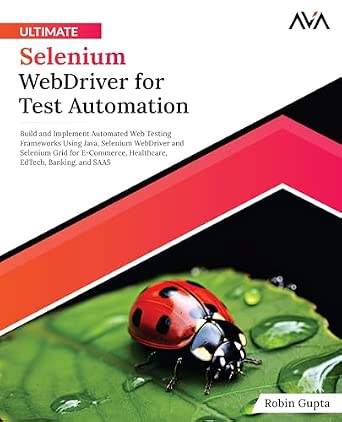 | Best for Java Web Automation | Resource type: Book | Primary topic: Automated web testing frameworks | Programming language: Java | VIEW LATEST PRICE | See Our Full Breakdown |
| ISTQB CTFL Quiz Bundle 6 – Test Tools |  | Best for Focused Certification Practice | Resource type: Quiz bundle | Certification focus: ISTQB CTFL | Topic: Test tools | VIEW LATEST PRICE | See Our Full Breakdown |
| software testing tools for team | Resource type | Primary topic |
|---|---|---|
| Specification by Example: How | Book | Specification by example |
| Ultimate Selenium WebDriver fo | Book | Automated web testing frameworks |
| ISTQB CTFL Quiz Bundle 6 | Quiz bundle | — |
More Details on Our Top Picks
Specification by Example: How Successful Teams Deliver the Right Software
I place Specification by Example first because its focus reaches beyond an individual tester or automation engineer. Its central subject is using examples and collaborative specification to improve how teams define and deliver software. That makes it a strong fit when defects are rooted in ambiguous requirements, mismatched assumptions, or acceptance criteria that arrive too late for useful feedback. Compared with the Selenium book, this is less about coding a browser test framework and more about agreeing what the software should do before teams rely on automation to check it.
That wider team relevance is also the reason I give it the overall role. Developers, testers, and people shaping product behavior can share a vocabulary around concrete examples. When teams align on examples early, those examples can inform test design and reduce disputes about whether a behavior is intended. The title describes practical guidance and collaborative techniques, though the available description does not specify particular templates, tooling integrations, or a prescribed implementation sequence. I would treat it as a process resource, not assume it comes with ready-to-run testing software.
Compared with the ISTQB quiz bundle, this book is oriented toward changing team conversations and working practices rather than checking an individual’s certification knowledge. Compared with Ultimate Selenium WebDriver, it is less technically specific: it does not promise Java code, Grid configuration, or a framework tutorial. That makes it less immediately useful to a team whose only need is building browser automation, but more adaptable where collaboration and shared understanding are the bottleneck.
The main drawback is that the supplied description gives few details about concrete features or technical implementation. Teams seeking a step-by-step tool setup, test management workflow, or extensive code samples should verify the book’s contents before choosing it. I recommend it as the strongest team-wide learning pick among these three, especially when quality problems begin with unclear expectations rather than a lack of test execution capacity.
Pros:- Centers on collaborative practices that can involve developers, testers, and product stakeholders.
- Connects example-driven specifications with delivering software that matches intended behavior.
- Addresses a team process need that is broader than one automation framework or certification chapter.
- Can complement technical testing tools rather than requiring the team to adopt a particular test runner.
Cons:- The supplied description does not list detailed features, specific exercises, or software integrations.
- It is guidance for team practices, not an executable testing tool or automation framework.
Best for: Cross-functional software teams that need shared examples and clearer agreement on expected behavior across product, development, and testing.
Not ideal for: Teams seeking a ready-to-run testing application, detailed Java automation instructions, or focused ISTQB practice questions.
- Resource type:Book
- Primary topic:Specification by example
- Intended audience:Software teams
- Main emphasis:Collaborative specification practices
- Stated outcome:Helping teams deliver software that meets intended needs
- Technical stack specified:None stated in the supplied description
- Executable testing software:Not described
Our verdict“I recommend this as the broadest team-oriented resource here when shared understanding matters more than adding another automation tutorial.”
Ultimate Selenium WebDriver for Test Automation: Build and Implement Automated Web Testing Frameworks Using Java, Selenium WebDriver and Selenium Grid for E-Commerce, Healthcare, EdTech, Banking, and SAAS
For teams whose immediate gap is browser automation, Ultimate Selenium WebDriver for Test Automation is the most technically targeted option in this lineup. The description says it covers building and implementing automated web testing frameworks with Java, Selenium WebDriver, and Selenium Grid. That gives it a clearer implementation focus than Specification by Example, which is centered on team collaboration, and a more practical engineering aim than the ISTQB quiz bundle, which supports certification preparation.
The named technologies help buyers judge fit before choosing. A Java team planning to automate web flows may find a framework-oriented resource more useful than a broad discussion of shared specifications. The mention of Selenium Grid also signals attention to distributed execution, a concern for teams that need to run browser tests across a wider environment. The title references e-commerce, healthcare, education technology, banking, and SaaS, suggesting examples across varied domains; it does not, on the supplied details, establish that the book addresses each domain’s specific compliance or security requirements.
This specialization is both the book’s strongest advantage and its main limitation. Teams using another language or a non-Selenium approach may get less direct value, and teams with unclear acceptance criteria may need the collaborative guidance of Specification by Example first. The description does not state which Java or Selenium versions are covered, how much code is included, or whether the framework material includes reporting and CI integration. I would check those details against a team’s environment before using it as the basis for a technical standard.
Compared with the other two resources, this is the best fit for engineers who need to understand how a web automation framework is assembled, rather than for every person on a cross-functional team. It is still a book, not a testing platform: it will not execute suites or manage results by itself. I rank it second because its technical value can be high for a matching stack, while its relevance narrows more quickly than the team practices covered by the top pick.
Pros:- Directly addresses building and implementing automated web testing frameworks.
- Names Java, Selenium WebDriver, and Selenium Grid, making its technical focus easy to evaluate.
- Applies its stated coverage to several software industry contexts.
- Offers a more implementation-centered learning path than the collaboration-focused Specification by Example book.
Cons:- Its value is narrower for teams that do not use Java and Selenium.
- The supplied description does not identify supported software versions, code depth, or CI and reporting coverage.
- It is educational material rather than a test execution or management application.
Best for: Java-based engineering and QA teams building or improving automated web tests with Selenium WebDriver and Selenium Grid.
Not ideal for: Teams using other automation stacks, buyers seeking a test management product, or groups whose main issue is unclear product requirements.
- Resource type:Book
- Primary topic:Automated web testing frameworks
- Programming language:Java
- Web automation technology:Selenium WebDriver
- Grid technology:Selenium Grid
- Stated coverage:Framework building and implementation
- Industry examples named:E-commerce, healthcare, EdTech, banking, and SaaS
- Software versions specified:Not stated in the supplied description
Our verdict“I would choose this for a Java team seeking Selenium framework guidance, but not as a general-purpose testing resource for a mixed-stack organization.”
ISTQB CTFL Quiz Bundle 6 – Test Tools
ISTQB CTFL Quiz Bundle 6 – Test Tools is the most focused and exam-oriented choice here. It offers chapter-based practice questions for candidates preparing for ISTQB CTFL certification, specifically around test tools. That makes it a useful self-check for an individual learner who already has study material and wants to test recall. It is not a substitute for the Selenium book’s framework guidance or Specification by Example’s team practices; its purpose is narrower by design.
The bundle’s chapter focus can make study sessions easier to target. A candidate can concentrate on test-tool concepts instead of working through a broad book or trying to build a practical automation framework at the same time. Compared with the other two products, this resource is likely the simplest to use as a short review aid, but its value depends on the buyer having a certification goal. A team choosing a shared testing resource may find little benefit unless several members are actively preparing for the same exam.
The stated limitation matters: detailed explanations are not provided. Questions can help reveal gaps, but without worked answers or reasoning, a learner may need a separate reference to understand why a response is wrong. Its scope is also limited to the test-tools chapter, so it does not cover the full CTFL syllabus or provide broad practice across software testing subjects. I would not treat it as a standalone preparation plan.
I rank this third because exam practice is less directly connected to ongoing team delivery than the other resources. Still, it serves a distinct audience and should not be dismissed when certification preparation is the specific need. Compared with the Selenium title, it does not teach a named automation stack; compared with Specification by Example, it is not aimed at group collaboration. It makes sense as a supplementary study aid, not as a team’s primary testing tool or learning program.
Pros:- Provides chapter-based practice focused on test tools.
- Supports self-checking during ISTQB CTFL certification preparation.
- Has a narrower, clearly defined purpose than the two books in this comparison.
- Can supplement a broader course or study reference without replacing it.
Cons:- The supplied description says detailed explanations are not provided.
- Coverage is limited to the test-tools chapter rather than the full certification syllabus.
- It does not teach a specific automation framework or establish a team testing workflow.
Best for: ISTQB CTFL candidates who want chapter-based practice questions on test tools alongside broader study materials.
Not ideal for: Teams seeking a shared delivery practice, hands-on automation instructions, or complete coverage of the CTFL syllabus.
- Resource type:Quiz bundle
- Certification focus:ISTQB CTFL
- Topic:Test tools
- Question format:Chapter-based practice questions
- Primary use:Certification preparation
- Detailed explanations:Not provided according to the supplied description
- Syllabus scope:Test-tools chapter
Our verdict“I recommend this only when test-tools chapter practice is the immediate study need, not as a general resource for a software team.”

How We Picked
I ranked these three options by how directly they help a software team improve testing work, not by treating every title as a testing application. The supplied information describes two books and one quiz bundle, so I distinguish learning and process support from software that executes tests. That distinction matters for buyers: a book can shape a framework or team practice, but it will not run a test suite, store results, or connect itself to a delivery pipeline.
Team applicability is the first ranking factor. Specification by Example comes first because collaborative examples can help developers, testers, and product stakeholders agree on behavior before and during implementation. That kind of shared understanding can benefit a whole team and can complement many technical stacks. The Selenium title comes next because it offers a more specific route into web automation, with Java, WebDriver, and Grid at its center. Its usefulness is substantial for teams that match that stack, but less universal for teams using other languages or testing approaches. The quiz bundle ranks third because its stated scope is test-tools exam practice rather than day-to-day team delivery.
I also weighed practical depth and scope. The Selenium book is described as covering framework construction and implementation across several industry contexts. Specification by Example focuses on collaborative specification practices, a different but broadly applicable challenge. The quiz bundle offers chapter-based questions, which can support recall and self-checking, but its limited chapter focus and lack of detailed explanations make it less suited to building a complete team capability.
Finally, I considered fit and limitations. The descriptions do not provide detailed technical specifications, platform compatibility, editions, or feature lists, so I avoid inventing them. Each recommendation includes a clear audience and a reason to skip it. My order reflects the breadth of likely team benefit, not a claim that one resource can replace the others: a team may use collaborative specification practices, study Selenium automation, and prepare for certification for different reasons.
| software testing tools for team | Resource type | Primary topic |
|---|---|---|
| Specification by Example: How | Book | Specification by example |
| Ultimate Selenium WebDriver fo | Book | Automated web testing frameworks |
| ISTQB CTFL Quiz Bundle 6 | Quiz bundle | — |
Factors to Consider When Choosing Software Testing Tools For Teams
These options support different parts of a testing practice, so I would start by naming the problem rather than comparing them as if they were equivalent software. Team alignment, browser automation skills, and certification practice call for different resources. None of the three descriptions identifies an application that runs tests or manages a team’s test results.
Choose based on the team’s current bottleneck
If people disagree about expected behavior or interpret acceptance criteria differently, I would start with Specification by Example. Its collaborative focus can help a cross-functional group discuss concrete examples before test cases are written or automation is added. This is the broadest organizational fit of the three, though the available description does not promise a particular workshop format or implementation template.
If the team already shares a clear understanding of the product but lacks browser automation knowledge, the Selenium title is a more direct match. Its Java, WebDriver, and Grid focus points toward framework construction. If the immediate need is an individual’s certification study, the quiz bundle is the focused choice. Picking a resource that addresses the actual bottleneck prevents a common mismatch: expecting a technical book to fix communication, or expecting exam questions to teach framework design.
Check stack fit before choosing automation guidance
The Selenium resource names a specific stack, which is useful only when that stack aligns with the team’s existing or planned approach. I would compare Java and Selenium WebDriver with the languages, browser automation framework, and execution environment already in use. Selenium Grid is part of the stated coverage, but the supplied description does not say which versions, browsers, operating systems, or integrations receive attention.
Teams using a different language or framework should not assume that concepts will transfer without adaptation. By contrast, Specification by Example is presented as a collaborative practice rather than a stack-specific guide. That flexibility does not make it a technical replacement: a team still needs tools to author, run, and report automated checks.
Separate learning material from operational software
A book or quiz bundle can inform how people work, but the descriptions do not list executable test tools. Before buying, I would map the resource to the software the team still needs: a framework or test runner, source control, CI execution, reporting, and a place to track issues or test coverage. Learning guidance is not the same as a working test pipeline.
Specification by Example may help teams produce clearer examples that can later inform automated checks. The Selenium book may help engineers learn how to create a framework. The quiz bundle can support study of test-tool terminology. Each can sit beside operational software, but none should be selected as if it automatically supplies those capabilities.
Match the resource to the people who will use it
Consider whether the buyer is an entire team, an automation engineer, or an individual candidate. The top-ranked book has the broadest potential audience because collaboration involves multiple roles. The Selenium title is more likely to serve QA engineers and developers responsible for browser tests. The quiz bundle is best treated as an individual study aid unless the team has a shared certification objective.
I would also account for experience. A team new to automation may need foundational instruction and mentoring beyond a framework-focused resource. A team with mature automation but repeated acceptance misunderstandings may gain more from shared specification techniques. A candidate who needs explanations for missed answers should pair the quiz bundle with a fuller reference, since detailed explanations are not listed in its description.
Use the ranking as a fit guide, not a universal score
I rank Specification by Example first for potential value across a mixed-role team, not because every buyer needs it before automation. For a Java team actively building a Selenium suite, the second-ranked book may be the most relevant purchase. For an ISTQB candidate preparing the test-tools section, the quiz bundle can be the right choice despite its narrower use. The best match depends on the job to be done.
For organizations with several needs, these resources can complement one another: align on behavior, develop automation skills, and support certification study as separate workstreams. I would still check the contents and edition details available to the buyer, since the supplied descriptions do not list version compatibility, detailed chapter contents, or specific integrations.
Frequently Asked Questions
Are these software testing tools that my team can install and run?
No. Based on the supplied descriptions, the products are two books and a quiz bundle. The Selenium title covers guidance for building automated web testing frameworks, Specification by Example addresses collaborative software practices, and the ISTQB bundle provides practice questions. A team looking for software to execute tests, report results, or manage cases will need a separate application or framework.
Which option is the best fit for a cross-functional software team?
I would start with Specification by Example when developers, testers, and product stakeholders need a shared way to discuss expected behavior. Its stated focus is collaborative specification, which is more broadly team-oriented than the Java Selenium framework material or the individual certification quiz. It will not replace a test runner, but it may help teams agree on what their tests should verify.
Should a Java team choose the Selenium book over Specification by Example?
That depends on the team’s current gap. A Java team building browser automation with Selenium WebDriver and Grid has a direct stack match with Ultimate Selenium WebDriver for Test Automation. If its larger problem is unclear requirements or disagreement about acceptance behavior, Specification by Example may have wider value. The two address different needs: implementation guidance versus collaborative definition of expected outcomes.
Can the ISTQB quiz bundle prepare someone for the full CTFL exam?
The supplied description presents this bundle as practice for the test-tools chapter, not as complete coverage of the CTFL syllabus. It can help candidates check knowledge in that area, but the description also notes that detailed explanations are not provided. I would use it alongside broader study materials and a reference that explains answers, rather than relying on it as a full preparation program.
What should I check before selecting one of these resources for a team?
First, identify whether the need is team alignment, Java-based browser automation, or certification practice. Then check the specific details that are not included in the supplied descriptions, such as the Selenium and Java versions covered, depth of examples, chapter contents, and any relevant integrations. I would also confirm that the team has or plans to use separate software for test execution, CI, reporting, and test management.
Conclusion
For a cross-functional team trying to reduce ambiguity, I recommend Specification by Example as the first resource to evaluate. For a Java team building Selenium browser automation, the Selenium book is the more direct technical fit, particularly if its version coverage matches the team’s stack. For an ISTQB CTFL candidate studying test tools, the quiz bundle is a focused supplement, not a complete study plan.
I would not buy any of these expecting a ready-to-run testing platform. Choose the resource that addresses the team’s present learning or process gap, then pair it with the operational testing software needed to write, execute, and maintain checks. That is the key distinction across this shortlist: collaboration guidance, automation instruction, and exam practice serve different buyers.
Halloween Picks
halloween
As an affiliate, we earn on qualifying purchases.