

For readers choosing QA automation testing tools, the right starting point depends on whether you need a framework guide, an API workflow, or a path from manual testing into automation. Hands-On Automated Testing with Playwright is my best overall pick for readers focused on modern browser testing, while Python API Automation Testing stands out for API projects and All You Need to Know About Software Testing suits newcomers building broad QA foundations. These books and guides differ in how much coding they assume, which tools they teach, and whether they focus on AI or a specialized field such as healthcare. Read on for the full breakdown and a guide to matching a resource to your team and test stack.

Get business pricing on monitors, keyboards and dev gear
- Business-only prices and quantity discounts
- Tax-exempt purchasing
- Multiple users, one account, clear invoices
Key Takeaways
- Playwright has the clearest all-around fit for browser automation: its dedicated hands-on guide is more focused on end-to-end web testing than the broader QA and AI books.
- Python API Automation Testing is the most direct option for API work: its Requests and PyTest focus gives API learners a narrower path than Selenium- or browser-centered resources.
- AI coverage is spread across several books, so readers should check the practical focus: the Claude Code, generative AI, and AI with Python titles approach AI-assisted testing from different angles.
- Beginners benefit from foundations before framework specialization: the software testing and manual-to-automation books address a different learning need than the Cypress and Playwright guides.
- Healthcare QA calls for domain-specific context: Modern QA Automation Architecture centers on compliant test systems, a specialized concern that general automation guides may not address.
| All You Need to Know About Software Testing: From Beginner to Job-Ready QA Engineer |  | Best for Broad Foundations | Format: Book | Topics: Manual testing, automation, APIs, Selenium, Playwright, CI/CD, AI-assisted QA | Intended audience: Beginner to job-ready QA engineer | VIEW LATEST PRICE | See Our Full Breakdown |
| AI for Quality Assurance and Software Testing: A Practitioner’s Guide to AI-Powered Testing | 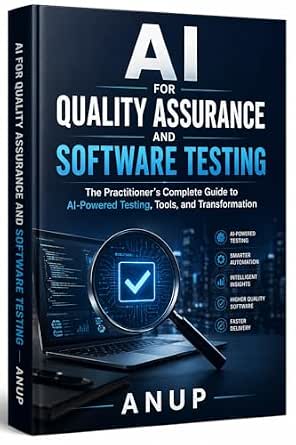 | Best for AI Testing Strategy | Format: Book | Primary subject: AI for quality assurance and software testing | Approach: Practitioner’s guide | VIEW LATEST PRICE | See Our Full Breakdown |
| Modern QA Automation Architecture: Reliable Compliant Test Systems in Healthcare |  | Best for Healthcare QA Architecture | Format: Book | Industry: Healthcare | Primary focus: QA automation architecture | VIEW LATEST PRICE | See Our Full Breakdown |
| Python API Automation Testing: Requests, PyTest & AI for Real-World Projects (QA Testing Book 3) |  | Best for Python API Automation | Format: Book | Programming language: Python | Testing focus: API automation testing | VIEW LATEST PRICE | See Our Full Breakdown |
| AI-Assisted QA and Software Testing with Claude Code |  | Best for Claude Code Workflows | Format: Book | Tool: Claude Code | Approach: AI-assisted QA and software testing | VIEW LATEST PRICE | See Our Full Breakdown |
| Generative AI for Software Testing: Improve QA with AI-Powered Automation |  | Best for Exploring Generative AI in QA | ASIN: B0G1HSQZYX | Format: Not specified in supplied product data | Subject: Generative AI for software testing | VIEW LATEST PRICE | See Our Full Breakdown |
| Quality Assurance: From Manual Testing to Automation |  | Best for Manual-to-Automation Orientation | ASIN: B0HKFXR6TY | Title-stated focus: Progression from manual testing to automation | Format: Not specified in supplied product data | VIEW LATEST PRICE | See Our Full Breakdown |
| Ultimate Web Automation Testing with Cypress: Master End-to-End Web Application Testing |  | Best for Cypress-Focused Web Testing | ASIN: B0CPYRLYXT | Language: English | Topic: Cypress end-to-end web application testing | VIEW LATEST PRICE | See Our Full Breakdown |
| Hands-On Automated Testing with Playwright |  | Best for Practical Playwright Testing | ASIN: 1806106477 | Framework: Microsoft Playwright | Focus: Automated testing for modern web applications | VIEW LATEST PRICE | See Our Full Breakdown |
| AI Testing with Python: Build Intelligent Test Automation Using Selenium, APIs, PyTest, LLMs & AI-Powered Tools |  | Best for Python-Based AI Test Automation | ASIN: B0H8CT7GW4 | Language: English | Programming language: Python | VIEW LATEST PRICE | See Our Full Breakdown |
| QA Testing Book: A Middle-Level Guide to Using Automation Tools for Efficient QA |  | Best for Mid-Level QA Practitioners | Format: Book | Subject: QA testing and automation tools | Intended level: Middle-level | VIEW LATEST PRICE | See Our Full Breakdown |
| QA automation testing tool | Format |
|---|---|
| All You Need to Know About Sof | Book |
| AI for Quality Assurance and S | Book |
| Modern QA Automation Architect | Book |
| Python API Automation Testing: | Book |
| AI-Assisted QA and Software Te | Book |
| Generative AI for Software Tes | Not specified in supplied product data |
| Quality Assurance: From Manual | Not specified in supplied product data |
| Ultimate Web Automation Testin | Not specified in supplied product data |
| Hands-On Automated Testing wit | — |
| AI Testing with Python: Build | — |
| QA Testing Book: A Middle-Leve | Book |
More Details on Our Top Picks
All You Need to Know About Software Testing: From Beginner to Job-Ready QA Engineer
This is the broadest starting point in this group for readers who want to connect core QA concepts with automation. Its stated coverage spans manual testing, APIs, Selenium, Playwright, CI/CD, and AI-assisted QA, giving beginners a map of several paths into modern testing. Compared with Python API Automation Testing, it offers wider coverage but less emphasis on one hands-on programming stack. It also reaches beyond AI workflows covered by AI-Assisted QA and Software Testing with Claude Code, though the available description does not establish how much practical depth it gives each subject. The tradeoff is breadth: readers seeking detailed healthcare architecture or a focused API project guide may need a more specialized book. This pick makes the most sense for learners building a first study plan toward QA work.
Pros:- Connects manual testing with automated QA
- Names Selenium and Playwright as automation topics
- Includes API testing and CI/CD in the stated scope
- Also addresses AI-assisted QA
Cons:- Broad coverage may leave less room for detailed exercises in each topic
- The available product details do not specify project depth or framework versions
Best for: New QA learners who want an overview of manual testing, automation, APIs, and delivery workflows before choosing a specialty
Not ideal for: Experienced automation engineers seeking deep implementation detail in one framework or industry
- Format:Book
- Topics:Manual testing, automation, APIs, Selenium, Playwright, CI/CD, AI-assisted QA
- Intended audience:Beginner to job-ready QA engineer
- Automation frameworks named:Selenium and Playwright
- Testing scope:Manual and automated testing
- Delivery workflow topic:CI/CD
Our verdict“Choose this as a wide-ranging first guide if you want to survey QA skills before committing to a specific automation stack.”
AI for Quality Assurance and Software Testing: A Practitioner’s Guide to AI-Powered Testing
This guide centers AI as the testing theme, making it a distinct option for QA practitioners exploring how AI may change their tools and workflows. The description points to AI-powered testing tools and transformation, while All You Need to Know About Software Testing treats AI as one subject among several. That narrower lens could help readers frame an AI initiative without first working through a broad beginner curriculum. The available details, though, do not name specific frameworks, exercises, or implementation examples, so I would not treat it as a substitute for a hands-on guide such as Python API Automation Testing. Its tradeoff is focus: relevant for evaluating AI’s role in QA, but uncertain as a practical build manual. It suits practitioners looking for a dedicated conceptual guide to AI-powered testing.
Pros:- Keeps AI-powered testing at the center of the subject
- Targets practitioner concerns rather than only introductory QA topics
- Addresses AI tools and transformation in software testing
Cons:- The supplied product details do not identify specific tools or frameworks
- No project examples or hands-on exercises are established by the available description
Best for: QA leads and practitioners evaluating where AI-powered testing tools may fit into existing testing work
Not ideal for: Readers who need step-by-step code examples, named automation frameworks, or a beginner-to-job-ready curriculum
- Format:Book
- Primary subject:AI for quality assurance and software testing
- Approach:Practitioner’s guide
- Tools focus:AI-powered testing tools
- Stated theme:Testing transformation
- Named frameworks:Not specified in the supplied product details
Our verdict“Pick this if your main question is how AI may shape QA practice and you do not need a verified coding tutorial.”
Modern QA Automation Architecture: Reliable Compliant Test Systems in Healthcare
Healthcare compliance is the defining reason to choose this book. Its focus on reliable test systems, architecture patterns, and regulatory considerations speaks to teams building automation in a sector where test design must account for compliance as well as coverage. Compared with the general survey in All You Need to Know About Software Testing, this guide trades breadth for an industry-specific system design lens. That makes it a more relevant choice for healthcare teams, but a narrower one for general web QA learners. The description also flags a technical level that may challenge beginners. While case studies and practical patterns are listed, the supplied details do not name regulations or tools, so buyers should check whether the book matches their environment. It is best suited to practitioners shaping or reviewing healthcare test architecture.
Pros:- Focuses on healthcare compliance considerations
- Covers architecture patterns for test systems
- Emphasizes reliability in automated testing
- Description indicates practical examples and case studies
Cons:- Healthcare focus limits its fit for teams in other sectors
- Technical architecture content may be difficult for beginners
- The supplied details do not identify specific regulations or tooling
Best for: QA architects, engineering leads, and compliance-minded testers building automated test systems for healthcare software
Not ideal for: Beginners seeking an introductory testing course or teams working outside healthcare who want broadly transferable examples
- Format:Book
- Industry:Healthcare
- Primary focus:QA automation architecture
- System goals:Reliable and compliant test systems
- Coverage:Best practices, system design, and regulatory considerations
- Examples:Practical architecture patterns and case studies
Our verdict“Choose this for healthcare-specific test architecture guidance, especially if your team already understands QA fundamentals.”
Python API Automation Testing: Requests, PyTest & AI for Real-World Projects (QA Testing Book 3)
This is the most focused coding option in the batch: its title names Python, Requests, and PyTest for API test automation. That specificity gives it a clearer fit than All You Need to Know About Software Testing for readers who have already chosen a Python API testing path and want to work through project-oriented material. It also differs from AI for Quality Assurance and Software Testing, whose supplied description centers AI tools and transformation without naming a programming stack. The title mentions AI and real-world projects, but the available description does not explain their depth or provide an outline, so buyers should keep expectations anchored to the named API tools. Its narrower scope is a real tradeoff: useful for API automation study, less suited to someone seeking browser testing or broad QA foundations.
Pros:- Targets API test automation with Python
- Names Requests and PyTest, giving buyers a concrete tool focus
- Title signals project-oriented material
- Title includes AI alongside API automation
Cons:- Narrower than a broad QA foundation guide
- The supplied description does not detail projects or the AI material
- No browser automation framework is identified
Best for: Python developers or QA testers ready to practice API automation with Requests and PyTest
Not ideal for: Beginners who need a broad QA introduction, or testers focused on browser end-to-end automation rather than APIs
- Format:Book
- Programming language:Python
- Testing focus:API automation testing
- Named HTTP library:Requests
- Named test framework:PyTest
- Additional title topics:AI and real-world projects
- Series label:QA Testing Book 3
Our verdict“Choose this if Python API testing is your immediate goal and you are comfortable with a focused book whose detailed outline is not provided.”
AI-Assisted QA and Software Testing with Claude Code
Claude Code gives this guide its specific angle: using an agentic coding assistant to automate unit, integration, and end-to-end testing workflows. That makes it more directly workflow-oriented than AI for Quality Assurance and Software Testing, whose supplied details do not name a particular assistant or test level. Compared with Python API Automation Testing, it spans multiple test layers but is tied to a named AI coding tool rather than a particular API stack. The tradeoff is that the available description does not say how the workflows handle review, debugging, or framework choice, so buyers should not assume a turnkey test suite. This pick makes sense for developers and QA engineers who already use Claude Code and want to explore its role across the testing process.
Pros:- Focuses on a named agentic coding assistant
- Covers unit, integration, and end-to-end testing
- Centers on automating QA workflows
- Connects AI assistance to multiple testing levels
Cons:- Its usefulness depends on interest in Claude Code
- The supplied details do not name testing frameworks or provide workflow examples
- Tool-specific focus may age as the assistant changes
Best for: Development teams using Claude Code that want guidance on applying it across unit, integration, and end-to-end testing
Not ideal for: Readers who do not use Claude Code or who need a tool-neutral, framework-specific automation manual
- Format:Book
- Tool:Claude Code
- Approach:AI-assisted QA and software testing
- Testing levels:Unit, integration, and end-to-end
- Workflow focus:Automating testing workflows
- Assistant type:Agentic coding assistant
Our verdict“Pick this if Claude Code is already part of your development workflow and you want to apply it across several test layers.”
Generative AI for Software Testing: Improve QA with AI-Powered Automation
Generative AI in software testing is the central draw here: the title frames the book around applying AI to QA automation rather than teaching one established framework. That makes it a different starting point from Hands-On Automated Testing with Playwright, which is explicitly focused on a particular web testing tool. The limitation is that the supplied information does not describe the chapters, examples, technical level, or even the format, so I can’t judge how much practical guidance it offers. Buyers interested in AI-assisted testing may find the topic relevant, but should not assume it includes implementation steps or code samples. Compared with AI Testing with Python, this book’s scope is less clearly defined; the Python guide names its tools and techniques, while this title leaves its coverage open.
Pros:- Centers on generative AI as applied to software testing
- Connects AI use with QA automation in its stated subject
- Offers a distinct AI-focused angle alongside framework-specific guides
Cons:- The supplied data does not describe chapters, examples, or technical depth
- Format and intended experience level are not specified
- The title alone does not confirm practical implementation guidance
Best for: QA professionals and software testers who want a book specifically centered on generative AI’s role in automated testing and are comfortable checking the contents before buying.
Not ideal for: Readers seeking a confirmed hands-on guide with named frameworks, programming examples, or a clearly stated beginner-to-advanced path; the supplied details do not establish that coverage.
- ASIN:B0G1HSQZYX
- Format:Not specified in supplied product data
- Subject:Generative AI for software testing
- Application:AI-powered QA automation
- Frameworks:Not specified in supplied product data
- Programming language:Not specified in supplied product data
Our verdict“Choose this if generative AI in QA is your main interest, but prefer a more clearly scoped guide if you need confirmed tools and exercises.”
Quality Assurance: From Manual Testing to Automation
The title points to a useful bridge: moving from manual QA toward automation, rather than starting with a named framework like Ultimate Web Automation Testing with Cypress. That broad positioning may suit testers deciding how to expand their existing workflow before committing to a specific tool. However, the supplied data gives no description, language, format, examples, or stated audience, so the title is the only basis for judging its coverage. I can’t tell whether it teaches coding, compares automation tools, or focuses on process. Compared with Hands-On Automated Testing with Playwright, which explicitly addresses modern web application tests, this book’s destination is less precise. Its appeal is the apparent progression from manual work, but buyers who need confirmed technical instruction should verify the contents first.
Pros:- Its title directly addresses the shift from manual testing to automation
- May suit testers who want a broad orientation before choosing a framework
- Provides a distinct entry point from the Cypress- and Playwright-specific books
Cons:- No description confirms the topics or depth of coverage
- Programming language, frameworks, and practical exercises are not specified
- Format and intended reader experience level are not provided
Best for: Manual QA testers looking for a book whose stated theme is progression toward automation, especially those who have not yet chosen a framework.
Not ideal for: Readers who need a verified tutorial for a specific tool, programming language, or web testing workflow; the supplied product information does not confirm any of those details.
- ASIN:B0HKFXR6TY
- Title-stated focus:Progression from manual testing to automation
- Format:Not specified in supplied product data
- Language:Not specified in supplied product data
- Frameworks:Not specified in supplied product data
- Programming language:Not specified in supplied product data
Our verdict“Consider it for a manual-to-automation overview, but choose a named-framework guide if you need confirmed technical instruction.”
Ultimate Web Automation Testing with Cypress: Master End-to-End Web Application Testing
Cypress end-to-end testing gives this book a narrower, clearer purpose than the general automation framing of Quality Assurance: From Manual Testing to Automation. It is aimed at readers who already want to work on web application tests with Cypress, rather than compare every QA approach. That focus can help buyers target a specific testing workflow, while the title’s emphasis on end-to-end coverage signals attention to tests that exercise application behavior across user journeys. The supplied data does not reveal the book’s examples, prerequisites, or Cypress version, so I can’t judge how current or hands-on its instruction is. Compared with Hands-On Automated Testing with Playwright, this is the Cypress alternative; the better fit depends on the framework a team has selected, not on any confirmed difference in teaching depth.
Pros:- Clearly focuses on Cypress rather than presenting an unspecified toolset
- Targets end-to-end testing for web applications
- Offers a framework-specific alternative to the Playwright guide
Cons:- The supplied data does not describe chapters, code samples, or prerequisites
- Cypress version and compatibility details are not provided
- Its focused scope may not help readers comparing multiple automation frameworks
Best for: English-language readers who have selected Cypress and want a book focused on end-to-end testing for web applications.
Not ideal for: Teams standardized on Playwright or testers seeking a broad survey of QA automation tools; this book’s stated focus is Cypress web testing.
- ASIN:B0CPYRLYXT
- Language:English
- Topic:Cypress end-to-end web application testing
- Testing scope:Web application end-to-end testing
- Framework:Cypress
- Format:Not specified in supplied product data
Our verdict“Pick this if Cypress is already your intended framework; choose the Playwright guide if your project uses Microsoft’s framework instead.”
Hands-On Automated Testing with Playwright
Playwright-focused, hands-on guidance makes this the clearest choice in the group for readers building automated tests for modern web applications. Its stated aim—fast, reliable, scalable tests—connects the framework to practical outcomes: quicker feedback, fewer fragile checks, and room to grow test coverage. That scope is more concrete than Quality Assurance: From Manual Testing to Automation, whose supplied details do not name tools or technical content. It also gives buyers a direct alternative to Ultimate Web Automation Testing with Cypress; the deciding factor is whether the project uses Playwright or Cypress. The product data does not specify language, chapter structure, or prerequisites, so readers should check those details if they need a particular learning path. This is a focused web testing guide, not a general survey of QA automation.
Pros:- Uses Microsoft Playwright as its clearly stated framework
- Focuses on automated testing for modern web applications
- Targets speed, reliability, and scalability in test design
- Provides a more specifically described technical focus than the broad QA titles
Cons:- The supplied data does not identify its programming language or prerequisites
- No chapter list or example details are provided
- Its framework-specific scope may not suit Cypress-based teams
Best for: Developers and QA engineers working on modern web applications who want practical guidance centered on Microsoft Playwright and scalable automated tests.
Not ideal for: Readers seeking a multi-framework overview, a manual-testing primer, or a guide confirmed to cover AI, APIs, or a particular programming language.
- ASIN:1806106477
- Framework:Microsoft Playwright
- Focus:Automated testing for modern web applications
- Stated test qualities:Fast, reliable, and scalable
- Testing scope:Web application automation
- Language:Not specified in supplied product data
Our verdict“Choose this for a Playwright-centered web testing path; select the Cypress book if that is the framework your project uses.”
AI Testing with Python: Build Intelligent Test Automation Using Selenium, APIs, PyTest, LLMs & AI-Powered Tools
Python across UI, API, and AI-assisted testing gives this guide the broadest named technical toolkit in this batch. It combines Selenium, API testing, PyTest, LLMs, and AI-powered tools, so readers can connect several parts of a QA workflow rather than focus only on browser end-to-end tests as in Hands-On Automated Testing with Playwright. That breadth is useful for developers and testers modernizing an existing Python-based setup, but it also raises the learning bar: the supplied details warn that beginners without Python or automation experience may find it too advanced. Compared with Generative AI for Software Testing, this title identifies specific tools and practical Python examples, making its scope easier to judge. The tradeoff is that readers seeking a gentle introduction or a single-framework course may find the range demanding.
Pros:- Covers Python-based Selenium UI testing, API testing, and PyTest
- Includes LLM and AI-powered testing methods in its stated scope
- Offers practical Python code examples across several testing areas
- Addresses modern automation workflows beyond browser-only testing
Cons:- May be too advanced for readers without Python or automation foundations
- Its broad coverage may feel less focused than a Playwright- or Cypress-specific guide
- The supplied data does not specify chapter structure or the depth of each topic
Best for: Developers and experienced QA testers with Python fundamentals who want to combine Selenium, API testing, PyTest, and AI tools in automation workflows.
Not ideal for: New testers without Python or test automation experience, or readers who want a narrow Playwright- or Cypress-only tutorial.
- ASIN:B0H8CT7GW4
- Language:English
- Programming language:Python
- UI testing tool:Selenium
- Test framework:PyTest
- Additional testing scope:API testing
- AI topics:Large language models and AI-powered tools
Our verdict“Choose this if you already know Python and want one guide spanning UI, API, and AI-assisted automation; beginners should start with a more introductory resource.”
QA Testing Book: A Middle-Level Guide to Using Automation Tools for Efficient QA
Aimed at readers past the basics, this book frames automation tools around making QA work more efficient. That makes it a plausible fit for testers who already understand quality assurance and want a guide focused on applying automation rather than starting with general testing concepts. Unlike Hands-On Automated Testing with Playwright, whose title points to a specific framework, this book does not identify a language, tool, or project type. That broader framing may suit readers choosing among approaches, but it gives buyers less evidence about the techniques and exercises inside. The available description also does not specify the book’s length, publication format, or supporting materials. I would choose it for its middle-level focus, not for a promised technical depth that the listing does not establish.
Pros:- Explicitly targets a middle-level audience rather than presenting itself as a beginner guide.
- Focuses on applying automation tools to improve QA efficiency.
- Broad tool-oriented framing may interest readers who have not settled on one framework.
Cons:- The available description does not name any automation frameworks, languages, or testing platforms.
- No details are provided about practical exercises, examples, or accompanying resources.
- The broad scope gives less concrete technical direction than framework-specific books such as Hands-On Automated Testing with Playwright.
Best for: QA practitioners with foundational testing knowledge who want a general, intermediate-level guide to using automation tools more efficiently.
Not ideal for: Beginners seeking a step-by-step introduction, or experienced engineers looking for a clearly specified framework, language, and hands-on project curriculum.
- Format:Book
- Subject:QA testing and automation tools
- Intended level:Middle-level
- Stated focus:Using automation tools for efficient quality assurance
- Specific framework:Not specified in the provided product details
- Programming language:Not specified in the provided product details
Our verdict“Choose this guide if you already know QA fundamentals and want a general automation-focused read; choose a framework-specific title if you need concrete implementation guidance.”

How We Picked
I compared the 11 listed books and guides by how directly each supports a buyer’s QA automation goal: learning core testing, adopting a framework, automating APIs, applying AI, or working in a regulated field. I also considered the apparent skill level, specificity of the stated subject, and how clearly a reader could match the resource to an existing stack. These are books and learning resources rather than software products, so the comparison focuses on instructional fit and topic coverage rather than runtime performance or product support.
The ranking gives the top position to the resource with the broadest practical fit for a common automation task, then places more specialized options where their focus benefits a defined audience. Playwright leads for general web end-to-end learning; Python API Automation Testing ranks strongly for API-focused learners; broader introductory titles suit readers who need foundations first. AI, Cypress, Selenium, and healthcare titles serve narrower goals, while middle-level and general QA books can bridge skills but may offer less framework specificity. The titles alone do not establish teaching quality, edition currency, or depth, so readers should check the contents and publication details before choosing.
| QA automation testing tool | Format |
|---|---|
| All You Need to Know About Sof | Book |
| AI for Quality Assurance and S | Book |
| Modern QA Automation Architect | Book |
| Python API Automation Testing: | Book |
| AI-Assisted QA and Software Te | Book |
| Generative AI for Software Tes | Not specified in supplied product data |
| Quality Assurance: From Manual | Not specified in supplied product data |
| Ultimate Web Automation Testin | Not specified in supplied product data |
| Hands-On Automated Testing wit | — |
| AI Testing with Python: Build | — |
| QA Testing Book: A Middle-Leve | Book |
Factors to Consider When Choosing QA Automation Testing Tools
Before choosing a QA automation learning resource, match its subject to the work you expect to do. A familiar framework name can be tempting, but your current skill level, test targets, and team constraints matter just as much.
Start With the Testing Target
Decide whether your immediate work involves web interfaces, APIs, or broader quality practices. Browser automation and API automation have different setup needs and failure patterns, so a guide aimed at one will not automatically prepare you for the other. Teams that test several layers may need more than one resource over time. A common mistake is choosing a book because it names a popular framework while the actual project’s bottleneck is test data, service contracts, or test design. Map one concrete task you need to perform to the book’s stated scope. If that task is not prominent in the contents, choose a closer match.
Match the Framework to Your Existing Stack
Learning a framework has more value when it fits the languages and tools your team already maintains. Check whether the examples use your project’s language and whether the framework supports your browser, CI environment, and reporting needs. Switching frameworks can bring cleaner workflows, but it also creates migration and maintenance work. Avoid treating a framework tutorial as proof that the framework is right for production. First list the tests you need to run, the environments they must cover, and who will maintain them. Then choose a learning resource that helps answer those practical questions.
Choose a Starting Level You Can Build On
Newcomers often get more from testing fundamentals before moving into a framework’s syntax. If you already understand test cases, assertions, and defect reporting, a specialized Playwright, Cypress, or PyTest guide may use your study time better. A beginner resource can provide useful context but may spend less time on advanced automation patterns. Conversely, jumping straight into framework code can leave gaps in test design and debugging. Look at the assumed background and sample projects before buying. Choose the level that lets you complete a useful exercise without skipping the underlying ideas.
Treat AI Coverage as a Specific Skill
AI in testing can mean generating test cases, assisting with code, analyzing failures, or building tests around language models. Those are different workflows with different review and reliability needs. A title mentioning AI does not tell you which workflow receives the most attention, so inspect its contents for examples that match your intended use. Keep human review in the process, especially for generated assertions and test data. Do not adopt AI automation simply to reduce typing if the team cannot validate its output. Pick a resource that addresses both where AI helps and where deterministic tests remain necessary.
Account for Compliance and Maintenance
Regulated teams need to think beyond whether a test passes: traceability, controlled data, reproducibility, and audit evidence can shape the whole test system. A healthcare-specific architecture guide may be more relevant to those constraints than a general framework tutorial. For other teams, maintenance deserves equal attention: brittle selectors, flaky tests, and slow suites can erase the benefit of automation. Ask whether the learning material discusses structure and upkeep, not only writing a first test. Set aside time for a small pilot that exercises the same controls and CI path as the real project. That reveals practical gaps a book’s title cannot.
Compare Learning Value With Team Needs
When selecting between a broad guide and a narrowly focused one, weigh how soon you can apply the material and how many people will use it. A broad foundation may help a new QA hire, while a focused API or browser guide can address a team’s immediate delivery bottleneck. A more specialized resource is only useful if its examples align with your tools and project constraints. Check the table of contents, sample pages, publication date, and any companion code before committing. Teams can reduce risk by agreeing on a small learning outcome, such as automating one stable workflow. That keeps the choice grounded in a result rather than a long list of features.
Frequently Asked Questions
Should I learn Playwright or Cypress first for web testing?
Start with the framework your team already uses, since shared conventions and code review will help you apply what you learn. If you are choosing for a new project, compare language fit, browser coverage, debugging workflow, and how tests will run in CI. The Playwright guide in this roundup is a strong dedicated option for end-to-end web learning, while the Cypress title is suited to readers specifically targeting Cypress. Check each book’s examples and edition details before deciding. A small trial on one representative user flow can reveal more than framework popularity alone.
Can I use a beginner QA book to prepare for an automation role?
A foundations book can help you learn test design, terminology, and the path from manual testing toward automation. It is unlikely to replace hands-on practice with a language, a framework, version control, and CI. Pair foundational reading with a focused guide such as Playwright or Python API Automation Testing once you know which work you want to pursue. Build a small project that includes meaningful assertions and clear failure output. That gives you practical evidence of skill beyond completing a book.
Which resource fits a team focused on API test automation?
Python API Automation Testing is the most directly aligned title here because it names Requests and PyTest alongside real-world API projects. Before choosing it, confirm that Python fits your team’s stack and that the examples cover the authentication, data setup, and response checks your services require. A web automation guide may teach useful testing habits, but it will not provide the same API-centered emphasis. If your team also needs browser coverage, treat API and UI automation as separate learning goals. A short pilot against a non-production service can help identify missing topics.
Are AI-focused testing books a good starting point for automation?
They can help if your goal is specifically to apply AI to QA workflows, but they may not be the clearest first step for learning test fundamentals. The AI-focused titles in this roundup differ by their stated emphasis, including Claude Code, generative AI, and Python-based tooling. Read the contents to see whether they teach foundational automation or assume you already know it. AI-generated tests still need review for correctness, meaningful assertions, and sensitive data handling. Readers new to QA may want to build core skills first, then add AI techniques to a defined task.
What should a healthcare QA team check before choosing an automation guide?
Look for material that addresses compliance, test data controls, traceability, and repeatable evidence, since these needs can influence architecture as much as framework choice. Modern QA Automation Architecture is the title in this list specifically focused on compliant healthcare test systems. Confirm that its scope matches your organization’s regulatory and technical environment; a title alone cannot establish that fit. Also review how your team handles access, audit records, and test data in its own pipeline. General automation references can supplement the specialized guidance for framework-specific techniques.
Conclusion
For the best overall fit, I recommend Hands-On Automated Testing with Playwright for readers focused on modern web end-to-end testing. For value through a direct, practical focus, choose Python API Automation Testing if your priority is API coverage and Python suits your stack. Beginners should start with All You Need to Know About Software Testing, or choose Quality Assurance: From Manual Testing to Automation when moving from manual work is the main goal. For a premium-style specialized learning choice, Modern QA Automation Architecture best matches healthcare teams facing compliance demands; I would not treat that specialization as a general-purpose framework course. Pick the Cypress, Selenium, or AI-focused titles when their specific tool or workflow matches your project, and use the middle-level QA guide when you already have basic testing experience and need a bridge into automation.
Halloween Picks
halloween
As an affiliate, we earn on qualifying purchases.