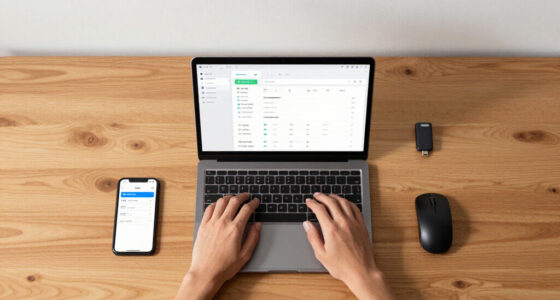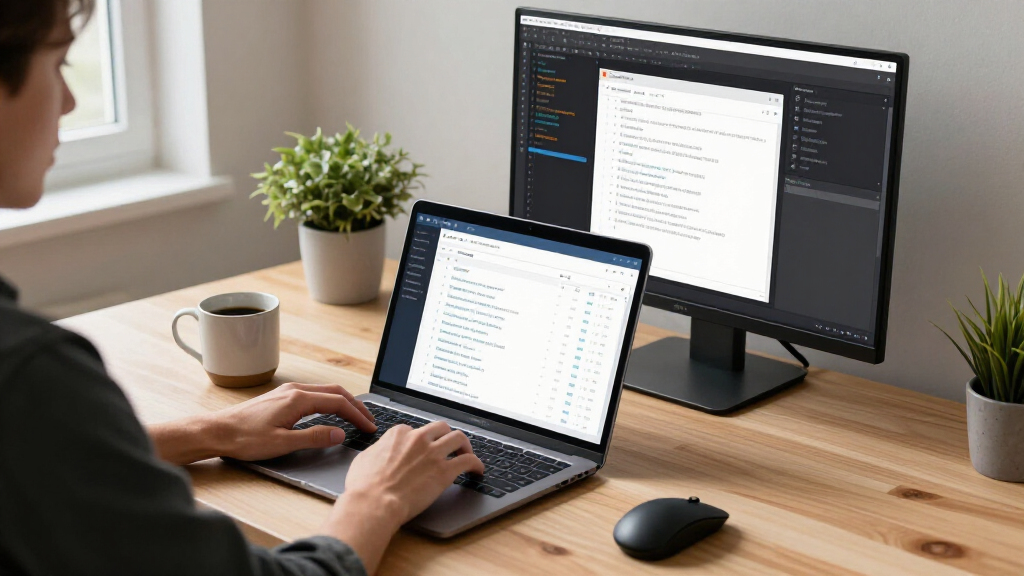

This checklist is for software developers, QA professionals, and technical teams putting together a practical workspace for coding, testing, and collaboration. The picks cover everyday input, desk connectivity, portable storage, remote testing, screen lighting, and wired-network checks.

Get monitors, keyboards and dev gear delivered free — and shop member deals
- Fast, free delivery on millions of items
- Access to Prime Big Deal Days deals on October 6–7
- Prime Video, Amazon Music and more included
The sections are organized by the role each tool plays in a development or QA setup. Each one explains why the category matters, what to check before choosing, and where the named pick may fit. Product names are provided as given; verify the exact model and specifications before buying.
Use the checklist to identify gaps in your own workflow rather than treating every item as essential. Check device compatibility, workspace constraints, and the tasks you actually perform first, then compare the listed pick with those needs.
Mechanical Keyboard
A keyboard is used throughout coding, documentation, test execution, and communication, so comfort and a dependable layout matter over long sessions. The Logitech MX Mechanical Wireless Illuminated Mechanical Keyboard is the named pick for this slot. Before selecting it, consider the key layout, the feel and sound of the keys, and whether its wireless and illuminated features suit your work environment. Preferences vary, so the product name alone cannot determine whether its typing feel is right for you.
A common buying mistake is choosing a keyboard based only on appearance or assuming every layout will work equally well. Check that the layout matches your operating-system shortcuts and that the keyboard fits your desk and typing habits. If you switch between machines, confirm how the connection options work with the devices you use; if you work in a shared space, consider whether the key sound is suitable. Test the layout and key feel where possible, and verify the exact model’s features before purchase. Prioritize a comfortable fit for your hands and a setup that supports your daily workflow, rather than features you are unlikely to use.
What to look for:
- A layout that matches your operating-system shortcuts and preferred key arrangement
- A key feel and sound that suit your typing habits and workspace
- Wireless connection compatibility with your computers
- Illumination that is useful for your desk and lighting conditions
- A size and layout that leave adequate room for your mouse and other tools
Logitech MX Mechanical Wireless Illuminated Mechanical Keyboard
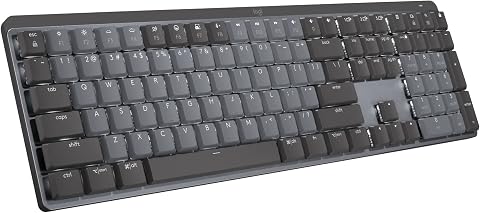
The Logitech MX Mechanical is a wireless mechanical keyboard featuring clicky switches with tactile feedback, low-profile keys for ergonomic comfort, and smart backlit illumination that adjusts automatically. It supports multi-device pairing via Bluetooth or Logi Bolt, offers customizable keys and lighting effects, and has a long-lasting rechargeable battery.
Pros:
- Tactile, clicky mechanical switches for satisfying feedback
- Smart auto-adjusting backlit keys for visibility in any lighting
- Supports multi-device pairing with easy switching
- Long battery life with quick USB-C charging
Cons:
- May be noisy due to clicky switches
- Premium price point might be high for some users
Best for: Developers who want a wireless, illuminated mechanical keyboard in their work setup
Not ideal for: Anyone who prefers a different key feel, layout, or wired-only setup
Bottom line: Choose the Logitech MX Mechanical only after confirming its layout, connection options, and key feel suit your daily typing.
USB-C Docking Station
A docking station can simplify a desk by bringing display and peripheral connections together, especially when a laptop is the center of a development or test setup. The named pick is the Plugable 13-in-1 USB-C Docking Station with Triple 4K Display Support. Its product name highlights a broad connection count and triple-display support, but those details do not guarantee compatibility with every computer or configuration. Check the dock’s exact requirements alongside your host device’s USB-C capabilities.
A frequent mistake is assuming that a USB-C port automatically supports every display or dock feature. Verify the computer’s supported display outputs, operating-system compatibility, and the dock’s connection requirements. Also map your actual devices—monitors, network connection, storage, and other peripherals—to the dock’s available ports before buying. Match the host and displays first, including the number and type of screens you intend to use. Consider desk placement and cable reach as well, so the dock can connect neatly without putting strain on cables. Confirm the exact model details rather than relying only on the product title.
What to look for:
- Compatibility with the computer’s USB-C port and operating system
- Display support that matches your computer, monitors, and intended setup
- Ports for the peripherals you actually connect
- Cable reach and dock placement that work with your desk
- The exact model’s requirements for multi-display use
Plugable 13-in-1 USB-C Docking Station with Triple 4K Display Support and 100W C

Connect up to three 4K 60Hz displays, USB accessories, Ethernet, audio, and SD cards through one USB-C connection. The dock provides up to 100W laptop charging and a front USB-C port with up to 20W accessory charging.
Pros:
- Supports up to three 4K 60Hz displays
- Provides up to 100W laptop charging
- Offers broad connectivity through one USB-C connection
- Includes lifetime customer support
Cons:
- macOS requires DisplayLink drivers and Screen Recording permission
- Does not support HDCP-protected streaming content
Best for: Laptop-based teams checking whether they can consolidate compatible desk connections
Not ideal for: Setups whose host computer or displays do not support the dock’s required connections
Bottom line: Confirm the computer, operating system, and monitor configuration before choosing this 13-in-1 dock.
Portable SSD
Portable storage can help QA and development teams move test files, project materials, and other work between compatible devices. The listed pick is the Samsung T9 Portable SSD 4TB, USB 3.2 Gen 2×2 External Solid State Driv. Treat the product name as a starting point, not a substitute for checking the exact listing and connection requirements. The right drive depends on the amount and type of data you handle, how often you transfer it, and which devices need to access it.
One common mistake is focusing on the capacity while overlooking connection compatibility or workflow needs. Check the available ports on every intended computer, along with operating-system and file-system requirements for your use case. If the drive will travel between workstations, consider how it will be stored and protected during transport. For shared test data, also make sure your team has a clear process for versioning and backups; a portable drive should not be your only copy of important work. Confirm the interface and capacity against actual requirements, and verify the complete product name and specifications before purchasing.
What to look for:
- Capacity that fits the files and projects you plan to carry
- Connection compatibility with the computers you will use
- Operating-system and file-system suitability for your workflow
- A practical way to protect and carry the drive
- A separate backup plan for important project and test data
Samsung T9 Portable SSD 4TB, USB 3.2 Gen 2×2 External Solid State Drive
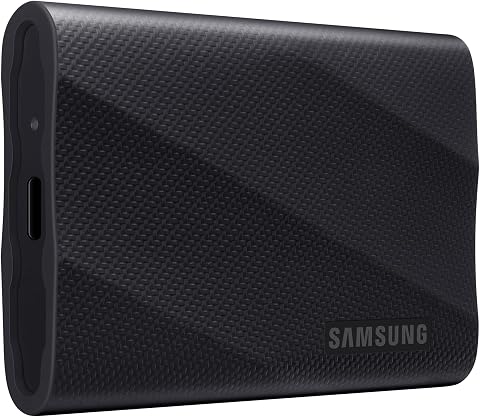
The Samsung T9 is a 4TB portable solid state drive with read and write speeds of up to 2,000MB/s and thermal management for sustained use. It works with desktops, cameras, gaming consoles, and iPhone 15 Pro for ProRes 4K video recording, and supports drive monitoring, firmware updates, and encryption through Magician Software.
Pros:
- High read and write speeds of up to 2,000MB/s
- Thermal management designed for sustained workloads
- Broad device compatibility, including iPhone 15 Pro
- Magician Software offers firmware updates, encryption, and drive health monitoring
Cons:
- Maximum speeds may depend on the connected device and workload
- The included SSD cable is recommended for iPhone video recording
Best for: Teams that need a portable drive and have verified their device connections
Not ideal for: Users who need built-in backup practices or compatibility without checking their devices
Bottom line: Choose the Samsung T9 only after confirming the full model, capacity, interface, and backup plan.
Webcam for Remote Testing
Remote testing can involve showing a physical device, a work area, or a hands-on test process to colleagues. The named option is the INSWAN INS-1 Classic USB Document Camera/Webcam, 8MP, Built-in LED, Mi. Its product name presents it as both a document camera and webcam, with a built-in LED, but the truncated ending means the exact listing should be checked before purchase. Consider whether your work calls for a conventional face-facing camera, an overhead view, or both.
A common mistake is buying a camera without planning its position and field of view for the task. Check how it connects to your computer and whether the camera can be arranged to show the objects or documents you need to discuss. Confirm that the intended video-conferencing or testing software recognizes it, and check what mounting or desk space the setup requires. Built-in lighting may be relevant when showing physical items, but it does not replace checking your room lighting and camera placement. Match the camera view to the test, then verify the exact model, included components, and compatibility for your workflow.
What to look for:
- A camera view suited to showing people, documents, devices, or test procedures
- USB and software compatibility with the computers used for remote sessions
- A workable camera position and enough space for its setup
- Lighting that suits the objects and environment you need to show
- The complete product model and included components in the listing
INSWAN INS-1 Classic USB Document Camera/Webcam, 8MP, Built-in LED, Mic

The INSWAN INS-1 is a compact, multi-joint USB document camera and webcam featuring an 8MP Sony sensor for high-definition images and smooth 30 fps video streaming. It includes LED lighting, autofocus, macro capability, and bundled software for image editing and recording, making it ideal for presentations and conferencing.
Pros:
- High-definition 8MP camera with clear, lag-free video streaming
- Flexible multi-joint design for adjustable viewing angles
- Includes useful features like LED lighting, autofocus, and macro mode
- Compatible with multiple operating systems with plug-and-play setup
Cons:
- Requires compatible devices with USB-C or USB-A ports for full functionality
- Some users may find the software features complex to navigate
- Limited to 30 fps video streaming, which may not suit high-speed recording needs
Best for: Remote testers who need to show physical documents or objects on camera
Not ideal for: Users who only need a standard webcam and do not need a document-camera view
Bottom line: Verify the complete INS-1 listing and camera setup before relying on it for remote testing.
Monitor Light Bar
Screen lighting is a workspace choice that may matter during long sessions of coding, reviewing, or testing. The named pick is the BenQ ScreenBar Halo 2 LED Monitor Light Bar. Before choosing a monitor light bar, check whether it can be positioned securely on your particular monitor and whether its lighting approach suits your desk. The product name identifies the pick, but the exact mounting fit and controls should be confirmed from the current model details.
A frequent mistake is assuming that a light bar will fit every screen or provide the right lighting for every room. Check your monitor’s shape and top-edge design, available desk space, and any camera or other equipment that shares that area. Think about where the light falls: the goal is to suit your working surface without creating a distracting reflection on the screen. Check monitor fit and glare before purchase, and consider how you will adjust the light for different tasks and room conditions. If your setup includes multiple screens, confirm which display the bar will mount on and whether the arrangement works for your viewing habits.
What to look for:
- Mounting compatibility with your monitor’s shape and top edge
- Lighting placement that avoids distracting screen reflections
- Enough clearance for cameras and other monitor-mounted equipment
- Controls and adjustments suited to your work habits
- A setup that works with your desk space and room lighting
BenQ ScreenBar Halo 2 LED Monitor Light Bar

This monitor light bar provides adjustable, glare-free front lighting and ambient backlighting to support comfortable screen use. Its wireless controller adjusts brightness, color temperature, and lighting modes, while smart features include ambient light adjustment and automatic monitor-linked operation.
Pros:
- Glare-free front lighting with adjustable ambient backlight
- Wireless controller with display for precise adjustments
- Adjustable brightness and color temperature
- Flicker-free LEDs with CRI > 95
Cons:
- Requires a USB electrical cable for power
Best for: Developers who want to evaluate a monitor-mounted light for their workspace
Not ideal for: Monitor setups where mounting clearance or glare cannot be resolved
Bottom line: Check monitor fit, camera clearance, and screen reflections before selecting the ScreenBar Halo 2.
Network Cable Tester
When a test environment depends on wired network connections, a cable verifier can help teams investigate cable-related questions as part of troubleshooting. The listed pick is the Fluke Networks MicroScanner2 Copper Cable Verifier with Built-In Intel. Because the supplied product name ends mid-phrase, verify the complete model name and the exact functions in the listing. Also consider whether your work involves copper cabling and whether the device’s intended checks align with the network tasks you perform.
A common mistake is treating a cable tester as a universal network diagnostic tool. Identify the cable types and connectors in your environment, then confirm that the device supports the checks your team needs. Think through who will use it, where testing will happen, and what documentation or training may be needed to interpret results. Match the tool to the cable and troubleshooting task rather than relying on the product category alone. Before purchasing, confirm the complete model details, included accessories, and compatibility with your cabling workflow. For broader connectivity issues, establish separate troubleshooting steps rather than assuming a cable verifier will diagnose every cause.
What to look for:
- Support for the copper cable types and connectors in your environment
- Verification functions that match the troubleshooting tasks you perform
- A complete model listing and clear description of included accessories
- A practical plan for how the team will interpret and document results
- Compatibility with your existing cabling workflow and user needs
Fluke Networks MicroScanner2 Copper Cable Verifier with Built-In IntelliTone Ton

The MicroScanner2 Cable Verifier tests copper cables for length, wiremap, cable ID, and faults. It supports troubleshooting for RJ11, RJ45, coax, and network speeds up to 10/100/1000Base-T, including VoIP applications.
Pros:
- Comprehensive cable testing features
- Displays cable length and faults on one screen
- Supports multiple cable types and network speeds
Cons:
- Limited to copper cable verification
- No mention of wireless testing capabilities
Best for: Teams that troubleshoot copper network cabling and have confirmed the required checks
Not ideal for: Users seeking a general-purpose solution for every network problem
Bottom line: Confirm the full MicroScanner2 model and supported cable checks before adding it to your toolkit.
Build in a needs-first order: start with tools that remove a clear workflow obstacle, such as a keyboard that suits daily typing or a dock that matches your laptop and displays. Next consider portable storage and remote-testing equipment if your projects require them. Add a monitor light bar or cable verifier when your workspace or troubleshooting tasks call for one.
You do not need every item to create a useful QA and development setup. Check compatibility, fit, and the exact product details before committing, then add tools as your real work demands. A considered checklist can keep your workspace practical without making it more complicated than it needs to be.
Halloween Picks
halloween
As an affiliate, we earn on qualifying purchases.