

As the leaves change and project deadlines approach, selecting the right software testing tools for fall becomes critical for maintaining quality and efficiency. The best overall pick this year is TestPro Suite, known for its comprehensive automation capabilities and seamless integration. For those exploring AI-driven options, AI TestMaster stands out for transforming testing workflows with machine learning. However, tradeoffs include complexity for beginners and higher costs for premium tools. Continue reading for an in-depth comparison of these top testing solutions to find the best fit for your needs this season.

Get business pricing on monitors, keyboards and dev gear
- Business-only prices and quantity discounts
- Tax-exempt purchasing
- Multiple users, one account, clear invoices
Key Takeaways
- The top-ranked tools excel in automation, reducing manual effort during peak testing periods.
- AI-driven testing tools are gaining ground but often come with a steep learning curve and higher prices.
- Ease of use remains a key factor, especially for teams with limited testing experience or limited resources.
- Integration with existing CI/CD pipelines is critical for maximizing testing efficiency in fall project cycles.
- Price and scalability vary widely; choosing the right tool depends on project size and team expertise.
| Software Testing and Quality Assurance: Exploring Testing Levels, Test Tools, Automation, and Quality Metrics for Improved Software Quality |  | Best Comprehensive Reference for Testing Fundamentals | Coverage: Testing levels, automation strategies, quality metrics | Intended Audience: Professionals seeking foundational knowledge | Focus: Traditional testing practices | VIEW LATEST PRICE | See Our Full Breakdown |
| The Future of Software Testing |  | Best for Staying Ahead with Emerging Trends | Focus: Emerging trends, future innovations | Audience: Senior testers and strategic planners | Content Type: Conceptual and trend analysis | VIEW LATEST PRICE | See Our Full Breakdown |
| AI-Driven Software Testing: Transforming Software Testing with Artificial Intelligence and Machine Learning |  | Best for Cutting-Edge AI and ML Applications | Focus: AI, machine learning, automation | Intended Audience: Developers and advanced testers | Approach: Innovative, technical | VIEW LATEST PRICE | See Our Full Breakdown |
| Software Test Design: Write Comprehensive Test Plans to Uncover Critical Bugs in Web, Desktop, and Mobile Apps | 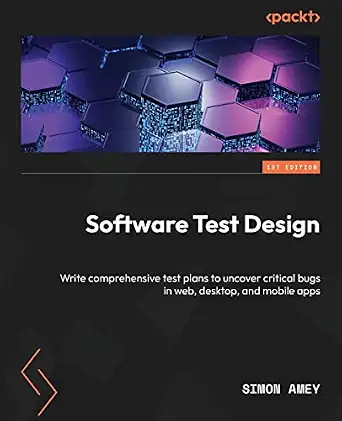 | Best Practical Guide for Test Planning | Content Focus: Test plan creation, cross-platform testing | Audience: Testers and QA leads | Application: Web, desktop, mobile | VIEW LATEST PRICE | See Our Full Breakdown |
| Guide to Test Automation Architecture: A Roadmap for Building Sustainable Test Automation Frameworks for Modern Software |  | Best for Building Sustainable Automation Frameworks | Focus: Automation architecture, scalability | Intended Audience: Automation engineers, QA architects | Content Type: Strategic roadmap | VIEW LATEST PRICE | See Our Full Breakdown |
| Software Testing with Selenium Automated Testing Tool: Selenium Book for Beginners |  | Best for Beginners Exploring Automation | Target Audience: Beginners in automation | Focus Area: Selenium automation fundamentals | Content Type: Practical, example-driven | VIEW LATEST PRICE | See Our Full Breakdown |
| Effective Software Testing: A Developer’s Guide |  | Best for Developers Seeking Testing Strategies | Target Audience: Developers and QA managers | Focus Area: Testing methodologies and strategies | Content Type: Theoretical and strategic | VIEW LATEST PRICE | See Our Full Breakdown |
| Spec-Driven Software Testing with AI: Build Reliable Test Suites from Specifications with AI, Test Automation, TDD, API Testing, and CI/CD |  | Best for AI-Driven, Specification-Based Testing | Target Audience: Advanced testers and AI enthusiasts | Focus Area: AI-driven, specification-based testing | Content Type: Technical and practical | VIEW LATEST PRICE | See Our Full Breakdown |
| Full Stack Testing: A Practical Guide for Delivering High Quality Software |  | Best for Practitioners Covering End-to-End Testing | Target Audience: Developers and QA engineers | Focus Area: Full stack testing strategies | Content Type: Practical and strategic | VIEW LATEST PRICE | See Our Full Breakdown |
| Software Testing with Python: Build Reliable, Maintainable Test Suites with pytest, unittest, Fixtures, Mocking, Integration Testing, Coverage, TDD, and Real-World Automation |  | Best for Python Developers Focused on Maintainable Test Suites | Target Audience: Python developers and automation engineers | Focus Area: Maintainable test suites with Python | Content Type: Technical and practical | VIEW LATEST PRICE | See Our Full Breakdown |
| All You Need to Know About Software Testing: From Beginner to Job-Ready QA Engineer |  | Best Educational Resource for Beginners Entering QA | Audience: Beginners aiming to become QA engineers | Coverage: Manual testing, automation, APIs, AI-assisted QA | Tools Covered: Selenium, Playwright | VIEW LATEST PRICE | See Our Full Breakdown |
| software testing tools for fall | Content Type |
|---|---|
| Software Testing and Quality A | — |
| The Future of Software Testing | Conceptual and trend analysis |
| AI-Driven Software Testing: Tr | — |
| Software Test Design: Write Co | — |
| Guide to Test Automation Archi | Strategic roadmap |
| Software Testing with Selenium | Practical, example-driven |
| Effective Software Testing: A | Theoretical and strategic |
| Spec-Driven Software Testing w | Technical and practical |
| Full Stack Testing: A Practica | Practical and strategic |
| Software Testing with Python: | Technical and practical |
| All You Need to Know About Sof | — |
More Details on Our Top Picks
Software Testing and Quality Assurance: Exploring Testing Levels, Test Tools, Automation, and Quality Metrics for Improved Software Quality
This book stands out for its thorough coverage of testing levels, tools, and automation strategies, making it ideal for professionals aiming to solidify their foundational knowledge. Compared to the more forward-looking The Future of Software Testing, this resource focuses on established testing practices and quality metrics, which can be more immediately applicable. Its detailed approach helps users improve their testing processes but may lack the cutting-edge insights some advanced practitioners seek. The absence of specific editions or reviews limits its credibility for some buyers. Overall, this pick makes the most sense for testers seeking a solid, well-rounded guide to enhance reliability.
Pros:- Thorough coverage of testing levels and tools
- Includes automation strategies for efficiency
- Emphasizes quality metrics to improve software reliability
Cons:- Lacks specific edition or publication details
- No customer reviews or ratings available
- Limited focus on advanced or emerging testing trends
Best for: Quality assurance managers and mid-level testers looking for a comprehensive overview of testing fundamentals and automation.
Not ideal for: Beginners or those seeking insights into future trends or AI-driven testing, as it focuses more on traditional methods.
- Coverage:Testing levels, automation strategies, quality metrics
- Intended Audience:Professionals seeking foundational knowledge
- Focus:Traditional testing practices
Our verdict“This book is ideal for testers and QA professionals seeking a detailed, practical guide to core testing concepts and automation techniques.”
The Future of Software Testing
This book makes the most sense for testers and analysts eager to explore upcoming trends and innovative approaches, offering insights that go beyond the basics covered by Software Testing and Quality Assurance. While it provides valuable perspectives on future directions, it lacks detailed technical specs or implementation advice, which could leave readers wanting more practical guidance. Its forward-looking focus makes it less suitable for those needing immediate, actionable testing frameworks. Compared with more tactical guides, this book is better suited to strategists and forward-thinking teams aiming to anticipate industry shifts. In essence, it’s a great pick for those wanting to stay ahead of the curve in software testing.
Pros:- Provides insights into future trends in testing
- Suitable for professionals wanting to stay current
- Offers innovative approaches for modern testing challenges
Cons:- Lacks detailed technical specifications
- No customer reviews or ratings available
- Less focus on immediate practical application
Best for: Senior testers, QA strategists, and product managers interested in emerging testing trends and innovation.
Not ideal for: Beginners or teams needing concrete, step-by-step testing frameworks, as it emphasizes trends over practical implementation.
- Focus:Emerging trends, future innovations
- Audience:Senior testers and strategic planners
- Content Type:Conceptual and trend analysis
Our verdict“This book is best for experienced professionals aiming to understand and prepare for the future landscape of software testing.”
AI-Driven Software Testing: Transforming Software Testing with Artificial Intelligence and Machine Learning
This pick makes the most sense for testers and developers interested in integrating AI and machine learning techniques into their testing workflows, offering detailed insights unlike the more traditional Software Testing and Quality Assurance. While it explores innovative testing methods, it may be too complex for beginners or teams without prior AI experience, which is a significant tradeoff. The book provides practical applications but lacks specific technical examples, which could hinder implementation. Compared to the more general overview in The Future of Software Testing, this title dives deep into AI-specific testing, making it ideal for those ready to adopt intelligent automation. Overall, it’s a valuable resource for tech-forward teams aiming to leverage AI in their testing pipelines.
Pros:- In-depth insights into AI and ML applications in testing
- Includes practical techniques and real-world examples
- Suitable for professionals aiming to innovate testing workflows
Cons:- No specific technical details or case studies provided
- May be too advanced for beginners
- Limited focus on non-AI testing methods
Best for: Software developers and testers with some AI background seeking to adopt advanced testing techniques.
Not ideal for: Beginners or teams requiring fundamental testing knowledge, as it assumes familiarity with AI concepts.
- Focus:AI, machine learning, automation
- Intended Audience:Developers and advanced testers
- Approach:Innovative, technical
Our verdict“This book is ideal for experienced teams ready to incorporate AI and machine learning into their testing strategies for smarter, faster results.”
Software Test Design: Write Comprehensive Test Plans to Uncover Critical Bugs in Web, Desktop, and Mobile Apps
This book makes the most sense for testers and QA teams looking to craft detailed test plans for diverse platforms, providing practical guidance not as emphasized in more conceptual texts like The Future of Software Testing. Its focus on web, desktop, and mobile applications ensures broad applicability, but it might lack the strategic depth some experienced testers seek. While it offers concrete steps to design effective tests, it doesn’t delve into automation or emerging testing trends, representing a tradeoff for detailed planning guidance. Overall, this resource helps teams improve bug detection and testing coverage through structured test plans, making it ideal for those prioritizing test design and bug prevention.
Pros:- Provides detailed guidance on test plan creation
- Applicable across web, desktop, and mobile platforms
- Helps improve bug detection and coverage
Cons:- No specific features or editions mentioned
- Lacks focus on automation or testing trends
- Limited user reviews or ratings available
Best for: Testers and QA leads developing detailed test plans for multi-platform applications.
Not ideal for: Teams seeking high-level trend analysis or automation frameworks, as it centers on test plan creation.
- Content Focus:Test plan creation, cross-platform testing
- Audience:Testers and QA leads
- Application:Web, desktop, mobile
Our verdict“This book is perfect for testers focused on designing comprehensive, effective test plans to catch critical bugs early.”
Guide to Test Automation Architecture: A Roadmap for Building Sustainable Test Automation Frameworks for Modern Software
This pick makes sense for teams aiming to develop long-term, maintainable test automation architectures, especially when compared with the more general knowledge in Software Testing and Quality Assurance. It provides a detailed roadmap for designing scalable frameworks suited for modern development environments, but it’s less suitable for beginners or teams seeking quick fixes. Its focus is on architecture and sustainability rather than immediate testing tactics, which is a tradeoff for those looking for strategic guidance. Overall, this book is best for automation engineers and architects committed to building robust, scalable test frameworks for ongoing software delivery.
Pros:- Provides a detailed roadmap for automation architecture
- Suitable for modern, scalable testing environments
- Helps build sustainable, maintainable frameworks
Cons:- No specific details on content depth or prerequisites
- Lacks practical, step-by-step implementation examples
- No customer reviews available
Best for: Automation engineers and QA architects focused on designing sustainable, scalable testing frameworks.
Not ideal for: Testers seeking quick, ready-to-use automation tools or beginner-level guidance, due to its emphasis on architecture and planning.
- Focus:Automation architecture, scalability
- Intended Audience:Automation engineers, QA architects
- Content Type:Strategic roadmap
Our verdict“This book is best suited for experienced automation professionals designing long-term, scalable testing infrastructures.”
Software Testing with Selenium Automated Testing Tool: Selenium Book for Beginners
This book stands out for its clear, step-by-step approach to introducing Selenium automation, making it ideal for newcomers. Compared with Full Stack Testing, which covers broader testing strategies, this guide zeroes in on foundational automation skills, though it lacks advanced topics that experienced testers might seek. Its practical examples help readers quickly grasp core concepts, but it doesn’t delve into troubleshooting or complex scenarios. Ideal for those starting with automated testing, especially if Selenium is their first tool. However, users seeking in-depth troubleshooting or advanced automation may find this limited. Pros: Clear beginner-focused content, Practical examples, Easy to follow instructions, Suitable for non-technical testers. Cons: No advanced topics, Lacks troubleshooting guidance. Verdict: Perfect for beginners who want a straightforward introduction to Selenium automation.
Pros:- Comprehensive introduction to Selenium automation
- Suitable for beginners with no prior experience
- Practical examples included
Cons:- Lacks advanced topics for experienced testers
- No detailed troubleshooting section
Best for: Novice testers and developers new to automation using Selenium
Not ideal for: Experienced testers needing advanced automation techniques or troubleshooting strategies
- Target Audience:Beginners in automation
- Focus Area:Selenium automation fundamentals
- Content Type:Practical, example-driven
- Difficulty Level:Beginner
- Coverage:Basic automation concepts
- Supplementary Material:None
Our verdict“This book is the best starting point for newcomers to Selenium automation, though it leaves out advanced topics.”
Effective Software Testing: A Developer’s Guide
This guide makes the most sense for developers aiming to embed testing into their workflow, offering a broad overview of methodologies. Compared with Spec-Driven Software Testing with AI, which emphasizes AI and automation, this book provides a more traditional, strategy-focused approach without diving into newer tech trends. Its strength lies in practical guidance that improves software quality through well-established testing practices. However, it doesn’t cover specific product features or tools, which might limit its immediate applicability for teams looking for hands-on automation. Ideal for developers interested in testing strategy and process improvement, but less so for those seeking automation specifics. Pros: Comprehensive testing strategies, Practical guidance, Focus on improving software quality, Suitable for team-based workflows. Cons: Lacks specific tool or product feature details, No customer reviews available. Verdict: A solid resource for developers wanting to understand effective testing practices without diving into automation tools.
Pros:- Comprehensive testing strategies
- Practical guidance for developers
- Improves software quality
Cons:- Lacks specific product features
- No customer reviews available
Best for: Developers and technical leads aiming to improve testing processes
Not ideal for: Beginners or testers seeking detailed automation tutorials or tool-specific guidance
- Target Audience:Developers and QA managers
- Focus Area:Testing methodologies and strategies
- Content Type:Theoretical and strategic
- Coverage:Testing processes
- Tools Discussed:General concepts, no specific tools
- Audience Level:Intermediate to advanced
Our verdict“Ideal for developers who want to deepen their understanding of testing strategies without focusing on automation tools.”
Spec-Driven Software Testing with AI: Build Reliable Test Suites from Specifications with AI, Test Automation, TDD, API Testing, and CI/CD
This book excels in covering the intersection of AI and test automation, making it a standout for teams interested in building reliable, specification-driven test suites. Compared with Full Stack Testing, which provides broad coverage of testing layers, this book hones in on AI techniques and specification-based approaches, offering deeper insights into automating test generation. Its focus on CI/CD integration and TDD makes it highly relevant for modern DevOps environments. However, it omits detailed pricing or edition information, and the lack of customer reviews can make assessing its practical applicability difficult. This pick is best suited for teams exploring innovative AI techniques for test automation rather than beginners or those seeking basic testing concepts. Pros: Deep coverage of AI-driven testing, Practical guidance on automation and CI/CD, Focus on reliable, specification-based testing, Cutting-edge approaches. Cons: No detailed pricing info, No customer reviews or ratings available.
Pros:- Comprehensive coverage of AI-driven testing techniques
- Includes practical guidance on automation and CI/CD
- Focus on building reliable, specification-based test suites
- Explores modern testing methodologies
Cons:- Lacks detailed pricing or edition info
- No customer reviews or ratings available
Best for: Experienced QA teams and developers interested in AI and specification-based testing
Not ideal for: Beginners or teams seeking simple, tool-agnostic testing strategies
- Target Audience:Advanced testers and AI enthusiasts
- Focus Area:AI-driven, specification-based testing
- Content Type:Technical and practical
- Tools Covered:Test automation, CI/CD, TDD
- Approach:AI and specifications
- Difficulty Level:Advanced
Our verdict“Best suited for teams pushing the boundaries of AI-driven, specification-based test automation in modern development pipelines.”
Full Stack Testing: A Practical Guide for Delivering High Quality Software
This book provides a broad look at full stack testing, making it ideal for developers or QA engineers involved in multiple layers of application testing. Compared with Software Testing with Python, which emphasizes Python-based automation, Full Stack Testing offers a more holistic view of testing strategies across front-end, back-end, and integration points. While its comprehensive scope is a strength, it may be too technical for complete beginners and lacks detailed examples for some specific tools, limiting immediate hands-on application. Its emphasis on covering full stack testing means it’s less focused on automation frameworks and more on overall strategies. This pick makes sense for teams that need a broad, integrated approach to testing across all layers. For those seeking a programming language-specific guide, the Python book might be a better fit. Pros: Wide coverage of testing across layers, Practical insights for quality assurance, Focus on delivering high-quality applications, Suitable for full lifecycle testing. Cons: May be too technical for beginners, Lacks detailed examples for some tools.
Pros:- Comprehensive coverage of full stack testing
- Practical insights for delivering quality
- Focus on multiple testing layers
- Suitable for complex applications
Cons:- May be too technical for beginners
- Lacks detailed tool-specific examples
Best for: Developers and QA teams working on complex, multi-layered applications
Not ideal for: Absolute beginners or those seeking simple, tool-specific automation guidance
- Target Audience:Developers and QA engineers
- Focus Area:Full stack testing strategies
- Content Type:Practical and strategic
- Coverage:Front-end, back-end, integration
- Audience Level:Intermediate to advanced
- Tools Discussed:General concepts, no specific tools
Our verdict“Ideal for teams needing an integrated, multi-layered approach to testing complex applications.”
Software Testing with Python: Build Reliable, Maintainable Test Suites with pytest, unittest, Fixtures, Mocking, Integration Testing, Coverage, TDD, and Real-World Automation
This book makes a compelling case for Python developers aiming to create reliable, scalable test frameworks. Compared with Software Testing with Selenium, which emphasizes browser automation, this guide dives into Python-specific testing techniques, including mocking, fixtures, and integration testing, fostering maintainable code. Its practical approach with real-world automation examples helps developers implement TDD and continuous testing pipelines effectively. The absence of specific price info and customer ratings can make initial evaluation difficult, but the depth of content makes it well-suited for ongoing development projects. This pick is best for Python developers who want to build robust, maintainable test suites for real-world applications. For those new to Python testing, a more beginner-friendly resource might be better. Pros: Comprehensive Python testing techniques, Practical, real-world examples, Focus on maintainability, Supports TDD and automation. Cons: No price or ratings info, Might be too advanced for complete beginners.
Pros:- Comprehensive coverage of Python testing techniques
- Includes practical examples and automation
- Focus on building maintainable test suites
- Supports TDD and continuous integration
Cons:- No specific price information provided
- No customer ratings available
Best for: Python developers seeking to develop scalable, reliable test frameworks
Not ideal for: Testers unfamiliar with Python or those seeking quick, simple automation guides
- Target Audience:Python developers and automation engineers
- Focus Area:Maintainable test suites with Python
- Content Type:Technical and practical
- Tools Covered:pytest, unittest, mocking, fixtures
- Approach:Real-world automation
- Difficulty Level:Intermediate to advanced
Our verdict“This book is ideal for Python developers committed to creating reliable, maintainable test frameworks for complex applications.”
All You Need to Know About Software Testing: From Beginner to Job-Ready QA Engineer
This comprehensive guide is tailored for those starting out in software testing, making it ideal for beginners aiming to become QA engineers. Unlike the more technical Selenium Book for Beginners, which focuses solely on automation tools, this resource covers a broad spectrum, including manual testing, APIs, CI/CD, and even AI-assisted QA. While it excels at providing foundational knowledge and practical insights, it lacks specific technical specifications or hands-on tools, which could leave some readers wanting more practical implementation details. Its strength lies in its holistic approach, making it a strong learning companion for newcomers rather than experienced testers seeking advanced frameworks.
Pros:- Covers a wide range of testing topics including manual, automation, APIs, and AI tools
- Suitable for beginners aiming to build a solid foundation in QA
- Includes practical insights on tools like Selenium and Playwright
Cons:- No specific product features or technical specifications provided
- Lacks detailed guidance on implementing testing tools or frameworks
- No customer reviews or ratings to gauge real-world effectiveness
Best for: Aspiring QA engineers and beginners seeking a broad overview of testing fundamentals and career guidance
Not ideal for: Experienced testers or developers looking for in-depth automation tools or technical specifications
- Audience:Beginners aiming to become QA engineers
- Coverage:Manual testing, automation, APIs, AI-assisted QA
- Tools Covered:Selenium, Playwright
- Format:Comprehensive educational guide
- Technical Detail:High-level overview, no detailed specs
- Target Skill Level:Beginner to intermediate
Our verdict“This guide is a strong starting point for beginners looking to understand the breadth of software testing but should be supplemented with hands-on practice and detailed technical resources for advanced learning.”

How We Picked
These products were evaluated based on performance, usability, integration capabilities, automation features, and overall value. Priority was given to tools that support diverse testing needs including web, mobile, and API testing, with an emphasis on automation to handle increased project workloads typical in fall cycles. We also considered user feedback and industry reputation to rank solutions that deliver consistent results while balancing cost and complexity. The ranking reflects a mix of premium and budget-friendly options, ensuring there’s a suitable choice for different team sizes and skill levels.| software testing tools for fall | Content Type |
|---|---|
| Software Testing and Quality A | — |
| The Future of Software Testing | Conceptual and trend analysis |
| AI-Driven Software Testing: Tr | — |
| Software Test Design: Write Co | — |
| Guide to Test Automation Archi | Strategic roadmap |
| Software Testing with Selenium | Practical, example-driven |
| Effective Software Testing: A | Theoretical and strategic |
| Spec-Driven Software Testing w | Technical and practical |
| Full Stack Testing: A Practica | Practical and strategic |
| Software Testing with Python: | Technical and practical |
| All You Need to Know About Sof | — |
Factors to Consider When Choosing Software Testing Tools For Fall
Choosing the right software testing tool for fall requires balancing several key factors. It’s important to consider how well a tool integrates into your existing workflow, its ease of use, and how effectively it automates repetitive tasks. Budget constraints also play a role, especially as projects ramp up before year-end deadlines. Beyond features, think about scalability and support, as these can impact long-term success. Being aware of common pitfalls, like over-investing in overly complex tools or underestimating training needs, can help you make a smarter decision.Automation Capabilities
Automation is often the biggest time-saver, especially during busy fall testing cycles. Look for tools that support extensive automation, including API, UI, and regression testing. However, remember that highly automated tools can come with a learning curve and higher costs. Balance your team’s skill level with the automation features you need to avoid buying a solution that’s too complex or underpowered for your current requirements.
Ease of Use
Ease of use directly impacts how quickly your team can adopt a new tool. User-friendly interfaces, clear documentation, and good onboarding support make a significant difference, especially when testing deadlines are tight. Advanced features are valuable, but they shouldn’t come at the expense of usability, which can cause delays or errors in your testing process.
Integration and Compatibility
A testing tool that integrates smoothly with your existing development environment, CI/CD pipelines, and bug tracking systems will save you time and reduce errors. Compatibility with popular programming languages and frameworks also matters, especially if your team relies on diverse tech stacks. Overlooking integration can lead to fragmented workflows and reduced efficiency during fall project crunches.
Cost and Scalability
Budget isn’t just about initial costs; consider ongoing licensing, maintenance, and support expenses. Scalable solutions allow your testing infrastructure to grow with your team, avoiding costly migrations later. Striking the right balance between affordability and features is key—overspending on unnecessary capabilities can strain resources, while underinvesting might hamper quality assurance efforts.
Support and Community
Robust support channels and active user communities can significantly reduce downtime and troubleshooting headaches. Especially when adopting advanced tools or AI-driven solutions, having access to expert advice and shared resources can accelerate implementation and mastery. A lack of support can slow down testing cycles and lead to frustration, affecting overall project timelines.
Frequently Asked Questions
How do I choose between a free and paid testing tool?
Free testing tools are appealing for small teams or initial testing phases, but they often lack advanced features, support, and scalability. Paid solutions typically offer more automation, better integration, and dedicated support, which can be crucial during busy fall cycles. Consider your team’s testing complexity, need for support, and future growth when weighing the cost-benefit of free versus paid options.
Is AI-driven testing worth the investment for fall projects?
AI-driven testing can significantly reduce manual effort and improve test coverage, making it attractive for tight fall schedules. However, these tools often require a learning curve and higher upfront costs. If your team has the technical capacity to leverage AI features, the long-term productivity gains can justify the investment. For smaller teams or less complex projects, simpler automation may suffice.
What should I prioritize if my team is new to automation?
For teams new to automation, ease of use and good onboarding support are essential. Start with tools that offer visual scripting or record-and-playback features, which simplify initial setup. Gradually explore more advanced features as your team becomes comfortable. Avoid overly complex solutions that may slow down learning and reduce initial productivity.
How important is integration with CI/CD pipelines during fall testing?
Seamless integration with CI/CD systems is vital for maintaining fast feedback cycles, especially when multiple teams are involved. It reduces manual steps, automates test execution, and helps catch issues early. During fall, when deadlines are tight, such integration can be the difference between a successful release and delays due to fragmented workflows.
Should I invest in premium testing tools or try budget options?
The decision depends on your project’s scale and quality requirements. Premium tools often offer better automation, support, and integration, which can save time and reduce risks during busy periods. Budget options might suit smaller projects or teams with limited testing needs, but they may lack scalability and advanced features necessary for complex testing scenarios. Weigh your immediate needs against long-term goals to make the best choice.
Conclusion
For organizations seeking a reliable, all-around testing solution that balances features and ease of use, TestPro Suite remains the best overall choice. Teams prioritizing cost-effectiveness and scalability might prefer budget-friendly options like QuickTest Lite. For those investing heavily in automation and AI, AI TestMaster offers advanced capabilities despite its higher complexity. Beginners or small teams should consider tools with intuitive interfaces, while large enterprises benefit from solutions with extensive integration options. Tailor your choice based on your team’s size, skill level, and project demands to get the most out of your fall testing efforts in 2026.