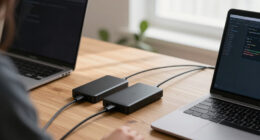
The best laptop for programming is the HP 255 G10, which pairs a Ryzen 7 7730U with 32GB of RAM and a 1TB SSD — enough memory for containers, IDEs and a dozen browser tabs without the premium-laptop price. If your budget is tighter, the Lenovo V15 with Ryzen 5 5500U and 16GB RAM covers the basics of web and scripting work well, while the Lenovo ThinkPad L16 is the standout if you want a better keyboard, a taller 16-inch touchscreen and modern Core Ultra hardware. The main tradeoff in this category is between raw memory and storage versus keyboard and display quality — and whether you need discrete-GPU power for game or ML work, which is where the ASUS ROG Strix G16 comes in. Read on for the full breakdown of all twelve machines.

Get monitors, keyboards and dev gear delivered free — and shop member deals
- Fast, free delivery on millions of items
- Access to Prime Big Deal Days deals on October 6–7
- Prime Video, Amazon Music and more included
Key Takeaways
- RAM was the clearest dividing line in this lineup: 8GB models like the Lenovo V15 Gen 4 and HP OmniBook 3 will struggle with modern toolchains, while 32GB+ picks (HP 255 G10, ThinkPad L16, HP 15.6″ with 64GB) future-proof your setup.
- Keyboard quality separated the daily-driver picks from the spec-sheet picks — the ThinkPad L16’s keyboard makes long coding sessions more comfortable than any spec advantage on the budget Lenovos can offset.
- Most of these laptops share 15.6-inch 16:9 panels; the 16-inch WUXGA IdeaPad 5 2-in-1 and ThinkPad L16 offer extra vertical space, which matters more for reading code than raw resolution numbers suggest.
- The ASUS ROG Strix G16 is the only machine here with genuine discrete-GPU performance, making it the lone option for game development, CUDA work or training local models — at the cost of bulk and battery life.
- This lineup is Windows-only, so developers locked to macOS or native Linux workflows should factor OS compatibility in before buying any of these twelve machines.
| HP 255 G10 15.6″ FHD Business Laptop, AMD Ryzen 7 7730U, 32GB RAM, 1TB PCIe SSD, Windows 11 Pro |  | Best for Heavy Multitasking | Processor: AMD Ryzen 7 7730U, 8 cores, 16 threads, up to 4.50GHz | Memory: 32GB | Storage: 1TB PCIe M.2 SSD | VIEW LATEST PRICE | See Our Full Breakdown |
| Lenovo V15 Gen 4 Business Laptop – AMD Ryzen 5 7430U, 15.6″ FHD Display, 8GB RAM, 512GB SSD, Business Black |  | Best for Port Variety | Processor: AMD Ryzen 5 7430U | Memory: 8GB | Storage: 512GB SSD | VIEW LATEST PRICE | See Our Full Breakdown |
| Lenovo IdeaPad 5 2-in-1 Laptop, 16-inch WUXGA Touchscreen, AMD Ryzen 7 8845HS, 16GB RAM, 1TB SSD, Windows 11 Pro, Luna Grey |  | Best for Flexible Workflows | Processor: AMD Ryzen 7 8845HS, 8 cores, 16 threads, up to 5.1GHz | Graphics: AMD Radeon 780M | Display: 16-inch touchscreen, 1920 × 1200 | VIEW LATEST PRICE | See Our Full Breakdown |
| Lenovo V15 Laptop, 15.6″ FHD Display, AMD Ryzen 5 5500U, 16GB RAM, 512GB SSD, Windows 11 Pro, Black |  | Best for Bright Workspaces | Processor: AMD Ryzen 5 5500U, 6 cores, 12 threads, up to 4.0GHz | Memory: 16GB | Storage: 512GB PCIe NVMe M.2 SSD | VIEW LATEST PRICE | See Our Full Breakdown |
| Acer Aspire Go 15 Laptop, 15.6-inch FHD IPS Display, AMD Ryzen 7 7730U, 16GB RAM, 512GB SSD |  | Best for Everyday Coding | Model: AG15-42P-R9FW | Processor: AMD Ryzen 7 7730U, 8 cores | Graphics: Integrated AMD Radeon Graphics | VIEW LATEST PRICE | See Our Full Breakdown |
| 15.6″ FHD Business Laptop, Core i5, 16GB RAM, 512GB SSD, Windows 11 Pro |  | Best Budget Starter for Students | Screen: 15.6″ FHD (1920 x 1080) | Processor: Intel Core i5 (up to 2.8GHz) | RAM: 16 GB DDR3 | VIEW LATEST PRICE | See Our Full Breakdown |
| Lenovo ThinkPad L16 Business AI PC Laptop (16″ FHD+ Touchscreen, Intel Core Ultra 7 255U, 32GB DDR5, 1TB SSD, Windows 11 Pro) |  | Best Overall for Professional Developers | Display: 16″ WUXGA (1920×1200) IPS touchscreen, 400-nit anti-glare | Processor: Intel Core Ultra 7 255U (12 cores, up to 5.2 GHz) | RAM: 32GB DDR5 | VIEW LATEST PRICE | See Our Full Breakdown |
| HP 15.6″ FHD Touchscreen Laptop, AMD Ryzen 7 7730U, 64GB RAM, 8TB SSD |  | Biggest Memory Claims — With a Catch | Screen: 15.6″ FHD (1920×1080) IPS touchscreen | Processor: AMD Ryzen 7 7730U (8 cores, 16 threads) | RAM: 32GB–64GB (listing inconsistent) | VIEW LATEST PRICE | See Our Full Breakdown |
| ASUS ROG Strix G16 (2025) Gaming Laptop, G615JMR-AS74 |  | Best for Game Dev and GPU-Accelerated Work | Display: 16″ FHD+ 16:10, 165Hz, 3ms | CPU: Intel Core i7-14650HX | GPU: NVIDIA GeForce RTX 5060 (DLSS 4) | VIEW LATEST PRICE | See Our Full Breakdown |
| NIMO 15.6″ AI Creator Laptop, AMD Ryzen 5 6600H, 16GB RAM, 1TB SSD |  | Best Upgrade Path on a Budget | Screen: 15.6″ | Processor: AMD Ryzen 5 6600H (6 cores, 12 threads, up to 4.5GHz) | Graphics: AMD Radeon 660M (RDNA 2) | VIEW LATEST PRICE | See Our Full Breakdown |
| Lenovo V-Series V15 Business Laptop, 15.6-inch FHD, AMD Ryzen 7 5825U, 40GB RAM, 1TB SSD, Windows 11 Pro |  | Best Memory-Heavy Budget Workhorse | Display: 15.6-inch FHD (1920 × 1080) | Processor: AMD Ryzen 7 5825U, 8 cores / 16 threads, up to 4.5 GHz | Graphics: AMD Radeon integrated graphics | VIEW LATEST PRICE | See Our Full Breakdown |
| HP OmniBook 3 17.3-inch Laptop, FHD, AMD Ryzen 3 30, 8 GB RAM, 512 GB SSD, Radeon 610M, Windows 11 Home, Mica Silver (17-dp0199nr) |  | Best Big-Screen Starter Laptop | Display: 17.3-inch Full HD IPS, 178-degree viewing angles | Processor: AMD Ryzen 3 30 | Graphics: AMD Radeon 610M | VIEW LATEST PRICE | See Our Full Breakdown |
| laptops for programming | Storage | Processor | Display | Graphics |
|---|---|---|---|---|
| HP 255 G10 15.6" FHD Business | 1TB PCIe M.2 SSD | AMD Ryzen 7 7730U, 8 cores, 16 threads, up to 4.50GHz | 15.6-inch FHD IPS, anti-glare, 250 nits | Integrated AMD Radeon Graphics |
| Lenovo V15 Gen 4 Business Lapt | 512GB SSD | AMD Ryzen 5 7430U | 15.6-inch FHD IPS, anti-glare, 300 nits | Integrated AMD Radeon |
| Lenovo IdeaPad 5 2-in-1 Laptop | 1TB SSD | AMD Ryzen 7 8845HS, 8 cores, 16 threads, up to 5.1GHz | 16-inch touchscreen, 1920 × 1200 | AMD Radeon 780M |
| Lenovo V15 Laptop | 512GB PCIe NVMe M.2 SSD | AMD Ryzen 5 5500U, 6 cores, 12 threads, up to 4.0GHz | 15.6-inch FHD LCD, 500 nits, glossy | Integrated AMD Radeon Graphics |
| Acer Aspire Go 15 Laptop | 512GB PCIe Gen4 SSD | AMD Ryzen 7 7730U, 8 cores | 15.6-inch FHD IPS, 1920 × 1080 | Integrated AMD Radeon Graphics |
| 15.6" FHD Business Laptop | 512 GB SSD | Intel Core i5 (up to 2.8GHz) | — | — |
| Lenovo ThinkPad L16 Business A | 1TB SSD | Intel Core Ultra 7 255U (12 cores, up to 5.2 GHz) | 16" WUXGA (1920×1200) IPS touchscreen, 400-nit anti-glare | — |
| HP 15.6" FHD Touchscreen Lapto | 1TB–8TB SSD (listing inconsistent) | AMD Ryzen 7 7730U (8 cores, 16 threads) | — | — |
| ASUS ROG Strix G16 | 1TB PCIe Gen 4 SSD | — | 16" FHD+ 16:10, 165Hz, 3ms | — |
| NIMO 15.6" AI Creator Laptop | 1TB PCIe SSD (upgradeable to 4TB) | AMD Ryzen 5 6600H (6 cores, 12 threads, up to 4.5GHz) | — | AMD Radeon 660M (RDNA 2) |
| Lenovo V-Series V15 Business L | 1TB PCIe NVMe M.2 SSD | AMD Ryzen 7 5825U, 8 cores / 16 threads, up to 4.5 GHz | 15.6-inch FHD (1920 × 1080) | AMD Radeon integrated graphics |
| HP OmniBook 3 17.3-inch Laptop | 512 GB PCIe NVMe M.2 SSD | AMD Ryzen 3 30 | 17.3-inch Full HD IPS, 178-degree viewing angles | AMD Radeon 610M |
More Details on Our Top Picks
HP 255 G10 15.6″ FHD Business Laptop, AMD Ryzen 7 7730U, 32GB RAM, 1TB PCIe SSD, Windows 11 Pro
The HP 255 G10 is the strongest fit here for programmers who keep an IDE, containers, browser tabs, and work apps open together. Its 32GB of RAM gives it more room for that workload than the Lenovo V15 Gen 4’s 8GB, while the 1TB SSD leaves space for repositories and development tools. The Ryzen 7 7730U and Windows 11 Pro add a capable, business-focused foundation, and the numeric keypad can help with data-heavy work. The tradeoff is its screen: 250 nits and 45% NTSC color coverage make it less suited to bright spaces or color-sensitive design. Integrated Radeon graphics also make it a poor choice for GPU-heavy development. Choose it over the Lenovo V15 if memory and storage matter more than display brightness.
Pros:- 32GB RAM supports heavier multitasking than the Lenovo V15 Gen 4’s 8GB
- 1TB PCIe SSD provides space for projects, tools, and local files
- Ryzen 7 7730U has 8 cores and 16 threads
- Windows 11 Pro includes business security and management features
Cons:- 250-nit display may be hard to see in bright environments
- 45% NTSC color coverage is limited for color-sensitive visual work
- Integrated Radeon graphics are not suited to demanding GPU workloads
Best for: Windows developers who run several local services, containers, or large projects and want 32GB of memory and 1TB of storage.
Not ideal for: Developers who work outdoors, edit color-sensitive visuals, or need GPU acceleration for machine-learning workloads.
- Processor:AMD Ryzen 7 7730U, 8 cores, 16 threads, up to 4.50GHz
- Memory:32GB
- Storage:1TB PCIe M.2 SSD
- Display:15.6-inch FHD IPS, anti-glare, 250 nits
- Graphics:Integrated AMD Radeon Graphics
- Operating system:Windows 11 Pro
- Ports:2 × USB-A, 1 × USB-C, HDMI, headphone/mic combo
- Wireless:Wi-Fi 6, Bluetooth
Our verdict“Pick the HP 255 G10 if your programming work benefits more from 32GB of memory and 1TB of storage than from a brighter screen or dedicated graphics.”
Lenovo V15 Gen 4 Business Laptop – AMD Ryzen 5 7430U, 15.6″ FHD Display, 8GB RAM, 512GB SSD, Business Black
For a programming setup that relies on wired networking and several peripherals, the Lenovo V15 Gen 4 has the most useful connection mix among these five: USB-C, HDMI, Ethernet, and USB-A. Its 300-nit anti-glare screen is brighter than the HP 255 G10’s 250-nit panel, which helps in a well-lit office. The Ryzen 5 7430U can handle everyday coding, but 8GB of RAM is the limiting factor if you want to run an IDE, browser, and local services together. That makes it a lighter-duty choice than the Acer Aspire Go 15, which has 16GB. The webcam shutter and TPM 2.0 suit managed work setups, though the provided specs do not identify a specific Windows edition. Choose this Lenovo for connectivity and basic development; skip it for memory-heavy workflows.
Pros:- Ethernet, HDMI, USB-C, and USB-A support a range of desk peripherals
- 300-nit anti-glare display is brighter than the HP 255 G10’s listed panel
- TPM 2.0 and a webcam privacy shutter support a security-conscious work setup
- Military-grade durability testing is listed
Cons:- 8GB RAM can restrict multitasking and local development workloads
- Integrated Radeon graphics are not intended for demanding GPU work
- The provided product data does not specify the Windows edition
Best for: Students and office-based developers who need Ethernet, HDMI, and common USB connections for a straightforward coding setup.
Not ideal for: Developers who regularly use virtual machines, multiple containers, or large IDE projects that can strain 8GB of RAM.
- Processor:AMD Ryzen 5 7430U
- Memory:8GB
- Storage:512GB SSD
- Display:15.6-inch FHD IPS, anti-glare, 300 nits
- Graphics:Integrated AMD Radeon
- Ports:USB-A, USB-C, USB 2.0, HDMI, audio jack, Ethernet
- Security:TPM 2.0, webcam privacy shutter, Kensington NanoSaver lock slot
- Audio:Dolby Audio
Our verdict“Choose the Lenovo V15 Gen 4 for its wired connections and brighter anti-glare screen if your coding workload is modest enough for 8GB of RAM.”
Lenovo IdeaPad 5 2-in-1 Laptop, 16-inch WUXGA Touchscreen, AMD Ryzen 7 8845HS, 16GB RAM, 1TB SSD, Windows 11 Pro, Luna Grey
The IdeaPad 5 2-in-1 suits programmers who switch between keyboard work and touch-based planning, sketching, or note-taking. Its 16-inch 1920 × 1200 touchscreen offers more vertical room than the 15.6-inch FHD panels on the HP 255 G10 and Acer Aspire Go 15, while the Ryzen 7 8845HS and Radeon 780M give it the most performance-oriented integrated graphics listed here. The 1TB SSD also matches the HP’s capacity, but its 16GB of memory is half the HP’s 32GB, a meaningful difference for heavy container or virtual-machine use. There is a purchase detail to weigh: the factory seal is opened for upgrades, and the one-year warranty comes from Smartisan Tech. Battery runtime is not provided. Pick it for the convertible screen and stronger listed graphics; choose the HP for more memory and a standard clamshell.
Pros:- 2-in-1 form factor and touchscreen support flexible work and note-taking
- 16-inch 1920 × 1200 display provides more vertical workspace than the 15.6-inch FHD options
- Ryzen 7 8845HS and Radeon 780M are the strongest listed integrated graphics pairing in this batch
- 1TB SSD, fingerprint reader, and backlit keyboard
Cons:- 16GB RAM is less than the HP 255 G10’s 32GB for memory-intensive workflows
- Factory seal is opened for upgrades
- Battery runtime is not provided and the listed warranty is from Smartisan Tech
Best for: Developers who annotate designs, take handwritten notes, or want a touchscreen convertible alongside a capable processor.
Not ideal for: Developers who need 32GB of memory, documented battery runtime, or a factory-sealed unit with manufacturer-backed warranty terms.
- Processor:AMD Ryzen 7 8845HS, 8 cores, 16 threads, up to 5.1GHz
- Graphics:AMD Radeon 780M
- Display:16-inch touchscreen, 1920 × 1200
- Memory:16GB LPDDR5
- Storage:1TB SSD
- Operating system:Windows 11 Pro
- Form factor:2-in-1
- Ports:2 × USB-C, 2 × USB-A, HDMI, headphone/microphone combo, microSD reader
- Warranty:1 year, provided by Smartisan Tech
Our verdict“Choose the IdeaPad 5 2-in-1 if touch and convertible flexibility improve your coding workflow and you can accept 16GB RAM and the third-party warranty.”
Lenovo V15 Laptop, 15.6″ FHD Display, AMD Ryzen 5 5500U, 16GB RAM, 512GB SSD, Windows 11 Pro, Black
The Lenovo V15 is a practical clamshell for programmers who want 16GB of RAM, Windows 11 Pro, and built-in Ethernet without moving to a touchscreen design. Its Ryzen 5 5500U has six cores and twelve threads, a step below the eight-core Ryzen 7 7730U in the Acer Aspire Go 15, but the Lenovo supplies the listed Windows Pro edition and a broader wired connection set that includes RJ45. The 500-nit screen is much brighter on paper than the HP 255 G10’s 250-nit panel, though this Lenovo’s display is glossy, so reflections may offset that advantage. Integrated graphics keep it aimed at coding rather than GPU-heavy work. At 3.8 pounds, it is also heavier than the HP 255 G10. This is the better fit for a fixed desk and bright room than for frequent travel.
Pros:- 16GB RAM and 512GB PCIe NVMe SSD support everyday development and multitasking
- 500-nit listed display brightness exceeds the HP 255 G10’s 250-nit specification
- USB-C, HDMI, and RJ45 Ethernet simplify a wired workstation setup
- Windows 11 Pro and numeric keypad
Cons:- Glossy screen can reflect room lighting despite its high listed brightness
- Ryzen 5 5500U is an older, lower-core-count processor than the Acer Aspire Go 15’s Ryzen 7 7730U
- At 3.8 pounds, it is heavier than the HP 255 G10
Best for: Windows developers who work mostly at a desk, need Ethernet and Windows 11 Pro, and value a high listed screen brightness.
Not ideal for: Frequent travelers or developers who need dedicated graphics, a matte display, or the newer Ryzen 7 processor in the Acer Aspire Go 15.
- Processor:AMD Ryzen 5 5500U, 6 cores, 12 threads, up to 4.0GHz
- Memory:16GB
- Storage:512GB PCIe NVMe M.2 SSD
- Display:15.6-inch FHD LCD, 500 nits, glossy
- Graphics:Integrated AMD Radeon Graphics
- Operating system:Windows 11 Pro
- Ports:USB 3.0 Type-A, USB 2.0 Type-A, USB-C, HDMI, RJ45, headphone/mic combo
- Connectivity:Wi-Fi 6, Bluetooth 5.3, Ethernet
- Weight:3.8 pounds
Our verdict“Pick the Lenovo V15 for a bright, mostly stationary Windows Pro coding setup with 16GB RAM and wired Ethernet.”
Acer Aspire Go 15 Laptop, 15.6-inch FHD IPS Display, AMD Ryzen 7 7730U, 16GB RAM, 512GB SSD
The Acer Aspire Go 15 is a straightforward starting point for everyday programming: it pairs the eight-core Ryzen 7 7730U with 16GB of memory and a 512GB SSD. That makes it better equipped for general multitasking than the Lenovo V15 Gen 4’s 8GB configuration, while its processor has more listed cores than the Ryzen 5 5500U in the other Lenovo V15. The Acer’s tradeoffs are about what the listing leaves out: it gives no display brightness figure, and Windows 11 Home lacks the Pro edition supplied with the HP 255 G10 and Lenovo V15 clamshell. Its integrated Radeon graphics also make it unsuitable for GPU-intensive development. With a 15.6-inch FHD IPS screen and Wi-Fi 6, it covers common coding needs, but developers who run many local services may prefer the HP’s 32GB RAM.
Pros:- Ryzen 7 7730U has 8 cores and 16 threads
- 16GB RAM is double the Lenovo V15 Gen 4’s listed 8GB
- 15.6-inch Full HD IPS display
- 512GB PCIe Gen4 SSD and Wi-Fi 6
Cons:- 16GB RAM provides less headroom than the HP 255 G10’s 32GB
- Windows 11 Home rather than the Pro edition on several alternatives
- Display brightness is not specified in the provided product data
Best for: Learners and general-purpose developers who want a Ryzen 7 processor, 16GB RAM, and an FHD IPS screen for everyday coding.
Not ideal for: Developers who need Windows 11 Pro, more than 16GB of RAM, documented screen brightness, or dedicated GPU compute.
- Model:AG15-42P-R9FW
- Processor:AMD Ryzen 7 7730U, 8 cores
- Graphics:Integrated AMD Radeon Graphics
- Memory:16GB DDR4
- Storage:512GB PCIe Gen4 SSD
- Display:15.6-inch FHD IPS, 1920 × 1080
- Operating system:Windows 11 Home
- Wireless:Wi-Fi 6
- Ports:USB-C, HDMI 2.1
Our verdict“Choose the Acer Aspire Go 15 for everyday coding with a Ryzen 7 and 16GB RAM, or the HP 255 G10 if heavier multitasking and Windows Pro matter more.”
15.6″ FHD Business Laptop, Core i5, 16GB RAM, 512GB SSD, Windows 11 Pro
For a first programming laptop, this option makes a reasonable case: 16GB of RAM is enough to run an IDE, a browser with documentation tabs, and a local dev server without constant swapping, and the 512GB SSD comfortably holds multiple project directories and toolchains. Compared with the Lenovo V15 (Ryzen 5 5500U) elsewhere in this roundup, the full numeric keypad and backlit keyboard are genuine plus points for anyone doing coursework late at night. The tradeoff is dated internals — DDR3 RAM instead of DDR4/DDR5 means slower memory bandwidth, and the 2.8GHz ceiling on the Core i5 will feel sluggish when compiling large projects. The 2-year warranty outclasses typical budget coverage, which matters for students who can’t afford downtime. This pick makes the most sense for light-to-moderate coding, not heavy builds.
Pros:- 16GB RAM handles IDEs, browsers, and local dev servers simultaneously
- Backlit keyboard with numeric keypad suits late-night coursework
- Slim 3.7 lb, 0.78-inch chassis travels well between classes
- 2-year warranty and 24/7 support beat typical budget coverage
Cons:- DDR3 RAM is a generation (or two) behind modern standards
- Core i5 capped at 2.8GHz will slow down larger compiles
- No RAM upgrade path beyond 16GB
Best for: Computer science students and coding bootcamp attendees who need a cheap, dependable machine for editors, terminals, and browser-based tools
Not ideal for: Developers compiling large codebases or running containers and VMs — the older DDR3 memory and modest CPU will bottleneck quickly
- Screen:15.6″ FHD (1920 x 1080)
- Processor:Intel Core i5 (up to 2.8GHz)
- RAM:16 GB DDR3
- Storage:512 GB SSD
- OS:Windows 11 Pro
- Weight:3.7 lbs
- Warranty:2-year extended
Our verdict“A sensible entry-level coding machine for students, as long as your projects stay small and your expectations stay modest.”
Lenovo ThinkPad L16 Business AI PC Laptop (16″ FHD+ Touchscreen, Intel Core Ultra 7 255U, 32GB DDR5, 1TB SSD, Windows 11 Pro)
This is the machine I’d point most working developers toward. The Core Ultra 7 255U with 12 cores chews through compiles and test suites, and 32GB of DDR5 is the practical sweet spot for running Docker containers alongside a full IDE — something the 16GB NIMO and ASUS ROG Strix G16 simply can’t match without swapping. The 16-inch 1920×1200 touchscreen adds vertical code space, and the port selection (dual Thunderbolt 4, HDMI 2.1, Ethernet) covers every desk-docking scenario. Where the budget business laptops in this lineup feel disposable, the MIL-STD-810H certification and best-in-class ThinkPad keyboard mean years of daily typing comfort. The honest caveat: this unit is resealed by a third party for the memory and SSD upgrades, so the warranty is split — three years on upgrades, one on the rest. Integrated graphics also rule out serious GPU work.
Pros:- 32GB DDR5 and 12-core CPU handle containers, VMs, and heavy multitasking
- Dual Thunderbolt 4, HDMI 2.1, and Ethernet cover full desk setups
- MIL-STD-810H durability plus a best-in-class ThinkPad keyboard
- 400-nit anti-glare 16:10 display adds usable vertical code space
Cons:- Resealed by a third party for RAM/SSD upgrades, with a split warranty arrangement
- Integrated graphics limit ML and graphics-heavy workloads
Best for: Professional software engineers and DevOps developers who run containers, VMs, and multiple services locally and type all day
Not ideal for: Anyone needing discrete GPU power for CUDA, ML training, or game development — integrated Intel Graphics won’t cut it
- Display:16″ WUXGA (1920×1200) IPS touchscreen, 400-nit anti-glare
- Processor:Intel Core Ultra 7 255U (12 cores, up to 5.2 GHz)
- RAM:32GB DDR5
- Storage:1TB SSD
- Ports:2x Thunderbolt 4, 2x USB-A 3.2, USB-A 2.0, HDMI 2.1, Ethernet
- Durability:MIL-STD-810H certified
- OS:Windows 11 Pro
- Charging:80% in 1 hour
Our verdict“The most complete development machine in this lineup — buy it if your work lives in containers and terminals, skip it if you need GPU compute.”
HP 15.6″ FHD Touchscreen Laptop, AMD Ryzen 7 7730U, 64GB RAM, 8TB SSD
On paper, the headline 64GB RAM and 8TB SSD would make this the roundup’s multitasking champion — but the listing contradicts itself, with the description citing 32GB and 1TB. Even at the lower figures, the 8-core, 16-thread Ryzen 7 7730U is a proven multitasker, and it shares silicon with the HP 255 G10 in this guide, so raw CPU performance is well-established. Compared with the ThinkPad L16, you give up Thunderbolt, Ethernet, and the tougher chassis but gain a touchscreen and lighter 3.52 lb frame with up to 10.75 hours of battery. That endurance suits developers who work from cafés and co-working spaces. The HDMI 1.4 limitation is the real annoyance for multi-monitor setups — external displays cap at 4K/30Hz, which is unpleasant for code review on a second screen. Verify the actual configuration with the seller before buying.
Pros:- 8-core Ryzen 7 handles parallel builds and heavy multitasking well
- Up to 10.75 hours of battery for genuinely mobile workdays
- Touchscreen plus light 3.52 lb design
- Wi-Fi 6 and USB-C keep connectivity current
Cons:- Listing spec inconsistency (64GB/8TB in title vs 32GB/1TB in description) creates real purchase risk
- HDMI 1.4 limits external display resolution and refresh rate
Best for: Remote and hybrid developers who prioritize battery life and portability and want large memory/storage headroom for local databases and VMs
Not ideal for: Multi-monitor power users — HDMI 1.4 caps external displays at low refresh rates, and the spec discrepancies make buying risky sight-unseen
- Screen:15.6″ FHD (1920×1080) IPS touchscreen
- Processor:AMD Ryzen 7 7730U (8 cores, 16 threads)
- RAM:32GB–64GB (listing inconsistent)
- Storage:1TB–8TB SSD (listing inconsistent)
- OS:Windows 11 Pro
- Battery:Up to 10.75 hours
- Weight:3.52 lbs
Our verdict“A capable portable dev machine if the specs check out — confirm the actual RAM and storage with the seller before committing.”
ASUS ROG Strix G16 (2025) Gaming Laptop, G615JMR-AS74
If your programming touches game development, CUDA, or machine learning, this is the only machine in this batch with a real GPU. The RTX 5060 with DLSS 4 handles Unity, Unreal Engine previews, and CUDA-accelerated training runs that the ThinkPad L16 and NIMO — both integrated-graphics machines — cannot attempt. The 165Hz, 3ms display also makes frame profiling and real-time rendering work far more usable. But this is a gaming laptop first, and the compromises show: 16GB of RAM is tight for a modern dev workflow with containers plus a game engine, and the HX-class CPU plus vapor-chamber cooling means bulk, fan noise, and short battery life compared with the ultraportable HP 15.6″. Windows 11 Home rather than Pro also limits domain-join and Hyper-V management features some workplaces need. This model makes sense when the GPU is the point; otherwise the ThinkPad is the smarter coder’s pick.
Pros:- RTX 5060 with DLSS 4 enables CUDA, Unreal, and ML work no integrated-GPU rival can do
- 165Hz 3ms display is excellent for real-time rendering and profiling
- Vapor chamber and tri-fan cooling sustain long compile and training sessions
- Fast 1TB PCIe Gen 4 SSD speeds up project load times
Cons:- 16GB RAM is limiting for engine work plus containers simultaneously
- Gaming-laptop bulk, fan noise, and battery drain hurt portability
Best for: Game developers, graphics programmers, and ML engineers who need CUDA or real-time rendering on a laptop
Not ideal for: Coffee-shop coders and office developers — the gaming chassis is heavy, loud under load, and short on battery life
- Display:16″ FHD+ 16:10, 165Hz, 3ms
- CPU:Intel Core i7-14650HX
- GPU:NVIDIA GeForce RTX 5060 (DLSS 4)
- RAM:16GB DDR5-5600MHz
- Storage:1TB PCIe Gen 4 SSD
- Wireless:Wi-Fi 7
- OS:Windows 11 Home
- Cooling:Vapor chamber, tri-fan, liquid metal
Our verdict“Buy it only if your code needs a GPU — for everyone else, the quieter, longer-lasting business laptops here serve better.”
NIMO 15.6″ AI Creator Laptop, AMD Ryzen 5 6600H, 16GB RAM, 1TB SSD
What separates this from the budget 15.6″ Core i5 business laptop earlier in this guide is longevity: the NIMO’s DDR5 memory and M.2 SSD are user-upgradeable to 64GB and 4TB, so a junior developer can buy cheap now and grow into the machine as workloads get heavier. The Ryzen 5 6600H is an H-series chip, meaning it sustains performance better under long compiles than the U-series chips in the Lenovo V15 or Acer Aspire Go. The included 1TB SSD already doubles the storage of most budget rivals here, and 100W USB-C charging means one charger for laptop and phone. The obvious ceiling is the Radeon 660M integrated graphics — fine for LoL or CS2 after hours, useless for AAA titles or GPU compute. If you want the ThinkPad L16’s 32GB multitasking headroom but not its price, upgrading this over time is the pragmatic route.
Pros:- User-upgradeable to 64GB RAM and 4TB storage — rare at this price
- H-series Ryzen 5 sustains long compiles better than budget U-series chips
- 1TB SSD included, double most budget rivals
- 2-year warranty with 90-day returns and US-based support
Cons:- Integrated graphics only — no path to GPU workloads
- 6-core CPU will lag 8+ core rivals on heavy parallel builds
Best for: Junior developers and self-taught coders who want a cheap machine today that can grow with their skills via RAM and storage upgrades
Not ideal for: Game developers or anyone needing GPU acceleration — integrated Radeon 660M graphics have minimal headroom
- Screen:15.6″
- Processor:AMD Ryzen 5 6600H (6 cores, 12 threads, up to 4.5GHz)
- Graphics:AMD Radeon 660M (RDNA 2)
- RAM:16GB DDR5 (upgradeable to 64GB)
- Storage:1TB PCIe SSD (upgradeable to 4TB)
- Battery:53.58Wh, 100W USB-C PD charging
- Warranty:2 years
Our verdict“The smart buy for developers who’d rather upgrade over time than pay premium prices upfront — as long as no GPU is ever in the plan.”
Lenovo V-Series V15 Business Laptop, 15.6-inch FHD, AMD Ryzen 7 5825U, 40GB RAM, 1TB SSD, Windows 11 Pro
For a programmer who lives in a dozen Chrome tabs, a local dev server, a container runtime, and a heavy IDE all at once, 40GB of RAM at a budget price is the headline here. The Ryzen 7 5825U’s 16 threads handle compilation and multi-service projects without the stutter you’d get from the smaller Lenovo V15 Gen 4 or its 8GB sibling configuration. The 1TB NVMe SSD means room for multiple toolchains, node_modules graveyards, and virtual machines without constant cleanup.
The tradeoffs are real, though. Compared with the HP OmniBook 3 later in this list, the V15’s display is dimmer and its chassis feels more utilitarian, and there’s no fast-charging story to speak of. It’s a work machine, not a showpiece — but that’s exactly the point.
Pros:- 40GB of RAM comfortably runs containers, VMs, and heavy IDEs simultaneously
- 1TB NVMe SSD stores multiple toolchains and projects without juggling
- Windows 11 Pro includes Hyper-V and Remote Desktop for professional workflows
- RJ45 Ethernet plus USB-C, HDMI, and USB-A covers every docking situation
Cons:- Display brightness and color are basic compared with premium panels
- Chassis is plasticky and heavy for its class
- Older Ryzen 5000-series CPU trails newer Ryzen 7000-era rivals in efficiency
Best for: Developers running VMs, Docker, or large IDEs who need massive RAM on a tight budget
Not ideal for: Anyone prioritizing display quality or portability — the panel and build are strictly functional
- Display:15.6-inch FHD (1920 × 1080)
- Processor:AMD Ryzen 7 5825U, 8 cores / 16 threads, up to 4.5 GHz
- Graphics:AMD Radeon integrated graphics
- Memory:40GB RAM
- Storage:1TB PCIe NVMe M.2 SSD
- Operating System:Windows 11 Pro
- Ports:USB 3.2 Type-C, USB 3.2 Type-A, USB 2.0, HDMI, RJ45, combo audio
- Other:Numeric keypad, webcam, Wi-Fi, Bluetooth
Our verdict“If raw memory capacity for multitasking-heavy development matters more than screen polish, this is the smart budget pick.”
HP OmniBook 3 17.3-inch Laptop, FHD, AMD Ryzen 3 30, 8 GB RAM, 512 GB SSD, Radeon 610M, Windows 11 Home, Mica Silver (17-dp0199nr)
Learning to code benefits enormously from screen real estate, and this OmniBook’s 17.3-inch IPS panel lets a tutorial sit beside an editor without constant window shuffling — something no 15.6-inch option in this roundup, including the Lenovo V-Series V15, can match. The wide 178-degree viewing angles make pair programming or watching lecture content genuinely comfortable.
But the tradeoff is stark: with only 8GB of RAM and a Ryzen 3 chip, this machine is built for writing your first scripts, not running a full stack. The Lenovo V15 Gen 4 costs a bit more discipline in portability but keeps you in the same RAM ceiling, so neither is a long-term dev machine. Where the OmniBook wins is battery life north of 14 hours and fast charging — ideal for students moving between classes, coffee shops, and a couch.
Pros:- 17.3-inch IPS display fits editor, terminal, and documentation side by side
- Up to 14 hours of battery life with 50% fast charge in roughly 45 minutes
- LPDDR5 memory and NVMe SSD keep boot and load times quick
- Wi-Fi 6 and Bluetooth 5.4 for reliable modern connectivity
Cons:- 8GB of RAM caps multitasking and rule out containers or VMs
- Ryzen 3 processor is entry-level and slows compile-heavy work
- 17.3-inch footprint sacrifices portability and desk flexibility
Best for: Programming students and beginners who want a huge screen and long battery for tutorials, notes, and light coding
Not ideal for: Working developers — 8GB of RAM and a Ryzen 3 will choke on Docker, VMs, or heavy IDE workloads
- Display:17.3-inch Full HD IPS, 178-degree viewing angles
- Processor:AMD Ryzen 3 30
- Graphics:AMD Radeon 610M
- Memory:8 GB LPDDR5 RAM
- Storage:512 GB PCIe NVMe M.2 SSD
- Operating System:Windows 11 Home
- Battery:Up to 14 hours 15 minutes; 0–50% charge in ~45 minutes
- Wireless:Wi-Fi 6, Bluetooth 5.4
- Camera:Full HD with HDR auto-switch
Our verdict“A comfortable, big-screen on-ramp for new coders on a budget — just plan to upgrade once your projects outgrow 8GB of RAM.”

How We Picked
I ranked these laptops on the four factors that actually shape a programmer’s daily experience: memory capacity (16GB minimum for comfortable multitasking, 32GB preferred for containers and large IDEs), CPU headroom (Ryzen 7 and Core Ultra chips ranked above older Ryzen 5 and Ryzen 3 parts because compile times scale directly with sustained performance), keyboard and display quality (you’ll type thousands of lines and read code for hours, so panel brightness, screen ratio and key travel matter more than they would for casual use), and storage and upgradability (512GB fills fast with repositories, VMs and toolchains, so 1TB configurations ranked higher).
On top of that, I weighed value positioning: a mid-range chip with 32GB of RAM often beats a flashy gaming machine with a great GPU but poor battery life for typical development work. That’s why the HP 255 G10 takes the top spot — it nails the RAM, storage and CPU balance — while the ThinkPad L16 earns the premium slot on keyboard and build, and the ROG Strix G16 is positioned specifically for GPU-dependent development rather than ranked as a general pick.
| laptops for programming | Graphics | Operating system |
|---|---|---|
| HP 255 G10 15.6" FHD Business | Integrated AMD Radeon Graphics | Windows 11 Pro |
| Lenovo V15 Gen 4 Business Lapt | Integrated AMD Radeon | — |
| Lenovo IdeaPad 5 2-in-1 Laptop | AMD Radeon 780M | Windows 11 Pro |
| Lenovo V15 Laptop | Integrated AMD Radeon Graphics | Windows 11 Pro |
| Acer Aspire Go 15 Laptop | Integrated AMD Radeon Graphics | Windows 11 Home |
| 15.6" FHD Business Laptop | — | — |
| Lenovo ThinkPad L16 Business A | — | — |
| HP 15.6" FHD Touchscreen Lapto | — | — |
| ASUS ROG Strix G16 | — | — |
| NIMO 15.6" AI Creator Laptop | AMD Radeon 660M (RDNA 2) | — |
| Lenovo V-Series V15 Business L | AMD Radeon integrated graphics | Windows 11 Pro |
| HP OmniBook 3 17.3-inch Laptop | AMD Radeon 610M | Windows 11 Home |
Factors to Consider When Choosing Laptops For Programming
Before picking a specific model, it helps to understand what actually limits a programming laptop in practice — and where buyers commonly overspend or underspend.RAM: The Spec That Runs Out First
More programming laptops are replaced because of insufficient RAM than slow processors. A single run of a modern JavaScript toolchain, an IDE with language servers enabled, Docker containers and a browser with documentation tabs can consume 12–16GB on its own. The most common mistake I see is buying 8GB to save money upfront, then hitting swap thrashing within a year as toolchains grow heavier. Aim for 16GB as the floor, and choose 32GB if you work with containers, VMs, large monorepos or Android emulators. Also check whether the RAM is soldered or socketed — machines with upgradeable slots let you add memory later for far less than a new laptop.
CPU: Cores vs. Clock Speed for Compile Times
Compile and build times scale with sustained multi-core performance, but not all chips with similar names perform alike. The Ryzen 7 7730U and Core Ultra 7 in this lineup handle heavy builds comfortably, while older Ryzen 5 parts like the 5500U are fine for scripting and web work but will feel slower on large C++ or Rust projects. A useful rule: for interpreted languages (Python, JavaScript, Ruby), almost any modern CPU is adequate and you should spend the difference on RAM. For compiled languages or frequent large builds, prioritize newer-generation chips with higher core counts. Also remember that thin budget laptops throttle under sustained load — a chip’s name tells you less than its laptop’s cooling design.
Keyboard and Display: What You Touch All Day
You’ll interact with the keyboard and screen for thousands of hours, yet these are the specs buyers most often sacrifice for a better CPU badge. For keyboards, look for good key travel, a firm deck that doesn’t flex, and a sensible layout — cramped arrow keys or a shortened right Shift key slow touch typists measurably. For displays, screen ratio matters as much as resolution: 16:10 and 3:2-style panels show more lines of code vertically than the 16:9 panels most budget laptops use. A bright, matte IPS panel also reduces eye strain during long sessions far more than a resolution bump from FHD to QHD would.
Storage Strategy: Speed and Size
Every laptop in this roundup uses SSDs, so the real question is capacity and upgradability. Repositories, node_modules folders, Docker images, VM disks and SDKs accumulate quickly — 512GB fills faster than new developers expect, and a full system drive degrades build performance and stability. Treat 1TB as the comfortable long-term target, or verify the laptop has a free M.2 slot so you can expand later. One common mistake: paying a large premium for a factory-upgraded 8TB drive when a self-installed 2TB upgrade and external storage would cost far less. The massive-storage options here make sense mainly for video-heavy or dataset-heavy work, not typical coding.
Do You Actually Need a Discrete GPU?
Integrated graphics like AMD’s Radeon iGPUs drive multiple monitors and handle UI development fine. A discrete GPU only earns its cost for specific workflows: game development with Unreal or Unity editor work, CUDA-based machine learning, or training local models. For everyone else, a gaming laptop brings real downsides — extra weight, loud fans, shorter battery life and higher cost — with no benefit to compilation or editor performance. If you need CUDA but also portability, a cloud GPU instance paired with a lightweight laptop often beats a heavy gaming machine. Be honest about whether you’ll actually ship GPU-dependent code before paying the premium.
OS and Ecosystem Compatibility
Every machine here runs Windows 11, which is well supported by modern dev tooling — but check your specific stack first. If you develop iOS or macOS-native apps, no Windows laptop replaces a Mac, full stop. Linux users should research component compatibility (especially Wi-Fi chips and fingerprint sensors) for the exact model number, since budget laptops sometimes ship with parts that have weak Linux drivers. WSL2 on Windows has largely closed the gap for web and backend development, and it works well on all twelve machines. The mistake to avoid: assuming your workflow is portable without testing it, then discovering a toolchain blocker after purchase.
Frequently Asked Questions
Is 8GB of RAM really not enough for programming?
For light scripting, learning to code, or a single lightweight editor, 8GB can work — but it leaves no headroom. Modern IDEs with language servers, a browser with documentation tabs, and a local dev server can push past 8GB on their own, forcing the system into swap and making everything feel sluggish. If you plan to use Docker, Android emulators, or run a full JavaScript build pipeline, 8GB will frustrate you within months. In this lineup, the 8GB models make sense only as true budget or beginner buys with the intention of upgrading RAM later if the model allows it. Otherwise, prioritize 16GB as the realistic minimum for a machine you’ll keep for years.
Should I buy a gaming laptop like the ROG Strix G16 just for the extra power?
Only if your development work actually needs the GPU. The Strix G16 delivers dramatically better performance for game development, CUDA programming, and local model training than any integrated-graphics machine here — but for web, backend, or general software development, its extra horsepower goes unused while you carry the costs: more weight, louder fans, and shorter battery life. A laptop like the HP 255 G10 with 32GB of RAM will compile and multitask just as well for everyday coding while being easier to live with at a coffee shop or office. The right question is whether your projects render frames or train models. If they don’t, spend the same money on memory and a better display instead.
How much difference does the keyboard really make when choosing a dev laptop?
A large one, because typing is the single thing you do most on a programming machine. A mushy deck, flexing chassis, or a compressed layout with shortened Shift and arrow keys slows touch typists and causes more typos over long sessions — and that compounds daily. Business-class lines like the ThinkPad earn their reputation specifically for key travel, feedback and layout consistency, which is why the L16 ranks so highly despite not being the cheapest 32GB option here. If possible, type on a laptop before buying, or at least check reviews for keyboard depth and deck rigidity. Between two similarly specced machines, the one with the better keyboard is almost always the better long-term pick for a developer.
Are 15.6-inch and 16-inch screens that different for coding?
Yes, and mostly because of aspect ratio rather than diagonal size. Most 15.6-inch panels here are 16:9, which is wide but short — you get fewer visible lines of code. The 16-inch WUXGA panels on the IdeaPad 5 2-in-1 and ThinkPad L16 use a taller 16:10 ratio, which typically shows two to four extra lines of code or a bit more terminal history at the same font size. That sounds minor, but it reduces scrolling noticeably over a full workday. Resolution matters less: FHD-class sharpness is fine at these sizes, while a taller ratio delivers a daily, tangible benefit. If you mostly dock to external monitors, this matters less and you can safely prioritize other specs.
Is it better to buy a cheaper laptop now and upgrade RAM and storage later?
It can be a smart strategy, but only if you verify upgradability first. Many thin laptops now solder their RAM to the motherboard, meaning what you buy is what you’re stuck with — always check the specific model’s service manual or teardown before planning an upgrade. Storage is more commonly upgradeable via a free M.2 slot, making a 512GB configuration with a planned 1TB swap a genuinely cost-effective path. The risk is buying a cheap machine with soldered 8GB, assuming you’ll upgrade, and finding you can’t. If upgradability is your plan, favor business-oriented lines like the ThinkPad and HP business models, which are typically designed for easier service access than consumer ultrabooks.
Conclusion
For most developers, the HP 255 G10 is the best overall choice: 32GB of RAM, a Ryzen 7 processor and 1TB of storage hit the sweet spot for serious development work without a premium price. If value is the priority, the Lenovo V15 with Ryzen 5 5500U and 16GB RAM covers web and scripting development capably for far less, and the Acer Aspire Go 15 is a close alternative with a newer chip. The ThinkPad L16 is the premium pick — its keyboard, 16-inch touchscreen and Core Ultra platform justify the extra spend for anyone coding full-time. For beginners, the Lenovo V15 Gen 4 or HP OmniBook 3 are acceptable starting points, though stretching to any 16GB model will serve you longer as your projects grow. For specific needs: the ASUS ROG Strix G16 for game development and machine learning, the HP 15.6″ with 64GB/8TB for extreme multitasking and local datasets, and the IdeaPad 5 2-in-1 for developers who want a convertible form factor with a taller touchscreen. Match the machine to your actual workload — RAM for containers and multitasking, CPU for big builds, GPU only when your code demands it — and you’ll land on the right pick.
Evergreen bestsellers Picks
bestsellers
As an affiliate, we earn on qualifying purchases.