

The right software testing automation tools can shrink release cycles, cut regression costs, and free your QA team from repetitive manual checks — but the category has fractured into distinct camps: framework-first tools like Playwright and Selenium, AI-assisted testing approaches built around Claude and generative models, and end-to-end pipelines that fold testing into continuous delivery. Practical Playwright Test stands out as my best overall pick for teams that want a fast, reliable, modern web automation framework, while Hands-On Automated Testing with Playwright is the stronger choice for developers building scalable test suites from scratch. If AI is central to your roadmap, AI-Assisted QA and Software Testing with Claude Code takes a different, forward-looking path. The main tradeoff you’ll face: open-source frameworks give control but demand coding skill, while AI-driven and pipeline-oriented options trade some transparency for speed. Read on for the full breakdown.

Get business pricing on monitors, keyboards and dev gear
- Business-only prices and quantity discounts
- Tax-exempt purchasing
- Multiple users, one account, clear invoices
Key Takeaways
- Playwright-focused options took the top two slots because they combine modern web support, speed, and a framework design that holds up at scale — something the older Selenium material matches only for teams already invested in Java.
- The AI split is real: the lineup contains three distinct AI approaches (spec-driven testing, generative AI testing, and Claude Code-assisted QA), and they serve different maturity levels rather than competing head-to-head.
- Selenium remains the safe enterprise choice for regulated industries, but its material leans heavily on Java and Grid infrastructure, making it a poor fit for small teams or JavaScript-first shops.
- Beginners should not start with automation at all — the beginner-focused entry pairs best with a general QA foundation before layering on a framework.
- Two picks aren’t about test-writing at all: continuous delivery and low-code Power Apps testing serve teams whose bottleneck is pipeline reliability or citizen-developer ecosystems.
| Hands-On Automated Testing with Playwright |  | Best for Modern Web Teams | Format: Print / digital book | Primary Tool: Microsoft Playwright | Focus: Web application test automation | VIEW LATEST PRICE | See Our Full Breakdown |
| Ultimate Selenium WebDriver for Test Automation | 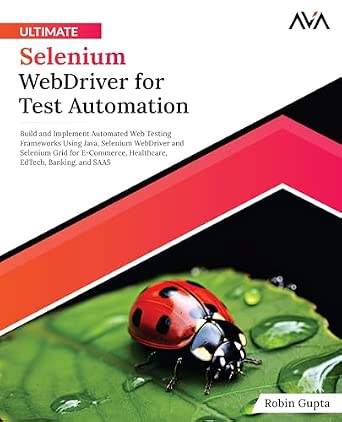 | Best for Enterprise Framework Builders | Format: Print / digital book | Primary Tools: Selenium WebDriver, Selenium Grid | Language Focus: Java | VIEW LATEST PRICE | See Our Full Breakdown |
| Spec-Driven Software Testing with AI |  | Best for AI-Era Methodology | Format: Digital / print book | Primary Focus: Specification-based testing with AI | Key Topics: Test automation, TDD, API testing, CI/CD | VIEW LATEST PRICE | See Our Full Breakdown |
| All You Need to Know About Software Testing: From Beginner to Job-Ready QA Engineer |  | Best for Career Switchers | Format: Digital / print book | Primary Focus: Complete QA career preparation | Key Topics: Manual testing, automation, APIs, Selenium, Playwright, CI/CD, AI-assisted QA | VIEW LATEST PRICE | See Our Full Breakdown |
| Software Testing with Generative AI | 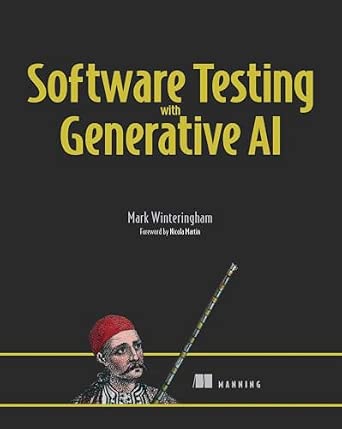 | Best Premium AI Testing Reference | Format: Print / digital book | Primary Focus: Generative AI applied to software testing | Skill Level: Intermediate to advanced | VIEW LATEST PRICE | See Our Full Breakdown |
| Software Testing and Quality Assurance: Exploring Testing Levels, Test Tools, Automation, and Quality Metrics for Improved Software Quality |  | Best Foundations Reference | Format: Book | Topic Focus: Testing levels, test tools, automation, quality metrics | Audience: Software quality professionals | VIEW LATEST PRICE | See Our Full Breakdown |
| Automate Testing for Power Apps: A Practical Guide to Applying Low-Code Automation Testing Tools and Techniques |  | Best for Low-Code Teams | Format: Book | Platform: Microsoft Power Apps | Approach: Low-code automation testing | VIEW LATEST PRICE | See Our Full Breakdown |
| AI-Assisted QA and Software Testing with Claude Code |  | Best for AI-Native Workflows | Type: AI tool / guide for Anthropic’s Claude Code | Testing Scope: Unit, integration, end-to-end | Automation Style: Agentic AI-driven | VIEW LATEST PRICE | See Our Full Breakdown |
| Continuous Delivery: Reliable Software Releases through Build, Test, and Deployment Automation |  | Best for Pipeline Strategy | Format: Book | Series: Addison-Wesley Signature Series | Author: Jez Humble, David Farley (Fowler series) | VIEW LATEST PRICE | See Our Full Breakdown |
| Full Stack Testing: A Practical Guide for Delivering High Quality Software in the Age of AI |  | Best for Modern Full-Stack Coverage | Format: Book | Coverage: Full-stack testing techniques | Special Focus: Quality assurance in AI-era development | VIEW LATEST PRICE | See Our Full Breakdown |
| Practical Playwright Test: Next-Generation Web Testing and Automation |  | Best for Modern Web Testing Teams | Format: Book (digital/print) | Primary Topic: Playwright web testing and automation | Skill Level: Intermediate to advanced | VIEW LATEST PRICE | See Our Full Breakdown |
| AI for Quality Assurance and Software Testing: The Practitioner’s Complete Guide to AI-Powered Testing, Tools, and Transformation |  | Best for AI-Driven QA Strategy | Format: Book (digital/print) | Primary Topic: AI-powered quality assurance and software testing | Skill Level: Intermediate to advanced practitioners | VIEW LATEST PRICE | See Our Full Breakdown |
| software testing automation tool | Format | Skill Level |
|---|---|---|
| Hands-On Automated Testing wit | Print / digital book | Intermediate to advanced |
| Ultimate Selenium WebDriver fo | Print / digital book | Intermediate to advanced |
| Spec-Driven Software Testing w | Digital / print book | Intermediate to advanced |
| All You Need to Know About Sof | Digital / print book | Beginner |
| Software Testing with Generati | Print / digital book | Intermediate to advanced |
| Software Testing and Quality A | Book | — |
| Automate Testing for Power App | Book | — |
| AI-Assisted QA and Software Te | — | — |
| Continuous Delivery: Reliable | Book | — |
| Full Stack Testing: A Practica | Book | — |
| Practical Playwright Test: Nex | Book (digital/print) | Intermediate to advanced |
| AI for Quality Assurance and S | Book (digital/print) | Intermediate to advanced practitioners |
More Details on Our Top Picks
Hands-On Automated Testing with Playwright
This pick earns its spot for teams committed to Playwright as their primary automation framework. Where broader QA survey books like All You Need to Know About Software Testing skim across many tools, this one goes deep on a single, fast-evolving stack — and that focus pays off in reliability. The emphasis on building scalable, flake-resistant tests translates directly into fewer false failures eating your sprint. Compared with Ultimate Selenium WebDriver for Test Automation, this option trades ecosystem maturity for modern capabilities like auto-waiting and cross-browser coverage out of the box. The tradeoff is real, though: readers new to testing automation may find the pace steep, and the book assumes comfort with web development fundamentals rather than teaching them.
Pros:- Focused, framework-specific guidance rather than surface-level tool tours
- Strong emphasis on reliable, scalable test architecture
- Covers modern web app testing patterns that Selenium-centric books miss
- Practical, hands-on structure suited to working engineers
Cons:- Content skews advanced; no gentle on-ramp for newcomers
- Playwright evolves quickly, so some examples may age faster than tool-agnostic material
- No stated prerequisites, making it hard to gauge fit before buying
Best for: Front-end developers and QA engineers at teams already standardizing on Playwright who need depth, not breadth
Not ideal for: Complete beginners who haven’t written a test script before — the hands-on approach assumes existing technical footing
- Format:Print / digital book
- Primary Tool:Microsoft Playwright
- Focus:Web application test automation
- Skill Level:Intermediate to advanced
- Key Topics:Reliable tests, scalability, web app quality
- Language:English
Our verdict“If your team uses or is adopting Playwright, this is the deep-dive companion worth buying before writing your first test.”
Ultimate Selenium WebDriver for Test Automation
For engineers who need to build a testing framework from scratch in Java, this is the most architecturally ambitious pick here. Unlike Hands-On Automated Testing with Playwright, which targets a single modern framework, this book teaches the Selenium ecosystem — WebDriver plus Grid — that still dominates large enterprise and regulated-industry environments. The industry-spanning examples (banking, healthcare, e-commerce) mean the patterns map onto real compliance-heavy contexts, not toy apps. That ambition is also the drawback: this is not a tool you can dabble in. Compared with Software Testing with Generative AI, it is far more hands-on but entirely traditional, offering no AI-assisted workflows for teams modernizing their approach.
Pros:- Full framework construction, not just script-writing basics
- Selenium Grid coverage for parallel, large-scale test execution
- Examples spanning five distinct industry domains
- Relevant to the most widely deployed automation stack in enterprise QA
Cons:- Requires prior Java and automation testing knowledge
- Selenium’s boilerplate-heavy approach adds maintenance burden versus Playwright-style alternatives
- No bundled tools or code repositories mentioned
Best for: Java-literate QA engineers building distributed Selenium Grid frameworks for enterprise or regulated-industry software
Not ideal for: Scripters without solid Java fundamentals — the framework-building material assumes you can already write production Java
- Format:Print / digital book
- Primary Tools:Selenium WebDriver, Selenium Grid
- Language Focus:Java
- Skill Level:Intermediate to advanced
- Industry Examples:E-commerce, healthcare, EdTech, banking, SaaS
- Focus:Automated web testing frameworks
- Language:English
Our verdict“Buy this if you’re a Java engineer who must design a scalable Selenium framework; skip it if you want a lighter, modern-stack entry point.”
Spec-Driven Software Testing with AI
This option stands out for a different reason than the others: it treats specifications as the source of truth and builds the entire testing pipeline — automation, TDD, API tests, CI/CD — from that foundation, with AI accelerating each step. Compared with Software Testing with Generative AI, which explores AI concepts more broadly, this pick is process-oriented, teaching a repeatable workflow rather than a survey of possibilities. And unlike All You Need to Know About Software Testing, it doesn’t start from first principles — it assumes you already test professionally and want to modernize how suites are derived and maintained. The main risk: with no customer reviews yet and a demanding blend of AI and testing prerequisites, buyers are gambling on fit without community validation.
Pros:- Cohesive methodology connecting specs, automation, TDD, API testing, and CI/CD
- Practical framing of AI as a workflow accelerator, not a gimmick
- Addresses reliability of test suites, a chronic pain point in automation
- Bridges specification writing and executable tests end to end
Cons:- No customer reviews or ratings to gauge quality
- Assumes prior knowledge of both testing practice and AI concepts
- Dense multi-domain scope may overwhelm engineers new to CI/CD
Best for: Experienced QA engineers and tech leads restructuring test suites around specifications, TDD, and CI/CD pipelines
Not ideal for: Buyers who want validated, battle-tested material — the lack of reviews makes this an unproven purchase
- Format:Digital / print book
- Primary Focus:Specification-based testing with AI
- Key Topics:Test automation, TDD, API testing, CI/CD
- Skill Level:Intermediate to advanced
- Prerequisites:Testing fundamentals and AI familiarity
- Language:English
Our verdict“A forward-looking choice for practitioners ready to rebuild their testing process around specs and AI — as long as they can tolerate an unreviewed title.”
All You Need to Know About Software Testing: From Beginner to Job-Ready QA Engineer
This is the on-ramp pick of the roundup. Every other title here assumes you already work in QA; this one starts at manual testing fundamentals and walks through Selenium, Playwright, APIs, CI/CD, and AI-assisted QA with a career goal attached — becoming a job-ready QA engineer. Compared with Ultimate Selenium WebDriver for Test Automation, it trades depth for coverage, which is exactly the right trade for someone who doesn’t yet know which stack they’ll be hired to use. The breadth is also the weakness: no single topic gets the treatment found in dedicated books like Hands-On Automated Testing with Playwright, and missing edition details make it hard to verify how current the tool coverage actually is.
Pros:- Covers the entire QA journey from manual testing to AI-assisted tools
- Explicitly oriented toward job readiness, not just theory
- Touches both Selenium and Playwright, matching real job postings
- Includes CI/CD and API testing, topics many intro books skip
Cons:- Broad coverage means shallow treatment of each individual tool
- Content and edition details are sparse, raising currency concerns
- No technical specifications or supplementary materials listed
Best for: Career changers and students preparing for a first QA role who need the full landscape in one place
Not ideal for: Working automation engineers who need depth on one framework — the breadth here will feel redundant
- Format:Digital / print book
- Primary Focus:Complete QA career preparation
- Key Topics:Manual testing, automation, APIs, Selenium, Playwright, CI/CD, AI-assisted QA
- Skill Level:Beginner
- Target Outcome:Job-ready QA engineer
- Language:English
Our verdict“The right first book for someone breaking into QA who wants one purchase to map the whole field.”
Software Testing with Generative AI
This pick makes the most sense for readers who want to understand what generative AI actually changes in testing — conceptually and strategically — before committing to any toolchain. Where Spec-Driven Software Testing with AI prescribes a specific workflow, this book reads more like a practitioner’s map of the AI testing landscape, suited to architects and leads evaluating where AI fits in their strategy. It’s also the most conceptually demanding of the AI titles; unlike All You Need to Know About Software Testing, it won’t hold your hand through testing basics. The honest tradeoff: readers frequently note the lack of detailed technical examples, so those expecting copy-paste prompts or runnable code will finish informed but not equipped.
Pros:- Clear framing of generative AI’s real impact on testing workflows
- Strategic depth suited to decision-makers, not just practitioners
- Published by an established technical publisher with editorial rigor
- Timely coverage of a fast-moving field
Cons:- Thin on detailed technical examples and executable guidance
- Too advanced for beginners without a testing background
- Rapid AI evolution may date specific tool discussions quickly
Best for: QA leads, architects, and senior testers shaping an AI testing strategy for their organization
Not ideal for: Hands-on learners wanting code and prompts — the conceptual treatment leaves implementation to you
- Format:Print / digital book
- Primary Focus:Generative AI applied to software testing
- Skill Level:Intermediate to advanced
- Audience:Software developers and testers
- Approach:Conceptual and strategic
- Language:English
Our verdict“Choose this to build an informed AI testing strategy; choose a different pick if you need step-by-step implementation.”
Software Testing and Quality Assurance: Exploring Testing Levels, Test Tools, Automation, and Quality Metrics for Improved Software Quality
Most titles in this roundup specialize — Selenium for web frameworks, Playwright for browser testing, or Generative AI for cutting-edge workflows. This book takes the opposite approach, walking through testing levels, tooling categories, automation, and quality metrics as one connected discipline. That breadth makes it a strong anchor for readers who want context before committing to a specific toolchain. Where Hands-On Automated Testing with Playwright assumes you already know why and what to test, this fills that conceptual gap first. The tradeoff is depth: it surveys rather than drills down, and the absence of edition or audience-level detail makes it harder to judge fit before buying. Compared with Continuous Delivery, it stays inside QA’s boundaries rather than extending into pipeline architecture.
Pros:- Broad coverage of testing levels, tools, and metrics in one place
- Connects automation strategy to measurable quality outcomes
- Useful as a reference for building or auditing a QA program
Cons:- Surveys many topics without deep implementation detail on any
- No edition or audience-level details to gauge difficulty before purchase
Best for: QA professionals and team leads who need a broad conceptual reference spanning testing levels, tools, and metrics rather than a single-tool tutorial
Not ideal for: Engineers hunting for copy-paste framework code — this is a survey text, not a hands-on implementation guide
- Format:Book
- Topic Focus:Testing levels, test tools, automation, quality metrics
- Audience:Software quality professionals
- Depth:Broad survey across QA discipline
- Hands-on Code:Limited
- Tool Specialization:None — tool-agnostic
Our verdict“Pick this if you need the conceptual map of modern software testing before investing in tool-specific books like the Selenium or Playwright titles.”
Automate Testing for Power Apps: A Practical Guide to Applying Low-Code Automation Testing Tools and Techniques
Nearly every other entry here targets professional engineers — Ultimate Selenium WebDriver for Test Automation presumes Java fluency, and Spec-Driven Software Testing with AI leans on CI/CD pipelines. This book serves the buyer those titles ignore: citizen developers and Power Platform teams who need low-code test automation without writing a traditional framework. The step-by-step, practical framing suits teams shipping internal apps where dedicated QA staff simply doesn’t exist. The catch is narrowness — if your stack isn’t Power Apps, almost none of it transfers, and advanced users will find the treatment too elementary compared with the depth of the Playwright guides. Limited technical examples also mean you may outgrow it quickly on complex enterprise apps.
Pros:- Practical step-by-step guidance oriented around real workflows
- One of the few resources dedicated to low-code test automation
- Directly addresses a platform most testing books ignore
Cons:- Content is tightly scoped to Power Apps with little transferable material
- Too basic for advanced users, with limited detailed technical examples
Best for: Power Apps developers and business analysts on Microsoft Power Platform teams who need testing coverage without traditional coding skills
Not ideal for: Engineers outside the Microsoft ecosystem, or advanced Power Platform users who want deeper technical patterns
- Format:Book
- Platform:Microsoft Power Apps
- Approach:Low-code automation testing
- Audience:Power Apps developers and testers
- Style:Practical, step-by-step
- Code Depth:Low-code, limited advanced examples
Our verdict“If your team builds on Power Apps and has no dedicated QA function, this niche guide earns its spot; everyone else should pass.”
AI-Assisted QA and Software Testing with Claude Code
This entry differs from every other AI title in the roundup by betting on one agentic assistant rather than surveying the field. Compared with Software Testing with Generative AI, which teaches concepts applicable across models, this resource shows how Claude Code can drive unit, integration, and end-to-end workflows directly — a workflow-level, hands-on posture. That focus produces real efficiency gains when it works: the assistant generates test code, orchestrates suites, and reduces boilerplate that frameworks like Selenium demand by hand. The tradeoffs are equally real. Tying your QA practice to a single vendor’s tooling creates lock-in risk, and with no user reviews or performance data available, buyers are taking it on faith that the workflows hold up at scale.
Pros:- Covers unit, integration, and end-to-end testing in one AI-driven workflow
- Reduces boilerplate test authoring compared with manual framework work
- Directly demonstrates agentic AI applied to real QA tasks
Cons:- Single-vendor dependency creates lock-in risk
- No user reviews or performance benchmarks to validate claims
- Sparse published feature specifications make evaluation difficult
Best for: Early-adopter engineers already using Claude in their development workflow who want AI to generate and orchestrate their test suites
Not ideal for: Enterprise teams requiring vendor-neutral tooling, or buyers who need proven performance data before adopting
- Type:AI tool / guide for Anthropic’s Claude Code
- Testing Scope:Unit, integration, end-to-end
- Automation Style:Agentic AI-driven
- Vendor Dependency:Anthropic (single vendor)
- Maturity Data:No published reviews or performance data
- Best Fit:AI-forward engineering teams
Our verdict“Worth exploring if you already work with Claude Code daily; skip it if you need battle-tested, vendor-neutral tooling.”
Continuous Delivery: Reliable Software Releases through Build, Test, and Deployment Automation
Where most roundup entries teach you to write tests, this classic teaches you to ship them reliably — treating automated testing as one pillar of a deployment pipeline alongside build and release automation. Compared with Full Stack Testing, which stays inside the testing discipline, this book zooms out to the delivery process that makes test automation actually pay off. Fowler’s authorship and the Addison-Wesley Signature Series pedigree give it credibility no newer AI title can match, and its principles have aged far better than any tool-specific guide. The tradeoff: it references no current tools, and its density makes it a slow read for newcomers — beginners would be better served by All You Need to Know About Software Testing before attempting it.
Pros:- Industry-standard text with enduring principles, not perishable tool syntax
- Authored by Martin Fowler with Addison-Wesley Signature Series credibility
- Frames test automation within the full delivery pipeline for strategic impact
Cons:- No coverage of specific modern testing tools or frameworks
- Dense and conceptual — a steep read for those new to delivery practices
Best for: DevOps leads and senior engineers designing release pipelines where automated testing is integrated into build and deployment strategy
Not ideal for: Beginners or anyone wanting tool-specific tutorials — it’s dense, conceptual, and tool-agnostic
- Format:Book
- Series:Addison-Wesley Signature Series
- Author:Jez Humble, David Farley (Fowler series)
- Topic Focus:Build, test, and deployment automation
- Tool Coverage:Tool-agnostic principles
- Difficulty:Intermediate to advanced
Our verdict“Buy this for the strategy layer that sits above every tool in this roundup; don’t expect hands-on framework instruction.”
Full Stack Testing: A Practical Guide for Delivering High Quality Software in the Age of AI
This book occupies the middle ground the roundup otherwise splits in two. Tool-specific titles like Ultimate Selenium WebDriver cover one layer deeply; Continuous Delivery covers strategy without testing technique. Full Stack Testing spans the entire application — front end, back end, APIs, and data — while folding in AI-era quality practices that older texts predate. That makes it the strongest single-volume choice for developers and testers who own quality across a whole product rather than one UI layer. The practical framing translates into outcomes: readers finish with a test strategy that scales across the stack instead of a siloed skill. The tradeoffs mirror its breadth — some sections thin on worked examples, and the technical register will challenge anyone newer than an intermediate practitioner.
Pros:- Spans the full application stack rather than a single testing layer
- Directly addresses quality challenges introduced by AI-driven development
- Practical strategies oriented around shipping reliable software
Cons:- Some sections lack detailed worked examples
- Technical depth may overwhelm readers early in their QA careers
Best for: Intermediate developers and testers responsible for quality across an entire application, especially on teams adopting AI tooling
Not ideal for: Absolute beginners, who should start with a gentler title before tackling full-stack scope
- Format:Book
- Coverage:Full-stack testing techniques
- Special Focus:Quality assurance in AI-era development
- Audience:Intermediate developers and testers
- Style:Practical strategy guide
- Example Depth:Varies by section
Our verdict“The best single book for practitioners who own quality end to end on modern, AI-assisted teams — just not an entry point.”
Practical Playwright Test: Next-Generation Web Testing and Automation
Among the Playwright-focused titles in this lineup, this one stands out for its practical, project-oriented approach rather than raw API documentation. Compared with Hands-On Automated Testing with Playwright, which leans toward framework fundamentals, this book pushes further into best practices, tooling choices, and reliability techniques — the details that separate flaky test suites from maintainable ones. It also serves as a strong modern counterweight to Ultimate Selenium WebDriver for Test Automation, since Playwright’s auto-waiting and cross-browser model solve problems Selenium teams often work around manually. The tradeoff is pacing: chapters assume comfort with JavaScript and CI concepts, so readers coming from All You Need to Know About Software Testing may find the early material steep. For teams already committed to Playwright, this pick makes the most sense as a depth-building companion.
Pros:- Focuses on real-world best practices, not just API reference
- Practical examples translate directly into maintainable test suites
- Covers modern web testing challenges like reliability and flakiness
- Directly applicable to teams standardizing on Playwright over Selenium
Cons:- Content skews advanced; beginners will struggle without prior automation experience
- Assumes JavaScript proficiency, limiting accessibility for Java or Python-centric teams
- No hands-on labs or bundled code repository mentioned to reinforce the concepts
Best for: QA engineers and frontend developers who already code in JavaScript and want to build fast, reliable Playwright suites for modern web apps
Not ideal for: Complete beginners or manual testers with no scripting background — the material assumes working knowledge of web automation concepts
- Format:Book (digital/print)
- Primary Topic:Playwright web testing and automation
- Skill Level:Intermediate to advanced
- Key Technologies:Playwright, modern web testing tools
- Coverage Areas:Best practices, automation techniques, test reliability
- Prerequisites:JavaScript and general QA familiarity
- Best Use Case:Building or improving production Playwright test suites
Our verdict“Teams already writing Playwright tests will get the most value here as a best-practices playbook for hardening and scaling their suites.”
AI for Quality Assurance and Software Testing: The Practitioner’s Complete Guide to AI-Powered Testing, Tools, and Transformation
This is the broadest AI-in-testing title in the roundup, aimed at practitioners who need to lead adoption rather than just tinker with prompts. Where Software Testing with Generative AI stays close to generative tooling and AI-Assisted QA and Software Testing with Claude Code is effectively a single-tool manual, this guide spans AI-powered testing tools, methodologies, and organizational transformation — the strategy layer that the others deliberately skip. Compared with Spec-Driven Software Testing with AI, it trades implementation depth for breadth, which is exactly why both can coexist on a shelf. The catch: because it moves fast across many tools, some chapters read as surveys rather than tutorials, and absolute beginners will want a testing foundation first. For QA leads and managers steering an AI rollout, this pick makes the most sense as the roadmap.
Pros:- Covers the full AI testing landscape: tools, methods, and adoption strategy
- Includes transformation guidance for teams, not just individual tactics
- Practitioner-oriented framing connects AI capabilities to real QA workflows
- Broader vendor-neutral perspective than single-tool AI guides
Cons:- Breadth limits depth — individual tools get less hands-on treatment
- Assumes existing QA knowledge, making it technical for newcomers
- AI tooling evolves quickly, so specific tool sections risk dating faster than methodology chapters
Best for: QA leads, test architects, and engineering managers planning an organization-wide AI testing adoption
Not ideal for: Junior testers seeking step-by-step tool tutorials — the wide scope means fewer hands-on exercises per topic
- Format:Book (digital/print)
- Primary Topic:AI-powered quality assurance and software testing
- Skill Level:Intermediate to advanced practitioners
- Coverage Areas:AI testing tools, methodologies, industry transformation
- Perspective:Vendor-neutral, strategy plus practice
- Prerequisites:Working knowledge of QA processes
- Best Use Case:Planning and leading AI testing adoption across a team
Our verdict“QA leaders who need a strategic, vendor-neutral map of AI testing will find this the most complete guide in the roundup.”

How We Picked
I evaluated each entry against five buyer-relevant criteria: framework modernity and long-term viability, breadth of automation coverage (web, API, CI/CD, mobile), learning curve and audience fit, AI readiness, and practical applicability — whether a reader can realistically ship automated tests after working through it. Entries that teach a current, actively maintained framework with strong ecosystem support ranked above legacy approaches, and options covering testing-plus-delivery pipelines scored well for teams, not just individual testers.
The ranking logic is straightforward: options that balance power, currency, and broad usability sit at the top; specialized picks (AI-native, low-code, enterprise Java) occupy the middle; and foundational material for newcomers slots lower because it prepares you for automation rather than delivering it directly. No entry is a bad purchase — each one earned its place for a specific buyer profile, which the buying guide and conclusion make explicit.
| software testing automation tool | Format | Skill Level |
|---|---|---|
| Hands-On Automated Testing wit | Print / digital book | Intermediate to advanced |
| Ultimate Selenium WebDriver fo | Print / digital book | Intermediate to advanced |
| Spec-Driven Software Testing w | Digital / print book | Intermediate to advanced |
| All You Need to Know About Sof | Digital / print book | Beginner |
| Software Testing with Generati | Print / digital book | Intermediate to advanced |
| Software Testing and Quality A | Book | — |
| Automate Testing for Power App | Book | — |
| AI-Assisted QA and Software Te | — | — |
| Continuous Delivery: Reliable | Book | — |
| Full Stack Testing: A Practica | Book | — |
| Practical Playwright Test: Nex | Book (digital/print) | Intermediate to advanced |
| AI for Quality Assurance and S | Book (digital/print) | Intermediate to advanced practitioners |
Factors to Consider When Choosing Software Testing Automation Tools
Choosing among software testing automation resources is less about finding the ‘best tool’ and more about matching a tool to your stack, your team’s coding ability, and where automation fits in your delivery pipeline. These are the factors that most often decide whether an automation investment pays off or collects dust.Match the Framework to Your Existing Stack
The single most common mistake is adopting an automation tool that fights your technology choices. A Java-house with an existing Selenium Grid and CI investment gets real leverage from Selenium-based material, because the skills, infrastructure, and hiring pipeline already exist. A JavaScript or TypeScript shop that picks Selenium anyway will pay a hidden tax in language switching and slower test authoring — this is exactly why Playwright-focused entries ranked higher for most modern teams. Before committing, audit what languages your developers write daily and which frameworks your CI servers already support. Switching automation frameworks later is one of the most expensive migrations in QA, often requiring full test-suite rewrites. Choose for the team you have today, not the team you wish you had.
Be Honest About Coding Ability
Automation tools span a wide skill spectrum, from scriptless low-code platforms to frameworks requiring solid programming fundamentals. Teams led by QA analysts rather than engineers routinely buy code-heavy tooling and then watch adoption stall because nobody can maintain the suite. If your testers are new to code, a foundational QA resource first, followed by a beginner-friendly framework entry, beats jumping straight into WebDriver architecture. Conversely, developer-heavy teams often over-invest in codeless tools they quickly outgrow. The cost of a mismatch isn’t just the purchase price — it’s months of stalled automation initiatives and abandoned test suites. Budget for the skills gap as deliberately as you budget for the tool itself.
Decide How AI Fits Before Buying AI-Flavored Tools
AI-assisted testing is not one thing, and buying the wrong flavor wastes money. Spec-driven AI testing suits teams with solid requirements discipline who want AI to generate and maintain tests from specifications. Generative AI testing helps with test data creation, edge-case generation, and drafting scripts faster. AI-assisted workflows built around tools like Claude Code work best for engineers who want an AI pair embedded in their daily testing work. What AI won’t do — yet — is replace the judgment needed to decide what to test and how much. Teams that treat AI as an accelerator for existing practices see returns; teams that treat it as a replacement for test strategy usually end up with brittle, low-confidence suites. Pick the AI entry that matches where your process is today.
Think Pipeline, Not Just Test Scripts
A brilliant test suite that never runs automatically is a liability, not an asset. This is why one of my picks focuses on continuous delivery rather than test authorship: the value of automation compounds only when tests run on every commit, block bad releases, and feed results back quickly. When comparing options, look at how deeply they cover CI/CD integration, parallel execution, and failure reporting. Test flakiness deserves special attention — a suite with a 5% false-failure rate will train your team to ignore red builds within weeks. If your current pain is ‘our tests exist but releases are still scary,’ a pipeline-focused resource will deliver more value than another framework tutorial.
Consider the Ecosystem and Longevity
Automation frameworks have lifecycles, and betting on a fading one means rewriting everything in three years. Playwright benefits from Microsoft’s active development and has become the default choice for new web projects; Selenium has two decades of enterprise adoption, third-party integrations, and a talent pool that’s easy to hire from. Niche platforms — like Power Apps testing tools — are worth the investment only if that ecosystem is central to your business, because the skills transfer poorly elsewhere. Check the framework’s release cadence, community activity, and job-market presence before committing months of team time. The cheapest option on paper is rarely cheapest when you factor in the rewrite.
Frequently Asked Questions
Should I learn Playwright or Selenium in 2026?
For new projects and most learners starting today, Playwright is the better default: it’s faster, handles modern web app patterns like shadow DOM and network interception natively, and its API is less verbose. Selenium still makes sense if you’re joining an enterprise that already runs Java-based suites, if you need multi-language support beyond JavaScript/Python/C#, or if you’re targeting older browser ecosystems. The good news is that the core concepts — locators, waits, page objects, assertions — transfer between them, so your first framework choice is not a career lock-in. What matters more is picking one and building real suite-maintenance experience with it, because that’s the skill employers actually screen for.
Can AI actually replace writing automated tests myself?
Not yet, and the entries in this roundup that lean on AI are honest about that. What current AI tools do well is accelerate test generation from clear specifications, produce test data and edge cases you might not think of, and draft boilerplate scripts you’d otherwise copy-paste. What they still do poorly is deciding test priorities, understanding business risk, and maintaining suites when the application changes in ways the spec doesn’t capture. The practical pattern that works in 2026 is AI-assisted authoring with human-owned test strategy and review. If a tool promises fully autonomous testing with no engineer involvement, treat that as marketing, not a buying criterion.
Is a foundational QA resource worth it if my goal is automation?
It depends on where you’re starting, and skipping this step is a common and expensive mistake. Testers who move into automation without grounding in test design produce suites that are technically correct but strategically weak — hundreds of low-value tests that slow builds without catching real defects. If you already understand equivalence partitioning, boundary analysis, and risk-based test selection, go straight to a framework pick. If those terms are unfamiliar, spend a few weeks on foundational material first; it will make every automated test you write afterward more valuable. Automation multiplies your test design skills — including the weak ones.
What’s the realistic cost of getting started with test automation?
The tools themselves are often free — Playwright and Selenium are both open source — so the real budget line is people and time. A realistic ramp-up for a working framework with a maintainable suite is four to eight weeks of focused effort for someone who already codes, longer if they’re learning programming alongside automation. Budget for CI infrastructure too, whether that’s self-hosted runners or cloud execution, plus ongoing maintenance at roughly 10–20% of original build effort per year. The paid resources in this roundup typically cost less than a single day of that engineering time, which is why a good book or course is one of the highest-ROI purchases in the whole effort. Underfunding the learning phase is what makes automation projects fail.
Do I need a separate tool for low-code platforms like Power Apps?
Generally yes, and this surprises teams that assume one automation framework covers everything. Low-code application platforms run inside proprietary runtimes that traditional web selectors handle poorly, so generic tools like Selenium or Playwright produce fragile tests that break on every platform update. Purpose-built Power Apps testing approaches understand the platform’s control model and work with its ALM pipelines. If Power Apps is a side project in your organization, you may get by with manual regression checks for a while. But if citizen developers are shipping business-critical apps on it, dedicated test automation for that ecosystem is worth the separate investment.
Conclusion
After comparing all twelve entries, the right pick comes down to your starting point and stack. For best overall, Practical Playwright Test delivers the best balance of modern framework power, practical depth, and long-term career relevance. For best value, Hands-On Automated Testing with Playwright covers similar ground for developers building from scratch. For best premium/enterprise, Ultimate Selenium WebDriver for Test Automation remains the strongest choice for regulated, Java-based organizations — banking, healthcare, and SaaS at scale. For beginners, start with All You Need to Know About Software Testing before touching any framework. For specific needs: AI-Assisted QA with Claude Code for AI-forward engineering teams, Continuous Delivery for pipeline reliability problems, and Automate Testing for Power Apps for Microsoft-centric low-code shops. Whatever you choose, commit to one path and build real suite-maintenance experience — that’s what separates teams whose automation compounds from teams whose suites rot.
Fall Picks

Theragun Mini 3rd Generation Massage Gun – Travel Essential (Black)
As an affiliate, we earn on qualifying purchases.