Searching for QA testing tools for developers usually means one of two things: picking up a framework like Playwright or Cypress, or building the testing fundamentals that make any of them useful. This roundup ranks 13 books covering both sides of that equation, because the right title depends on where you sit today. Hands-On Automated Testing with Playwright is my best overall pick — it pairs Microsoft’s fast-growing framework with the code-first practice working developers actually need. Ultimate Web Automation Testing with Cypress is the stronger alternative for teams already committed to that ecosystem, while Software Testing Unlocked gives true beginners a gentler on-ramp. The main tradeoff across the lineup is depth versus breadth: single-tool manuals get you productive faster, while wider guides like Full Stack Testing cover more ground with less hands-on detail. Read on for the full breakdown of all 13 picks, who each one suits, and who should skip it.

Get monitors, keyboards and dev gear delivered free — and shop member deals
- Fast, free delivery on millions of items
- Access to Prime Big Deal Days deals on October 6–7
- Prime Video, Amazon Music and more included
Key Takeaways
- Tool-specific, code-first titles outperformed broad overviews for this audience — the Playwright and Cypress manuals teach a single framework deeply, which suits working developers far better than survey-style books.
- The two AI testing entries split cleanly: AI Testing with Python is a build-it-yourself manual (Selenium, PyTest, LLMs), while AI Testing & Automation reads more like strategy for QA leads and managers.
- Beginner picks serve different goals — How to Become a QA Tester in 30 Days targets career changers chasing a job title, whereas Software Testing Unlocked builds skills without the job-hunt framing.
- Classics still earn their shelf space: Developer Testing (Addison-Wesley, Cohn) teaches design-level thinking no framework manual covers, though it won’t show you a single modern tool.
- Bundles and templates offer the best pure value — the 3-in-1 QA Testing Book replaces three separate purchases, and the QA Templates & Checklists toolkit delivers usable professional artifacts from day one.




| QA testing tools for developer | ASIN | Format | Skill level | Audience |
|---|---|---|---|---|
| Ultimate Web Automation Testin | B0CQ4J99QH | Kindle eBook | Intermediate | — |
| How to Become a QA Tester in 3 | 1985238993 | Paperback | — | Beginners and career changers |
| Bruno API Testing for Beginner | B0GY8Z5P5X | Kindle eBook | Beginner, no prior experience needed | — |
| QA Templates & Checklists: Rea | B0GHPR7TLS | Digital toolkit | — | Junior testers |
| Hands-On Automated Testing wit | 1806106477 | Paperback | Intermediate to advanced | — |
| Software Testing Unlocked | B0FSYHQ397 | Book (digital-first release) | Beginner | Aspiring QA testers with no prior experience |
| Full Stack Testing: A Practica | — | Print book | Intermediate to advanced | Developers and QA professionals |
| AI Testing & Automation: A Pra | B0FMRJPS5H | Book (digital-first release) | — | Developers and QA engineers |
| AI Testing with Python: Build | B0H8D69KX2 | Book (digital-first release) | Intermediate — assumes Python familiarity | Testers adding AI to automation workflows |
| QA Testing Book: 3-in-1 | B0D94JCC64 | Book (digital-first release) | Beginner to advanced (progressive) | Aspiring quality testers |
| Developer Testing: Building Qu | — | — | Intermediate to advanced | Developers and testers |
| Automated Software Testing: Fr | B0GQPDCLH3 | — | Some coding background assumed | — |
| Mastering Software Testing & Q | B0GDDW6VGY | — | Beginner through experienced | QA professionals and aspiring testers |
More Details on Our Top Picks
Ultimate Web Automation Testing with Cypress: Master End-to-End Web Application Testing Automation to Accelerate Your QA Process
I see this as the strongest pick in the roundup for anyone already committed to Cypress. Where Hands-On Automated Testing with Playwright bets on Microsoft’s newer framework, this one goes deep on a tool many QA teams already run in production, and its end-to-end testing strategies map directly onto the daily work of automating real web applications. Compared with How to Become a QA Tester in 30 Days, it assumes far more of the reader — prior web testing knowledge is required, not optional — so it sharpens existing skills rather than building them from zero. The tradeoffs are real: the listing indicates no sample code, which slows hands-on learners, and everything here is locked to a single framework. If your team runs Cypress, that focus is a feature. If you’re still choosing a stack, the Playwright title is the more future-proof investment.
Pros:- Deep, focused coverage of Cypress end-to-end testing
- Strategies map directly to real QA automation workflows
- Builds practical automation skills for working QA professionals
- Clear single-framework focus avoids watered-down breadth
Cons:- No sample code included, which limits hands-on practice
- Requires prior web testing knowledge before it becomes useful
- Locked to Cypress, so skills don’t transfer if your stack changes
Best for: QA engineers and developers on teams already standardized on Cypress who want to deepen their end-to-end automation strategy
Not ideal for: Readers still evaluating frameworks or total beginners — it requires prior web testing knowledge and covers only Cypress
- ASIN:B0CQ4J99QH
- Format:Kindle eBook
- Topic:Web automation testing
- Framework:Cypress
- Coverage:End-to-end web application testing strategies
- Skill level:Intermediate
- Prerequisites:Prior web testing knowledge
- Sample code:Not included
Our verdict“The right buy for working QA engineers already invested in Cypress who want sharper end-to-end strategy, not a beginner’s on-ramp.”
How to Become a QA Tester in 30 Days
Most entries in this roundup teach a tool; I picked this one because it teaches a career path. Its structured 30-day plan covers testing concepts, common tools, and job-hunting advice, making it the right first purchase for someone who wants to become a QA tester rather than automate one specific stack. Compared with Bruno API Testing for Beginners, which drills into a single skill, this casts a much wider net — fundamentals, vocabulary, and workplace expectations. That breadth is also its weakness: the listing notes no detailed technical exercises, so readers who want to write real tests will need a follow-up like the Cypress or Playwright books. There’s also no clarity on updated editions, a mild risk in a field where tooling shifts quickly. For a structured on-ramp into the profession, though, nothing else here is this direct.
Pros:- Structured 30-day learning plan removes guesswork
- Covers both testing concepts and career advice
- Genuinely beginner-friendly, no prerequisites
- Includes practical tips on QA tools
Cons:- No detailed technical exercises for hands-on practice
- No information on updated editions, so tool coverage may age
Best for: Career changers and new graduates who want a structured, day-by-day path into their first QA role
Not ideal for: Working testers who already know the fundamentals — it lacks technical exercises and depth beyond entry level
- ASIN:1985238993
- Format:Paperback
- Topic:QA career foundation
- Audience:Beginners and career changers
- Learning structure:Step-by-step 30-day plan
- Coverage:Testing concepts, tools, and career tips
- Technical exercises:Not included
- Edition information:Not specified
Our verdict“The clearest starting point for anyone breaking into QA from another field, as long as they pair it with a hands-on tool guide later.”
Bruno API Testing for Beginners: Test REST APIs Step-by-Step (Without Postman)
API testing is the gap in most QA guides, and I like that this one fills it with an unusual angle: it teaches REST API testing through Bruno, the open-source Postman alternative, rather than the industry-default tool. That choice pays off for developers who want file-based, version-control-friendly test collections instead of a cloud-synced GUI, and the step-by-step format assumes zero prior experience. Against How to Become a QA Tester in 30 Days, it’s narrower but far more hands-on within its lane; against Hands-On Automated Testing with Playwright, it skips browser automation entirely, which keeps the learning curve flat. The drawbacks mirror that simplicity: the listing flags no advanced testing methods and thin technical explanations, so experienced engineers will outgrow it fast. As a low-friction entry into API testing, it’s the most approachable option in this roundup.
Pros:- Teaches REST API testing without requiring Postman
- Step-by-step instructions need no prior experience
- Emphasizes practical technique over theory
- Bruno’s file-based approach fits developer workflows
Cons:- No coverage of advanced testing methods
- Technical explanations stay shallow
- Single-tool focus limits broader API testing context
Best for: Developers and aspiring testers with no API testing background who want a practical, Postman-free workflow they can keep in git
Not ideal for: Experienced QA engineers — it stops at fundamentals and never touches advanced testing methods
- ASIN:B0GY8Z5P5X
- Format:Kindle eBook
- Topic:REST API testing
- Tool:Bruno (Postman alternative)
- Skill level:Beginner, no prior experience needed
- Approach:Step-by-step practical instruction
- Advanced methods:Not covered
Our verdict“The easiest first step into API testing for developers who’d rather learn on an open-source, git-friendly tool than on Postman.”
QA Templates & Checklists: Ready-to-Use Toolkit for Junior Testers
This isn’t a book you read so much as a kit you use, and I think that distinction defines its role. The ready-to-use templates and checklists for test cases and bug reports give a junior tester something the learning-focused titles can’t: artifacts they can apply at work on day one. Where How to Become a QA Tester in 30 Days teaches concepts over a month, this shortcuts straight to structured documentation — a lifeline for someone already hired and scrambling to look organized. Compared with QA Testing Book: 3-in-1 elsewhere in the roundup, it trades teaching for tooling. The tradeoffs deserve honesty: the listing gives little detail on the individual templates and shows no pricing or customer ratings, so buyers take a small leap of faith on quality. As a supplement to a real study guide, it punches above its weight; as your only QA resource, it won’t teach you why the checklists matter.
Pros:- Ready-to-use templates for test cases and bug reports
- Immediately applicable on the job, no reading curve
- Checklists bring structure to unstructured QA processes
- Improves documentation consistency for junior testers
Cons:- Sparse detail on what each template actually contains
- No pricing or customer ratings available to gauge quality
- No teaching content, so it can’t stand alone as a learning resource
Best for: Newly hired junior testers who need professional-looking test cases and bug reports immediately, not another theory book
Not ideal for: Anyone still learning QA fundamentals — templates without context won’t teach testing judgment
- ASIN:B0GHPR7TLS
- Format:Digital toolkit
- Contents:Test case templates, bug report templates, QA checklists
- Audience:Junior testers
- Purpose:Streamline test documentation and reporting
- Template detail:Limited descriptions in listing
- Customer ratings:Not available
Our verdict“A practical desk companion for junior testers already in a role, best paired with a real study guide rather than used alone.”
Hands-On Automated Testing with Playwright: Create Fast, Reliable, and Scalable Tests for Modern Web Apps with Microsoft’s Automation Framework
This earns my top slot because Playwright is where modern web test automation is heading, and the book is built around the outcomes developers care about: fast, reliable, scalable tests that hold up in CI rather than flaky scripts that erode trust. Set against the Cypress title in this roundup, it covers a framework with broader browser support and Microsoft’s backing, which matters for teams shipping across Chromium, Firefox, and WebKit. The emphasis on scalability also gives it a longer shelf life than narrower guides like Bruno API Testing for Beginners. The catch: the listing offers no detailed specs, so you’re buying on the strength of the topic and the framework’s momentum, and the material may run technical for true beginners — newcomers should start with How to Become a QA Tester in 30 Days first, then graduate here once the fundamentals stick.
Pros:- Covers Playwright, the fastest-growing automation framework
- Focuses on reliable, scalable tests suited to CI pipelines
- Aimed at modern web app architectures
- Hands-on orientation favors working code over theory
Cons:- Listing provides almost no detailed specs or feature breakdown
- Likely too technical for readers new to testing
- Framework-specific, so less useful to teams on Cypress or Selenium
Best for: Developers and QA engineers building or scaling automated test suites for modern web apps across multiple browsers
Not ideal for: Absolute beginners to testing — the technical material assumes some programming and testing background
- ASIN:1806106477
- Format:Paperback
- Topic:Automated web application testing
- Framework:Microsoft Playwright
- Focus:Fast, reliable, scalable test creation
- App coverage:Modern web applications
- Skill level:Intermediate to advanced
- Beginner suitability:May be too technical for newcomers
Our verdict“The best overall pick for developers who want their test automation skills aligned with where the industry is moving.”
Software Testing Unlocked – A Beginner’s Guide to QA & Automation
This option stands out for treating QA as a career path, not just a skill set. The 20-step structure walks a total newcomer from testing principles through automation basics and into job-hunting advice, which makes it a narrower but more guided read than the QA Testing Book: 3-in-1, whose beginner-to-pro arc covers more ground with less hand-holding. I’d point career changers here first: the practical advice on landing a first QA role is something Full Stack Testing doesn’t attempt, since that book assumes you already work in software. The tradeoff is depth. Technical examples are thin, so readers who want to write real Selenium code will outgrow it fast and should look at AI Testing with Python instead. Think of it as a map of the profession rather than a toolbox — strong orientation, limited mechanics.
Pros:- Clear 20-step structure removes the guesswork for absolute beginners
- Covers both QA fundamentals and automation basics in one path
- Includes practical job-hunting advice, which most QA books skip
Cons:- Thin on detailed technical examples, so coding skills need another resource
- Stops short of advanced topics — readers will outgrow it quickly
Best for: Career changers with no testing background who want a structured route into their first QA job
Not ideal for: Working developers — the lack of detailed technical examples means it won’t teach you to write actual test code
- ASIN:B0FSYHQ397
- Format:Book (digital-first release)
- Structure:20-step guided learning path
- Coverage:QA fundamentals plus test automation basics
- Skill level:Beginner
- Career content:Guidance for landing a first QA job
- Audience:Aspiring QA testers with no prior experience
Our verdict“If you’re trying to break into QA from another field and want one guided plan, this is the right first book.”
Full Stack Testing: A Practical Guide for Delivering High Quality Software
This pick makes the most sense for working developers because it treats testing as a delivery discipline spread across the whole stack rather than a single layer. Compared with Software Testing Unlocked, it assumes a professional context and skips career coaching entirely, which is exactly why it works better as a day-to-day reference. And where AI Testing & Automation narrows in on one trend, this book’s methodology-first approach ages well — the risk-based thinking it teaches will outlast any specific tool or framework. The honest tradeoff is that breadth costs depth: individual chapters can’t rival a dedicated guide like the Cypress or Playwright titles elsewhere in this roundup for framework fluency, and readers new to QA may find the density slow going. It’s the book I’d keep on the desk, not the one I’d learn testing from.
Pros:- Covers testing across the full stack instead of a single layer
- Practical, real-world framing suited to day-to-day delivery work
- Methodology-first content stays relevant as tools change
- Speaks to both developers and QA professionals
Cons:- Breadth over depth — no single topic gets framework-level treatment
- Dense for newcomers; no beginner on-ramp
Best for: Working developers and QA professionals who own quality across an entire application stack
Not ideal for: Total beginners — it assumes professional context and offers no on-ramp or career guidance
- ISBN:1098108132
- Publisher:O’Reilly Media
- Format:Print book
- Coverage:Full-stack testing methodologies, tools, and best practices
- Approach:Practical, real-world application
- Skill level:Intermediate to advanced
- Audience:Developers and QA professionals
Our verdict“For practicing developers who want one durable reference on testing across the stack, this is the strongest single pick.”
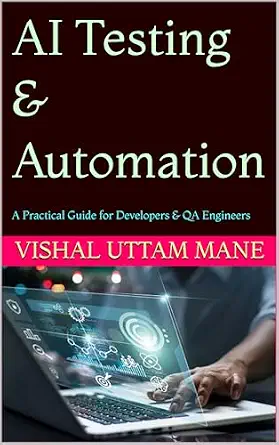
AI Testing & Automation: A Practical Guide for Developers & QA Engineers (The AI Transformation Series)
Compared with AI Testing with Python, this title sits one level up: it’s about strategy and process rather than code. Where the Python book has you writing Selenium and PyTest scripts, this one focuses on how developers and QA engineers should fold AI-driven testing into an existing workflow, which makes it the better read for leads planning a team rollout. Its place in the AI Transformation Series reinforces that framing — adoption and best practices over syntax. The drawbacks are real, though. The listing offers little detail on actual content — no chapter breakdown, no tooling list — so buyers can’t verify depth before purchasing, and hands-on practitioners will likely get more mileage from the Python alternative. I’d treat it as the orientation read before a technical one, not a replacement for it.
Pros:- Focuses on strategy for adopting AI-driven testing processes
- Written for both developers and QA engineers
- Part of a series, so it fits a broader learning track on AI adoption
Cons:- No published content outline or tooling list, so depth is hard to verify
- Strategy-level coverage won’t satisfy readers who want hands-on implementation
Best for: QA leads and senior engineers planning how to introduce AI-driven testing into a team or process
Not ideal for: Practitioners who want working code — there’s no confirmed tooling detail, and AI Testing with Python serves that need better
- ASIN:B0FMRJPS5H
- Series:The AI Transformation Series
- Format:Book (digital-first release)
- Coverage:AI testing and AI-driven automation strategy
- Approach:Best practices for implementing AI testing processes
- Audience:Developers and QA engineers
- Content detail:Limited published outline — strategy-oriented
Our verdict“Buy this if you’re shaping an AI testing approach for a team; skip it if you want to write the tests yourself.”
AI Testing with Python: Build Intelligent Test Automation Using Python, Selenium, APIs, PyTest, LLMs & AI-Powered Testing Tools
This option stands out as the most technical pick in the lineup: Python, Selenium, APIs, PyTest, and LLM-based tooling in one package. Against AI Testing & Automation, which stays at the strategy level, this is the book that actually has you building automation frameworks, and its tool-by-tool scope goes wider than single-framework titles like the Cypress or Playwright books elsewhere in this roundup. For a tester who already scripts and wants AI in the pipeline, that breadth is the point. The tradeoffs: the content assumes Python fluency and will bury true beginners — Software Testing Unlocked is the saner starting point — and with no visible rating history, buyers take the coverage on faith. Tool churn is the other risk; LLM testing moves fast, so treat the concepts as the durable value and the tool chapters as a snapshot.
Pros:- Widest tool coverage in the lineup: Selenium, APIs, PyTest, LLMs
- Practical, build-oriented focus on real automation frameworks
- Directly addresses how to bring AI into existing QA automation
Cons:- Too technical for beginners; no on-ramp for non-programmers
- No price or rating track record visible to gauge quality
- Fast-moving tool coverage may date quickly
Best for: Testers and developers who already know Python and want to add AI-powered techniques to their automation work
Not ideal for: Beginners without scripting experience — it assumes Python fluency and offers no fundamentals track
- ASIN:B0H8D69KX2
- Format:Book (digital-first release)
- Stack:Python, Selenium, PyTest
- Coverage:APIs, LLMs, and AI-powered testing tools
- Focus:Building intelligent test automation frameworks
- Skill level:Intermediate — assumes Python familiarity
- Audience:Testers adding AI to automation workflows
Our verdict“If you already code and want the most hands-on AI testing material in this roundup, this is your book.”
QA Testing Book: 3-in-1 – From Beginner to Pro, Developing Professional Skills in Quality Testing
The appeal here is range for the price of one book: a single volume that carries a reader from first principles to professional-level technique. Next to Software Testing Unlocked, which is really a career launchpad built around a 20-step plan, this is the broader curriculum — more testing technique, less job-hunt coaching. Compared with Full Stack Testing, it’s friendlier to self-taught readers but can’t match that book’s depth on any given layer of the stack. That breadth-over-depth pattern is the core tradeoff: bundling beginner, intermediate, and advanced material into one book means each stage gets less room than a dedicated title would give it. The listing also says nothing about workbooks, code samples, or companion materials, which matters for a learn-by-doing subject. For budget-conscious self-starters who want one spine for their whole QA education, it’s still the sensible buy.
Pros:- Complete beginner-to-pro learning path in one volume
- Covers core QA testing techniques and best practices
- Progressive structure suits self-paced study
- Strong value as a single purchase
Cons:- Breadth over depth — each skill stage gets less room than a dedicated book
- No mention of supplementary materials like exercises or code samples
Best for: Self-taught learners on a budget who want a single book to carry them from novice to working QA professional
Not ideal for: Developers who need depth on a specific stack — Full Stack Testing covers professional contexts with more rigor
- ASIN:B0D94JCC64
- Format:Book (digital-first release)
- Structure:3-in-1 bundled learning path
- Coverage:Beginner through professional QA techniques and best practices
- Skill level:Beginner to advanced (progressive)
- Audience:Aspiring quality testers
- Extras:No supplementary materials listed
Our verdict“If you want one affordable book to anchor your entire QA self-education, this is the practical choice.”
Developer Testing: Building Quality into Software (Addison-Wesley Signature Series by Cohn)
Among the titles in this roundup, this is the one I’d hand to a practicing developer who wants testing treated as part of the craft rather than a separate job. Where Automated Software Testing: From Zero to Secure Deploy walks you through specific tools like Jest and Cypress, this book works at a deeper level — testability, design, and the judgment calls that decide whether your suite still matters two years from now. The Addison-Wesley Signature pedigree shows in the rigor, and at times in the density, so it rewards slow reading more than weekend skimming. The tradeoff is clear: it won’t teach a framework you can put on a résumé next week, and with no visible customer ratings, buyers lean on the imprint’s reputation. For building durable testing instincts, it’s the strongest pick here.
Pros:- Treats testing as a design discipline, not an afterthought
- Backed by the authoritative Addison-Wesley Signature Series
- Deep coverage of testability and developer judgment
- Long shelf life — not tied to one framework’s release cycle
Cons:- Dense prose that assumes solid programming experience
- Teaches no specific tool, so limited short-term résumé value
- No customer ratings or pricing visible to gauge reception
Best for: Mid-level and senior developers who want testing woven into design decisions rather than bolted on after the fact
Not ideal for: Absolute beginners — the density and assumed programming background will slow them down; QA Testing Book: 3-in-1 is a gentler on-ramp
- Series:Addison-Wesley Signature Series (Cohn)
- ISBN-10:0134291069
- Focus:Developer-led testing and testability
- Skill level:Intermediate to advanced
- Approach:Methodology and design over specific tools
- Audience:Developers and testers
- Ratings:None listed yet
Our verdict“The best choice if you write production code daily and want testing judgment that outlasts any single framework.”
Automated Software Testing: From Zero to Secure Deploy
If your goal is a working pipeline rather than theory, this is the one I’d reach for first in the batch. It strings together Jest, Cypress, TDD, and CI/CD into a single workflow, so each chapter ends in something runnable rather than a concept to mull over. Compared with Developer Testing: Building Quality into Software, it’s shallower on design thinking but far more actionable — you’ll ship a tested deploy before the other book has finished arguing why you should. The security angle, with deploy practices woven into the testing flow, also sets it apart from tool-specific entries like Hands-On Automated Testing with Playwright. The gaps: no stated prerequisites, so true newcomers may hit setup walls early, and the absence of reader ratings makes the depth of coverage hard to verify before buying.
Pros:- End-to-end path from unit tests to secure deployment
- Covers Jest, Cypress, TDD, and CI/CD in one workflow
- Step-by-step structure suits learning by doing
- Security practices built into the pipeline rather than tacked on
Cons:- Prerequisites unstated, so beginners may stall on tooling setup
- No reader ratings to verify depth of coverage
- Thinner on design-level testing theory than methodology-focused books
Best for: Working developers who want to stand up a full automated test-and-deploy pipeline quickly
Not ideal for: Career-switchers with no programming background — it assumes you can follow JavaScript tooling without a primer
- ASIN:B0GQPDCLH3
- Tools covered:Jest, Cypress, CI/CD
- Methodology:Test-driven development (TDD)
- Focus:Automated testing pipelines and secure deploys
- Skill level:Some coding background assumed
- Prerequisites:Not stated
- Structure:Step-by-step implementation guide
- Ratings:None listed yet
Our verdict“Pick this if you already code and want one guided route to automated tests guarding every deploy.”
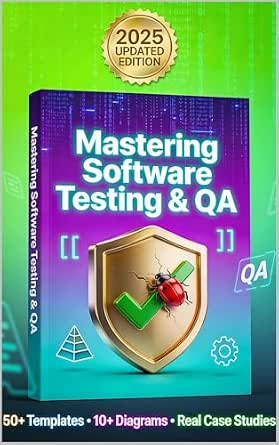
Mastering Software Testing & QA: A Practical Guide to Manual Testing, Agile Quality, and Real-World Delivery
Most of this roundup chases automation; this one fills the gap for the manual side of QA, which is where many testers actually start — and where I’d argue judgment matters most. Its coverage of agile quality practices and delivery strategy gives it a process view that tool-first titles like Ultimate Web Automation Testing with Cypress don’t attempt. Against How to Become a QA Tester in 30 Days, it reads more like a working professional’s reference than a career-bootcamp plan — broader, but slower to get you job-ready. That breadth is also the main weakness: with no stated edition or publication date, it’s hard to tell how current the agile material is, and readers wanting code-heavy automation examples will find it thin on that front. For grounding QA judgment across a whole delivery cycle, it’s the right fit.
Pros:- Rare focus on manual testing craft in an automation-heavy list
- Agile quality and delivery coverage adds process context
- Works for both new and experienced testers
- Practical strategies tied to real-world delivery
Cons:- No edition or publication date, so currency of agile content is unclear
- Light on code-level automation examples
- May feel too technical for casual readers
Best for: QA testers and team leads who own manual testing and agile quality processes across real delivery cycles
Not ideal for: Developers hunting for automation code samples — this is process and strategy, not a scripting guide
- ASIN:B0GDDW6VGY
- Topics:Manual testing, agile QA, real-world delivery
- Skill level:Beginner through experienced
- Audience:QA professionals and aspiring testers
- Approach:Process and strategy over tooling
- Edition / date:Not specified
- Ratings:None listed yet
Our verdict“The right buy for testers whose daily work is manual testing and agile delivery rather than writing automation scripts.”

How We Picked
I evaluated each title against five criteria: relevance to working developers (does it teach tools and habits that plug into CI/CD workflows), hands-on density (code you can run versus prose about testing), currency (modern frameworks and practices rather than legacy tooling), learning path (does it move from basics to real projects), and value for money (scope, page count, and whether a bundle replaces separate purchases). Because the promise of this roundup is QA testing tools for developers, books that teach a specific, in-demand framework with runnable examples scored highest.
That weighting explains the order. Hands-on framework manuals rank above general QA guides, developer-oriented guides rank above career-change manuals, and recent material on Playwright, Cypress, and AI-assisted testing ranks above purely conceptual works. Titles like Developer Testing place lower not because they’re weak — Cohn’s book is a classic — but because they teach principles rather than tools. Every pick earned its slot by being the best option for a clearly defined buyer, so use the role labels, not just the numbering, to find yours.
| QA testing tools for developer | Format |
|---|---|
| Ultimate Web Automation Testin | Kindle eBook |
| How to Become a QA Tester in 3 | Paperback |
| Bruno API Testing for Beginner | Kindle eBook |
| QA Templates & Checklists: Rea | Digital toolkit |
| Hands-On Automated Testing wit | Paperback |
| Software Testing Unlocked | Book (digital-first release) |
| Full Stack Testing: A Practica | Print book |
| AI Testing & Automation: A Pra | Book (digital-first release) |
| AI Testing with Python: Build | Book (digital-first release) |
| QA Testing Book: 3-in-1 | Book (digital-first release) |
| Developer Testing: Building Qu | — |
| Automated Software Testing: Fr | — |
| Mastering Software Testing & Q | — |
Factors to Consider When Choosing QA Testing Tools For Developers
The right QA book depends less on raw quality than on fit — your tooling, your experience level, and whether you’re learning a framework or a mindset. These are the factors I weighed most heavily while ranking this list, and the ones worth checking before you buy any title on it.Match the Book to the Framework You’ll Actually Ship With
The biggest buying mistake in this category is learning the wrong tool. Playwright and Cypress dominate new JavaScript projects, Selenium remains the default in large enterprises and polyglot teams, and API-first shops may get more from Bruno than from any browser framework. A Cypress manual is wasted on a team whose CI pipeline runs Playwright, no matter how good the writing is. Before buying, check what your repositories already use, what job listings in your market ask for, and which language you write daily — most titles here assume either JavaScript or Python, rarely both. Developers on .NET or Java stacks should lean toward language-agnostic titles like Full Stack Testing and treat framework manuals as secondary reading. When two tools both fit, pick the book rather than the framework: a well-taught runner-up tool beats a poorly taught market leader every time.
Decide Whether You Need a Tool or a Testing Mindset
Some books on this list teach you a framework; others teach you how to think about quality. Hands-on manuals like the Playwright and Cypress titles show you selectors, fixtures, and CI wiring — skills that pay off within a week but age as the tools evolve. Concept-first books like Developer Testing and Full Stack Testing explain test design, risk, and where automation pays back, knowledge that survives any framework swap. The mistake is expecting one purchase to do both jobs. If you can only buy one title and you have a sprint starting Monday, take the tool manual. If you’re shaping quality culture or leading a team, the concept books return more per page. Pairing one of each is the move most senior engineers end up making.
Career Changers and Working Developers Need Different Starting Points
A developer with five years of experience and a support analyst chasing a first QA role should not buy the same book. Career-change titles like How to Become a QA Tester in 30 Days spend chapters on terminology, interview prep, and what a tester actually does all day — material a working developer will skim or skip. The QA Templates & Checklists toolkit sits in a similar lane: it shines when you need professional artifacts fast, not when you want to learn automation. Developers get more from titles that assume coding fluency and go straight to framework mechanics. Knowing which of these two readers you are saves you from the most common regret in this category: paying for half a book you never read.
Treat AI Testing Claims With Healthy Skepticism
AI-assisted testing is the fastest-moving corner of this lineup, and the two entries here could not be more different. AI Testing with Python is a builder’s manual — Selenium, PyTest, LLM integration, and self-healing locators you can run today. AI Testing & Automation reads closer to a field guide for leads deciding where machine learning fits their process. Ask which of those you actually need before buying either. Be wary of any title where AI is the headline but the code is thin; in this market, marketing cycles move faster than print cycles. The durable skills underneath — API testing, test data design, flaky-test triage — are what make AI features useful, so a solid automation foundation still comes first.
Check Version Currency, Format, and Bundle Math Before Checkout
Testing books age faster than most tech titles because the frameworks they cover release breaking changes on quarterly cycles. Before buying, confirm the publication date and, where possible, which framework version the examples target — a two-year-old Cypress book may teach APIs that have since changed. Format matters more than buyers expect: long code listings are painful on small e-readers, so paperback or a large tablet suits these titles better. Bundles change the value math entirely — the 3-in-1 QA Testing Book costs less than many single volumes while covering manual testing through advanced practice. Spending ten minutes on edition and format checks beats returning a book that teaches last year’s syntax.
Frequently Asked Questions
Should I learn Playwright, Cypress, or Selenium first as a developer?
There is no universal answer, but there is a sensible default. Playwright is the strongest first pick for most developers in 2026 — its auto-waiting model, cross-browser engine support, and growing job-market presence give it the most momentum of any framework here. Cypress remains a fine choice if your team already runs it, since its debugging experience is genuinely friendly and its ecosystem is mature. Selenium still makes sense in enterprises with polyglot codebases or legacy suites, which is why it anchors the AI Testing with Python title on this list. The practical move is to check ten job postings you would actually apply for and let the named frameworks decide — then buy the matching book rather than learning a tool nobody around you uses.
Are QA testing books worth buying when framework documentation is free?
Documentation tells you what an API does; it rarely tells you how to build a test suite that survives a growing codebase. The books on this list earn their price through structure, sequencing, and judgment — which patterns to adopt early, which anti-patterns produce flaky suites, and how to wire tests into CI without slowing the pipeline. Experienced testers who only need syntax lookups can skip the beginner titles entirely and work from docs. The value case is strongest for the framework manuals and the templates toolkit, where examples and artifacts save real hours. If a book only restates what the official docs cover, skip it — every pick here was ranked partly on adding something docs do not.
Can a book alone make me job-ready as a QA tester?
A book can carry you a long way, but hiring managers look for evidence you built something. How to Become a QA Tester in 30 Days works well as a curriculum — pair it with the QA Templates & Checklists toolkit and you’ll finish with vocabulary, process knowledge, and professional-looking artifacts. What neither can supply is a portfolio: a public repository of automated tests against a real application, even a small one, separates candidates more than any chapter you read. Plan on spending as much time writing tests as reading about them. Treat these titles as the syllabus and your own practice project as the exam.
What separates QA books aimed at developers from those aimed at career testers?
Audience assumptions change everything about how these books read. Developer-focused titles like Full Stack Testing and Developer Testing assume you write code daily, so they spend their pages on automation architecture, test pyramid tradeoffs, and fitting quality into delivery pipelines. Tester-focused titles like Mastering Software Testing & QA and the 3-in-1 QA Testing Book start further back — test case design, manual technique, Agile ceremonies, and reporting. Buying across that line is the most common mistake in this category: developers stall out in terminology chapters, while career changers drown in code they can’t yet run. Match the book’s assumed reader to your actual week, not your aspirational job title.
Do I need Python experience before learning AI-powered test automation?
For the code-heavy entry on this list, yes — AI Testing with Python assumes you can already write and run Python scripts, and it moves quickly into Selenium, PyTest, and LLM integration from there. If your Python is rusty or nonexistent, build a base with a general automation title first; Software Testing Unlocked gets the concepts in place, and any beginner Selenium tutorial covers the syntax you’ll need. The AI Testing & Automation volume is the exception — it reads as strategy and process rather than code, so QA leads and managers can take it on without touching a terminal. Skipping the foundation usually means stalling halfway through the AI material, which is where most abandoned testing books end up.
Conclusion
After lining all 13 titles up against the same criteria, the picks by buyer type look like this. Best overall: Hands-On Automated Testing with Playwright — the sharpest match between what developers need and what the book delivers, with runnable examples on the framework carrying the most momentum into 2026. Best for Cypress shops: Ultimate Web Automation Testing with Cypress, which goes deeper on its framework than any general title can. Best for beginners: Software Testing Unlocked, and best for career changers: How to Become a QA Tester in 30 Days, ideally paired with the QA Templates & Checklists toolkit for interview-ready artifacts. Best value: the QA Testing Book 3-in-1, which replaces three separate purchases at a bundle price, while Developer Testing (Addison-Wesley) remains the premium shelf pick for engineers who want principles that outlast any framework. Developers chasing AI-assisted workflows should start with AI Testing with Python, API-first teams with Bruno API Testing for Beginners, and anyone who codes daily but tests rarely will find Full Stack Testing the fastest way to close that gap. Match the pick to your stack and your starting point, and any title on this list will earn its place.
Fall Picks
fall essentials
As an affiliate, we earn on qualifying purchases.