Finding the right QA testing tools for developers is less about feature lists and more about matching a framework to your stack, your skill level, and how your team ships software. After ranking 14 of the strongest guides in this space, Hands-On Automated Testing with Playwright comes out as the best overall pick because it teaches Microsoft’s framework — the current default for new web test automation — through fast, code-first exercises. Developer Testing: Building Quality into Software is the runner-up for developers who want to own quality inside the codebase itself, while How Google Tests Software remains the sharpest look at QA at scale. The main tradeoff you will face is depth versus breadth: tool-specific books get you productive in weeks, while classics like Continuous Delivery pay off over years but teach no single framework. Read on for the full breakdown of all 14 picks, who each one serves, and who should skip it.

Get monitors, keyboards and dev gear delivered free — and shop member deals
- Fast, free delivery on millions of items
- Access to Prime Big Deal Days deals on October 6–7
- Prime Video, Amazon Music and more included
Key Takeaways
- Tool-specific guides beat general QA overviews for working developers: the Playwright, Cypress, and Bruno books ranked ahead of broad theory titles because they build job-ready, code-level skill in one framework.
- Hands-On Automated Testing with Playwright took the top spot largely on framework momentum — Playwright has become the default choice for new web automation projects, while the Selenium picks in this lineup now skew toward interview prep rather than day-to-day work.
- AI is the loudest new theme in the category: two of the 14 picks cover AI-assisted testing, but they split cleanly — AI Testing with Python is the hands-on option, while AI Testing & Automation reads more like a survey of what AI changes about QA workflows.
- The classics held their ground on principles, not tools: Continuous Delivery and How Google Tests Software ranked highest among senior-facing picks because pipeline design and test-at-scale strategy age far more slowly than any single framework.
- Career-entry picks trade depth for speed: How to Become a QA Tester in 30 Days, QA Testing Book: 3-in-1, and the Selenium interview Q&A serve job seekers well, but developers already writing code will outgrow them quickly.






| QA testing tools for developer | Audience | Skill level | Format | Focus |
|---|---|---|---|---|
| Developer Testing: Building Qu | — | Intermediate to advanced | — | Developer-owned testing and testability |
| Continuous Delivery: Reliable | Developers, DevOps, and release engineers | — | — | Deployment pipelines and release automation |
| Hands-On Automated Testing wit | Web developers and test automation engineers | — | — | End-to-end testing for modern web apps |
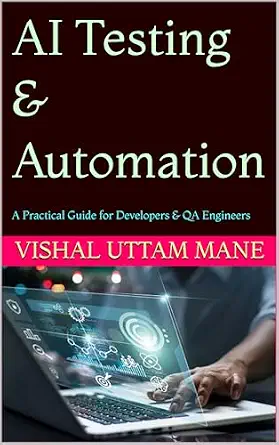
| AI Testing & Automation: A Pra | Developers and QA engineers | Intermediate | Kindle eBook | AI testing and test automation strategy |
| Bruno API Testing for Beginner | New developers and junior QA testers | Beginner | Kindle eBook | REST API testing |
| Full Stack Testing: A Practica | Developers and QA teams | Intermediate; working developers and QA professionals | Book (print ISBN listed) | — |
| Ultimate Web Automation Testin | QA professionals and web developers | Beginner through experienced testers | Book | Automation strategy and QA workflow efficiency |
| AI Testing with Python: Build | QA professionals, SDETs, automation engineers | Intermediate to advanced | Book | — |
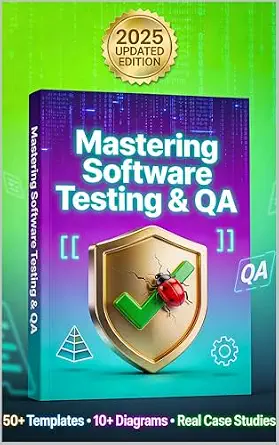
| Mastering Software Testing & Q | QA professionals and agile team members | Beginner through experienced professionals | Book | — |
| Software Testing Unlocked | Beginners and career changers | Entry-level | Book | — |
| How to Become a QA Tester in 3 | Aspiring QA professionals | Beginner | Paperback | — |
| Selenium Testing Interview Q & | Testers preparing for job interviews | Beginner to intermediate | Paperback | Selenium testing tool |
| QA Testing Book: 3-in-1 | Aspiring and experienced testers | Beginner through professional | Book (Amazon listing) | — |
| How Google Tests Software | Software engineers and testers | Intermediate to advanced | Paperback | Google’s testing methodology, roles, and culture |
More Details on Our Top Picks
Developer Testing: Building Quality into Software (Addison-Wesley Signature Series by Cohn)
Of all the books in this roundup, Developer Testing is the one I’d hand to a working developer first. Where Continuous Delivery zooms out to pipelines and release strategy, Tarlinder’s book stays at the code level, covering the unit, integration, and acceptance tests developers write every day, plus topics most QA books skip, like testability and designing for verification. That focus is why it earns the Best Overall slot: it meets developers where they already work. The tradeoff is that it’s a book about practice, not tools. If you want step-by-step Playwright or Cypress tutorials, Hands-On Automated Testing with Playwright will get you further. Readers who prefer recipes over reasoning may find parts of it dense. But for building durable testing judgment rather than framework fluency, nothing else here matches it.
Pros:- Covers the full developer testing spectrum, from unit to acceptance tests
- Treats testability as a design property rather than an afterthought
- Written for developers instead of dedicated QA staff
- Concepts outlast any single framework or tool
Cons:- Light on tool-specific, copy-paste examples
- Dense in places for readers who want recipes
- Not a guide to UI automation frameworks
Best for: Mid-level developers who own test suites and want to design more testable code
Not ideal for: Absolute beginners or readers after tool tutorials — it’s concept-heavy, not a Playwright or Selenium walkthrough
- Author:Alexander Tarlinder
- Series:Addison-Wesley Signature Series (Cohn)
- Publisher:Addison-Wesley Professional
- Published:2016
- Length:352 pages (paperback)
- Formats:Kindle and paperback
- Focus:Developer-owned testing and testability
- Skill level:Intermediate to advanced
Our verdict“The first book I’d buy for a developer who wants testing judgment, not just framework syntax.”
Continuous Delivery: Reliable Software Releases through Build, Test, and Deployment Automation
I treat Continuous Delivery as the anchor of this list: it’s the book that gave the industry its vocabulary for build, test, and deployment automation. Compared with Developer Testing, which lives inside the codebase, Humble and Farley work one level up, showing how automated tests fit into a deployment pipeline that makes releases boring and repeatable. That systems view is exactly what QA-minded developers need once their test suite outgrows a single repo. The honest caveat is age: published in 2010, it predates containers, Kubernetes, and modern cloud tooling, so its examples feel dated next to newer entries like Hands-On Automated Testing with Playwright. The principles aged better than the screenshots. I’d pair it with a tool-specific book rather than read it alone. For pipeline thinking, it remains the reference everything else here borrows from.
Pros:- Defined the deployment-pipeline vocabulary the industry still uses
- Connects automated testing directly to release reliability
- Principles have aged well across a decade of tooling change
- Practical patterns for build, test, and deployment automation
Cons:- Published in 2010, so examples predate containers and modern cloud
- Long and demanding — not a quick read
- Strategy-level, with little hands-on code
Best for: Senior developers and tech leads responsible for getting code safely and frequently into production
Not ideal for: Readers wanting current tooling tutorials — it predates Docker, Kubernetes, and GitHub Actions
- Authors:Jez Humble and David Farley
- Publisher:Addison-Wesley Professional
- Published:2010
- Length:512 pages (hardcover)
- Award:Jolt Product Excellence Award (2011)
- Focus:Deployment pipelines and release automation
- Audience:Developers, DevOps, and release engineers
- Formats:Hardcover and eBook
Our verdict“Read this to understand why your pipeline looks the way it does, then grab a newer book for the how.”
Hands-On Automated Testing with Playwright: Create Fast, Reliable, and Scalable Tests for Modern Web Apps with Microsoft’s Automation Framework
If your QA problem is flaky end-to-end tests on a modern web app, I’d call this the most practical pick in the roundup. Hands-On Automated Testing with Playwright commits fully to Microsoft’s Playwright framework, walking through fast, reliable, scalable test suites rather than surveying every tool on the market. That single-framework depth is the advantage over broader titles like Full Stack Testing: you finish with working skills, not an overview. Against Ultimate Web Automation Testing with Cypress, the choice is really Playwright versus Cypress — Playwright’s cross-browser and multi-language support gives this book the edge for larger suites. The tradeoffs: it assumes you’re comfortable writing JavaScript or TypeScript, and everything you learn is tied to one framework, so Selenium shops will find little that transfers directly.
Pros:- Single-framework depth instead of a shallow tool survey
- Emphasis on fast, reliable, scalable suites — the three ways E2E tests usually fail
- Directly applicable to modern web app stacks
- Hands-on structure builds working skills, not just theory
Cons:- Everything learned is tied to one framework
- Assumes JavaScript/TypeScript comfort that isn’t spelled out
- Listing gives little detail on prerequisites or scope
Best for: Web developers and SDETs standardizing end-to-end tests on Playwright
Not ideal for: Teams locked into Selenium or Cypress, and developers who don’t write JavaScript or TypeScript
- Framework:Microsoft Playwright
- Publisher:Packt Publishing
- ISBN:1806106477
- Focus:End-to-end testing for modern web apps
- Approach:Hands-on, example-driven
- Outcomes:Fast, reliable, scalable test suites
- Prerequisites:JavaScript or TypeScript basics
- Audience:Web developers and test automation engineers
Our verdict“The most directly job-ready pick here if your team tests web UIs with Playwright.”
AI Testing & Automation: A Practical Guide for Developers & QA Engineers (The AI Transformation Series)
Most books in this roundup teach you to test software; AI Testing & Automation teaches you to test systems that behave probabilistically, which is a different discipline. It covers strategies for validating AI features and folding AI assistance into QA workflows, which makes it, in my view, the natural pick for teams shipping AI features. Compared with AI Testing with Python, which anchors everything in Python tooling like PyTest and Selenium, this one reads more as strategy than code — a strength if you want concepts that survive any single library, a weakness if you want runnable examples. Against a fundamentals book like Developer Testing, it trades timelessness for relevance: AI-specific techniques age quickly, and some practices here may look dated within a couple of years. Beginners should start elsewhere; working QA engineers facing AI features will get the most from it.
Pros:- Addresses testing of probabilistic, AI-driven systems
- Covers both AI in QA workflows and QA for AI features
- Strategy-level guidance that isn’t locked to one library
- Written for developers and QA engineers alike
Cons:- Fast-moving subject matter may date quickly
- Thin listing detail makes depth hard to gauge before buying
- Too technical for true beginners
Best for: QA engineers and developers who suddenly own quality for AI or ML-powered features
Not ideal for: Newcomers to testing — it assumes fundamentals that books like Software Testing Unlocked teach first
- Series:The AI Transformation Series
- Format:Kindle eBook
- Focus:AI testing and test automation strategy
- Coverage:Techniques and best practices for AI QA
- Audience:Developers and QA engineers
- Skill level:Intermediate
- Approach:Practical strategies over code walkthroughs
Our verdict“The right second book for working testers whose roadmap now includes AI features.”
Bruno API Testing for Beginners: Test REST APIs Step-by-Step (Without Postman)
Bruno API Testing for Beginners is the narrowest book on this list, and I’d say that’s precisely why it earns a spot. Instead of surveying QA as a discipline the way Software Testing Unlocked or Mastering Software Testing & QA do, it teaches one job — testing REST APIs with Bruno, the open-source, offline-friendly Postman alternative — through step-by-step walkthroughs a genuine newcomer can follow. For a junior developer who needs to verify endpoints this week, that focus beats breadth. The tradeoffs are real, though: there’s little here for experienced testers, the listing promises no advanced examples or code samples, and Bruno skills transfer less cleanly to teams standardized on Postman or automated suites. Think of it as a first rung on the ladder — pair it later with something like Hands-On Automated Testing with Playwright once API checks need to live in CI.
Pros:- Genuinely beginner-friendly, step-by-step structure
- Teaches Bruno, a free open-source Postman alternative
- Narrow scope keeps the learning curve short
- Practical, do-it-now API testing skills
Cons:- Little to offer experienced testers
- No accompanying code samples
- Bruno skills transfer less cleanly to Postman-standardized teams
Best for: Junior developers and new QA testers who need to verify REST APIs without learning Postman first
Not ideal for: Experienced automation engineers — no advanced scenarios or code samples to grow into
- Tool covered:Bruno (open-source API client)
- Focus:REST API testing
- Approach:Step-by-step walkthroughs
- Skill level:Beginner
- Postman required:No
- Format:Kindle eBook
- Audience:New developers and junior QA testers
Our verdict“A low-cost, low-friction first step into API testing — outgrow it quickly and move on.”
Full Stack Testing: A Practical Guide for Delivering High Quality Software
Full Stack Testing earns the top spot because it answers the question most developer teams actually have: how the layers of testing fit together. Unit, API, UI, mobile, performance, security — it maps the whole stack and explains which techniques pay off where, with real-world examples that keep it from reading like theory. Next to a single-framework guide like Ultimate Web Automation Testing with Cypress, it sacrifices depth per tool for breadth of judgment, which is the right call for developers who own quality across an entire application. It also goes further into engineering practice than Software Testing Unlocked, making it the better second book after a beginner text. The honest drawbacks: some sections are light on code samples, and readers already deep in one specialty may find their chapter too brief. As a single desk reference, nothing else in this lineup covers this much ground.
Pros:- Covers the full testing stack in one coherent methodology
- Real-world examples keep the advice practical
- Serves both developers and QA engineers equally well
- Strong guidance on which technique fits which layer
Cons:- Some sections skimp on code examples
- Breadth means less depth on any single tool
- Specialists may find their own area under-served
Best for: Full-stack developers and SDETs responsible for quality across front end, back end, and everything in between
Not ideal for: Specialists who want exhaustive depth on one framework — a dedicated Cypress or Playwright guide goes further on that single tool
- Format:Book (print ISBN listed)
- Subject:Full stack application testing
- Coverage:Testing methodologies, tools, and best practices across the stack
- Approach:Practical guidance with real-world examples
- Skill Level:Intermediate; working developers and QA professionals
- Audience:Developers and QA teams
- Identifier:ASIN 1098108132 (print ISBN)
Our verdict“The one book I’d hand a developer who owns quality for an entire application rather than a single layer of it.”
Ultimate Web Automation Testing with Cypress: Master End-to-End Web Application Testing Automation to Accelerate Your QA Process
Where Full Stack Testing spreads its attention across every layer of an application, Ultimate Web Automation Testing with Cypress commits to a single framework — and that focus is the whole point. I’d point front-end teams already running JavaScript toward this one, because Cypress runs inside the browser, which makes debugging a failing test feel closer to ordinary development work than to classic QA. The book promises a path from fundamentals to end-to-end strategy, so it works as both an onboarding text and a reference. The tradeoff is reach: readers who need API, mobile, or performance coverage get nothing here, and teams evaluating Hands-On Automated Testing with Playwright will want to weigh cross-browser support before committing. The listing also stays quiet on exercises and sample projects, so hands-on learners take a small gamble.
Pros:- Single-framework depth on Cypress end-to-end testing
- Debugging model sits close to everyday front-end development
- Suits both newcomers to Cypress and experienced testers
- Covers automation strategy, not just syntax
Cons:- Cypress only — no API, mobile, or performance testing coverage
- Listing gives no detail on practical exercises or sample projects
- Weaker fit than Playwright-based options when cross-browser testing is a priority
Best for: Front-end developers and QA engineers on JavaScript stacks who want one framework-specific reference instead of a broad survey
Not ideal for: Teams still deciding between automation frameworks, or anyone needing API, mobile, or performance test coverage in the same book
- Format:Book
- Subject:End-to-end web application test automation
- Primary Tool:Cypress
- Skill Level:Beginner through experienced testers
- Focus:Automation strategy and QA workflow efficiency
- Audience:QA professionals and web developers
- Identifier:ASIN B0CQ4J99QH
Our verdict“If your team has already chosen Cypress, this is the most direct route to productive end-to-end coverage; everyone else should start broader.”
AI Testing with Python: Build Intelligent Test Automation Using Python, Selenium, APIs, PyTest, LLMs & AI-Powered Testing Tools
AI Testing with Python is the most forward-looking pick in this roundup, and the most demanding. Where Software Testing Unlocked walks a newcomer into the field, this one assumes you already live in Python and want Selenium, PyTest, API testing, and LLM-based techniques working together in one automation stack. The payoff is relevance: as teams fold AI-assisted test generation and self-healing scripts into their pipelines, readers here learn to build that tooling rather than just configure a vendor’s. Compared with Full Stack Testing, it trades breadth of QA judgment for a modern, code-first toolkit. Two cautions: the material is tough for beginners, and AI-focused content ages fast, so specific tool coverage may date quicker than the Python fundamentals underneath. The listing also omits pricing and ratings, which makes pre-purchase homework worthwhile.
Pros:- Connects Selenium, PyTest, and API testing with LLM-based methods
- Teaches building AI-assisted tooling, not just using it
- Practical Python examples throughout
- Positions readers for where test automation is heading
Cons:- Too technical for beginners
- AI tool coverage may date quickly as the market shifts
- No price or rating information in the listing
Best for: Python-fluent QA engineers and SDETs who want to add AI-assisted and LLM-based techniques to an existing automation practice
Not ideal for: Testing newcomers or non-Python teams — it assumes programming comfort and moves quickly from the first chapter
- Format:Book
- Subject:AI-powered test automation
- Primary Language:Python
- Tools Covered:Selenium, PyTest, REST APIs, LLMs, AI-powered testing tools
- Approach:Practical, example-driven
- Skill Level:Intermediate to advanced
- Audience:QA professionals, SDETs, automation engineers
- Identifier:ASIN B0H8CT7GW4
Our verdict“For Python-comfortable testers ready to modernize their automation stack, this is the most future-facing book in the lineup.”
Mastering Software Testing & QA: A Practical Guide to Manual Testing, Agile Quality, and Real-World Delivery
Most books in this roundup teach a tool; Mastering Software Testing & QA teaches the job around the tool. Its emphasis on manual testing, agile quality practices, and real-world delivery fills the gap that framework guides like Ultimate Web Automation Testing with Cypress leave open: what to test, when to test it, and how quality survives a sprint deadline. I see it as the strongest companion for testers embedded in agile teams, where deciding what not to automate matters as much as writing the script. The tradeoffs are real. Manual-first coverage means readers chasing hands-on automation skills should pair it with something code-heavy, and the listing offers no edition details and no customer ratings, so judging its currency takes a leap of faith. Less flashy than AI Testing with Python, but closer to daily QA reality.
Pros:- Balances manual testing craft with agile quality practices
- Frames testing around real delivery constraints
- Covers strategy decisions that tool-specific books skip
- Accessible across experience levels
Cons:- Automation coverage is lighter than dedicated automation guides
- No customer reviews or ratings available to gauge quality
- Edition and format details are unclear from the listing
Best for: QA professionals and testers on agile teams who want stronger test strategy and delivery judgment rather than another tool tutorial
Not ideal for: Developers hunting for code-level automation instruction — the manual-first focus will leave them wanting
- Format:Book
- Subject:Software testing and quality assurance
- Coverage:Manual testing, agile quality, real-world delivery
- Approach:Practical, delivery-oriented
- Skill Level:Beginner through experienced professionals
- Audience:QA professionals and agile team members
- Identifier:ASIN B0GDDW6VGY
Our verdict“Pick this if your bottleneck is testing judgment inside agile delivery, not tool syntax.”
Software Testing Unlocked – A Beginner’s Guide to QA & Automation
Software Testing Unlocked is the only title in this lineup built around getting hired, not just getting skilled. Its 20-step structure treats QA as a career path — fundamentals first, automation after — which makes it far easier to finish than a dense reference like Full Stack Testing. I’d hand this to a support engineer, bootcamp grad, or manual-tester-curious developer who wants a map of the whole field before picking a specialty. The cost of that accessibility is depth: the listing flags limited technical examples, and advanced topics get little room, so readers who already write code daily may outgrow it within weeks. Compared with Mastering Software Testing & QA, it covers less delivery practice but gives a clearer on-ramp. Think of it as the first book in a QA library, not the last.
Pros:- Structured 20-step path aimed at landing a first QA job
- Covers QA fundamentals and automation in one beginner-friendly arc
- Practical career framing, not just theory
- Realistic finish for readers new to testing
Cons:- Thin on detailed technical examples
- Skips advanced testing topics
- Experienced developers will outgrow it quickly
Best for: Career changers, bootcamp graduates, and support staff preparing for a first QA role
Not ideal for: Working developers who already automate tests — the fundamentals-heavy pacing will feel slow
- Format:Book
- Subject:Software testing and QA fundamentals
- Structure:20-step guided journey
- Skill Level:Entry-level
- Career Focus:Preparation for a first QA job
- Audience:Beginners and career changers
- Identifier:ASIN B0FSYMKDJK
Our verdict“The clearest starting line for anyone trying to turn curiosity about QA into a first job offer.”
How to Become a QA Tester in 30 Days
I see How to Become a QA Tester in 30 Days as the entry ramp of this lineup: a day-by-day plan aimed at people switching into QA from another field. Where the QA Testing Book: 3-in-1 asks readers to work through a long arc from novice to pro, this one compresses the fundamentals into a fixed schedule, which suits anyone who needs momentum more than depth. The career advice woven into the lessons is the real draw — resume and job-hunt guidance that pure tool books like the Selenium Testing Interview Q & A skip entirely. The tradeoff is shallow technical coverage: developers hoping to sharpen automation skills will outgrow it fast, and with no reader ratings yet, I can’t gauge how well the 30-day promise holds up in practice. Treat it as a starting line, not a reference.
Pros:- Clear day-by-day structure that keeps self-learners on schedule
- Blends testing techniques with resume and career guidance
- Approachable tone for readers with zero QA background
- Covers both core techniques and commonly used QA tools
Cons:- Technical depth is thin; automation content stays introductory
- No reader ratings available to validate the 30-day claim
- Advanced topics are largely absent
Best for: Career changers with no QA background who want a structured 30-day study plan plus practical job-hunting advice
Not ideal for: Working developers who want automation depth — the technical coverage stays at survey level
- Format:Paperback
- ISBN-10:1985238993
- Skill level:Beginner
- Structure:30-day step-by-step plan
- Coverage:Testing techniques, tools, career advice
- Audience:Aspiring QA professionals
- Technical depth:Foundational
Our verdict“The right first purchase for a career changer who needs structure and job-search help, but one you’ll outgrow within a year.”
Selenium Testing Interview Q & A: Selenium Testing Tool
This pick makes the most sense for one narrow job: getting through a Selenium interview. The question-and-answer format mirrors how hiring loops actually run, so readers can drill weak spots the night before instead of rereading a full textbook. Compared with Hands-On Automated Testing with Playwright, which builds skill through projects, this book builds recall — useful, but only up to the offer letter. I’d treat it as a companion to hands-on training rather than a replacement; it pairs naturally with something like AI Testing with Python, where Selenium appears inside real automation work. The drawbacks are real: no tutorials, few worked examples, and senior automation engineers will find the material too basic. For readers finishing How to Become a QA Tester in 30 Days, though, it’s a logical next step once the fundamentals are in place and interviews are booked.
Pros:- Focused question bank matched to real Selenium interview formats
- Quick to revise in the days before an interview
- Covers core Selenium concepts and related tooling
- Helps identify knowledge gaps before a hiring loop does
Cons:- No hands-on tutorials or worked examples
- Too basic for experienced SDETs or senior automation engineers
- Narrow single-tool scope limits long-term usefulness
Best for: QA candidates with Selenium interviews on the calendar who need rapid, focused Q&A drill practice
Not ideal for: Developers learning Selenium from scratch — there are no tutorials or project walkthroughs here
- Format:Paperback
- ISBN-10:1976877210
- Skill level:Beginner to intermediate
- Content format:Interview question-and-answer
- Focus:Selenium testing tool
- Coverage:Key Selenium concepts, tools, interview scenarios
- Audience:Testers preparing for job interviews
- Hands-on projects:Not included
Our verdict“Buy it the week before a Selenium interview, not as the book that teaches you Selenium.”
QA Testing Book: 3-in-1 – From Beginner to Pro, Developing Professional Skills in Quality Testing
Value is the story here. The QA Testing Book: 3-in-1 bundles a beginner-to-professional arc into a single purchase, so readers don’t have to stitch together separate primers the way they would with Software Testing Unlocked plus an advanced title later on. That breadth is also its weakness: covering everything from first principles to professional technique means dense chapters that casual readers may stall on, and the listing gives no edition or publication details, so I can’t confirm how current the tooling advice is. Against How Google Tests Software, which zooms in on one company’s philosophy, this book stays deliberately general — better for building a foundation than for learning how elite teams operate. If the 30-day guide feels too thin and Google’s book too specialized, this is the middle path, and likely the most pages per dollar in the lineup.
Pros:- Single-volume path from beginner through professional material
- Wide coverage across QA topics and techniques
- Works for both aspiring testers and those already in the field
- Strong pages-per-dollar value versus buying separate books
Cons:- Dense reading that can stall casual learners
- No edition or publication details to verify currency
- Broad scope sacrifices depth in places
Best for: Self-taught testers who want one purchase to carry them from first principles to professional-level practice
Not ideal for: Casual readers or busy developers — the dense, wide-ranging chapters demand sustained commitment
- ASIN:B0D94JCC64
- Format:Book (Amazon listing)
- Structure:3-in-1 combined volume
- Skill level:Beginner through professional
- Coverage:QA fundamentals plus advanced techniques
- Audience:Aspiring and experienced testers
- Edition details:Not provided
Our verdict“The sensible single purchase for committed self-learners who want one book to grow with.”
How Google Tests Software
This is the one book in the roundup I’d hand to a working engineer without caveats. How Google Tests Software explains how a company shipping at massive scale thinks about quality — the SET and TE roles, the split between small, medium, and large tests — and it reads as field report rather than tutorial. Compared with Developer Testing, which argues for quality practices at the individual-code level, this book operates at organizational altitude: hiring, culture, and process design. That focus is also the tradeoff. Published in 2012, some specifics predate the pipeline norms described in Continuous Delivery, and readers wanting step-by-step tool instruction should reach for the Playwright or Cypress guides instead. But for understanding why mature teams test the way they do, nothing else here comes close, which is why it anchors the ranking.
Pros:- Insider view of Google’s SET/TE model and test-sizing approach
- Written by the engineers who ran those teams
- Strategy and culture lessons that outlive specific tools
- Complements hands-on tool guides rather than competing with them
Cons:- 2012 publication predates modern CI/CD tooling and practice
- Light on step-by-step implementation guidance
- Assumes readers already work inside software teams
Best for: Practicing engineers and QA leads who want to see how an elite engineering organization structures testing at scale
Not ideal for: Beginners hunting for tool tutorials — it teaches organizational design and philosophy, not hands-on frameworks
- Format:Paperback
- ISBN-10:0321803027
- Publisher:Addison-Wesley
- Authors:James A. Whittaker, Jason Arbon, Jeff Carollo
- Published:2012
- Pages:281
- Focus:Google’s testing methodology, roles, and culture
- Skill level:Intermediate to advanced
- Audience:Software engineers and testers
Our verdict“The definitive strategy read for engineers who already test and want to understand how the best organizations do it.”

How We Picked
I evaluated every pick through one lens: what does a developer need to know to choose between these options? Each book was judged on five criteria — developer relevance (does it assume you write code, or is it aimed at manual testers?), hands-on practicality (working examples versus concept talk), tool currency (frameworks teams actually adopt in 2026), teaching structure (a clear path from first chapter to usable skill), and value for the time invested. Books that pair a modern framework with code-first exercises scored highest; titles that only survey concepts ranked lower, even when the writing is strong.
The ranking logic follows from those criteria. Tool-specific, code-heavy guides sit at the top because they produce measurable skill fastest — that is why the Playwright and Cypress titles outrank broad QA overviews. Foundational works like Continuous Delivery land in the upper middle: they score lower on immediate practicality but near-perfect on long-term value. Career-change and interview-prep books close out the list not because they are weak, but because they serve a narrower reader — and I weighted everyday developer utility above job-hunt utility for this roundup.
| QA testing tools for developer | Format |
|---|---|
| Developer Testing: Building Qu | — |
| Continuous Delivery: Reliable | — |
| Hands-On Automated Testing wit | — |
| AI Testing & Automation: A Pra | Kindle eBook |
| Bruno API Testing for Beginner | Kindle eBook |
| Full Stack Testing: A Practica | Book (print ISBN listed) |
| Ultimate Web Automation Testin | Book |
| AI Testing with Python: Build | Book |
| Mastering Software Testing & Q | Book |
| Software Testing Unlocked | Book |
| How to Become a QA Tester in 3 | Paperback |
| Selenium Testing Interview Q & | Paperback |
| QA Testing Book: 3-in-1 | Book (Amazon listing) |
| How Google Tests Software | Paperback |
Factors to Consider When Choosing QA Testing Tools For Developers
Before you pick any single title, step back and think about what you are actually buying. These 14 books are not interchangeable — they differ in the tools they teach, the careers they serve, and how quickly their advice will age. The sections below cover the factors that separate a smart purchase from a shelf decoration, including the mistakes buyers make most often in this category.
Pick the Tool First, the Book Second
The single most common mistake in this category is buying a well-reviewed book for the wrong framework. A Cypress guide does nothing for a team standardized on Playwright, no matter how good the writing is. Start by confirming what your stack already uses — or, if you are choosing fresh, look at job postings in your target market to see which frameworks employers ask for. In 2026 that usually means Playwright for new projects, Cypress for teams already invested in it, and Selenium mainly in legacy enterprise suites. API-focused developers should weigh a dedicated API testing title instead of a browser automation book. Only after the tool decision is made should you compare books within that lane, because a great book about the wrong tool is still the wrong book.
Depth Beats Breadth Once You Can Code
Broad overviews of QA — the ones promising to cover manual testing, automation, agile process, and delivery in one volume — look attractive because they seem to offer more for the money. For a developer, the opposite is usually true. You already understand software construction, so chapters re-explaining what a test case is will feel like padding. Code-first books with exercises, repos, and real projects build skill you can use the next day at work, and that utility compounds. Save the wide-ranging surveys for moments when you genuinely need the map — for example, moving into a QA lead role where process knowledge matters as much as tooling. If a book’s table of contents spends its first third on definitions, it was written for someone earlier in their path than you.
Classics Age Slowly, Tool Books Age Fast
Every book in this category sits somewhere on a decay curve, and knowing where your pick sits changes what a fair price looks like. Framework-specific guides have the shortest shelf life: APIs change, syntax gets deprecated, and screenshots drift from the current UI within a couple of years. Buy those for immediate use and treat them as disposable training, not permanent reference. Principle-driven works like Continuous Delivery or How Google Tests Software decay far more slowly, because pipeline design and test strategy do not churn with framework releases. Paying full price for a strategy classic is easier to justify than paying full price for a tool book you will replace in three years. When in doubt, check the publication date against the current major version of the framework it teaches.
AI Testing Claims Deserve a Skeptical Read
AI-assisted testing is the fastest-growing theme in QA publishing, and the quality gap between titles is wide. Some books teach concrete skills — generating test cases with LLMs, using AI for flake detection, evaluating model output, wiring AI into existing Selenium or PyTest suites. Others repackage familiar automation advice with an AI chapter bolted on to catch search traffic. Before buying, scan the table of contents for specific tools and workflows rather than generic AI enthusiasm: named libraries, code samples, and integration patterns signal substance. Also check whether the book assumes a language — several AI testing titles are Python-only, which is a real constraint if your team works in JavaScript. Buyers who are merely curious about where AI is heading will be better served by a survey-style pick than a 400-page code manual.
Match the Book to the Career Moment
A developer sharpening automation skills, a manual tester moving into automation, and a career changer chasing a first QA job are three different buyers who often end up shopping from the same list. Career changers should favor structured beginner paths and interview-prep material, because the immediate goal is passing screens and sounding credible, not mastering a framework. Working developers should skip straight to tool-specific or strategy titles — beginner material will bore them within two chapters. Manual testers sit in between: they need a book that respects their testing knowledge while teaching code, and buying a pure beginner title wastes the expertise they already have. Be honest about which buyer you are before comparing prices, because the cheapest path for one of these readers is wasted money for another. The wrong-level book is the purchase people regret most in this category.
Frequently Asked Questions
Should I learn Playwright, Cypress, or Selenium in 2026?
For most developers starting fresh, Playwright is the safest bet in 2026: it handles cross-browser testing well, auto-waits reduce flaky tests, and employer demand has grown faster than for any rival. Cypress still makes sense if your team already runs it or you value its debugging experience, and the Cypress pick in this lineup serves exactly that reader. Selenium remains common in large enterprises with long-lived suites, but new projects rarely choose it, which is why the Selenium titles here skew toward interview prep. If you work mostly on APIs rather than browser flows, skip all three and go straight to an API-focused guide like the Bruno book. The framework decision should come first — the right book follows from it.
Are QA testing books worth it if I already write unit tests?
Yes, but only if you buy above your current level. Unit testing teaches you to verify isolated logic; the gap most developers have is further up the pyramid — end-to-end flows, API contracts, CI integration, and release strategy. A good QA tools book fills exactly those gaps, and tool-specific picks do it fastest because they put you in a working test suite within the first chapters. What you should skip are beginner surveys that re-explain what testing is, since that material will feel repetitive. The practical filter is simple: if a book’s early chapters teach vocabulary you already use at work, move up the list to something code-heavier. Developers get the most value from books that treat testing as an engineering problem rather than a separate discipline.
Can one of these books actually get me a QA job?
A book can get you interview-ready, but it cannot get you hired on its own. The career-focused picks here — the 30-day plan, the 3-in-1 beginner volume, and the Selenium interview Q&A — are built to close the gap between zero knowledge and passing a first-round screen, and they do that job well for the price. What employers ask for beyond that is evidence you can apply the skill: a small public test repo, a portfolio project, or automation you built against a demo site. Plan to pair any career-entry book with two to four weeks of hands-on practice before applying. Also set expectations on the timeline — 30 days is realistic for interview vocabulary and basic automation, not for the depth a mid-level role expects. Treat the book as the syllabus and your own practice as the course.
Do I need to know Python before buying an AI testing book?
It depends on the title, and checking this before purchase saves real frustration. Some AI testing guides are Python-only from the first chapter — the AI Testing with Python pick in this lineup assumes comfort with Python, Selenium, and PyTest and builds everything on that stack. If your daily work is JavaScript or TypeScript, you would be learning a language and a testing approach at the same time, which doubles the effort. The more survey-oriented AI pick is largely language-agnostic and suits readers who want to grasp what AI changes about QA without writing Python. As a rule, match the book’s language to the one your team ships in, because test code you cannot run in your own pipeline stays theoretical. When the listing does not say, the table of contents will tell you within a page.
How quickly do QA testing books go out of date?
Framework-specific books have the shortest useful life — expect roughly two to three years before deprecated APIs, changed defaults, and stale screenshots start slowing you down, faster for rapidly moving tools. That does not make them bad buys; it makes them training material with an expiry date, so buy them when you will use them immediately. Strategy and process books decay far more slowly: the pipeline thinking in Continuous Delivery has stayed relevant for well over a decade because it teaches principles rather than syntax. Interview-prep titles sit in the middle — the questions age slowly, but framework specifics in the answers can drift. Before buying any tool-specific title, compare its publication year against the framework’s current major version. A one-version gap is fine; three versions usually means a frustrating read.
Conclusion
After weighing all 14 picks, the choice comes down to which buyer you are. For most developers, Hands-On Automated Testing with Playwright is the best overall option — it pairs the framework with the most momentum in 2026 with a teaching style that gets you writing real tests immediately. QA Testing Book: 3-in-1 is the best value, bundling a beginner-to-pro path into one purchase for readers who want breadth on a budget. Beginners with no QA background should start with How to Become a QA Tester in 30 Days, which trades depth for a clear, fast on-ramp into the field. Senior engineers and architects get the best return on Continuous Delivery or How Google Tests Software, the premium strategy picks whose lessons outlast any single tool. And for specific needs: Cypress teams should take Ultimate Web Automation Testing with Cypress, Python shops should take AI Testing with Python, API-first developers should take the Bruno guide, full-stack developers who want one book across the whole test pyramid should take Full Stack Testing, manual testers moving into automation should start with Mastering Software Testing & QA, and job hunters should keep the Selenium interview Q&A on the desk. Match the book to your moment, and any of these picks will earn its place.
Halloween Picks
halloween
As an affiliate, we earn on qualifying purchases.