

Finding the right software testing tools for students can be challenging, especially with so many options that vary in complexity and focus. The best overall pick for students is Selenium with Java, thanks to its versatility and widespread use in automation. For those just starting out, tools like TestComplete provide user-friendly interfaces, while more advanced learners may prefer comprehensive guides such as Lessons Learned in Software Testing. The main tradeoffs involve balancing ease of use against depth of functionality and cost. Keep reading for a detailed breakdown that will help you choose the best fit for your learning journey.

Get monitors, keyboards and dev gear delivered free — and shop member deals
- Fast, free delivery on millions of items
- Access to Prime Big Deal Days deals on October 6–7
- Prime Video, Amazon Music and more included
Key Takeaways
- Automation-focused tools like Selenium dominate the top of the list for students aiming to learn scalable testing approaches.
- Ease of use and beginner-friendly interfaces are key factors for early learners, favoring tools like TestComplete and certain guides.
- Comprehensive learning resources often include practical exercises but may lack direct hands-on testing features.
- Price and accessibility vary widely; free or open-source options are ideal for students on a budget, but premium tools offer more features.
- The most successful tools for students combine clear documentation, community support, and a balance of automation and manual testing capabilities.




| software testing tools for student | Format | Pages | Language | Publication Year |
|---|---|---|---|---|
| Lessons Learned in Software Te | Paperback | 350 | English | 1999 |
| Software Testing and Quality A | Hardcover | 420 | English | 2020 |
| Testing Computer Software | Paperback | 250 | English | 2002 |
| Software Testing Tools: Coveri | Hardcover | 300 | English | 2010 |
| Elevating Software Testing wit | eBook | 150 | English | 2023 |
| A Practitioner’s Guide to Soft | — | — | — | — |
| Software Testing: An ISTQB-BCS | — | — | — | — |
| AI Integrated Software Automat | — | — | — | — |
| The Software Tester’s Success | — | — | — | — |
More Details on Our Top Picks
Lessons Learned in Software Testing: A Context-Driven Approach
This book stands out for its emphasis on context-driven testing, offering practical lessons that resonate well with students aiming to understand real-world testing scenarios. Unlike more technical manuals like Testing Computer Software, this resource prioritizes experience-based learning, making it accessible for motivated learners ready to dive into testing strategies. However, its technical depth may challenge beginners, and it lacks detailed specifications or step-by-step guides. This makes it ideal for students with some foundational knowledge seeking to deepen their understanding through case studies and practical tips.
Pros:- Provides practical insights grounded in real-world testing scenarios
- Uses real-world examples to clarify complex testing concepts
- Encourages a flexible, context-driven approach to testing
Cons:- Content can be too technical for absolute beginners
- Lacks detailed specifications or structured tutorials
Best for: Students with basic testing knowledge who want to learn practical, experience-based techniques
Not ideal for: Complete beginners seeking straightforward, step-by-step tutorials without technical jargon
- Format:Paperback
- Pages:350
- Language:English
- Publication Year:1999
- Target Audience:Intermediate students and practitioners
- Focus Area:Context-driven testing
Our verdict“This book is best suited for students who want to augment theoretical knowledge with practical, experience-based testing insights.”
Software Testing and Quality Assurance: Exploring Testing Levels, Test Tools, Automation, and Quality Metrics for Improved Software Quality
This book offers an extensive overview of testing levels, automation, and quality metrics, making it a solid resource for students aiming to grasp the full scope of quality assurance. Compared to Lessons Learned in Software Testing, which favors practical lessons, this title emphasizes systematic strategies and metrics, appealing more to students interested in the theoretical frameworks behind testing. Its lack of specific edition details and absence of user feedback can be a drawback, but its thorough coverage makes it valuable for those pursuing a deeper understanding of testing processes. It’s less suitable for absolute beginners who need foundational tutorials.
Pros:- Offers comprehensive coverage of testing levels and automation tools
- Focuses on quality metrics to measure testing effectiveness
- Suitable for advanced students and aspiring QA professionals
Cons:- Lacks recent edition or publication details
- No available reviews or ratings to assess practicality
Best for: Students seeking a detailed, professional-level understanding of testing processes and quality metrics
Not ideal for: Beginners who need simple, easy-to-follow testing tutorials without deep theoretical content
- Format:Hardcover
- Pages:420
- Language:English
- Publication Year:2020
- Target Audience:Advanced students and professionals
- Focus Area:Testing levels and quality metrics
Our verdict“This book suits serious students and future QA specialists looking for an in-depth, structured approach to testing and quality assurance.”
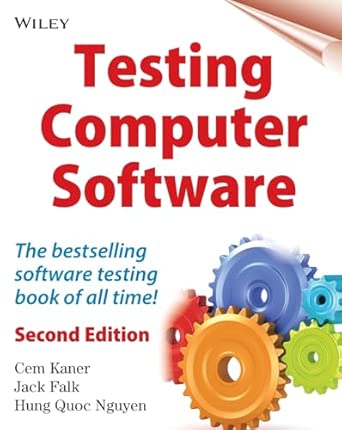
Testing Computer Software
This resource provides essential tools and methods for testing computer software, making it a good choice for students who are starting to learn fundamental testing techniques. Unlike Lessons Learned in Software Testing, which emphasizes practical lessons, this title offers more structured testing tools and methods, suitable for students who prefer a more technical, tool-focused approach. Its lack of detailed specifications and absence of reviews may limit its usefulness for beginners, but it remains a solid foundation for understanding core testing principles in software development.
Pros:- Provides essential testing tools for software quality assurance
- Helps improve software reliability through structured testing methods
- Good for building foundational testing knowledge
Cons:- No detailed specifications or recent reviews
- Lacks advanced or modern testing techniques
Best for: Students new to testing who need a structured introduction to testing tools and methods
Not ideal for: Advanced students or those seeking insights into automation and modern testing frameworks
- Format:Paperback
- Pages:250
- Language:English
- Publication Year:2002
- Target Audience:Beginner students and novice testers
- Focus Area:Basic testing tools and methods
Our verdict“This book is well-suited for beginners seeking a structured introduction to software testing tools and methods.”
Software Testing Tools: Covering WinRunner, SilkTest, LoadRunner, JMeter, TestDirector and QTP
This book offers detailed insights into popular testing tools, including WinRunner, SilkTest, and JMeter, making it valuable for students focused on learning specific automation and performance testing tools. While Lessons Learned in Software Testing provides general testing principles, this resource dives into tool functionalities and methodologies, which is ideal for students who want hands-on familiarity. Its potential drawback is that it may be outdated if not the latest edition, and it lacks recent reviews or detailed features, limiting its relevance for the latest testing environments.
Pros:- Provides detailed coverage of multiple testing tools
- Useful for gaining hands-on knowledge of automation frameworks
- Includes practical methodologies for tool application
Cons:- May be outdated if not the latest edition
- Lacks detailed specifications and recent user feedback
Best for: Students aiming to specialize in automation and performance testing tools
Not ideal for: Students seeking broad testing concepts or beginner-level introductions
- Format:Hardcover
- Pages:300
- Language:English
- Publication Year:2010
- Target Audience:Students and professionals focusing on automation tools
- Focus Area:Tool functionalities and methodologies
Our verdict“This book is best for students who want specific knowledge of popular testing tools and their methodologies.”
Elevating Software Testing with Artificial Intelligence
This resource explores how AI can transform testing processes, making it appealing for students interested in innovative, efficiency-enhancing techniques. Compared to traditional testing guides like Lessons Learned in Software Testing, this title emphasizes the integration of artificial intelligence for smarter testing. While it offers exciting insights into AI-driven solutions, its lack of detailed specifications and reviews makes it less practical for students seeking immediate, hands-on tools. It’s ideal for those already familiar with basic testing concepts and eager to explore future-oriented approaches.
Pros:- Provides innovative AI-driven testing solutions
- Enhances testing efficiency and accuracy through automation
- Introduces cutting-edge concepts for future-ready testers
Cons:- No detailed specifications or real-world case studies
- Limited practical application guidance for beginners
Best for: Students and early-career testers interested in AI and automation innovations
Not ideal for: Beginners or students needing fundamental testing tutorials without AI concepts
- Format:eBook
- Pages:150
- Language:English
- Publication Year:2023
- Target Audience:Students interested in AI and automation
- Focus Area:AI in software testing
Our verdict“This book is best for students eager to explore the impact of artificial intelligence on testing processes and future developments.”
A Practitioner’s Guide to Software Test Design
This book stands out for its focus on actionable testing techniques, making it ideal for students who want to grasp real-world test design. Compared with more theoretical resources like Software Testing: An ISTQB-BCS Certified Tester Foundation Guide, it emphasizes practical strategies over certification prep, which benefits students looking to apply skills immediately. However, its lack of detailed specifications and limited reviews make it less suitable for those seeking comprehensive technical depth or validation from other learners. This pick is perfect for students who prefer hands-on approaches and want to develop effective test cases quickly.
Pros:- Provides practical strategies for test design
- Covers various testing methodologies
- Helps improve software quality
Cons:- No detailed specifications provided
- No customer reviews available
Best for: Students seeking practical, real-world test design strategies to enhance their hands-on skills.
Not ideal for: Students looking for a structured certification guide or detailed technical specifications.
Our verdict“This book is ideal for students who want actionable test design techniques without getting bogged down in technical details.”
Software Testing: An ISTQB-BCS Certified Tester Foundation Guide – 4th Edition
This book offers comprehensive coverage of core testing principles aligned with ISTQB-BCS standards, making it a solid choice for students aiming for certification or a broad understanding of testing concepts. Compared to A Practitioner’s Guide to Software Test Design, which focuses on practical skills, this guide emphasizes foundational knowledge and exam readiness, though it lacks detailed technical specifications and user reviews. It’s well-suited for beginners and those wanting to solidify their theoretical understanding before diving into automation tools. This resource is especially beneficial for students preparing for formal certification or seeking a structured learning path.
Pros:- Comprehensive coverage of testing fundamentals
- Aligned with ISTQB-BCS certification standards
- Suitable for beginners and experienced testers
Cons:- No detailed specifications available
- No customer reviews or ratings provided
Best for: Students new to testing or preparing for ISTQB-BCS certification exams.
Not ideal for: Students seeking hands-on test automation or advanced testing techniques without certification focus.
Our verdict“This guide is best for students wanting a solid theoretical foundation and certification exam prep in software testing.”
AI Integrated Software Automation Testing with Java and Selenium
This automation tool integrates AI with Java and Selenium, making it ideal for students interested in cutting-edge testing technology. Its support for frameworks like TestNG and integration with GitHub Co-Pilot provides a practical edge over purely manual or traditional automation tools. The machine learning-based flaky test detection further improves reliability, but the requirement for Java knowledge and automation experience limits accessibility for beginners. Compared with books like The Software Tester’s Success Blueprint, which focus on career skills, this product emphasizes technical automation capabilities. It’s best suited for students eager to explore the latest in AI-driven testing and automation frameworks.
Pros:- Integrates AI for enhanced testing capabilities
- Supports popular frameworks like Selenium and TestNG
- Detects flaky tests using machine learning
Cons:- Requires knowledge of Java and automation testing
- No detailed pricing information available
Best for: Students with basic Java and automation testing experience looking to incorporate AI into their workflow.
Not ideal for: Beginners or students without prior programming or automation knowledge, due to technical complexity.
- Programming Language:Java
- Framework:Selenium WebDriver, TestNG
- AI Integration:Yes
- Version Control:GitHub Co-Pilot
- Special Feature:Machine learning-based flaky test detection
Our verdict“This tool is best for students ready to leverage AI and automation frameworks to improve testing reliability.”
The Software Tester’s Success Blueprint: How to succeed as a QA, QE, Automation Engineer and SDET
This book provides a comprehensive roadmap for students aiming to build a career as QA or automation engineers. Unlike the other products, which focus on technical skills or certification, this guide emphasizes the overall success strategies, soft skills, and career growth pathways. While it lacks detailed technical specifications and reviews, it offers practical advice for those seeking long-term professional development in testing roles. It’s particularly suited for students who want to understand what it takes to succeed in testing beyond just technical knowledge, making it a strategic investment for future career planning.
Pros:- Comprehensive guide for testing professionals
- Practical strategies for career success
- Suitable for QA, QE, Automation Engineers, and SDETs
Cons:- No detailed specifications provided
- No customer reviews or ratings available
Best for: Students aspiring to become QA, QE, or automation professionals seeking career guidance and success strategies.
Not ideal for: Students solely interested in technical testing tools or certification-focused learning without career development insights.
Our verdict“This book is ideal for students planning a long-term career in testing and wanting to understand success pathways.”

How We Picked
Our evaluation centered on how well each tool serves students who are new to software testing or seeking to expand their skills. We considered ease of learning, availability of tutorials, the scope of automation features, and community support. Cost was also a significant factor, as many students have limited budgets. Tools that offer a balance of practical application and educational value ranked higher, while those requiring extensive prior knowledge or expensive licenses were rated lower. The ranking reflects a combination of usability, learning potential, and overall value for student learners.| software testing tools for student | Format | Target Audience | Focus Area |
|---|---|---|---|
| Lessons Learned in Software Te | Paperback | Intermediate students and practitioners | Context-driven testing |
| Software Testing and Quality A | Hardcover | Advanced students and professionals | Testing levels and quality metrics |
| Testing Computer Software | Paperback | Beginner students and novice testers | Basic testing tools and methods |
| Software Testing Tools: Coveri | Hardcover | Students and professionals focusing on automation tools | Tool functionalities and methodologies |
| Elevating Software Testing wit | eBook | Students interested in AI and automation | AI in software testing |
| A Practitioner’s Guide to Soft | — | — | — |
| Software Testing: An ISTQB-BCS | — | — | — |
| AI Integrated Software Automat | — | — | — |
| The Software Tester’s Success | — | — | — |
Factors to Consider When Choosing Software Testing Tools For Students
Choosing the right software testing tool as a student involves more than just feature lists. You should consider your current skill level, future goals, and the specific types of testing you’re interested in, such as manual, automation, or performance testing. Budget is also important, especially if you’re just starting out. Additionally, look for tools with strong community support and plenty of educational resources, which can ease the learning curve. Be mindful of over-investing in complex tools before mastering basic concepts, but also don’t shy away from premium options if they align with your ambitions.Ease of Use and Learning Curve
For students new to testing, intuitive interfaces and comprehensive tutorials are essential. Tools like TestComplete or SoapUI are designed with beginners in mind, offering drag-and-drop features and guided workflows. Avoid overly complex tools that require extensive setup and prior knowledge, as they can hinder your learning progress. Striking a balance between simplicity and functionality ensures you build confidence while gaining practical skills.
Automation Capabilities
Automation is a key skill for future QA professionals, so selecting tools with automation support is wise. Open-source options like Selenium provide extensive flexibility but may require programming skills. Commercial tools like TestComplete or QTP offer more user-friendly automation features with less coding, which can accelerate your learning. Consider your comfort with coding when choosing, and aim for tools that can grow with your skills.
Cost and Accessibility
Many students prefer free or low-cost tools that still offer robust features. Open-source solutions like JMeter or Selenium fit this bill, but they often demand a steeper learning curve. Paid tools may provide better support and more polished interfaces but can be expensive. Look for educational discounts or trial versions to test before committing financially, and prioritize tools that offer ongoing updates and community support.
Documentation and Community Support
Good documentation and active user communities can make a significant difference when learning testing tools. Resources such as tutorials, forums, and official guides can help troubleshoot issues and accelerate your progress. Popular tools like Selenium and JMeter benefit from large communities, while lesser-known options might lack sufficient learning materials. Always check for available support channels before choosing a tool.
Compatibility and Integration
Ensure the tool integrates well with other development environments and supports your preferred programming languages. For example, Selenium supports multiple languages, making it versatile for different coding backgrounds. Compatibility issues can cause delays and frustration, so verifying that your chosen tool works with your operating system and development setup is essential. This consideration becomes especially important if you plan to work on group projects or real-world applications.
Frequently Asked Questions
Is it better to start with free or paid testing tools as a student?
Starting with free tools is often the best approach for students, as they provide a risk-free way to learn core concepts and gain hands-on experience. Open-source options like Selenium or JMeter are widely used and supported by active communities. However, paid tools can offer more polished interfaces, dedicated support, and additional features that might accelerate your learning if your budget allows. Ultimately, the best choice depends on your current skill level and learning goals.
Can I learn automation testing with limited programming experience?
Yes, but it depends on the tools you choose. Some automation tools like TestComplete or Katalon Studio are designed with beginner-friendly interfaces and require minimal coding. Others, like Selenium, are more flexible but demand some programming knowledge, typically in languages like Java or Python. If you’re new to coding, starting with tools that offer visual scripting or recorded test features can build your confidence before moving on to more complex automation frameworks.
Are there testing tools suitable for learning performance or load testing?
Absolutely, tools like JMeter and LoadRunner are excellent for performance and load testing. JMeter is free and widely used in academia and industry, making it a good starting point. These tools help students understand how software behaves under stress, a critical aspect of testing. Keep in mind that they often require some familiarity with testing concepts and may have steeper learning curves, but they are invaluable for comprehensive testing education.
What features should I prioritize in a testing tool for educational use?
For learning purposes, prioritize tools that offer clear documentation, active community support, and ease of use. Features like record-and-playback, visual test creation, and integration with popular programming languages can accelerate learning. Automation capabilities are valuable, but simplicity should come first to build foundational knowledge. As you advance, you can explore more complex tools with broader feature sets tailored to professional environments.
Is it necessary to learn multiple testing tools or focus on one?
Initially, focusing on a single, versatile tool allows for deeper understanding and skill mastery. Popular options like Selenium or JMeter provide broad application areas and extensive resources for learners. As your skills grow, exploring additional tools can broaden your testing repertoire and prepare you for real-world scenarios. However, concentrating early on one tool ensures you gain practical experience without spreading yourself too thin.
Conclusion
For beginners just starting their testing journey, tools like TestComplete or Selenium with Java stand out as the best options for ease of learning and practical skills. Students aiming for a comprehensive understanding of automation should consider investing in more advanced platforms or resource-rich guides like Lessons Learned in Software Testing. For those on a tight budget, open-source tools such as JMeter and Selenium offer excellent value without sacrificing functionality. Finally, advanced learners or those seeking industry readiness might prefer premium solutions with dedicated support and extensive features, like QTP or TestComplete. Choose based on your current skill level, learning goals, and budget to maximize your growth in software testing.”
Halloween Picks
halloween
As an affiliate, we earn on qualifying purchases.