

Students shopping for software testing tools for students in 2026 face a crowded shelf of books, certification guides, and hands-on automation tutorials — and the right pick depends on whether the goal is passing an exam, landing a first QA job, or actually writing test code. My top pick overall is Introduction to Software Testing: A Practical Guide to Testing, Design, Automation, and Execution, because it covers theory and hands-on practice in one volume and serves both coursework and self-study. Two standouts worth knowing early: Foundations of Software Testing ISTQB Certification, 4th Edition is the strongest choice if an ISTQB exam is on the horizon, while Learning Selenium Testing Tools with Python delivers the most directly employable automation skill for the price. The main tradeoff across this category is breadth versus practical depth — certification-oriented guides explain vocabulary and process but rarely include runnable code, while automation tutorials skip foundational concepts employers still expect you to know. Keep reading for the full ranked breakdown, including who each book is for and who should skip it.

Get business pricing on monitors, keyboards and dev gear
- Business-only prices and quantity discounts
- Tax-exempt purchasing
- Multiple users, one account, clear invoices
Key Takeaways
- Books that pair concepts with runnable automation code (Introduction to Software Testing, Learning Selenium with Python) ranked highest because they serve coursework, portfolios, and interviews simultaneously.
- ISTQB-specific guides (Foundations of Software Testing, 4th Edition) are the only picks aligned to an actual certification syllabus — but they lose value the day after the exam, which capped their ranking.
- Two entries on this list are near-duplicate titles (Full Stack Testing, with and without ‘The Age of AI’); the AI edition is the one worth buying, covering modern AI-assisted testing workflows the older edition ignores.
- Job-ready framing (All You Need to Know About Software Testing) beats classic texts for interview prep but underdelivers on test design depth — a real weakness once you’re on the job.
- Context-driven thinking books (Lessons Learned in Software Testing) are the most durable long-term reads, yet they’re the wrong first purchase for beginners who need vocabulary and structure first.
| Learning Selenium Testing Tools with Python |  | Best for Automation Beginners | Format: Print / eBook | Primary Tool: Selenium | Programming Language: Python | VIEW LATEST PRICE | See Our Full Breakdown |
| Full Stack Testing: A Practical Guide for Delivering High Quality Software |  | Best Overall | Format: Print / eBook | Coverage: Full stack (frontend, backend, pipelines) | Audience: Developers and QA professionals | VIEW LATEST PRICE | See Our Full Breakdown |
| Software Test Design: Write Comprehensive Test Plans to Uncover Critical Bugs in Web, Desktop, and Mobile Apps | 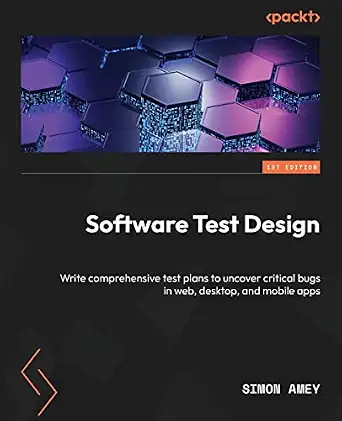 | Best for Test Planning Skills | Format: Print / eBook | Focus: Test design and planning | Platform Coverage: Web, desktop, mobile | VIEW LATEST PRICE | See Our Full Breakdown |
| Lessons Learned in Software Testing: A Context-Driven Approach |  | Best for Interview Prep and Testing Judgment | Format: Print / eBook | Focus: Testing philosophy and practice | Approach: Context-driven school of testing | VIEW LATEST PRICE | See Our Full Breakdown |
| Software Testing and Quality Assurance: Exploring Testing Levels, Test Tools, Automation, and Quality Metrics for Improved Software Quality |  | Best Value Reference | Format: Print / eBook | Coverage: Testing levels, tools, automation, quality metrics | Audience: Developers, testers, QA professionals | VIEW LATEST PRICE | See Our Full Breakdown |
| Foundations of Software Testing ISTQB Certification, 4th Edition |  | Best for Certification Prep | Format: Paperback / print textbook | Edition: 4th Edition | Alignment: ISTQB Foundation Level syllabus | VIEW LATEST PRICE | See Our Full Breakdown |
| Full Stack Testing: A Practical Guide for Delivering High Quality Software in the Age of AI |  | Best Advanced Pick | Format: Book (digital and print editions) | Audience level: Intermediate to advanced | Primary focus: Full stack testing strategy with AI integration | VIEW LATEST PRICE | See Our Full Breakdown |
| Introduction to Software Testing: A Practical Guide to Testing, Design, Automation, and Execution |  | Best for Coursework | Format: Paperback / print | Audience level: Beginner to intermediate | Primary focus: Testing principles, design, automation, execution | VIEW LATEST PRICE | See Our Full Breakdown |
| Software Testing with Selenium Automated Testing Tool: Selenium Book for Beginners |  | Best for First Automation Project | Format: Book (digital edition) | Audience level: Beginner | Primary focus: Selenium automated testing | VIEW LATEST PRICE | See Our Full Breakdown |
| All You Need to Know About Software Testing: From Beginner to Job-Ready QA Engineer |  | Best Career-Building Value | Format: Book (digital edition) | Audience level: Beginner to job-seeking | Primary focus: End-to-end QA career preparation | VIEW LATEST PRICE | See Our Full Breakdown |
| software testing tools for student | Format | Skill Level | Focus | Audience level |
|---|---|---|---|---|
| Learning Selenium Testing Tool | Print / eBook | Beginner to Intermediate | Test automation | — |
| Full Stack Testing: A Practica | Print / eBook | Intermediate | Testing strategy and quality delivery | — |
| Software Test Design: Write Co | Print / eBook | Beginner to Intermediate | Test design and planning | — |
| Lessons Learned in Software Te | Print / eBook | Intermediate | Testing philosophy and practice | — |
| Software Testing and Quality A | Print / eBook | Intermediate | Reference and overview | — |
| Foundations of Software Testin | Paperback / print textbook | — | — | Beginner to intermediate |
| Full Stack Testing: A Practica | Book (digital and print editions) | — | — | Intermediate to advanced |
| Introduction to Software Testi | Paperback / print | — | — | Beginner to intermediate |
| Software Testing with Selenium | Book (digital edition) | — | — | Beginner |
| All You Need to Know About Sof | Book (digital edition) | — | — | Beginner to job-seeking |
More Details on Our Top Picks
Learning Selenium Testing Tools with Python
Learning Selenium Testing Tools with Python earns its spot as the most practical entry point for students who want to write real automated tests rather than just read about them. Compared with Software Testing with Selenium Automated Testing Tool: Selenium Book for Beginners, this pick goes deeper on Python integration, which matters because Python is the language most university courses and entry-level QA job postings expect. The practical examples translate directly into portfolio projects, something the more theory-driven options in this roundup can’t offer.
The tradeoff is depth: once you move past fundamentals, the advanced coverage thins out, and the lack of downloadable code samples means retyping everything by hand. Students wanting a broader conceptual foundation should pair this with Lessons Learned in Software Testing.
Pros:- Teaches Selenium through Python, the most in-demand language for entry-level QA roles
- Practical examples that can become portfolio projects
- Approachable for beginners while still useful to experienced testers
- Focused on a single tool, so skills build quickly
Cons:- Advanced Selenium topics are only lightly covered
- No downloadable code samples or companion resources
Best for: Computer science students learning Python who want hands-on automation skills for internships
Not ideal for: Students seeking theory-heavy exam prep like ISTQB certification material — this is a tool-first guide, not a certification syllabus
- Format:Print / eBook
- Primary Tool:Selenium
- Programming Language:Python
- Skill Level:Beginner to Intermediate
- Focus:Test automation
- Includes Examples:Yes (in-text)
- Downloadable Code:No
Our verdict“This is the pick for students who want to say ‘I can write automated tests in Python’ by the end of a semester.”
Full Stack Testing: A Practical Guide for Delivering High Quality Software
Full Stack Testing stands out as the best all-around choice because it mirrors what modern software teams actually do: testing across the entire application stack, from APIs to UI to deployment pipelines. Compared with Learning Selenium Testing Tools with Python, which narrows in on one tool, this book gives students the vocabulary and breadth to participate in real sprint planning and QA discussions — a big advantage for internship interviews.
It’s written for working developers and QA professionals, so students should expect a faster pace and some assumed industry context. A few topics lack the detailed worked examples that make the Selenium book feel approachable. Compared with the AI-focused edition of the same title, this version skips AI-era tooling, which is either a strength or a gap depending on your coursework.
Pros:- Covers testing across the entire stack, matching real team workflows
- Practical, strategy-oriented rather than purely theoretical
- Serves both developers and QA-track students
- Strong foundation for internship and junior-role interviews
Cons:- Some topics lack detailed worked examples
- Assumes baseline knowledge of how modern applications are structured
Best for: Students preparing for software engineering internships who need to understand how testing fits across a whole application
Not ideal for: Absolute beginners with no development background — the full-stack framing assumes comfort with how applications are built
- Format:Print / eBook
- Coverage:Full stack (frontend, backend, pipelines)
- Audience:Developers and QA professionals
- Skill Level:Intermediate
- Focus:Testing strategy and quality delivery
- AI Coverage:No (see the Age of AI edition)
Our verdict“If you buy one book to understand testing as it’s actually practiced in industry, this is it.”
Software Test Design: Write Comprehensive Test Plans to Uncover Critical Bugs in Web, Desktop, and Mobile Apps
Software Test Design fills a gap none of the other picks address: how to actually structure a test plan before you touch a tool. Where Learning Selenium Testing Tools with Python teaches you to execute tests, this book teaches you to decide what to test and why — the skill that separates thoughtful testers from script-runners in job interviews.
The multi-platform coverage across web, desktop, and mobile is a real differentiator, since most student projects and capstones span at least two of these. The tradeoff is that it stays at the planning level; students expecting automation recipes or code will finish wanting more. Compared with Full Stack Testing, it’s narrower but sharper, and better suited to coursework where documentation and test-case design are graded.
Pros:- Teaches test-plan structure, a skill most tutorials skip
- Covers web, desktop, and mobile platforms
- Improves bug-detection efficiency with concrete strategies
- Directly applicable to graded coursework and documentation
Cons:- No automation or tooling instruction
- Thin supporting materials and no companion resources
Best for: Students working on capstone projects or coursework where structured test plans and test-case design are required deliverables
Not ideal for: Students hunting for automation coding tutorials — this book plans tests but doesn’t teach you to script them
- Format:Print / eBook
- Focus:Test design and planning
- Platform Coverage:Web, desktop, mobile
- Skill Level:Beginner to Intermediate
- Automation Content:No
- Best Use:Coursework and capstone test planning
Our verdict“Pick this when your course or project demands written test plans, not just executed test scripts.”
Lessons Learned in Software Testing: A Context-Driven Approach
Lessons Learned in Software Testing is the veteran of this lineup, and its context-driven philosophy is exactly what separates candidates who memorize definitions from those who can reason about testing in an interview. Compared with Software Testing and Quality Assurance, which catalogs tools and metrics, this book teaches judgment: when scripted testing fails, when to explore, when to stop.
That wisdom comes at a cost. There’s no tooling instruction, no Python, no Selenium — students who need to build hands-on skills first should start elsewhere. It also reads as a book of lessons rather than a course, so it works best as a second or third purchase after a practical guide like Learning Selenium Testing Tools with Python. Read it before interviews; skim it during your first internship.
Pros:- Teaches testing judgment, not just terminology
- Context-driven approach is respected across the industry
- Format of discrete lessons suits short reading sessions
- Durable career advice that outlasts any specific tool
Cons:- No coverage of modern tools or automation
- Not structured as a learning curriculum for beginners
Best for: Students preparing for QA interview questions that probe how they think, not just what they know
Not ideal for: Students who need hands-on tool skills first — there is no automation or tool instruction here
- Format:Print / eBook
- Focus:Testing philosophy and practice
- Approach:Context-driven school of testing
- Structure:Discrete lessons
- Skill Level:Intermediate
- Automation Content:No
Our verdict“The book to read when you know how to test and want to learn how to think about testing.”
Software Testing and Quality Assurance: Exploring Testing Levels, Test Tools, Automation, and Quality Metrics for Improved Software Quality
Software Testing and Quality Assurance works best as a single-volume reference — the book you keep on your desk while other guides teach you one thing well. It sweeps across testing levels, tools, automation, and quality metrics, giving students the broad map that narrower picks like Software Test Design deliberately skip. If a syllabus mentions everything from unit testing to defect metrics, this book has at least a section on it.
That breadth is also its weakness. Compared with Full Stack Testing, the treatment of each topic is shallower, and the technical density can overwhelm first-semester students who haven’t yet written a test. It earns its place as the affordable broad-coverage option, not as a primary learning path.
Pros:- Broadest topic coverage in one affordable volume
- Includes quality metrics, a topic most beginner books omit
- Useful as a quick reference across multiple courses
- Covers both manual concepts and automation techniques
Cons:- Shallow treatment of each individual topic
- Technical writing style can be hard for true beginners
Best for: Students on a budget who want one affordable book covering the full testing vocabulary for multiple courses
Not ideal for: First-semester students with no development background — the technical framing assumes prior exposure to software concepts
- Format:Print / eBook
- Coverage:Testing levels, tools, automation, quality metrics
- Audience:Developers, testers, QA professionals
- Skill Level:Intermediate
- Focus:Reference and overview
- Automation Content:Yes (concepts and techniques)
- Positioning:Broad reference, not a course book
Our verdict“A solid desk reference for the price, as long as it isn’t your only testing book.”
Foundations of Software Testing ISTQB Certification, 4th Edition
Most testing books teach skills; this one teaches you the vocabulary and framework the industry actually certifies against. The 4th edition maps directly to the ISTQB Foundation Level syllabus, which means every chapter doubles as exam preparation — a real advantage if a student’s degree program or first employer expects that credential. Compared with Introduction to Software Testing, which covers similar conceptual ground but without certification alignment, this book sacrifices some hands-on automation depth for syllabus precision. That focus is a tradeoff: there is little here about modern tooling like Selenium or Playwright, so readers wanting to build practical skills will need a companion title such as Software Testing with Selenium. This pick makes the most sense for students who want a structured, exam-ready path rather than a project-driven tutorial.
Pros:- Maps directly to the ISTQB Foundation syllabus
- Terminology aligned with what hiring managers and examiners expect
- Accessible enough for first-year students while still useful to working testers
- Structured progression that supports self-study
Cons:- No hands-on automation or tool tutorials
- Certification focus makes parts of it dry and abstract for casual learners
Best for: Students preparing for the ISTQB Foundation Level exam or applying to employers that require certification
Not ideal for: Learners who want hands-on automation practice — the book stays firmly at the conceptual and methodological level
- Format:Paperback / print textbook
- Edition:4th Edition
- Alignment:ISTQB Foundation Level syllabus
- Audience level:Beginner to intermediate
- Primary focus:Testing principles and terminology
- Certification relevance:Direct exam preparation
- Hands-on exercises:Limited
Our verdict“The right choice if your goal is passing the ISTQB Foundation exam or entering a certification-minded job market.”
Full Stack Testing: A Practical Guide for Delivering High Quality Software in the Age of AI
This is the most forward-looking title in the lineup, and that is both its appeal and its barrier. Where All You Need to Know About Software Testing touches AI-assisted QA as one topic among many, this book makes AI-era quality the organizing theme — covering how testing strategy changes when ML components enter the stack. For a final-year student or intern on a modern engineering team, that perspective is genuinely hard to find elsewhere. The tradeoff is steepness: compared with Introduction to Software Testing, this assumes you already understand test pyramids, CI pipelines, and API testing, and the practical examples lean conceptual rather than copy-along. This option stands out for readers who want to think like a quality strategist, not just execute test cases. First-semester students should build fundamentals elsewhere first.
Pros:- Only major title in this roundup centered on AI-integrated testing
- Covers the full testing stack end to end
- Strategy-level guidance that mirrors real engineering teams
- Strong preparation for modern QA interviews
Cons:- Too advanced for students still learning fundamentals
- Worked technical examples are sparse for a book labeled practical
Best for: Senior students, interns, and aspiring QA leads who already know testing basics and want AI-era strategy skills
Not ideal for: Beginners — it assumes familiarity with CI/CD, APIs, and test architecture from the outset
- Format:Book (digital and print editions)
- Audience level:Intermediate to advanced
- Primary focus:Full stack testing strategy with AI integration
- Topics covered:Test strategy, AI-era quality, delivery practices
- Hands-on exercises:Conceptual rather than tutorial-based
- Prerequisites:Working knowledge of testing and CI/CD
Our verdict“Choose this after you’ve mastered the basics and want testing skills that match where the industry is heading.”
Introduction to Software Testing: A Practical Guide to Testing, Design, Automation, and Execution
If a student could buy only one conceptual textbook, this is the strongest all-around foundation in the batch. It walks from testing strategy through design, automation, and execution — the exact sequence most university software engineering modules follow. Compared with Foundations of Software Testing ISTQB Certification, it trades certification alignment for broader practical coverage, including automation basics that the ISTQB title skips. Against Software Testing with Selenium, it goes shallower on any single tool but wider across the discipline, which suits coursework better than tool-specific training. The tradeoff is mediocrity of extras: there is little guidance on supplementary online resources, and readers wanting to actually script tests will still need a tool-focused follow-up. This pick makes the most sense for structured semester-long learning where breadth beats depth.
Pros:- Covers strategy, design, automation, and execution in one volume
- Balanced for both beginners and readers with some experience
- Practical framing that connects theory to real test processes
- Logical structure that matches typical university curricula
Cons:- Automation coverage is introductory rather than hands-on
- No companion online resources or exercise files mentioned
Best for: Students taking a software engineering or QA course who need one textbook covering the whole discipline
Not ideal for: Job seekers needing tool-specific portfolio skills — the automation coverage is introductory, not portfolio-grade
- Format:Paperback / print
- Audience level:Beginner to intermediate
- Primary focus:Testing principles, design, automation, execution
- Structure:Textbook-style progression
- Certification alignment:None
- Hands-on exercises:Guidance-level, not tutorial-based
Our verdict“The safest single purchase for coursework, as long as you add a tool-specific book for practical skills.”
Software Testing with Selenium Automated Testing Tool: Selenium Book for Beginners
Every roundup needs a book that gets you writing working test scripts in week one, and this is it. Where Introduction to Software Testing explains what automation is, this title shows you how to do it, walking through Selenium fundamentals with runnable examples — exactly what a student needs for a first internship task or a class project demo. Compared with All You Need to Know About Software Testing, which spreads itself across manual testing, APIs, and CI/CD, this book goes narrow and deep on one tool, which accelerates early progress but limits long-term value. That narrowness is the honest tradeoff: there is nothing on advanced frameworks like TestNG patterns at scale, and the lack of a troubleshooting section means beginners will hit browser-driver and locator errors with no in-book rescue. This option stands out as a confidence builder, not a career manual.
Pros:- Beginner-friendly with practical, runnable examples
- Focused on Selenium, the most in-demand entry-level automation tool
- Gets readers productive quickly without prior testing background
- Covers the essential concepts needed for a first automation project
Cons:- Stops at beginner level with no advanced framework coverage
- No troubleshooting guidance for common setup and locator errors
Best for: Students who need to automate a browser test quickly for a class project or first internship
Not ideal for: Learners aiming for broad QA careers — one tool at beginner depth won’t carry a resume
- Format:Book (digital edition)
- Audience level:Beginner
- Primary focus:Selenium automated testing
- Examples:Practical, included throughout
- Advanced topics:Not covered
- Troubleshooting section:Not included
Our verdict“Buy this to learn Selenium fast for a specific project; pair it with a broader book for career foundations.”
All You Need to Know About Software Testing: From Beginner to Job-Ready QA Engineer
This title makes the boldest promise in the roundup — beginner to job-ready in one volume — and mostly earns it through sheer topical range: manual testing, APIs, Selenium, Playwright, CI/CD, and AI-assisted QA all appear. That breadth is precisely what distinguishes it from Software Testing with Selenium, which covers one of those six areas, and from Introduction to Software Testing, which stops short of modern tooling like Playwright. For a student building toward first QA job applications on a tight budget, that one-stop coverage is the value proposition. The tradeoff is depth: any single topic here gets less page time than a dedicated book would give it, so readers hitting interview prep for a specific tool will outgrow it. There is also little transparency about supplementary materials. This pick makes the most sense as a career roadmap that tells you what to learn, with deeper books as follow-ups.
Pros:- Widest topic coverage in the roundup, from manual testing to AI-assisted QA
- Includes modern tools like Playwright and CI/CD that older textbooks omit
- Explicitly oriented toward job readiness and interviews
- Works as a standalone starting point for complete beginners
Cons:- Each topic gets only introductory depth
- No details on supplementary materials, exercises, or author credentials
Best for: Students on a budget who want one affordable book mapping the full path from first concepts to QA job applications
Not ideal for: Readers who need deep mastery of any single tool — the wide scope means shallow coverage per topic
- Format:Book (digital edition)
- Audience level:Beginner to job-seeking
- Primary focus:End-to-end QA career preparation
- Topics covered:Manual testing, automation, APIs, Selenium, Playwright, CI/CD, AI-assisted QA
- Depth per topic:Introductory
- Career orientation:Explicit job-readiness focus
Our verdict“The best single-book bet for a student whose goal is landing a first QA role rather than acing one exam or tool.”

How We Picked
Since every product in this category is a learning resource rather than a piece of software, I judged each one as a tool for a student’s specific end goal: passing a certification, completing a university course, building a portfolio, or getting hired into a first QA role. The criteria that separated the ranking were practical applicability (does it include exercises, runnable code, or worked examples a student can put in a portfolio?), syllabus alignment (how closely it maps to ISTQB and common university course outlines), currency (does it reflect 2026 practices like AI-assisted testing and modern CI/CD pipelines?), and longevity (will it stay useful after the exam or first course ends?).
I ranked resources that combine conceptual foundations with hands-on automation highest, because students who can both explain testing theory and demonstrate it in an interview consistently outperform those trained in only one dimension. Certification-only guides ranked in the middle: excellent for their narrow purpose, weak as general references. Purely conceptual or interview-focused books filled out the lower tier — not because they’re poorly written, but because a student’s budget goes further elsewhere first. Duplicate editions were resolved by recommending only the newer version where the update was substantive.
| software testing tools for student | Format | Skill Level | Focus | Audience level |
|---|---|---|---|---|
| Learning Selenium Testing Tool | Print / eBook | Beginner to Intermediate | Test automation | — |
| Full Stack Testing: A Practica | Print / eBook | Intermediate | Testing strategy and quality delivery | — |
| Software Test Design: Write Co | Print / eBook | Beginner to Intermediate | Test design and planning | — |
| Lessons Learned in Software Te | Print / eBook | Intermediate | Testing philosophy and practice | — |
| Software Testing and Quality A | Print / eBook | Intermediate | Reference and overview | — |
| Foundations of Software Testin | Paperback / print textbook | — | — | Beginner to intermediate |
| Full Stack Testing: A Practica | Book (digital and print editions) | — | — | Intermediate to advanced |
| Introduction to Software Testi | Paperback / print | — | — | Beginner to intermediate |
| Software Testing with Selenium | Book (digital edition) | — | — | Beginner |
| All You Need to Know About Sof | Book (digital edition) | — | — | Beginner to job-seeking |
Factors to Consider When Choosing Software Testing Tools For Students
Before spending money on any testing resource, it helps to understand what actually distinguishes a useful purchase from a shelf ornament. These are the factors that shaped my ranking — and the mistakes I see students make most often.Match the Resource to Your Actual Goal
The single most common mistake is buying a well-reviewed book for the wrong purpose. An ISTQB study guide is nearly perfect for certification prep and mediocre for learning automation; a Selenium tutorial is the reverse. Before purchasing, write down whether your next milestone is a passed exam, a completed assignment, or a job offer — each points to a different type of book. Students who buy for a vague goal like ‘learn testing’ end up with three half-read books instead of one finished one. The ranked list above reflects this: goals, not general quality, drove the ordering. A mid-tier book perfectly matched to your goal will beat a top-tier book that isn’t.
Practical Exercises Beat Passive Reading
Testing is a skill, and skills are built by doing. Books that include runnable code, downloadable sample applications, or end-of-chapter exercises produce demonstrably better outcomes than purely conceptual texts, because you can turn exercises into portfolio artifacts for interviews. When comparing two similar titles, check the table of contents for hands-on labs, GitHub repositories, or practice test banks. One caution: exercise-heavy books age faster, since tools and APIs change — verify the edition covers a current tool version before buying used. Conceptual books age slowly but leave you with knowledge you can’t easily show an employer. The strongest students combine one of each.
Certification Value Is Real but Narrow
The ISTQB Foundation certification genuinely helps in European and Asian job markets and some university programs give course credit for it — so an exam-aligned guide has real value. But that value has a hard expiration date: once the exam is passed, a syllabus-mapped study guide becomes a paperweight. If certification is on your path, buy the newest edition aligned to the current syllabus (old editions covering retired syllabi are heavily discounted for a reason) and treat it as a consumable, not a reference. If certification isn’t required in your region or industry, skip these guides entirely and invest in automation skills instead, which employers weigh more heavily in North America.
Edition Age Matters More Than You’d Expect
Software testing changed more between 2022 and 2026 than in the previous decade, largely because of AI-assisted test generation and maintenance tools. Older editions — even classics — may not mention CI/CD integration, shift-left practices, or AI copilots that now appear in real workplaces. Before buying, check the publication year against your course requirements and the job postings you’re targeting. A used older edition can save 60% and still teach timeless test-design principles, which makes it a reasonable choice for theory. But for anything touching automation tools or AI workflows, paying for the current edition is the better trade. This is also why my list favors newer editions when two versions of the same title exist.
Budget Strategy: One Deep Book Beats Three Shallow Ones
Students routinely overspend by buying overlapping titles — a certification guide, an automation tutorial, and a general intro that cover 70% of the same ground. A smarter allocation is roughly one foundational book plus one skill-specific book, totaling under $70 in most cases. Library access, publisher student discounts, and legitimate eBook subscriptions can cut that further; check whether your university’s library licenses tech book platforms before paying retail. The exception is certification guides, where buying new (for the current syllabus and any included practice exams) is usually justified. Whatever you buy, finish it — an unfinished book is the most expensive kind.
Frequently Asked Questions
Do I need an ISTQB certification book if I’m a student, or is it optional?
It depends on where you plan to work and what your program requires. ISTQB Foundation certification carries real weight in European and Asian QA job markets, and some universities grant course credit or require it, in which case Foundations of Software Testing, 4th Edition is a justified purchase. In North America, employers tend to prioritize demonstrable automation skills over the credential, so a Selenium or Python testing book usually delivers more interviews per dollar. A reasonable middle path: confirm whether the internships you’re targeting mention ISTQB in their requirements before buying a syllabus-mapped guide. If they don’t, spend the money on hands-on practice instead and revisit certification once employed — many companies sponsor it later.
Should I learn Selenium with Python or a different language as a student?
Python is the strongest default for students because it’s the most common first language in university programs, which means one skillset serves both coursework and test automation. Learning Selenium through Python also aligns with how most entry-level QA automation job postings are written, and the ecosystem of tutorials and Stack Overflow answers is larger than for alternatives like Java or C#. If your program is Java-heavy or your target employers use Java-based stacks, a Java-focused resource makes sense instead — but don’t switch languages midway, since the testing concepts transfer while the syntax friction slows you down. Learning Selenium Testing Tools with Python ranked highly on this list precisely because it meets students where they already are linguistically.
Which single book is best if I can only buy one?
For most students, Introduction to Software Testing: A Practical Guide to Testing, Design, Automation, and Execution is the one-book answer, because it covers test design theory, automation, and execution workflow in a single progression — roughly matching the arc of a full university testing course. You’ll outgrow it eventually, but it delays that point longer than any other single title on the list. The exceptions: if you have an ISTQB exam scheduled, the certification guide replaces it; and if you already know the theory and just need employable automation skills, the Selenium book is the better single purchase. Buying one matched book and finishing it beats owning three you’ve skimmed.
Are AI-era testing books actually different, or is ‘AI’ just marketing?
Partly marketing, partly genuine — which is why this distinction shaped the ranking. The AI-focused edition of Full Stack Testing earns its place because it addresses real 2026 practices: AI-assisted test generation, self-healing locators, and how manual testers now collaborate with AI tools. Those topics genuinely affect what entry-level QA jobs look like, and older editions simply don’t cover them. However, books that bolt an AI chapter onto an otherwise unchanged text offer little value over the cheaper previous edition — check the table of contents and publication date to tell the difference. A practical rule: if AI appears in the title but not in the automation and execution chapters, it’s a repackaged reprint.
Can I rely on free online tutorials instead of buying any of these?
Free tutorials are excellent for tool mechanics — installing Selenium, writing a first script — and no purchase is needed for that layer. What free content rarely provides is structured test-design thinking: how to choose what to test, design equivalence classes, or decide when automation isn’t worth the maintenance cost. That structured layer is exactly what employers probe in interviews and what coursework grades, and it’s where a well-written book earns its price. The efficient strategy is to use free tutorials for tool syntax and one paid book for the conceptual scaffold. If your budget is genuinely zero, prioritize the official tool documentation and any ISTQB syllabus PDF you can legally access, then borrow library copies of the theory books.
Conclusion
The right pick comes down to what the next twelve months look like for you. For best overall, Introduction to Software Testing: A Practical Guide to Testing, Design, Automation, and Execution is the most complete single purchase, carrying you from first principles through hands-on automation. For best value, Learning Selenium Testing Tools with Python converts a small spend into the single most requested entry-level QA skill. For certification-focused students, Foundations of Software Testing ISTQB Certification, 4th Edition is the only choice aligned to the actual exam syllabus. For absolute beginners who want gentle onboarding before committing, Software Testing with Selenium Automated Testing Tool offers the friendliest starting ramp. For job-seekers specifically, All You Need to Know About Software Testing: From Beginner to Job-Ready QA Engineer targets interview readiness directly, while Full Stack Testing: A Practical Guide in the Age of AI is the pick for students who want to graduate fluent in how modern, AI-assisted teams actually test. Whatever you choose, pick one, finish it, and build something with it — that’s what turns a book into a job offer.