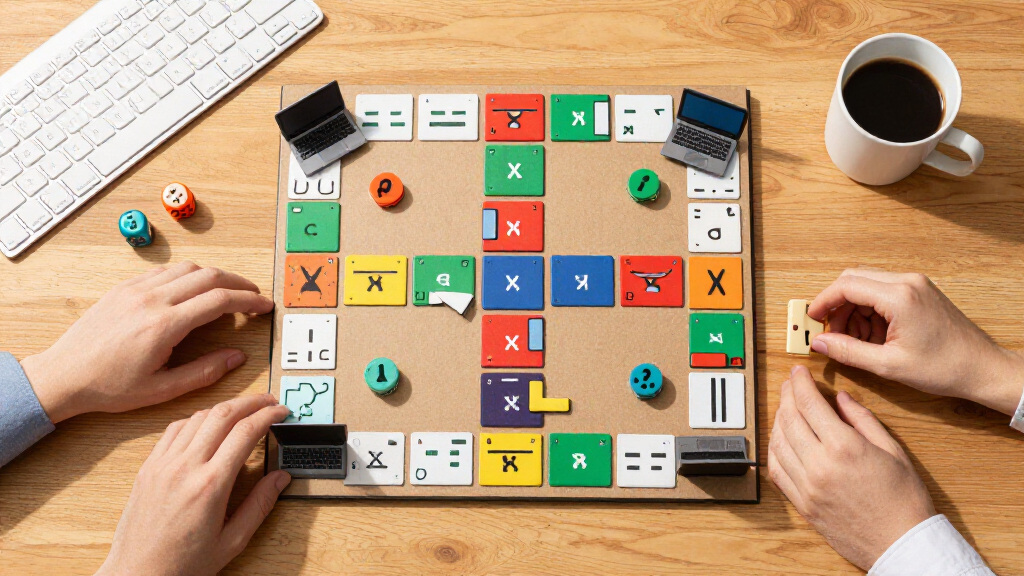

For developers seeking a screen-free way to practice programming logic, ThinkFun Code Master is my best overall pick because its structured puzzles focus directly on sequencing and problem-solving. ThinkFun Hacker adds a cybersecurity angle for older players, while Robo Rally turns instruction order and planning into a competitive group challenge. The main tradeoff is whether you want solo logic practice, a shared game night, or hands-on activities for younger learners. Age range, replay value, and how closely a game reflects coding concepts matter more than a promise to teach a particular language. Read on for how all 10 options compare and which one fits your needs.

Get business pricing on monitors, keyboards and dev gear
- Business-only prices and quantity discounts
- Tax-exempt purchasing
- Multiple users, one account, clear invoices
Key Takeaways
- Code Master leads for focused programming logic: its puzzle format makes it a stronger fit for solo sequencing practice than the more social Robo Rally.
- Hacker stands apart by adding cybersecurity: it suits older players who want a topic beyond basic commands and pathways.
- Robo Rally is the group-play choice: its competitive, movement-based play makes programming instructions social, though it is less like a quiet coding exercise.
- Early-learning picks serve different needs: MatataStudio bundles several games, while Code & Go Mouse and Coder Bunnyz center on accessible activities for children.
- Not every option teaches the same skill: GiiKER Super Decoder emphasizes code-breaking, and Bloxels focuses on making video games, so buyers should match the activity to their learning goal.
| Bloxels Build Your Own Video Games Official Kit |  | Best for Building and Sharing Games | Brand: Bloxels | Age range: 8 years and up | Educational objective: Digital creativity | VIEW LATEST PRICE | See Our Full Breakdown |
| ThinkFun Code Master Programming Logic Game |  | Best for Solo Logic Practice | Brand: ThinkFun | Age range: 8 and up | Players: 1 | VIEW LATEST PRICE | See Our Full Breakdown |
| MatataStudio Game Box: 5 Programming Board Games for Coding Set, Ages 4–10 |  | Best Add-On for MatataStudio Owners | Brand: MatataStudio | Model: Gamebox for Coding Set | Compatible with: Coding Set and Coding Set Pro | VIEW LATEST PRICE | See Our Full Breakdown |
| CoderMarz Educational Board Game: Mars, Coding, and Artificial Intelligence |  | Best for Coding and AI Themes | Brand: CoderMarz | Genre: Educational | Players: 2–4 | VIEW LATEST PRICE | See Our Full Breakdown |
| Coder Bunnyz STEM Coding Board Game | 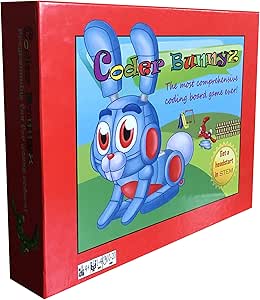 | Best for Beginner Group Play | Brand: Coder Bunnyz | Players: 4 | Recommended age: 4 years and up | VIEW LATEST PRICE | See Our Full Breakdown |
| Robo Rally Strategy Board Game |  | Best for Competitive Group Play | Players: 2–6 | Recommended age: 12 years and up | Playing time: 45 minutes | VIEW LATEST PRICE | See Our Full Breakdown |
| CoderMindz AI and Coding Board Game for Kids Ages 6+ |  | Best for Exploring AI Concepts | Recommended age: 6 years and up | Listed number of players: 11 | Game type: Strategy board game | VIEW LATEST PRICE | See Our Full Breakdown |
| GiiKER Super Decoder Code-Breaking Puzzle, 600 Levels |  | Best Compact Logic Puzzle | Puzzle type: Lock | Levels: 600: 100 easy and 500 advanced | Players: 1–2 | VIEW LATEST PRICE | See Our Full Breakdown |
| Learning Resources Code & Go Mouse Mania Board Game |  | Best for Early Coding Play | Players: 2–4 | Recommended age: 5–8 years | Brand: Learning Resources | VIEW LATEST PRICE | See Our Full Breakdown |
| ThinkFun Hacker Cybersecurity Coding Game, Ages 10+ |  | Best for Structured Solo Challenges | Recommended age: 10 years and up | Challenges: 120 | Materials: Cardboard, plastic | VIEW LATEST PRICE | See Our Full Breakdown |
| coding board games for developer | Brand | Recommended age | Players | Included components |
|---|---|---|---|---|
| Bloxels Build Your Own Video G | Bloxels | — | — | — |
| ThinkFun Code Master Programmi | ThinkFun | — | 1 | 12 guide scrolls, 12 action tokens, 8 conditional tokens, instruction booklet |
| MatataStudio Game Box: 5 Progr | MatataStudio | — | — | 2 double-sided exploration maps, 28 paper cards, 6 paper crafts, 7 building blocks, user guide, cloth bag, 1 die |
| CoderMarz Educational Board Ga | CoderMarz | 6 years and up | 2–4 | — |
| Coder Bunnyz STEM Coding Board | Coder Bunnyz | 4 years and up | 4 | 1 game board, 1 rule book, 4 decks of 52 instruction cards, 42 game element tokens, 4 bunny tokens, 4 destinations, 4 Bug Fixit! tokens, 4 carrots, 16 fences, 10 puddles, 1 die |
| Robo Rally Strategy Board Game | Renegade Game Studios | 12 years and up | 2–6 | — |
| CoderMindz AI and Coding Board | — | 6 years and up | — | — |
| GiiKER Super Decoder Code-Brea | — | 5–12 years | 1–2 | — |
| Learning Resources Code & Go M | Learning Resources | 5–8 years | 2–4 | Game board, coding cards, player pieces, maze obstacles, cheese wedges |
| ThinkFun Hacker Cybersecurity | ThinkFun | 10 years and up | — | Game grid, control panel, challenge booklet, solution booklet, agent tokens, movement tiles, revolving platform tiles, transaction tiles, and other game tokens |
More Details on Our Top Picks
Bloxels Build Your Own Video Games Official Kit
Bloxels turns game design into the main activity: players arrange pieces on a physical board to create characters and layouts, then use the app to bring those ideas to life. Compared with ThinkFun Code Master, which focuses on solving structured programming-logic puzzles, Bloxels gives developers-in-the-making more room to shape a game and share the finished result through Bloxels Arcade. Its no-coding approach makes it approachable for children curious about game creation before they tackle syntax or code-heavy tools.
The tradeoff is that the physical kit is only part of the experience: the Bloxels app is required to turn board creations into playable games. That makes this a stronger choice for visual creators than for buyers seeking a screen-free logic game, and it is listed for indoor use. I’d choose it for making and publishing simple game concepts, not for practicing programming rules directly.
Pros:- Physical board lets players create characters and game layouts.
- Bloxels app turns board designs into digital games.
- No coding is required to create games.
- Players can publish creations to the Bloxels Arcade.
Cons:- Requires the Bloxels app to bring creations to life.
- Designed for indoor use.
- Focuses on visual game design rather than explicitly teaching programming logic.
Best for: Children aged 8 and up who want to design characters and game layouts, then share their creations digitally without writing code.
Not ideal for: Buyers seeking a screen-free coding logic game or a way to practice programming concepts such as loops and conditionals, since the app is required and the description centers on visual game creation.
- Brand:Bloxels
- Age range:8 years and up
- Educational objective:Digital creativity
- Included:Bloxels account
- Material:Plastic
- Item weight:1.04 kg
- Usage:Indoor
Our verdict“Choose Bloxels for a young visual creator who wants to build and publish games, rather than a player looking for structured programming puzzles.”
ThinkFun Code Master Programming Logic Game
Code Master is the clearest pick here for practicing programming logic alone. Its 60 levels ask one player to arrange actions so an avatar collects power crystals, building from easier puzzles toward harder ones. That progression gives it a more structured learning path than Bloxels, which emphasizes creating and sharing games, and makes it a practical fit for a child who enjoys solving problems step by step.
The single-player format is also its defining limitation: this is not the choice for a group wanting to collaborate or compete around a shared board. Players must be comfortable arranging action sequences and working through puzzles, rather than designing their own game world. With 10 maps and guide, action, and conditional tokens, it offers a tangible way to explore instruction and logic, but the experience stays focused on puzzle-solving rather than broad game creation.
Pros:- 60 levels progress from beginner to expert.
- Builds sequential reasoning, planning, and problem-solving through puzzles.
- Includes 10 maps plus guide, action, and conditional tokens.
- Single-player format supports independent play.
Cons:- Designed for one player, so it does not support group play.
- Requires arranging action sequences to solve each puzzle.
- Focuses on logic puzzles rather than open-ended game creation.
Best for: Ages 8 and up who enjoy solo puzzles and want a gradual introduction to sequencing, planning, and programming logic.
Not ideal for: Families or classrooms seeking a collaborative multiplayer activity, or children more interested in designing their own games than solving fixed puzzles.
- Brand:ThinkFun
- Age range:8 and up
- Players:1
- Levels:60
- Maps:10
- Included components:12 guide scrolls, 12 action tokens, 8 conditional tokens, instruction booklet
- Materials:Cardboard, plastic
- Language:English
Our verdict“Pick Code Master for a solo learner who wants progressively harder programming-logic puzzles rather than a collaborative or creative game.”
MatataStudio Game Box: 5 Programming Board Games for Coding Set, Ages 4–10
This five-game box is an activity expansion, not a standalone coding game. Its themes range from treasure hunting and sheep rescue to football and chess, giving families with a compatible MatataStudio Coding Set or Coding Set Pro several different tabletop activities to revisit. Compared with Coder Bunnyz, which is a self-contained board game with its own cards and pieces, this set depends on another product; in return, it adds varied game scenarios for children already using the MatataStudio system.
The included maps, cards, crafts, blocks, die, and guide provide materials for tabletop play, with activities intended to encourage collaboration and logical thinking. That range may suit younger children who benefit from changing themes, but buyers without a compatible Coding Set should skip it. The listing also mentions a requirement for AA batteries without specifying the quantity, so check the setup needs before choosing this add-on.
Pros:- Includes five games with varied themes and activities.
- Offers a range of tabletop materials, including maps, cards, crafts, and blocks.
- Activities are designed to encourage collaboration and logical thinking.
- An instruction guide helps families and children get started.
Cons:- Requires the separately compatible Coding Set or Coding Set Pro.
- AA batteries are listed as required, but the quantity is not specified.
- Its value depends on already owning the compatible system.
Best for: Families or educators who already own a MatataStudio Coding Set or Coding Set Pro and want five themed tabletop activities for children aged 4–10.
Not ideal for: Buyers without a compatible MatataStudio Coding Set or Coding Set Pro, or anyone seeking a complete standalone coding board game.
- Brand:MatataStudio
- Model:Gamebox for Coding Set
- Compatible with:Coding Set and Coding Set Pro
- Age range:4–10 years
- Number of games:5
- Included games:Treasure Hunt on Grassland, Rescue Sheep, Matata Football Competition, Push Box Competition, Matata Aeroplane Chess
- Included components:2 double-sided exploration maps, 28 paper cards, 6 paper crafts, 7 building blocks, user guide, cloth bag, 1 die
- Recommended activity location:Tabletop
Our verdict“Choose this box to add variety to a MatataStudio setup you already own, not as a first or standalone coding game.”
CoderMarz Educational Board Game: Mars, Coding, and Artificial Intelligence
CoderMarz stands out by pairing coding concepts with Mars exploration and artificial intelligence. Its listed topics include loops, functions, conditionals, algorithms, training, prediction, and adaptive learning, making it a broader thematic introduction than ThinkFun Code Master, which centers on sequential logic puzzles. The 2–4 player format also gives it more potential for shared play than Code Master’s solo format, while its cooperative, area-control, and deck-building mechanics suggest more than one kind of interaction.
That breadth comes with less detail for buyers planning a specific session: the description gives no play time, difficulty, or full box contents. It is listed for ages 6 and up and needs no batteries, which keeps setup simpler than an app-dependent option such as Bloxels. I’d choose CoderMarz for a group drawn to space and AI themes, but not for someone who wants a clearly mapped sequence of coding lessons.
Pros:- Connects Mars exploration with coding and artificial intelligence topics.
- Introduces loops, functions, conditionals, and algorithms alongside AI concepts.
- Supports 2–4 players.
- Does not require batteries.
Cons:- Play time and difficulty are not specified in the description.
- The full contents of the box are not detailed.
- The description does not lay out a progressive learning path comparable to Code Master’s 60 levels.
Best for: Children aged 6 and up who enjoy space themes and want to explore coding and AI ideas in a 2–4 player tabletop game.
Not ideal for: Buyers who need a clearly stated play time, difficulty level, or complete component list before choosing a game.
- Brand:CoderMarz
- Genre:Educational
- Players:2–4
- Recommended age:6 years and up
- Materials:Cardboard, plastic
- Batteries required:No
- Game mechanics:Area control, cooperative, deck building
- Educational topics:Mars, coding, artificial intelligence
Our verdict“Choose CoderMarz for group play built around Mars, coding, and AI themes, but skip it if you need detailed information about session length or progression.”
Coder Bunnyz STEM Coding Board Game
Coder Bunnyz makes programming concepts tangible through a shared maze challenge. Players use instruction cards to guide bunny tokens toward carrots and destinations, with 13 levels and concepts that include loops, conditionals, functions, and algorithms. Compared with ThinkFun Code Master, which is built for one player, Bunnyz is designed for four, giving families, clubs, or classrooms a reason to talk through their instructions together. Its stated minimum age of 36 months also makes it the youngest-starting option among these five.
The breadth of concepts is appealing, but the card-driven rules may take guidance for younger players, and the four-player design makes it a poor fit for solo use or a small group that wants flexible player counts. Unlike Bloxels, it teaches through navigating a board with programmed moves rather than creating a digital game. Choose it for guided group learning; skip it if freeform design or solo puzzles are the priority.
Pros:- Introduces a wide range of programming concepts through movement and instruction cards.
- Includes 13 levels for guided play.
- Requires no prior coding experience.
- Includes a board, four bunny tokens, instruction-card decks, and game-element tokens.
Cons:- Designed for four players, limiting its fit for solo or smaller-group play.
- Card-based instructions and rules may require adult guidance for younger children.
- Its broad concept list may be more challenging to work through than a narrower beginner puzzle game.
Best for: Families, educators, and clubs seeking a structured, four-player introduction to coding ideas for children from age 4, including beginners.
Not ideal for: Solo players, groups that need a flexible player count, or children who prefer open-ended game creation over card-based maze instructions.
- Brand:Coder Bunnyz
- Players:4
- Recommended age:4 years and up
- Minimum age:36 months
- Game levels:13
- Programming concepts:Loops, branches, functions, conditionals, inheritance, parallelism, lists, stacks, queues, and algorithms
- Included components:1 game board, 1 rule book, 4 decks of 52 instruction cards, 42 game element tokens, 4 bunny tokens, 4 destinations, 4 Bug Fixit! tokens, 4 carrots, 16 fences, 10 puddles, 1 die
- Material:Plastic
Our verdict“Choose Coder Bunnyz for a beginner group that can learn together through guided maze challenges, rather than for solo play or game design.”
Robo Rally Strategy Board Game
Robo Rally is the strongest fit here for developers who enjoy planning a sequence, then dealing with the consequences when the environment or other players disrupt it. Players program robots with card decks to cross hazards and reach checkpoints, so its appeal is less about teaching syntax and more about sequencing, anticipating state changes, and debugging a plan. Compared with the puzzle-focused ThinkFun Hacker, Robo Rally turns those ideas into a competitive race for a larger group, with 2–6 players and many board layouts. Its four double-sided factory boards offer 80+ course combinations, while pre-painted figures keep setup approachable. The tradeoff is a more chaotic experience: hazards and opponent moves can derail careful programming, and the age-12-plus recommendation makes it a poor fit for younger coding beginners.
Pros:- Programming decks make planning and revising a sequence central to play.
- Four double-sided factory boards create more than 80 course combinations.
- Pre-painted robot figures are ready to use without assembly or painting.
- Supports groups of 2–6 players.
Cons:- Factory hazards and opponents can disrupt carefully planned moves.
- The recommended age of 12 and up excludes many younger coding learners.
- Its competitive group format is less suited to solo play or focused puzzle-solving.
Best for: Developer friend groups and families with older children who want a competitive, multiplayer game built around programming sequences and adapting to changing conditions.
Not ideal for: Younger children, players seeking a quiet solo coding puzzle, or groups that dislike unpredictable movement and direct competition.
- Players:2–6
- Recommended age:12 years and up
- Playing time:45 minutes
- Course combinations:80+
- Factory gameboards:4 double-sided
- Robot figures:6 pre-painted
- Programming cards:120 cards in 6 decks of 20
- Brand:Renegade Game Studios
Our verdict“Choose Robo Rally for older players who want a lively programming-and-planning race, not a controlled introduction to coding concepts.”
CoderMindz AI and Coding Board Game for Kids Ages 6+
CoderMindz reaches beyond basic move sequencing by connecting robot-themed play with ideas such as training, image recognition, inference, loops, and conditionals. That makes it a distinct choice for families who want a conversation starter about how AI systems learn, rather than a game focused mainly on racing or solving a fixed puzzle. Compared with Learning Resources Code & Go Mouse Mania, which centers on moving a mouse through a maze with coding cards, CoderMindz presents a broader set of programming and AI topics and mentions a downloadable curriculum. The tradeoff is that the supplied information gives little detail about how the manual gameplay teaches each concept, and its player-count listing of 11 is unusual enough to check before buying for a particular group. It is best treated as an educational activity, not a coding simulator.
Pros:- Pairs programming topics with introductory AI concepts such as training and inference.
- Covers loops, functions, conditionals, and algorithms.
- Product information mentions a downloadable curriculum.
- Manual play offers a screen-free way to discuss computational ideas.
Cons:- The listed player count of 11 is unusual and may not suit typical small groups.
- Manual operation does not provide digital feedback or interactive coding tools.
- The product details do not explain in depth how each AI concept is taught during play.
Best for: Parents and educators introducing children ages 6 and up to basic programming vocabulary alongside beginner-friendly AI ideas.
Not ideal for: Buyers who need clearly specified small-group rules, digital coding practice, or a game whose learning mechanics are fully explained in the product details.
- Recommended age:6 years and up
- Listed number of players:11
- Game type:Strategy board game
- AI concepts:Image recognition, training, inference, data, adaptive learning, autonomous behavior
- Coding concepts:Loops, functions, conditionals, algorithms
- Operation mode:Manual
- Dimensions:11.8 × 9.1 × 2 inches
- Weight:2.3 pounds
Our verdict“Pick CoderMindz when AI vocabulary matters as much as basic coding; choose Code & Go Mouse Mania for a more straightforward maze-and-command activity.”
GiiKER Super Decoder Code-Breaking Puzzle, 600 Levels
GiiKER Super Decoder is the most portable and self-contained option in this group: players infer a hidden four-color code from clues and have seven moves or fewer to solve it. That repeated cycle of testing possibilities and interpreting feedback gives developers a compact exercise in deduction and hypothesis checking, though it is not a lesson in programming commands or code structure. Compared with ThinkFun Hacker, which uses a grid, tiles, and cybersecurity-themed challenges, Super Decoder is smaller and built around one focused code-breaking mechanic. Its 600 levels, including easy and advanced sets, support repeated solo play, and two-player mode adds a simple shared challenge. The compromises are a small handheld format that is not ideal for a group around a table and the need for two AA batteries.
Pros:- Offers 600 levels split between easy and advanced challenges.
- Supports solo play and two-player gameplay.
- Direct or indirect clues give players different levels of help.
- Compact handheld design includes a mute mode.
Cons:- Requires two AA batteries.
- The small handheld board is less suitable for group tabletop play.
- Code deduction does not directly teach programming syntax or algorithms.
Best for: Developers who want a small solo logic challenge for travel, short breaks, or occasional two-player code-breaking sessions.
Not ideal for: Families seeking a substantial tabletop game for several players or learners specifically looking to practice programming concepts such as loops and functions.
- Puzzle type:Lock
- Levels:600: 100 easy and 500 advanced
- Players:1–2
- Recommended age:5–12 years
- Dimensions:4.13 × 2.68 × 1.34 inches
- Weight:0.09 kg
- Batteries:2 AA batteries required
- Material:Plastic
Our verdict“Choose Super Decoder for portable, repeatable code-breaking; choose ThinkFun Hacker for a broader tabletop puzzle experience with cybersecurity themes.”
Learning Resources Code & Go Mouse Mania Board Game
Code & Go Mouse Mania is the most direct choice here for young children starting with the basic idea that commands can guide a character through a problem. Players use coding cards to plan a route around obstacles and collect cheese, turning sequencing and step-by-step planning into a shared, screen-free activity. Compared with CoderMindz, it keeps the learning focus narrower and more concrete; it does not cover the same range of AI topics, but its maze objective is easier to grasp for ages 5–8. The multiplayer format for 2–4 players also makes it a natural fit for family or classroom turns. The tradeoff is that children need to read and follow command cards, which can call for adult help, and the listed product information does not include a manufacturer warranty.
Pros:- Uses coding cards to make command sequencing tangible.
- Screen-free maze play encourages planning and problem-solving.
- Supports interactive play for 2–4 players.
- Includes obstacles and cheese pieces to give routes a clear goal.
Cons:- Players need to read and follow step-by-step commands, which may require adult support.
- Its early-learning focus offers limited depth for older children or experienced developers.
- Manufacturer warranty is not included in the supplied product information.
Best for: Families and early-years educators looking for a screen-free, shared activity that introduces children ages 5–8 to commands and route planning.
Not ideal for: Older children or developers seeking advanced programming challenges, AI content, or a game that works well before players can follow written commands.
- Players:2–4
- Recommended age:5–8 years
- Brand:Learning Resources
- Included components:Game board, coding cards, player pieces, maze obstacles, cheese wedges
- Model number:LER2863
- ASIN:B078WMLTJN
Our verdict“Choose Code & Go Mouse Mania for young beginners who learn through guided, hands-on route planning; choose CoderMindz for broader AI and coding topics.”
ThinkFun Hacker Cybersecurity Coding Game, Ages 10+
ThinkFun Hacker turns coding-adjacent reasoning into a set of 120 cybersecurity-themed puzzles. Players arrange tiles and tokens to solve challenges, making planning, spatial reasoning, and logical problem-solving the main draw rather than competitive play. The progression from beginner to expert gives it more structured challenge variety than GiiKER Super Decoder, whose core task stays focused on guessing a hidden color code. Hacker also includes a solution booklet, so players can check an attempt and continue without needing another person to run the game. Its tradeoff is a less social format than Robo Rally: the supplied information centers on individual puzzle-solving, not a multiplayer race. The cardboard and plastic pieces also make it a straightforward puzzle kit rather than a premium-feeling collection of components.
Pros:- Includes 120 challenges ranging from beginner to expert.
- Puzzle solving practices planning, logical reasoning, and spatial reasoning.
- Cybersecurity theme gives the coding-related challenges a clear context.
- Instruction and solution booklets support independent play.
Cons:- The supplied details do not specify a multiplayer mode.
- Recommended for ages 10 and up, making it less suitable for younger beginners.
- Components use cardboard and plastic rather than premium materials.
Best for: Developers, older children, and puzzle fans ages 10 and up who prefer structured, progressively harder logic challenges with cybersecurity themes.
Not ideal for: Buyers looking for a lively multiplayer game, a hands-on programming environment, or polished premium components.
- Recommended age:10 years and up
- Challenges:120
- Materials:Cardboard, plastic
- Included components:Game grid, control panel, challenge booklet, solution booklet, agent tokens, movement tiles, revolving platform tiles, transaction tiles, and other game tokens
- Brand:ThinkFun
- Model:Hacker
- Edition:Standard Edition
Our verdict“Choose Hacker for a structured solo puzzle progression with cybersecurity flavor, or Robo Rally if your group wants competitive play.”
How We Picked
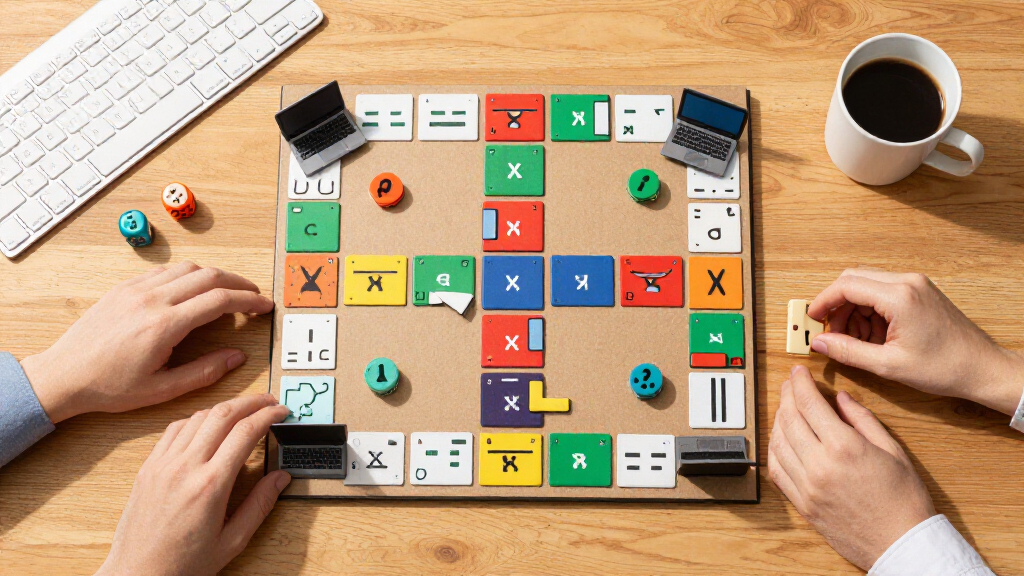
I ranked these games by how clearly their play connects to ideas developers use: sequencing instructions, debugging outcomes, planning ahead, recognizing patterns, and understanding systems. I also weighed age fit, how easily a new player can get started, whether the game works solo or with a group, and how much variety its format appears to offer. Those factors help distinguish a programming logic puzzle from a code-breaking challenge or a game-making kit.
Code Master ranks first because its core activity most directly supports structured programming logic. Picks such as Hacker and Robo Rally follow for their distinct cybersecurity and multiplayer strategy angles, while the child-focused games are ranked for accessibility and learning format rather than adult developer depth. I treat Bloxels, GiiKER Super Decoder, and other adjacent options as useful when their specific creative or deduction focus matches the buyer’s goal; they are not interchangeable with programming instruction.
Factors to Consider When Choosing Coding Board Games For Developers
Before choosing, decide what you want the game to do: offer a developer a logic exercise, give a family a playful introduction to coding, or make a group activity out of planning instructions. The most useful comparison is not simply which box says “coding,” but how its play connects to the skill you want to practice.
Match the game mechanic to the skill
Games that ask players to arrange commands or predict a sequence map most directly to programming fundamentals. Deduction games can strengthen pattern recognition, but cracking a code is not the same activity as writing or debugging a program. Creative game-building kits focus more on designing an experience than on practicing algorithmic steps. A common mistake is treating every STEM label as evidence of the same learning outcome. Pick one primary goal, then use the game’s central action—not its theme—to judge fit. If your goal is developer practice, prioritize clear instruction, sequencing, and cause-and-effect feedback.
Choose for the youngest regular player
For a mixed-age household, the youngest person who will play regularly should guide the difficulty choice. A game that is too advanced can turn a shared activity into an adult-led lesson, while an overly simple one may lose older players quickly. Check whether reading, arithmetic, or independent rule-following is expected, not just the age label. Younger children often benefit from visible movement and concrete pieces that make an instruction’s result easy to see. Older beginners may prefer puzzles that let them work at their own pace. Avoid buying a more complex game solely because an adult in the group is a developer.
Decide between solo practice and group play
Solo puzzles work well for short, focused sessions and let players retry without waiting for a turn. Group games can build discussion around planning and mistakes, but competition may reward winning more than explaining the logic behind a move. If the main goal is shared learning, look for moments where players can compare strategies or talk through instructions. For a developer who wants a quiet mental challenge, a multiplayer format may add friction rather than value. Ask how many people will actually join most sessions, since an occasional large game night should not outweigh regular solo use. This distinction helps separate puzzle-focused options from social strategy picks.
Look for replay variety, not just a large level count
A long list of puzzles can keep a solo game in rotation, but the number alone does not reveal whether challenges vary in method or simply grow harder. For board games, replay can also come from player interaction, changing strategies, or multiple ways to approach a goal. A fixed sequence may suit a learner who enjoys steady progression, while a group may prefer outcomes that shift with each session. Check what happens after the included challenges are solved or familiar. A common buying error is assuming a high level count automatically means lasting interest. Match the source of variety to the player’s habits.
Treat themes as a gateway, not proof of instruction
Mars, robots, security, and video-game creation can make abstract ideas easier to approach, but the theme does not define what a player learns. A cybersecurity setting may introduce systems thinking without teaching practical security work. A game-making kit can encourage creativity without providing the same structured practice as a command-sequencing puzzle. Consider whether the player is drawn to the theme enough to keep returning, then check that the core mechanic still serves your goal. For developers buying for themselves, a familiar technical theme may be fun but not automatically challenging. For children, interest in the setting can be the reason they stick with a new kind of problem.
Pay for fit and flexibility, not a bigger box
A multi-game set may suit a family seeking several activity styles, while a single-purpose puzzle can be a better match for someone who wants a clear, repeatable challenge. More components do not necessarily mean more useful coding practice. Check storage, setup time, and whether the game can be brought out for a short session; these practical details affect how often it gets played. If you are choosing for a classroom or club, consider whether turns move quickly enough for a group and whether the rules are easy to explain. For a gift, age range and the recipient’s preferred play style are safer guides than a broad educational claim. Choose the format that fits the likely routine.
Frequently Asked Questions
Which of these games is closest to practicing programming logic?
ThinkFun Code Master is the clearest fit when you want structured logic puzzles built around planning and sequences. It is more directly aligned with programming-style reasoning than GiiKER Super Decoder, which centers on cracking hidden codes, or Bloxels, which focuses on creating video games. That distinction matters: pattern deduction and game design can be useful adjacent activities, but they do not provide the same kind of instruction planning. Choose based on whether you want a focused logic exercise or a broader creative or puzzle experience. None of these should be treated as a replacement for writing code.
Are these games suitable for adult developers, or mainly for children?
The lineup includes options with different audiences and levels of challenge, so an adult developer should look beyond the educational label. Code Master offers a focused puzzle format, Hacker adds a cybersecurity theme for older players, and Robo Rally makes planning instructions a group strategy activity. Child-oriented options such as Code & Go Mouse Mania and Coder Bunnyz are better suited to introducing ideas through accessible play than to advanced technical practice. Adults may enjoy them as casual games, but should not expect professional coding exercises. For a mixed-age group, choose the game whose core challenge everyone can engage with.
Should I choose a solo puzzle or a multiplayer game for a coding club?
For a club that values discussion and shared strategy, a multiplayer game such as Robo Rally can give players a reason to compare plans and outcomes. Solo puzzle formats are easier to use for individual stations, short practice sessions, or players who prefer working at their own pace. Think about group size and how long players may wait between turns; a game that works well at home may not keep a large club involved. You can also pair formats, using a solo challenge for quiet work and a group game for discussion. The right choice depends more on the session structure than on the players’ coding experience.
Does a coding-themed game teach a programming language?
These games are best understood as ways to practice concepts such as sequencing, logic, planning, or pattern recognition, not as lessons in a specific programming language. A theme involving robots or cybersecurity does not by itself teach syntax, software tools, or real-world development workflows. If your goal is language instruction, use a game as a supplement to a course, tutorial, or coding project. Ask what a player actually does during a turn: arranging steps is closer to algorithmic reasoning, while decoding clues develops a different skill. This expectation check can prevent disappointment after purchase.
Which option makes the most sense for a family with children of different ages?
Start with the youngest child’s ability to follow the rules, then check whether older players will still find the activity engaging. MatataStudio’s multiple-game format may appeal to families seeking variety, while Robo Rally offers a more social strategy experience for players ready for its rules. A simpler movement-based activity can be a better shared starting point for younger children, even if it offers less depth for adults. Consider whether older siblings can help without taking over the decisions. For a wide age range, ease of joining and turn-taking may matter more than the most advanced coding theme.
Conclusion
My best overall choice is ThinkFun Code Master for buyers who want direct, structured programming logic practice. For best value in variety, MatataStudio Game Box is the pick to investigate when a household wants several coding-game formats rather than one focused challenge. Best for beginners goes to Learning Resources Code & Go Mouse Mania for a child-friendly, hands-on starting point. Choose ThinkFun Hacker as the best premium-style pick for older learners who want cybersecurity alongside logic, and Robo Rally for specific group needs when shared strategy matters more than solo puzzle progression. If your priority is creative game-making, choose Bloxels; if you want code-breaking, consider GiiKER Super Decoder. Match the mechanic to the buyer, and the shortlist becomes much easier.