Readers searching for software testing management tools often need practical guidance on organizing QA, choosing testing methods, and making quality work fit software delivery. The four options here are books, not software platforms: none is described as a test case management application, defect tracker, or automation product. I rank them by how directly their stated subject matter helps a reader make testing decisions.

Get business pricing on monitors, keyboards and dev gear
- Business-only prices and quantity discounts
- Tax-exempt purchasing
- Multiple users, one account, clear invoices
All You Need to Know About Software Testing is my broadest starting point for aspiring QA engineers, while AI for Quality Assurance and Software Testing is the more targeted choice for practitioners focused on AI adoption. For readers building automated tests from requirements, Spec-Driven Software Testing with AI offers the clearest stated workflow focus. The main tradeoff is breadth versus specialization: the wider guides may orient more readers, while narrower ones may be more useful for a defined technical or leadership need.
I also include a management-oriented guide for CIOs and senior leaders. It speaks to project delivery and quality assurance rather than day-to-day test execution. My recommendations stay within the supplied descriptions; detailed editions, formats, length, and technical depth are not provided, so I flag where that limits a confident fit.
Key Takeaways
- None of these four products is described as software for managing test cases, defects, or QA workflows; each is a book or guide.
- All You Need to Know About Software Testing has the broadest stated coverage, spanning manual testing, automation, APIs, Selenium, Playwright, CI/CD, and AI-assisted QA.
- AI for Quality Assurance and Software Testing is the most directly focused choice for practitioners examining AI methods and organizational change in QA.
- Spec-Driven Software Testing with AI is the most specialized option for engineers connecting specifications to automated suites, TDD, API testing, and CI/CD.
- Executing IT Project Management with Software Quality Assurance and Testing is aimed at CIOs and senior managers, not readers seeking a hands-on test-management platform.
| All You Need to Know About Software Testing: From Beginner to Job-Ready QA Engineer |  | Best Overall Learning Guide | Product type: Software testing guide | Stated audience: Aspiring QA engineers | Career framing: Beginner to job-ready | VIEW LATEST PRICE | See Our Full Breakdown |
| AI for Quality Assurance and Software Testing: The Practitioner’s Complete Guide to AI-Powered Testing, Tools, and Transformation | 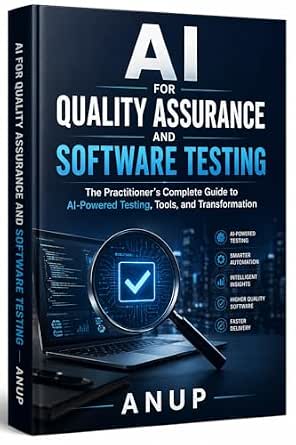 | Best for AI-Focused QA Practitioners | Product type: Practitioner guide | Primary topic: AI for quality assurance and software testing | Stated audience: Practitioners | VIEW LATEST PRICE | See Our Full Breakdown |
| Spec-Driven Software Testing with AI: Build Reliable Test Suites from Specifications |  | Best for Specification-Based Automation | Product type: Technical software testing guide | Primary method: Specification-driven testing | AI focus: AI-driven techniques for test suites | VIEW LATEST PRICE | See Our Full Breakdown |
| Executing IT Project Management with Software Quality Assurance and Testing: A Guide for CIOs and Senior Management |  | Best for CIOs and Senior Managers | Product type: IT project management guide | Primary audience: CIOs and senior management | Management focus: IT project execution | VIEW LATEST PRICE | See Our Full Breakdown |
| software testing management tool | Product type | Stated audience | Format and length |
|---|---|---|---|
| All You Need to Know About Sof | Software testing guide | Aspiring QA engineers | Not specified in supplied details |
| AI for Quality Assurance and S | Practitioner guide | Practitioners | Not specified in supplied details |
| Spec-Driven Software Testing w | Technical software testing guide | Engineers working with automated testing | — |
| Executing IT Project Managemen | IT project management guide | — | — |
More Details on Our Top Picks
All You Need to Know About Software Testing: From Beginner to Job-Ready QA Engineer
This is my first pick for readers who want a wide map of software testing before committing to one method or tool. Its stated coverage stretches from manual testing and APIs to Selenium, Playwright, CI/CD, and AI-assisted QA. That range makes it the most versatile guide in this lineup for someone trying to understand how testing disciplines connect, rather than solve one narrow automation problem.
Compared with Spec-Driven Software Testing with AI, this guide appears more suitable as a starting point: it names both manual and automated testing and frames its audience around becoming job-ready. The spec-driven title, by contrast, is aimed at engineers who already want to build automated suites from specifications. This broader coverage may help a learner see the shape of QA work before choosing a specialization.
The same breadth leaves an unanswered question about depth. The description does not say how much space each subject receives, what format the book takes, or what prerequisites it assumes. Readers who need a focused plan for adopting AI across an existing QA organization may get a more direct match from AI for Quality Assurance and Software Testing; those seeking executive-level project guidance should look to the management-focused title. I would choose this one for orientation and career learning, not as a replacement for a test management system or a detailed platform manual.
Pros:- Covers manual and automated testing in one broad learning path.
- Names APIs, Selenium, Playwright, CI/CD, and AI-assisted QA.
- Its beginner-to-job-ready framing suits readers exploring a QA career.
- Broader scope than the AI-specific and specification-driven guides.
Cons:- The supplied description does not specify format, length, or prerequisites.
- Breadth may come at the expense of depth in any single topic.
- It is a learning resource, not a software test-management platform.
Best for: Aspiring QA engineers and early-career testers who want an overview spanning manual testing, automation, APIs, and modern delivery practices.
Not ideal for: Teams seeking an application to manage test cases and defects, or experienced practitioners who need a deep guide to one specific testing workflow.
- Product type:Software testing guide
- Stated audience:Aspiring QA engineers
- Career framing:Beginner to job-ready
- Testing approaches:Manual testing and automation
- Named automation tools:Selenium and Playwright
- Other named topics:APIs, CI/CD, and AI-assisted QA
- Format and length:Not specified in supplied details
Our verdict“I recommend this as the broadest entry point for aspiring QA professionals, provided they want a guide rather than operational testing software.”
AI for Quality Assurance and Software Testing: The Practitioner’s Complete Guide to AI-Powered Testing, Tools, and Transformation
When a QA team is asking how AI changes its testing practice, this title has the clearest subject match. It is explicitly about AI-powered testing tools, methodologies, and transformation strategies, so it speaks more directly to practitioners evaluating AI in an existing quality process than the broad career guide does.
Its difference from Spec-Driven Software Testing with AI is the apparent level of focus. The spec-driven guide centers on turning specifications into reliable automated suites and integrating them into development workflows. This book describes a wider AI-and-QA remit, including transformation, which may better fit readers considering methods and adoption beyond one technical pattern. Compared with All You Need to Know About Software Testing, it sacrifices broad coverage of manual testing and named automation tools in favor of a sharper AI emphasis.
The available description does not name particular AI products, explain the transformation framework, or give examples of its intended reader’s technical level. Its title promises a practitioner’s guide, but the provided details cannot confirm how much hands-on instruction it contains. I would choose it when AI is the central question, and skip it if the need is conventional test case management, a beginner’s full QA foundation, or a specified technical recipe for specification-driven suites.
Pros:- Directly focuses on AI in quality assurance and software testing.
- Covers tools, methodologies, and transformation strategies according to the description.
- More targeted for AI adoption than the broad QA career guide.
- Addresses practitioner concerns rather than presenting itself as a general testing overview.
Cons:- No specific AI tools, examples, format, or curriculum details are supplied.
- The depth and prerequisites are not described.
- Its AI focus may not help readers seeking broader manual-testing fundamentals.
Best for: QA practitioners and testing leads who want guidance centered on AI-powered testing approaches and changes to QA practice.
Not ideal for: Beginners looking for a broad introduction to testing, buyers needing a test-management platform, or engineers seeking a specifically described specification-to-suite workflow.
- Product type:Practitioner guide
- Primary topic:AI for quality assurance and software testing
- Stated audience:Practitioners
- Coverage:AI-powered testing tools and methodologies
- Organizational focus:QA transformation strategies
- Named AI tools:Not specified in supplied details
- Format and length:Not specified in supplied details
Our verdict“I would choose this for a practitioner whose main question is how AI fits into QA, while treating its unspecified technical detail as a reason to check the full listing before buying.”
Spec-Driven Software Testing with AI: Build Reliable Test Suites from Specifications
This is the most technically focused selection for an engineer who wants to connect requirements to test automation. Its description brings together specifications, AI-driven test creation, TDD, API testing, and CI/CD integration. That combination gives it a defined practical lane: build test suites around what software is meant to do and connect those tests to delivery workflows.
Compared with AI for Quality Assurance and Software Testing, this title appears narrower and more implementation-oriented. The AI practitioner guide addresses tools, methods, and transformation; this one concentrates on reliable suites built from specifications. It also goes further toward a particular engineering workflow than All You Need to Know About Software Testing, whose coverage is broader and better suited to readers still learning the field.
The tradeoff is a higher assumed level of familiarity. The supplied description warns that the learning curve may be steep for readers unfamiliar with AI concepts and that the subject may not suit developers outside automated testing. I would not select it as a first introduction to QA or as a general management guide. Its appeal rests on the specificity of its stated workflow, but the listing does not provide the language, toolchain, prerequisites, or sample material a buyer might want before committing.
Pros:- Clearly connects specifications with automated test-suite creation.
- Includes TDD, API testing, and CI/CD in its stated coverage.
- More workflow-specific than the broader AI practitioner guide.
- A strong thematic match for engineers focused on reliable automated tests.
Cons:- The description flags a steep learning curve for readers new to AI.
- Its specialized automation focus may not suit general QA learners.
- Specific tools, prerequisites, and format are not supplied.
Best for: Software engineers and automation-focused QA professionals building tests from specifications and integrating them into CI/CD.
Not ideal for: Newcomers without AI or automation background, non-technical managers, or teams that mainly need manual test planning.
- Product type:Technical software testing guide
- Primary method:Specification-driven testing
- AI focus:AI-driven techniques for test suites
- Stated audience:Engineers working with automated testing
- Related practice:Test-driven development
- Testing coverage:API testing
- Delivery integration:CI/CD pipelines
- Learning curve:May be steep for readers unfamiliar with AI concepts
Our verdict“I recommend this to automation-focused engineers who want a specification-led testing workflow, not to beginners seeking a general QA primer.”
Executing IT Project Management with Software Quality Assurance and Testing: A Guide for CIOs and Senior Management
This guide shifts the discussion from test design to leadership and project delivery. Its stated audience is CIOs and senior management, and it frames software quality assurance and testing as parts of managing IT projects successfully. That makes it the most relevant pick here for a decision-maker who needs to connect quality practices with oversight and delivery outcomes, rather than write or run automated tests.
It differs sharply from Spec-Driven Software Testing with AI, which focuses on engineering workflows, and from All You Need to Know About Software Testing, which is framed for aspiring QA engineers. If your responsibility is to set direction, review project execution, or understand how testing supports delivery, its management lens may be more useful than either technical guide. The AI practitioner book is a closer alternative only when the leadership question is specifically about AI adoption in QA.
The description provides little detail about the management practices, testing methods, or technical depth covered. It also warns that the guide may be too technical for non-IT executives, which narrows its leadership audience to people comfortable with technology delivery. I would choose it for senior IT leaders seeking a quality-and-project perspective, but not for a hands-on tester or anyone searching for software to manage test plans, cases, and defects.
Pros:- Places testing and quality assurance within IT project management.
- Targets CIOs and senior management rather than individual testers.
- Connects quality practices with project delivery concerns.
- Offers a leadership-focused contrast to the technical guides in this lineup.
Cons:- The supplied description does not detail its methods or technical coverage.
- May be too technical for executives without an IT background.
- Not presented as a tool for operational test-case or defect management.
Best for: CIOs, senior IT managers, and technology leaders overseeing project delivery and quality assurance.
Not ideal for: Hands-on QA engineers, people seeking a software platform, or non-IT executives who want a nontechnical management overview.
- Product type:IT project management guide
- Primary audience:CIOs and senior management
- Management focus:IT project execution
- Quality focus:Software quality assurance and testing
- Stated objective:Support successful project delivery
- Technical level:May be too technical for non-IT executives
- Format and detailed coverage:Not specified in supplied details
Our verdict“I would reserve this guide for senior IT leaders who want a project-level quality perspective rather than hands-on testing instruction.”

How We Picked
I ranked these options by their stated usefulness to people making software testing and QA decisions, rather than by claims that they are software tools. The supplied product information describes four books or guides and gives no evidence that any is a platform for tracking test cases, assigning defects, managing test runs, or reporting QA status. I treat that distinction as the first buying decision: a reader who needs an application should not mistake a learning resource for operational software.
Within that boundary, I compared audience fit, coverage of testing work, and the level of practical specificity described. Broad coverage earns a higher place for readers still choosing a direction; focused coverage earns a higher place when it maps to a clearly defined task, such as AI adoption or specification-based automation. I also considered whether the description connects testing to delivery workflows, project outcomes, or career preparation.
The source details are limited. No product includes a supplied format, length, edition information, prerequisite list, or detailed curriculum. I do not infer those details or claim that a guide contains templates, exercises, or particular tools beyond those named in its description. The ranking reflects the available descriptions and the likely buyer fit they support—not a claim of firsthand use or a substitute for selecting an actual test-management platform.
| software testing management tool | Product type | Stated audience |
|---|---|---|
| All You Need to Know About Sof | Software testing guide | Aspiring QA engineers |
| AI for Quality Assurance and S | Practitioner guide | Practitioners |
| Spec-Driven Software Testing w | Technical software testing guide | Engineers working with automated testing |
| Executing IT Project Managemen | IT project management guide | — |
Factors to Consider When Choosing Software Testing Management Tools
Before choosing among these titles, I would separate two meanings that often get mixed together in searches for software testing management tools. A test-management platform is software a team uses to organize cases, runs, results, and defects. These four listings are learning resources. They may help readers understand QA work, but the supplied descriptions do not identify any as an application or claim integrations, dashboards, user permissions, or live test tracking.
Decide whether you need a book or a platform
If your immediate problem is keeping test cases organized, connecting defects to runs, or sharing execution status, none of these four is described as the solution. Look for a dedicated application and compare its workflow, integrations, access controls, reporting, and support for your team’s testing approach. The books here serve a different purpose: they provide context, methods, or guidance for people learning or overseeing software quality.
That distinction also affects the ranking. I place the broad career guide first because it has the widest stated learning coverage, not because it can manage a team’s QA work. A reader buying for operational use should stop at that distinction and choose actual software instead.
Match the scope to your current question
For a broad introduction, All You Need to Know About Software Testing names manual testing, automation, APIs, Selenium, Playwright, CI/CD, and AI-assisted QA. That makes it the most flexible starting point when you have not settled on a specialization. Its description does not establish how deeply it treats each subject, so a specialist may want a more focused title.
If your central question is AI adoption in QA, the practitioner guide is the closer fit. If it is how to create automated suites from specifications and connect them to CI/CD, the spec-driven guide makes the more direct promise. For project oversight, the CIO and senior-management guide changes the lens from test execution to delivery and quality governance.
Check the intended reader and assumed background
The audience labels are useful because the titles are not interchangeable. The beginner-to-job-ready framing points toward aspiring QA engineers; the AI practitioner guide speaks to people already working around testing; the specification-led title is aimed at engineers involved in automation; and the project-management guide is for CIOs and senior managers. A title can cover a relevant topic and still be the wrong fit if its assumed background does not match yours.
In particular, the spec-driven option warns of a steeper learning curve for readers unfamiliar with AI concepts. The leadership title may be too technical for non-IT executives. The broad guide has beginner framing, but its prerequisites are not given. I would use these cues to shortlist, then confirm the full listing’s audience and level before buying.
Treat missing detail as a real limitation
None of the supplied product information specifies format, length, complete contents, or prerequisites across all the areas a buyer might want to compare. The AI-focused listing does not name specific tools, and the broad guide does not say how much attention it gives each technology. The project-management title gives a high-level purpose without laying out its management framework.
That does not make the titles unsuitable; it means the descriptions support a subject-fit comparison more strongly than a depth comparison. I would check the full product page for edition, sample pages, table of contents, and format. I would not assume that a named topic receives a complete implementation tutorial or that a guide includes templates unless the listing says so.
Choose breadth for orientation and focus for a defined task
A broad resource is most useful when you are still deciding what to learn or how QA responsibilities fit together. A focused guide is usually a better match when you already know the problem: AI adoption, specification-driven automation, or leadership oversight. For example, the career guide spans more testing areas than the spec-driven title, but it is less tightly aimed at turning specifications into suites.
My practical rule is to start with your next decision. If you are mapping a learning path, choose the broad guide. If you are deciding how AI could alter QA practice, choose the AI practitioner book. If you are building automated tests from requirements, choose the specification-led guide. If you supervise IT projects, consider the management guide. None should be purchased in place of the software platform your team needs to run its process.
Frequently Asked Questions
Are these software testing management tools?
No. The supplied descriptions identify all four as books or guides, not software platforms. They may explain testing methods, AI, automation, or project-level QA, but none is described as managing test cases, executions, defects, users, or reports. If you need software for a team’s day-to-day test management, compare dedicated applications instead.
Which option is the best starting point for a new QA learner?
All You Need to Know About Software Testing is the clearest starting point in this comparison because it is framed for readers moving from beginner knowledge toward QA work and lists both manual and automated testing topics. Its description does not provide prerequisites or confirm the depth of each topic, so readers should check the full listing if they need a structured course-like sequence or a specific level of instruction.
Which guide is the closest fit for AI in quality assurance?
AI for Quality Assurance and Software Testing is the most directly centered on AI-powered testing tools, methods, and transformation strategies. The specification-driven guide also uses AI, but its described scope is narrower: building test suites from specifications and connecting them to engineering practices such as TDD, API testing, and CI/CD. Choose based on whether your focus is broader QA adoption or a specific automated testing workflow.
Which title should an automation engineer choose?
An automation engineer building tests from requirements may find Spec-Driven Software Testing with AI the closest match, since it names specification-based suites, TDD, API testing, and CI/CD integration. Someone who wants broader coverage of tools and testing areas may prefer the beginner-to-job-ready guide. The spec-driven listing warns of a learning curve for readers new to AI, and it does not specify a programming language or toolchain.
Is the CIO and senior-management guide suitable for hands-on testers?
It is not the strongest match for hands-on test execution based on the supplied description. Executing IT Project Management with Software Quality Assurance and Testing is framed around project management, delivery, and senior leadership. A QA engineer seeking test design or automation guidance is more likely to find relevant subject matter in the broad testing guide or the specification-driven title, depending on experience and goals.
Conclusion
My recommendation depends on what you mean by a testing management tool. If you need software to track cases, runs, defects, and reporting, none of these four listings is described as a platform; shop for a dedicated application. If you want a learning resource, choose All You Need to Know About Software Testing for broad career-oriented coverage, AI for Quality Assurance and Software Testing for practitioner-level AI questions, and Spec-Driven Software Testing with AI for specification-led automation. CIOs and senior IT managers should look at Executing IT Project Management with Software Quality Assurance and Testing for its project and leadership perspective. I would verify format, depth, and prerequisites in the full listings, since the supplied descriptions leave those details open.
Halloween Picks
halloween
As an affiliate, we earn on qualifying purchases.