

The best software testing resource for QA depends on what stage of the testing journey you are in, and that tradeoff shapes this entire roundup. For most QA professionals, Hands-On Automated Testing with Playwright stands out as the best overall pick because it pairs a modern, in-demand framework with practical, project-based instruction. If your focus is on the AI shift, AI-Assisted QA and Software Testing with Claude Code and AI for Quality Assurance and Software Testing offer two very different depths of coverage. The main tension in this category is between framework-specific manuals that make you productive fast and broader engineering-culture books that build judgment but take longer to pay off. Keep reading for the full breakdown, including who each option suits and who should skip it.

Get monitors, keyboards and dev gear delivered free — and shop member deals
- Fast, free delivery on millions of items
- Access to Prime Big Deal Days deals on October 6–7
- Prime Video, Amazon Music and more included
Key Takeaways
- Framework-specific resources like the Playwright guide deliver the fastest path to hands-on productivity, which is why one tops the ranking over broader titles.
- AI-focused titles split into two camps: practitioner workflows with a specific tool (Claude Code) versus strategic, tool-agnostic transformation guides — choosing between them depends on whether you need skills or perspective.
- Two Full Stack Testing titles cover overlapping ground, and the comparison revealed clear differences in scope and AI coverage that justify picking one over the other.
- Career-entry resources for beginners vary widely in job-readiness framing; the beginner pick stood out for structuring content around employability rather than exam-style theory.
- Engineering-culture classics like How Google Tests Software reward experienced readers but frustrate newcomers who need syntax and tooling first.
| Continuous Delivery: Reliable Software Releases through Build, Test, and Deployment Automation |  | Best for Building the Pipeline Mindset | Format: Print book | Publisher: Addison-Wesley Signature Series | Primary Author: Jez Humble and David Farley (foreword by Martin Fowler) | VIEW LATEST PRICE | See Our Full Breakdown |
| Hands-On Automated Testing with Playwright: Create Fast, Reliable, and Scalable Tests for Modern Web Apps with Microsoft’s Automation Framework |  | Best Hands-On Web Automation Guide | Format: Print/digital book | Framework Covered: Microsoft Playwright | Focus: Web application test automation | VIEW LATEST PRICE | See Our Full Breakdown |
| AI-Assisted QA and Software Testing with Claude Code |  | Best for AI-Augmented Testing Workflows | Product Type: Software tool (digital) | Underlying Technology: Anthropic Claude agentic coding assistant | Test Coverage: Unit, integration, and end-to-end | VIEW LATEST PRICE | See Our Full Breakdown |
| AI Testing with Python: Build Intelligent Test Automation Using Python, Selenium, APIs, PyTest, LLMs & AI-Powered Testing Tools |  | Best for Building Your Own AI Test Framework | Format: Digital/print book | Primary Language: Python | Tools Covered: Selenium, PyTest, API testing, LLMs | VIEW LATEST PRICE | See Our Full Breakdown |
| How Google Tests Software |  | Best for Testing Culture and Strategy | Format: Print book | Publisher: Addison-Wesley | Primary Authors: James Whittaker, Jason Arbon, Jeff Carollo | VIEW LATEST PRICE | See Our Full Breakdown |
| AI for Quality Assurance and Software Testing: The Practitioner’s Complete Guide to AI-Powered Testing, Tools, and Transformation |  | Best for AI-Driven QA Strategy | Format: Book (print/digital) | Audience: QA practitioners, test leads, managers | Focus Areas: AI-powered testing, tools, methodologies, transformation strategy | VIEW LATEST PRICE | See Our Full Breakdown |
| Full Stack Testing: A Practical Guide for Delivering High-Quality Software in the Age of AI |  | Best Modern Testing Reference | Format: Book (print/digital) | Audience: Testers and developers | Focus Areas: Full stack testing, AI-era QA, delivery best practices | VIEW LATEST PRICE | See Our Full Breakdown |
| All You Need to Know About Software Testing: From Beginner to Job-Ready QA Engineer |  | Best for Career Starters | Format: Book (print/digital) | Audience: Beginners and aspiring QA engineers | Focus Areas: Manual testing, automation, APIs, Selenium, Playwright, CI/CD, AI-assisted QA | VIEW LATEST PRICE | See Our Full Breakdown |
| Full Stack Testing: A Practical Guide for Delivering High Quality Software |  | Best Foundational Full-Stack Guide | Format: Book (print) | Audience: Developers and testers | Focus Areas: Full stack testing strategies, tools, best practices | VIEW LATEST PRICE | See Our Full Breakdown |
| Mastering Software Testing & QA: A Practical Guide to Manual Testing, Agile Quality, and Real-World Delivery | 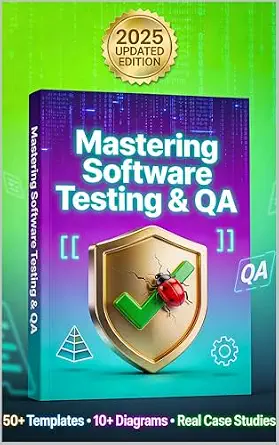 | Best for Manual and Agile Fundamentals | Format: Book (print/digital) | Audience: Testers and QA professionals | Focus Areas: Manual testing, agile quality, real-world delivery | VIEW LATEST PRICE | See Our Full Breakdown |
| software testing tools for QA | Format | Audience | Focus Areas | Skill Level |
|---|---|---|---|---|
| Continuous Delivery: Reliable | Print book | — | — | — |
| Hands-On Automated Testing wit | Print/digital book | — | — | — |
| AI-Assisted QA and Software Te | — | — | — | — |
| AI Testing with Python: Build | Digital/print book | — | — | — |
| How Google Tests Software | Print book | — | — | — |
| AI for Quality Assurance and S | Book (print/digital) | QA practitioners, test leads, managers | AI-powered testing, tools, methodologies, transformation strategy | Intermediate to advanced |
| Full Stack Testing: A Practica | Book (print/digital) | Testers and developers | Full stack testing, AI-era QA, delivery best practices | Intermediate |
| All You Need to Know About Sof | Book (print/digital) | Beginners and aspiring QA engineers | Manual testing, automation, APIs, Selenium, Playwright, CI/CD, AI-assisted QA | Beginner |
| Full Stack Testing: A Practica | Book (print) | Developers and testers | Full stack testing strategies, tools, best practices | Beginner to intermediate |
| Mastering Software Testing & Q | Book (print/digital) | Testers and QA professionals | Manual testing, agile quality, real-world delivery | Beginner to experienced |
More Details on Our Top Picks
Continuous Delivery: Reliable Software Releases through Build, Test, and Deployment Automation
This pick stands out as the foundational reference for QA teams automating release pipelines. While How Google Tests Software explains testing culture at organizational scale, this book goes deeper on the mechanics: build automation, deployment pipelines, and test automation as part of a continuous delivery discipline. Fowler’s authorship gives it unusual authority, and the material translates directly into fewer broken releases. The tradeoff is density — this is engineering writing, not a quick-start guide, and readers hoping for tool walkthroughs like those in Hands-On Automated Testing with Playwright will not find them here. This pick makes the most sense for engineers who want to understand why pipelines work, not just how to script them.
Pros:- Authoritative coverage of continuous delivery from a recognized expert
- Connects test automation directly to reliable release outcomes
- Pipelines and deployment concepts that remain relevant across tool generations
Cons:- Dense, technical prose that demands prior engineering context
- No hands-on exercises or tool-specific tutorials
Best for: DevOps engineers and QA leads designing automated build-test-deploy pipelines
Not ideal for: Junior manual testers — the material assumes engineering fluency and offers no beginner ramp-up
- Format:Print book
- Publisher:Addison-Wesley Signature Series
- Primary Author:Jez Humble and David Farley (foreword by Martin Fowler)
- Focus:Build, test, and deployment automation
- Audience Level:Intermediate to advanced
- Topic Coverage:Continuous delivery, deployment pipelines, test automation strategy
Our verdict“The definitive choice for engineers who want pipeline-level understanding rather than tool tutorials.”
Hands-On Automated Testing with Playwright: Create Fast, Reliable, and Scalable Tests for Modern Web Apps with Microsoft’s Automation Framework
Where Continuous Delivery teaches strategy, this book delivers keyboard-to-code practice with a single modern framework. Its tight focus on Playwright is the point: readers finish with working, scalable test suites for modern web apps rather than a survey of tools. Compared with AI Testing with Python, which spreads across Selenium, APIs, PyTest, and LLM integrations, this one goes narrower and deeper on browser automation specifically. That focus is a genuine strength for frontend-heavy QA teams, but it also means no coverage of API or unit testing layers — teams testing services or backends will need a second resource. Compared with other entries here, it is the most immediately applicable on Monday morning.
Pros:- Focused, practical tutorials tied to one current framework
- Emphasizes reliable and scalable test design, not just syntax
- Directly applicable to modern single-page web applications
Cons:- Single-framework scope limits value for polyglot testing teams
- Framework-specific content ages faster than concept-driven books
Best for: QA engineers and frontend developers who need working Playwright suites for modern web apps quickly
Not ideal for: Teams testing APIs, mobile, or backend services — the browser-only scope leaves those gaps
- Format:Print/digital book
- Framework Covered:Microsoft Playwright
- Focus:Web application test automation
- Approach:Hands-on, project-based
- Audience Level:Beginner to intermediate developers
- Test Types:End-to-end browser testing
Our verdict“The strongest pick for anyone who needs working Playwright tests this week rather than theory.”
AI-Assisted QA and Software Testing with Claude Code
This option stands apart from every book in this lineup because it is a working software tool, not a text. It uses Anthropic’s agentic coding assistant to generate and validate unit, integration, and end-to-end tests, which changes the value proposition entirely: instead of learning techniques, QA engineers get AI-assisted execution of repetitive test authoring. Compared with AI Testing with Python, which teaches you to build AI-powered frameworks yourself, this product applies the AI for you — less learning curve, less control. The tradeoffs are real: onboarding requires comfort with both AI tooling and existing test frameworks, and transparency around pricing and platform compatibility is thin. This pick makes the most sense for engineering-forward teams already fluent in automation.
Pros:- Automates unit, integration, and end-to-end test authoring
- Reduces time spent on repetitive test writing
- Actively generates and validates code rather than just explaining concepts
Cons:- Unclear pricing and compatibility documentation
- Demands prior fluency in AI tooling and testing frameworks
Best for: Automation-experienced QA engineers who want AI to accelerate test generation and validation
Not ideal for: Manual testers or AI newcomers — the workflow assumes existing framework knowledge and AI familiarity
- Product Type:Software tool (digital)
- Underlying Technology:Anthropic Claude agentic coding assistant
- Test Coverage:Unit, integration, and end-to-end
- Core Capability:AI-assisted test generation and validation
- Required Background:Testing frameworks and AI tooling familiarity
- Pricing Transparency:Not clearly documented
Our verdict“The choice for established automation teams ready to delegate test authoring to an AI agent.”
AI Testing with Python: Build Intelligent Test Automation Using Python, Selenium, APIs, PyTest, LLMs & AI-Powered Testing Tools
This book earns its place by taking the broadest technical sweep of AI-powered testing in this batch — Selenium, APIs, PyTest, and large language models in one Python-based toolkit. Compared with AI-Assisted QA and Software Testing with Claude Code, the difference is direction: that product does the AI work for you, while this one teaches you to construct your own intelligent automation frameworks, which matters for teams that need maintainable, customized pipelines. The breadth carries a cost — coverage across this many topics means less depth on any single one, and readers new to Python or test automation may find the learning curve steep. This pick makes the most sense for testers who want durable engineering skills rather than a shortcut.
Pros:- Integrates Selenium, PyTest, API testing, and LLMs into one framework-building approach
- Practical examples rather than abstract AI theory
- Skills transfer across projects and employers
Cons:- Broad scope means shallow treatment of individual tools
- Technical density may overwhelm readers newer to automation
Best for: Python-literate testers and developers who want to engineer custom AI-enhanced automation frameworks
Not ideal for: Beginners without Python basics — the multi-tool curriculum moves quickly and assumes coding comfort
- Format:Digital/print book
- Primary Language:Python
- Tools Covered:Selenium, PyTest, API testing, LLMs
- Approach:Framework construction with practical examples
- Audience Level:Intermediate technical testers
- Focus:AI-powered test automation
Our verdict“The pick for hands-on engineers who would rather build AI testing infrastructure than rent it.”
How Google Tests Software
Rather than teaching a framework or a workflow, this book answers a different question: how does a massive engineering organization sustain software quality? Its case studies and role-based testing model give QA leads a vocabulary and structure for building culture, something no other entry here — including the pipeline-focused Continuous Delivery — attempts. The strategic lens is the strength and the limitation: readers wanting executable code will prefer Hands-On Automated Testing with Playwright, and some practitioners find the technical detail thinner than the title promises. This model is better suited to engineering managers, QA leads, and anyone shaping how testing works across teams rather than writing tests themselves. Its ideas about test size, test roles, and risk still shape modern QA thinking.
Pros:- Rare insider view of testing practices at planetary engineering scale
- Real-world case studies rather than hypothetical scenarios
- Strategic frameworks for organizing test roles and priorities
Cons:- Lighter on technical implementation than practitioners may expect
- Organizational lessons translate imperfectly to small teams
Best for: QA leads and engineering managers designing testing strategy and culture across teams
Not ideal for: Hands-on automators — there is little runnable code or tool instruction to apply directly
- Format:Print book
- Publisher:Addison-Wesley
- Primary Authors:James Whittaker, Jason Arbon, Jeff Carollo
- Focus:Testing strategy, culture, and organizational practice
- Content Style:Case studies and methodology
- Audience Level:Intermediate to leadership
Our verdict“The pick for leaders who need to shape testing culture, not for engineers who need scripts today.”
AI for Quality Assurance and Software Testing: The Practitioner’s Complete Guide to AI-Powered Testing, Tools, and Transformation
AI for Quality Assurance and Software Testing stands out as the most strategy-oriented pick in this lineup. Where AI Testing with Python teaches you to build AI test automation hands-on, this guide focuses on the bigger picture: how AI reshapes QA workflows, which tool categories matter, and how teams should adapt. That makes it the better fit for QA leads and managers planning an AI adoption roadmap rather than writing code. Compared with Full Stack Testing, it trades depth on traditional test techniques for breadth on transformation and tooling trends. The tradeoff is real: readers who want runnable examples or step-by-step automation setups will find it too abstract, and it won’t replace a tool-specific book like Hands-On Automated Testing with Playwright. Think of it as the why and what next book, not the how-to.
Pros:- Broad coverage of AI-powered testing tools and methodologies in one place
- Focuses on transformation strategy, not just tactics, which most testing books skip
- Written for practitioners, so it connects AI concepts to real QA workflows
- Useful as a reference when evaluating which AI testing tools to adopt
Cons:- No hands-on exercises, code samples, or tool-specific tutorials
- Strategy-heavy framing may frustrate readers who want immediate, practical takeaways
Best for: QA leads, test managers, and senior practitioners planning how to introduce AI-powered testing across a team or organization
Not ideal for: Hands-on automation engineers who want code samples, tool walkthroughs, and step-by-step implementation guidance
- Format:Book (print/digital)
- Audience:QA practitioners, test leads, managers
- Focus Areas:AI-powered testing, tools, methodologies, transformation strategy
- Skill Level:Intermediate to advanced
- Hands-On Content:Conceptual guidance; minimal code
- Primary Use Case:AI adoption planning and tool evaluation
Our verdict“This makes the most sense for QA decision-makers who need to understand and plan AI adoption rather than implement it themselves.”
Full Stack Testing: A Practical Guide for Delivering High-Quality Software in the Age of AI
Among the books in this roundup, this Full Stack Testing guide earns its place as the best modern general reference. It sits between two poles: broader than Hands-On Automated Testing with Playwright, which drills into one framework, and more current than the earlier Full Stack Testing: A Practical Guide for Delivering High Quality Software, which predates the AI era. The AI-era framing is what separates it — testing strategies are presented in the context of AI-driven development, which matters for teams already working with AI-assisted code generation. The tradeoff is depth: by covering the entire testing stack, it can’t go deep on any single layer, and beginners may find the pacing technical. Compared with All You Need to Know About Software Testing, it assumes you already understand QA fundamentals and want to modernize your approach.
Pros:- Covers the entire testing stack, from unit to end-to-end, in one framework-agnostic guide
- Explicitly addresses QA challenges introduced by AI-driven development
- Practical guidance works for both testers and the developers they collaborate with
- More up to date than older full-stack testing titles on the market
Cons:- Breadth over depth — few topics get the detailed treatment a dedicated book provides
- Light on worked case studies, so applying ideas to your own codebase takes effort
Best for: Working testers and developers on modern teams who need a current, end-to-end reference that accounts for AI in the delivery pipeline
Not ideal for: Career-changers with no QA background — the assumed knowledge and breadth make it a frustrating first book
- Format:Book (print/digital)
- Audience:Testers and developers
- Focus Areas:Full stack testing, AI-era QA, delivery best practices
- Skill Level:Intermediate
- Framework Coverage:Tool-agnostic methodologies
- Primary Use Case:End-to-end quality strategy on modern teams
Our verdict“The strongest pick for experienced professionals who want one current book that spans the full modern testing landscape, including AI.”
All You Need to Know About Software Testing: From Beginner to Job-Ready QA Engineer
All You Need to Know About Software Testing is the clearest career-on-ramp title in this batch. Its scope is unusually wide for a beginner book — manual testing, APIs, Selenium, Playwright, CI/CD, and even AI-assisted QA — all sequenced toward making a reader employable, not just informed. Compared with Mastering Software Testing & QA, which leans heavily on manual and agile practices, this one pushes further into automation and tooling, which is what junior roles now expect. The tradeoff for that breadth is depth: it introduces Playwright, for example, but can’t rival Hands-On Automated Testing with Playwright for hands-on mastery. Similarly, its AI coverage is a survey, not the deep treatment in AI for Quality Assurance and Software Testing. Read it as a foundation and career map, then specialize with a dedicated title afterward.
Pros:- Covers the full junior QA skill set: manual testing, automation, APIs, and CI/CD
- Includes modern tools like Selenium, Playwright, and AI-assisted QA that older beginner books omit
- Structured around job readiness rather than academic theory
- Accessible entry point that doesn’t assume a computer science background
Cons:- Introductory depth on every topic — specialists will outgrow it quickly
- Covers many tools but provides deep mastery of none
Best for: Aspiring QA engineers and career-changers who want a single structured path from fundamentals to job-ready skills
Not ideal for: Experienced testers — most of the content will retread what they already know, and no section goes deep enough to justify it
- Format:Book (print/digital)
- Audience:Beginners and aspiring QA engineers
- Focus Areas:Manual testing, automation, APIs, Selenium, Playwright, CI/CD, AI-assisted QA
- Skill Level:Beginner
- Career Orientation:Job-readiness focused
- Primary Use Case:Entering the QA profession
Our verdict“The smartest first purchase for someone breaking into QA who wants one book that maps the whole field before specializing.”
Full Stack Testing: A Practical Guide for Delivering High Quality Software
This earlier Full Stack Testing title plays a distinct role: it’s the proven, fundamentals-first option, unburdened by AI-era framing. Where the newer Full Stack Testing: A Practical Guide for Delivering High-Quality Software in the Age of AI leans into current trends, this one earns its keep through real-world examples — something the AI-focused edition is often criticized for lacking. For teams that haven’t adopted AI tooling, or readers who want time-tested testing strategy without trend-chasing, this is the steadier choice. Compared with How Google Tests Software, it’s less about engineering culture at a giant company and more about applicable techniques for ordinary product teams. The tradeoff is currency: content on tooling and practices is aging, and anyone working in AI-assisted development should pick the newer edition instead.
Pros:- Grounded in real-world examples that make concepts easy to apply
- Framework-agnostic strategies that haven’t been tied to short-lived tools
- Balanced coverage across unit, integration, and end-to-end testing
- Practical for both developers owning quality and dedicated testers
Cons:- Pre-dates the AI-assisted development era, so modern workflows aren’t addressed
- Some tooling references have aged since publication
Best for: Developers and testers on conventional stacks who want a stable, example-driven guide to testing across the whole application
Not ideal for: Teams already deep in AI-assisted development — the newer AI-era edition of this guide covers that reality better
- Format:Book (print)
- Audience:Developers and testers
- Focus Areas:Full stack testing strategies, tools, best practices
- Skill Level:Beginner to intermediate
- Examples:Real-world case examples included
- AI Coverage:None — predates AI-assisted development
- Primary Use Case:Building a whole-stack quality practice
Our verdict“A dependable pick if you want example-rich full-stack testing fundamentals and don’t need AI-era coverage.”
Mastering Software Testing & QA: A Practical Guide to Manual Testing, Agile Quality, and Real-World Delivery
Mastering Software Testing & QA fills the process and practice slot in this roundup. Its center of gravity is manual testing and agile quality workflows — test design, exploration, sprint-level QA collaboration, and shipping discipline — rather than tooling. That’s a deliberate contrast with All You Need to Know About Software Testing, which rushes beginners toward Selenium and Playwright. This book argues, reasonably, that strong manual technique and agile fluency are what make automation valuable, and it suits testers on agile teams where exploratory and manual testing still carry real weight. The tradeoff is obvious in a roundup full of automation titles: there’s little here on frameworks or scripting, so anyone wanting to build automated suites should pair it with Hands-On Automated Testing with Playwright or skip this entirely. Compared with How Google Tests Software, it’s more prescriptive and less culture-driven.
Pros:- Deep, practical treatment of manual and exploratory testing rarely covered elsewhere in this lineup
- Agile QA guidance connects testing work directly to sprint and delivery rhythms
- Serves both newcomers and experienced testers tightening their fundamentals
- Real-world delivery framing helps testers advocate for quality within teams
Cons:- Almost no coverage of automation frameworks, scripting, or specific tools
- Dense process detail can overwhelm casual readers or those wanting quick tips
Best for: Manual testers and QA generalists on agile teams who want to sharpen test design, exploratory technique, and delivery practices
Not ideal for: Automation-focused engineers — the minimal tool and scripting coverage makes it a poor fit for building automated pipelines
- Format:Book (print/digital)
- Audience:Testers and QA professionals
- Focus Areas:Manual testing, agile quality, real-world delivery
- Skill Level:Beginner to experienced
- Automation Coverage:Minimal — manual-first approach
- Primary Use Case:Strengthening manual and agile QA practice
Our verdict“The right choice when your gap is testing craft and agile process, not tooling — automation-first readers should look elsewhere in this list.”

How We Picked
I evaluated each resource against four buyer-relevant criteria. Practical applicability came first: does the reader finish with working skills they can apply on a real project the same week? Audience fit came second, because a brilliant distributed-systems testing book is useless to someone preparing for a first QA interview. Third, I weighed currency — how well the material reflects the 2026 landscape of AI-assisted testing, modern frameworks, and CI/CD practice. Fourth, I considered depth versus breadth tradeoffs, since narrower books tend to teach faster while wider ones build durable judgment.
The ranking order reflects a simple logic: resources that combine current relevance with immediate hands-on payoff rank highest, followed by strategic guides that reward experienced readers, with entry-level and legacy-leaning titles placed according to how well they serve their specific niche. Where two titles overlap — as with the two Full Stack Testing books — I ranked the one with clearer differentiation and stronger AI coverage ahead.
| software testing tools for QA | Format | Audience | Focus Areas | Skill Level |
|---|---|---|---|---|
| Continuous Delivery: Reliable | Print book | — | — | — |
| Hands-On Automated Testing wit | Print/digital book | — | — | — |
| AI-Assisted QA and Software Te | — | — | — | — |
| AI Testing with Python: Build | Digital/print book | — | — | — |
| How Google Tests Software | Print book | — | — | — |
| AI for Quality Assurance and S | Book (print/digital) | QA practitioners, test leads, managers | AI-powered testing, tools, methodologies, transformation strategy | Intermediate to advanced |
| Full Stack Testing: A Practica | Book (print/digital) | Testers and developers | Full stack testing, AI-era QA, delivery best practices | Intermediate |
| All You Need to Know About Sof | Book (print/digital) | Beginners and aspiring QA engineers | Manual testing, automation, APIs, Selenium, Playwright, CI/CD, AI-assisted QA | Beginner |
| Full Stack Testing: A Practica | Book (print) | Developers and testers | Full stack testing strategies, tools, best practices | Beginner to intermediate |
| Mastering Software Testing & Q | Book (print/digital) | Testers and QA professionals | Manual testing, agile quality, real-world delivery | Beginner to experienced |
Factors to Consider When Choosing Software Testing Tools For QA
Before committing to any single resource, it helps to understand the landscape and the mistakes buyers commonly make when building a QA learning path or team library.Manual Foundations Versus Automation Skills
The most common mistake is jumping straight into automation without manual testing fundamentals, then wondering why automated suites produce flaky, low-value tests. A resource like Mastering Software Testing & QA teaches test design thinking — boundary analysis, risk-based prioritization, exploratory technique — that no framework manual covers. Automation tools amplify whatever test design skill you bring to them, so weak fundamentals produce fast, automated bad tests. If your resume already includes manual QA experience, an automation-first resource makes sense. If not, budget for one foundations resource before, or alongside, any framework guide.
How Much AI Coverage You Actually Need
AI coverage in QA resources ranges from a bolt-on chapter to an entire transformation thesis, and paying for the wrong depth wastes money either way. If your team is actively evaluating AI-assisted workflows, a practitioner-level resource showing real tool usage beats a strategic overview. If you are briefing leadership or redesigning a QA org, the strategic guides earn their keep instead. A useful test: if you cannot name three concrete tasks you want AI to handle in your pipeline, start with a practitioner resource and revisit strategy later. The overlap between AI titles in this roundup is smaller than it appears — they solve genuinely different problems.
Framework Lock-In and Career Portability
Framework-specific skills depreciate when your employer switches tools, and QA hiring shifts faster than most engineering disciplines. A Playwright-focused resource teaches transferable concepts — selectors, waits, page objects, parallel execution — but through one lens. Python-plus-Selenium resources cover a broader, older stack that still dominates enterprise job listings. The mistake to avoid is treating any single framework book as a complete education. Pairing one deep framework resource with one breadth resource, such as a full stack testing guide, hedges against both skill gaps and tool churn.
Team Adoption Versus Individual Learning
Resources written for individual skill-building often fail when a whole QA team must change practice together. Engineering-culture titles like How Google Tests Software and Continuous Delivery work well as shared team reading because they address process, roles, and organizational incentives, not just syntax. A single tester reading them gains vocabulary but limited individual leverage. Before buying for a team, ask whether the blocker is skills or process — the answer determines which type of resource moves the needle. Managers buying for groups should weight culture and process titles far more heavily than solo learners would.
Job-Readiness Framing for Career Changers
Not all beginner resources are equal, and the gap shows up in interviews. Some teach testing theory in isolation, leaving readers unable to describe a bug report, a test plan, or an agile ceremony. Resources with explicit job-readiness framing connect each concept to hiring artifacts: portfolios, interview answers, and workplace workflows. Career changers should check whether a resource includes realistic project scenarios rather than sanitized exercises. The cheapest beginner option is rarely the best value if it leaves you unemployable at the end.
Frequently Asked Questions
Should I learn one testing framework deeply or several shallowly?
Depth wins for employability, breadth wins for resilience — and the right answer depends on your timeline. Learning Playwright deeply makes you productive and interview-ready quickly, since hiring managers value demonstrated competence over a list of dabbled tools. That said, the underlying concepts — locators, assertions, fixtures, CI integration — transfer heavily between frameworks, so a second framework later costs a fraction of the first. A reasonable path is one framework resource plus one breadth resource, such as a full stack testing guide, which contextualizes where the framework fits in the whole delivery pipeline. Avoid collecting three framework books before you can write a stable test suite in one.
Do AI testing skills replace manual and automation fundamentals?
No, and resources claiming otherwise should raise a flag. AI-assisted testing amplifies existing QA judgment: an AI agent can generate test cases quickly, but evaluating whether those cases cover real risk requires the fundamentals taught in manual testing and test design resources. The practitioners who benefit most from AI tooling are the ones who can review, prune, and redirect AI output intelligently. If you skip fundamentals and go straight to AI workflows, you get volume without quality. The strongest 2026 skill stack pairs traditional test design with AI-assisted execution, which is why this roundup spans both types of resource.
Are classic engineering-culture books still worth reading in 2026?
Yes, but with managed expectations about what has aged. Books like How Google Tests Software describe organizational patterns — testing roles, blameless culture, quality ownership — that remain the backbone of how mature teams operate. What dates them is tooling: specific automation stacks and release practices have moved on considerably. Read them for the process philosophy and skip the tool-specific prescriptions. They suit mid-career engineers and managers far better than newcomers, who will find the abstraction frustrating without hands-on context. Pairing a classic with a current practitioner resource gives you both durable principles and modern practice.
Can one resource take me from beginner to job-ready QA engineer?
A few come close, but the honest answer is that job-readiness comes from applying material, not consuming it. The beginner-oriented entries in this roundup that frame content around workplace artifacts — bug reports, test plans, agile rituals — get you furthest toward interview confidence. What any single resource lacks is portfolio evidence, so plan to build two or three small test projects from what you learn. Employers consistently value a GitHub repo with real automated tests over certificates or completed books. Treat the resource as your map and the projects as the actual journey.
If I can only buy one resource this year, which type gives the best return?
For most working QA professionals, a hands-on automation resource delivers the fastest measurable return because it maps directly to daily tasks and promotion cases. If your team is actively adopting AI tooling, swap that for the AI practitioner resource instead, since early adoption compounds. Beginners should invert the logic and start with a foundations resource, because automating before understanding test design wastes months. Managers buying for teams get the best return from process and culture titles that lift everyone’s practice at once. The one universally poor investment is a resource that duplicates what you already know, so audit your gaps before buying.
Conclusion
Matching the right resource to your situation closes the decision loop. For best overall, Hands-On Automated Testing with Playwright earns the top spot for combining a current, in-demand framework with practical, immediately applicable instruction. For best value, AI Testing with Python covers an unusually wide stack — Selenium, APIs, pytest, and LLM tooling — in one resource, making it the most capability per dollar for generalists. For best premium/strategic pick, AI for Quality Assurance and Software Testing suits leaders driving organization-wide transformation. For best for beginners, All You Need to Know About Software Testing offers the clearest job-readiness path from zero. For specific needs: AI-Assisted QA with Claude Code for tool-specific AI workflows, Continuous Delivery for pipeline and release engineering, How Google Tests Software for engineering culture, and Full Stack Testing for breadth across the whole quality discipline. Whichever you choose, pair skills with practice — the resource is the map, not the terrain.
Halloween Picks
halloween
As an affiliate, we earn on qualifying purchases.