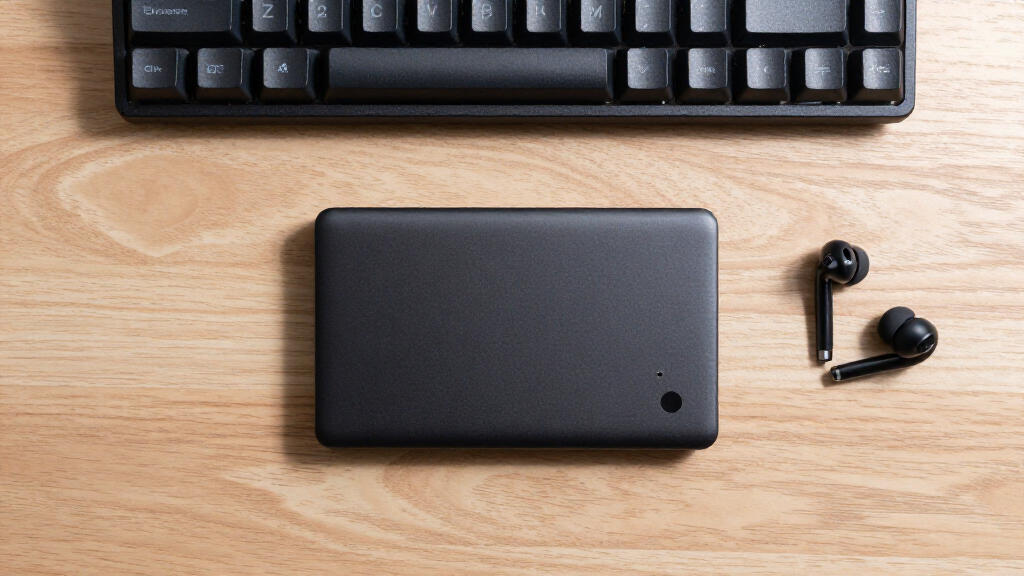
For most developers, I’d start with the Samsung T9: its advertised speeds up to 2,000 MB/s suit large project transfers, provided your computer supports USB 3.2 Gen 2×2. The Samsung P7 stands out for buyers with a USB4 setup, while the Crucial X9 Pro offers a more straightforward option for everyday project files. The main tradeoffs are connection compatibility, sustained performance, capacity, and how much portability matters beside your desk. A drive’s headline speed may not be reachable through every laptop port or cable. Read on for my comparison of all 14 portable SSDs and the developer workflows each fits best.

Get business pricing on monitors, keyboards and dev gear
- Business-only prices and quantity discounts
- Tax-exempt purchasing
- Multiple users, one account, clear invoices
Key Takeaways
- Connection compatibility separates the speed leaders. The T9 advertises up to 2,000 MB/s, but its USB 3.2 Gen 2×2 interface needs a compatible host to reach its intended performance; the P7’s USB4 connection targets a different class of setup.
- Two SanDisk Extreme capacities offer a practical rugged-drive choice. The 1TB and 2TB versions make it easier to match capacity to project size without moving to the Extreme PRO.
- The lineup spans distinct speed tiers. Models range from the T5’s advertised 540 MB/s to several drives rated around or above 2,000 MB/s, so a developer moving small repositories may not benefit from paying for peak throughput.
- Connector flexibility can matter more than a speed claim. The Lexar D70E’s dual-connector design can simplify transfers across devices, while a conventional USB-C drive may suit a stable laptop-and-dock workflow better.
- Thunderbolt and USB4 picks need a compatible workstation to justify their place. The SABRENT Rocket XTRM Plus and Samsung P7 make the most sense when the developer’s computer and workflow can use their higher-bandwidth connections.
| Lexar ES3 1TB Portable SSD, Silver, USB 3.2 Gen 2 |  | Best Value for Everyday Development | Capacity: 1 TB | Interface: USB 3.2 Gen 2 | Maximum read speed: Up to 1,050 MB/s | VIEW LATEST PRICE | See Our Full Breakdown |
| SanDisk Extreme Portable SSD, 1TB, Up to 2000MB/s |  | Best Rugged 1TB Pick | Capacity: 1 TB | Maximum read speed: Up to 2,000 MB/s | Interface: USB 3.0 | VIEW LATEST PRICE | See Our Full Breakdown |
| SanDisk Extreme 2TB Portable SSD |  | Best for Larger Project Libraries | Capacity: 2 TB | Interface: USB 3.2 Gen 2 | Maximum read speed: Up to 1,050 MB/s | VIEW LATEST PRICE | See Our Full Breakdown |
| SanDisk 2TB Extreme PRO Portable SSD |  | Best for High-Throughput Workloads | Capacity: 2 TB | Maximum read speed: Up to 4,000 MB/s | Maximum write speed: Up to 3,800 MB/s | VIEW LATEST PRICE | See Our Full Breakdown |
| Lexar D70E 1TB Dual-Connector External SSD, Up to 2000MB/s Read and 1800MB/s Write |  | Best for Mixed USB-A and USB-C Setups | Capacity: 1 TB | Connectors: USB-C and USB-A | USB-C read speed: Up to 2,000 MB/s | VIEW LATEST PRICE | See Our Full Breakdown |
| SanDisk 1TB Portable Drive, USB-C, Up to 600MB/s Read Speed, Black |  | Best Compact Everyday Carry | Storage capacity: 1 TB | Connectivity: USB Type-C | Maximum read speed: Up to 600 MB/s | VIEW LATEST PRICE | See Our Full Breakdown |
| Samsung T9 Portable SSD, 1TB, USB 3.2 Gen 2×2, Up to 2,000 MB/s | 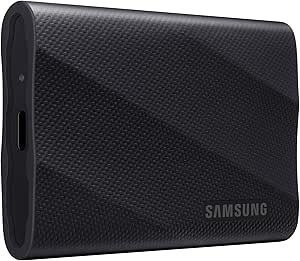 | Best for Secure Fast Transfers | Storage capacity: 1 TB | Interface: USB 3.2 Gen 2×2 | Maximum read speed: Up to 2,000 MB/s | VIEW LATEST PRICE | See Our Full Breakdown |
| Samsung Portable SSD P7 1TB USB4 External Solid-State Drive |  | Best Premium USB4 Performance | Storage capacity: 1 TB | Drive type: Portable SSD | Interface: USB 2.0/3.0 listed; maximum speeds require compatible USB4 Gen 3×2 host | VIEW LATEST PRICE | See Our Full Breakdown |
| Samsung T7 Portable SSD, 1TB, Titan Gray, USB 3.2 Gen 2 | 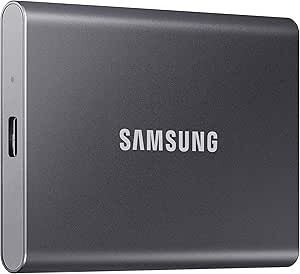 | Best Balanced Developer Drive | Storage capacity: 1 TB | Interface: USB 3.2 Gen 2 | Maximum read speed: Up to 1,050 MB/s | VIEW LATEST PRICE | See Our Full Breakdown |
| SABRENT Rocket XTRM Plus 2TB Thunderbolt 3 Portable SSD |  | Best for Thunderbolt Workstations | Storage capacity: 2 TB | Connectivity: Thunderbolt 3, USB 3.2 Gen 2×1, and USB-C | Maximum read speed: Up to 2,700 MB/s | VIEW LATEST PRICE | See Our Full Breakdown |
| SanDisk 1TB Portable SSD, Up to 1000MB/s Read Speed, Black |  | Best for Everyday Development Backups | Capacity: 1 TB | Read speed: Up to 1000 MB/s | Interface: USB 3.0 | VIEW LATEST PRICE | See Our Full Breakdown |
| Crucial X10 Pro 1TB Portable SSD |  | Best for High-Speed Project Files | Capacity: 1 TB | Read speed: Up to 2100 MB/s | Write speed: Up to 2000 MB/s | VIEW LATEST PRICE | See Our Full Breakdown |
| Samsung T5 Portable SSD 2TB, USB 3.1, Up to 540 MB/s, Black | 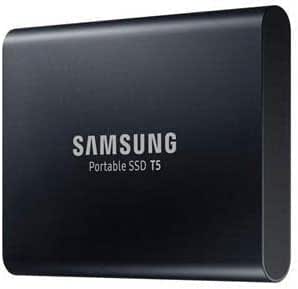 | Best for Capacity and Encrypted Archives | Capacity: 2 TB | Maximum transfer speed: Up to 540 MB/s | Interface: USB 3.1 | VIEW LATEST PRICE | See Our Full Breakdown |
| Crucial X9 Pro 1TB Portable SSD, USB-C, Up to 1050MB/s, Silver |  | Best Balanced Rugged Pick | Capacity: 1 TB | Read speed: Up to 1050 MB/s | Write speed: Up to 1050 MB/s | VIEW LATEST PRICE | See Our Full Breakdown |
| portable SSDs for developer | Interface | Capacity | Maximum read speed | Weight |
|---|---|---|---|---|
| Lexar ES3 1TB Portable SSD | USB 3.2 Gen 2 | 1 TB | Up to 1,050 MB/s | 42 g |
| SanDisk Extreme Portable SSD | USB 3.0 | 1 TB | Up to 2,000 MB/s | 1.6 oz |
| SanDisk Extreme 2TB Portable S | USB 3.2 Gen 2 | 2 TB | Up to 1,050 MB/s | — |
| SanDisk 2TB Extreme PRO Portab | USB 3.0 | 2 TB | Up to 4,000 MB/s | 2.24 oz |
| Lexar D70E 1TB Dual-Connector | — | 1 TB | — | 55 g |
| SanDisk 1TB Portable Drive | — | — | Up to 600 MB/s | 1.12 ounces |
| Samsung T9 Portable SSD | USB 3.2 Gen 2×2 | — | Up to 2,000 MB/s | — |
| Samsung Portable SSD P7 1TB US | USB 2.0/3.0 listed; maximum speeds require compatible USB4 Gen 3×2 host | — | Up to 4,000 MB/s | 0.1 kg |
| Samsung T7 Portable SSD | USB 3.2 Gen 2 | — | Up to 1,050 MB/s | — |
| SABRENT Rocket XTRM Plus 2TB T | — | — | Up to 2,700 MB/s | — |
| SanDisk 1TB Portable SSD | USB 3.0 | 1 TB | — | 1.12 ounces |
| Crucial X10 Pro 1TB Portable S | USB-C (USB 3.2) | 1 TB | — | — |
| Samsung T5 Portable SSD 2TB | USB 3.1 | 2 TB | — | — |
| Crucial X9 Pro 1TB Portable SS | USB-C | 1 TB | — | — |
More Details on Our Top Picks
Lexar ES3 1TB Portable SSD, Silver, USB 3.2 Gen 2
The Lexar ES3 is a sensible pick for developers who want a light project drive for source trees, backups, and everyday file transfers without prioritizing extreme throughput. Its USB 3.2 Gen 2 connection supports up to 1,050 MB/s read and 1,000 MB/s write with compatible hardware, enough for many code and media workflows. The included USB-C cable and 256-bit AES encryption software make it straightforward to connect and protect work files. Compared with the Lexar D70E, the ES3 needs a cable but has a lighter listed weight; the D70E is more convenient across USB-A and USB-C ports and advertises higher USB-C speeds. The ES3’s main limits are its 1TB capacity and reliance on a compatible fast host connection. Older iPhone models are not supported, and this version lacks MagSafe.
Pros:- Up to 1,050 MB/s read and 1,000 MB/s write over compatible USB 3.2 Gen 2
- Light 42 g design is easy to keep in a laptop bag
- USB-C cable is included for a direct connection
- 256-bit AES encryption software adds a layer of protection for work files
Cons:- Performance can fall on systems without USB 3.2 Gen 2 support
- 1TB capacity may be limiting for large repositories, virtual machines, or media assets
- No MagSafe support, and iPhone 14 and older models are not compatible
Best for: Developers who want an inexpensive-to-carry 1TB drive for source code, working files, and encrypted backups on USB-C computers.
Not ideal for: Developers moving very large datasets frequently, or anyone who needs built-in USB-A connectivity, MagSafe support, or compatibility with iPhone 14 and older models.
- Capacity:1 TB
- Interface:USB 3.2 Gen 2
- Maximum read speed:Up to 1,050 MB/s
- Maximum write speed:Up to 1,000 MB/s
- Weight:42 g
- Thickness:10.5 mm
- Security:Lexar DataShield 256-bit AES encryption software
- Included accessory:USB Type-C cable
- Warranty:3-year limited warranty
Our verdict“Choose the Lexar ES3 for a lightweight, cable-connected 1TB developer drive when broad USB-C compatibility and basic file protection matter more than peak speed.”
SanDisk Extreme Portable SSD, 1TB, Up to 2000MB/s
For developers who carry a drive between offices, job sites, or travel setups, the SanDisk Extreme Portable SSD pairs a pocket-sized 1TB format with IP65 dust and water resistance and drop protection up to 3 meters. Its advertised read speed reaches 2,000 MB/s, which can shorten reads and backups on a compatible system, though the supplied data does not specify write speed. That makes it less predictable for sustained writes than the SanDisk 2TB Extreme PRO, which lists both write and sustained-write figures. The Extreme’s practical advantage is protection in a compact, light package; its tradeoff is that password protection requires a software download and supports only Windows 10 or later and macOS 12 or later. Developers should also check their host connection before expecting the maximum speed.
Pros:- Advertised read speed reaches up to 2,000 MB/s
- IP65-rated dust and water resistance
- Drop protection rated up to 3 meters
- Pocket-sized design weighs 1.6 oz
Cons:- Write speed is not specified in the provided product data
- Password protection requires a software download and has stated OS requirements
- Maximum performance depends on the host device and connection
Best for: Mobile developers who need a compact 1TB work drive with stated dust, water, and drop protection for commuting and field use.
Not ideal for: Developers whose main workload is sustained large writes or who need documented write-speed figures and prefer not to install encryption software.
- Capacity:1 TB
- Maximum read speed:Up to 2,000 MB/s
- Interface:USB 3.0
- Connector:USB Type-C
- Protection:IP65 rating; drop protection up to 3 m
- Encryption:256-bit AES password protection
- Dimensions:3.35 × 2 × 0.39 in
- Weight:1.6 oz
- Compatible platforms:Mac and PC
Our verdict“Pick this SanDisk Extreme if portability and environmental protection matter more than having documented sustained-write performance.”
SanDisk Extreme 2TB Portable SSD
The SanDisk Extreme 2TB gives developers more room for repositories, local datasets, build artifacts, and backup copies than the 1TB drives in this group. Its USB 3.2 Gen 2 connection is rated for 1,050 MB/s read and 1,000 MB/s write, while hardware AES encryption and password protection suit drives that may hold client or company files. A carabiner loop and stated water, dust, and 3-meter drop resistance make it easier to carry than a bare desktop drive. Compared with the SanDisk Extreme Portable SSD 1TB, this model doubles capacity but has lower advertised peak read speed; compared with the SanDisk 2TB Extreme PRO, it gives up the PRO’s much higher listed throughput. Actual speeds vary with the host, and Mac password protection requires a software download.
Pros:- 2TB capacity accommodates more project files and local datasets
- Up to 1,050 MB/s read and 1,000 MB/s write over USB 3.2 Gen 2
- 256-bit AES hardware encryption with password protection
- Carabiner loop and stated water, dust, and drop resistance
Cons:- Actual transfer speeds vary with the host device and operating conditions
- Mac password protection requires a software download
- Slower advertised throughput than the SanDisk 2TB Extreme PRO
Best for: Developers who need 2TB for multiple active projects, datasets, or portable backups and want stated hardware encryption and physical protection.
Not ideal for: Developers who prioritize the fastest transfers available in this lineup, or who want password protection without installing software on Mac.
- Capacity:2 TB
- Interface:USB 3.2 Gen 2
- Maximum read speed:Up to 1,050 MB/s
- Maximum write speed:Up to 1,000 MB/s
- Encryption:256-bit AES hardware encryption
- Protection:Water and dust resistant; drop protection up to 3 m
- Form factor:Portable
- Compatible devices:Desktop, laptop, and tablet
- Operating temperature:-20°C to 85°C
Our verdict“Choose this model when 2TB capacity and portable protection matter more than the higher throughput advertised by the Extreme PRO.”
SanDisk 2TB Extreme PRO Portable SSD
The SanDisk 2TB Extreme PRO is the performance-led option here, with advertised speeds of 4,000 MB/s read and 3,800 MB/s write plus an average sustained write speed of 3,100 MB/s. Those figures can matter when a developer regularly moves large build outputs, local databases, or media-heavy project files, but only if the computer and connection can make use of them. The standard SanDisk Extreme 2TB lists much lower peak speeds, so it is the more restrained choice for routine backups and source trees. Both models offer 2TB capacity and stated rugged protection, while the PRO adds far more throughput at the cost of greater dependence on a suitable host setup. Its supplied specs list USB 3.0, so buyers should verify interface compatibility rather than assume every system will reach the headline rates. Encryption also requires software.
Pros:- Advertised read speed up to 4,000 MB/s and write speed up to 3,800 MB/s
- Average sustained write speed listed at 3,100 MB/s
- 2TB capacity for large working sets and project archives
- IP65 dust and water resistance with drop protection up to 3 meters
Cons:- Actual speeds depend on host device, interface, and usage conditions
- Password protection requires software and is limited to Windows 10 or later and macOS 13 or later
- Higher performance is of limited use without a compatible high-bandwidth host
Best for: Developers with compatible high-bandwidth systems who often transfer large datasets, build artifacts, or media files and want 2TB of portable storage.
Not ideal for: Developers using ordinary USB connections or mainly storing source code and backups, since they may not benefit from its headline speeds.
- Capacity:2 TB
- Maximum read speed:Up to 4,000 MB/s
- Maximum write speed:Up to 3,800 MB/s
- Average sustained write speed:3,100 MB/s
- Interface:USB 3.0
- Connector:USB Type-C
- Protection:IP65 dust and water resistance; drop protection up to 3 m
- Encryption:256-bit AES password protection
- Weight:2.24 oz
Our verdict“Buy the Extreme PRO for repeated large transfers on a compatible system; for routine code storage, the standard SanDisk Extreme 2TB is a more proportionate fit.”
Lexar D70E 1TB Dual-Connector External SSD, Up to 2000MB/s Read and 1800MB/s Write
The Lexar D70E suits developers who move between newer USB-C laptops and older USB-A workstations: its built-in connectors avoid the cable or adapter shuffle. Over USB-C it advertises up to 2,000 MB/s read and 1,800 MB/s write; USB-A figures are lower, at up to 1,000 MB/s read and 900 MB/s write. That split makes the drive more flexible than the cable-dependent Lexar ES3, while the ES3 weighs less and includes a cable. At 55 g, the D70E remains portable, and its metal housing and lanyard loop suit daily carry. The Lexar App’s automatic photo and video backup is more useful for mobile media than developer files, though it can help protect device captures. Actual speeds depend on the host standard, and the product data does not specify a durability rating.
Pros:- Built-in USB-C and USB-A connectors support different compatible host ports
- USB-C speed ratings reach up to 2,000 MB/s read and 1,800 MB/s write
- Metal housing, 55 g weight, and integrated lanyard loop suit portable use
- Lexar App supports automatic photo and video backups
Cons:- USB-A speed ratings are lower than the USB-C figures
- Actual performance depends on host support for the required USB standard
- No water or drop-protection rating is listed in the supplied product data
Best for: Developers who regularly connect to both USB-A and USB-C computers and want one compact drive for code, project files, and device transfers.
Not ideal for: Developers who need stated water or drop protection, or who mainly use a single USB-C system and would rather have a lighter cable-connected drive.
- Capacity:1 TB
- Connectors:USB-C and USB-A
- USB-C read speed:Up to 2,000 MB/s
- USB-C write speed:Up to 1,800 MB/s
- USB-A read speed:Up to 1,000 MB/s
- USB-A write speed:Up to 900 MB/s
- Weight:55 g
- Dimensions:3.13 × 1.19 × 0.31 in
- Warranty:5-year limited warranty
Our verdict“Choose the D70E if built-in USB-A and USB-C connections simplify your mixed-device workflow; skip it if ruggedness ratings matter more.”
SanDisk 1TB Portable Drive, USB-C, Up to 600MB/s Read Speed, Black
This is the simplest fit here for developers who mainly need a lightweight place to carry project files, reference data, or backups between devices. At 1.12 ounces, it is easier to keep in a laptop bag or pocket than the larger SABRENT Rocket XTRM Plus, and its USB-C connection suits many current laptops and mobile devices. The rated two-meter drop protection adds reassurance for everyday transport, while the no-moving-parts design avoids the fragility of a mechanical drive.
The tradeoff is speed: its read rate tops out at 600 MB/s, and writes are slower, so compiling directly from the drive or moving large repositories will take longer than on the Samsung T7. Host hardware and usage also affect performance. I’d choose it for portability and routine transfers, not as a fast scratch disk for heavy builds.
Pros:- Pocket-sized 1.12-ounce design is easy to carry daily
- USB-C connection works with a range of compatible devices
- Rated for drops up to 2 meters
- No moving parts for portable solid-state storage
Cons:- Write speeds are lower than the stated maximum read speed
- 600 MB/s maximum reads are modest for large builds or datasets
- Actual performance varies with the host, interface, and workload
Best for: Developers who carry a small set of files between a laptop, tablet, or phone and value low weight over fast project builds.
Not ideal for: Developers who routinely move large datasets or run active projects from external storage; its slower writes and 600 MB/s maximum read speed trail faster options such as the Samsung T7.
- Storage capacity:1 TB
- Connectivity:USB Type-C
- Maximum read speed:Up to 600 MB/s
- Write speed:Lower than read speed
- Drop protection:Up to 2 meters
- Weight:1.12 ounces
- Dimensions:2.95 x 1.77 x 0.39 inches
- Compatibility:Mac, PC, desktop, laptop, smartphone, and tablet
Our verdict“Choose this SanDisk when compact everyday file carriage matters more than fast writes or sustained development workloads.”
Samsung T9 Portable SSD, 1TB, USB 3.2 Gen 2×2, Up to 2,000 MB/s
The Samsung T9 is a strong match for developers moving sizeable project archives or datasets who also want hardware-backed protection for stored files. Its up-to-2,000 MB/s read and write speeds can shorten transfers compared with the Samsung T7, but those figures depend on a USB 3.2 Gen 2×2 host, a suitable cable, and UASP support. A port that lacks that interface can limit the speed advantage, so checking the development machine matters before choosing it.
AES 256-bit hardware encryption adds a useful layer for work carried between offices or client sites, and Dynamic Thermal Guard helps manage heat during heavy activity. The 9.8-foot drop rating supports mobile use, though this remains a 1TB drive. I’d pick it over the SanDisk 600 MB/s model for faster, more security-conscious transfers, but not if the host cannot make use of its interface.
Pros:- Read and write speeds reach up to 2,000 MB/s with compatible hardware
- AES 256-bit hardware encryption supports protection of portable work files
- Dynamic Thermal Guard helps manage heat during demanding transfers
- Rated for drops up to 9.8 feet
Cons:- Maximum speeds require a compatible USB 3.2 Gen 2×2 host, cable, and UASP mode
- Host compatibility can limit performance
- 1TB capacity may be restrictive for large local datasets or extensive archives
Best for: Developers with a USB 3.2 Gen 2×2 workstation who transfer large files and want hardware encryption for work carried off-site.
Not ideal for: Developers using hosts without USB 3.2 Gen 2×2 or suitable UASP support; they may not see the advertised speed advantage over a Samsung T7.
- Storage capacity:1 TB
- Interface:USB 3.2 Gen 2×2
- Maximum read speed:Up to 2,000 MB/s
- Maximum write speed:Up to 2,000 MB/s
- Encryption:AES 256-bit hardware encryption
- Drop resistance:Up to 9.8 feet
- Thermal management:Dynamic Thermal Guard
- Compatibility:Mac, PC, tablet, iPhone 15/16, Xbox Series S/X, and PlayStation 4/5
Our verdict“Pick the T9 for fast transfers and hardware encryption if your development machine supports USB 3.2 Gen 2×2.”
Samsung Portable SSD P7 1TB USB4 External Solid-State Drive
The P7 has the highest advertised transfer ceiling in this group: up to 4,000 MB/s reads and 3,700 MB/s writes. That makes it the premium choice for developers shifting very large assets or datasets, provided their host supports USB4 Gen 3×2, the cable is suitable, and UASP mode is available. Without that setup, the headline speeds are not a reliable expectation; the listed USB 2.0/3.0 compatibility does not itself establish access to the maximum rate.
Compared with the Samsung T9, the P7 promises substantially higher throughput but places even more weight on having the right host. Its Samsung Magician health and optimization tools are useful for monitoring the drive, and the 6.5-foot drop rating suits mobile work. I’d favor it over the T9 for a USB4-equipped workstation, but choose the T7 or T9 if broad, known interface performance matters more than peak speed.
Pros:- Advertised read speed up to 4,000 MB/s and write speed up to 3,700 MB/s
- Samsung Magician offers optimization and drive health monitoring
- Rated to withstand drops up to 6.5 feet
- Compatible with a broad range of computers and mobile devices
Cons:- Maximum speeds require a compatible USB4 Gen 3×2 host, supported cable, and UASP mode
- Listed compatibility with USB 2.0/3.0 does not guarantee the maximum performance
- Drop resistance does not cover every condition, and drop damage is not covered under warranty
Best for: Developers with a compatible USB4 Gen 3×2 workstation who regularly transfer very large datasets, media assets, or build artifacts.
Not ideal for: Developers whose computers lack the required USB4 host and cable; the premium speed ceiling may go unused, making a Samsung T7 or T9 a more practical match.
- Storage capacity:1 TB
- Drive type:Portable SSD
- Interface:USB 2.0/3.0 listed; maximum speeds require compatible USB4 Gen 3×2 host
- Connectivity:USB Type-C
- Maximum read speed:Up to 4,000 MB/s
- Maximum write speed:Up to 3,700 MB/s
- Drop resistance:Up to 6.5 feet
- Weight:0.1 kg
- Software:Samsung Magician for Windows, macOS, and Android
Our verdict“Choose the P7 for demanding transfers only when your workstation and cable can support its USB4 speed ceiling.”
Samsung T7 Portable SSD, 1TB, Titan Gray, USB 3.2 Gen 2
The Samsung T7 is the balanced choice for developers who want a meaningful speed step up from entry-level portable storage without depending on a USB4 or Gen 2×2 host. With a compatible USB 3.2 Gen 2 connection, its read and write speeds reach up to 1,050 and 1,000 MB/s, respectively—useful for moving repositories, containers, and project assets. That makes it a more practical everyday work drive than the SanDisk 600 MB/s model, while avoiding the T9’s more demanding Gen 2×2 requirement.
Its aluminum unibody provides shock resistance and drop protection up to six feet, and AES 256-bit hardware encryption helps safeguard portable files. The included USB-C-to-C and USB-C-to-A cables make connecting to different machines easier. The ceiling is lower than the T9 and P7, and full performance still depends on the host and UASP support. I’d choose it for routine development transfers, not peak-throughput workloads.
Pros:- Up to 1,050 MB/s reads and 1,000 MB/s writes with a compatible connection
- Aluminum body offers shock resistance and drop protection up to 6 feet
- 256-bit AES hardware encryption
- Includes USB-C-to-C and USB-C-to-A cables
Cons:- Maximum speeds require a compatible USB 3.2 Gen 2 host and UASP support
- Performance and compatibility vary with the host device and operating system
- Its 1TB capacity and speed ceiling may not suit large datasets or heavy scratch-disk use
Best for: Developers who want a compact daily project and backup drive with fast USB 3.2 Gen 2 transfers and included cables for varied ports.
Not ideal for: Developers who need maximum throughput for very large datasets or have a USB4 workstation; the P7 offers a higher advertised ceiling when the host supports it.
- Storage capacity:1 TB
- Interface:USB 3.2 Gen 2
- Maximum read speed:Up to 1,050 MB/s
- Maximum write speed:Up to 1,000 MB/s
- Construction:Aluminum unibody
- Drop protection:Up to 6 feet
- Encryption:256-bit AES hardware encryption
- Included cables:USB Type-C to Type-C and USB Type-C to Type-A
Our verdict“Choose the T7 for a dependable balance of everyday development speed, portability, and encryption without requiring a higher-tier host interface.”
SABRENT Rocket XTRM Plus 2TB Thunderbolt 3 Portable SSD
For developers whose workflow involves large repositories, virtual-machine images, or substantial local datasets, the Rocket XTRM Plus pairs 2TB capacity with up to 2,700 MB/s over Thunderbolt 3. That extra room is a practical distinction from the 1TB Samsung T7, while the Thunderbolt connection gives compatible workstations a much higher transfer ceiling. It also falls back to USB 3.2 Gen 2×1 at up to 900 MB/s, so it can remain useful on a USB-C machine that lacks Thunderbolt, though at a reduced rate.
The aluminum enclosure supports heat dissipation, and a removable silicone sleeve adds physical protection. Bus power and included Thunderbolt 3 and USB-A-to-USB-C cables suit a portable, plug-and-play setup. The tradeoff is that peak speed depends on Thunderbolt 3, and its 900 MB/s USB fallback is slower than the T7’s stated maximum read speed. I’d choose it for capacity and Thunderbolt throughput, not universal peak performance.
Pros:- 2TB capacity accommodates larger project libraries and datasets
- Thunderbolt 3 supports maximum read speeds up to 2,700 MB/s
- USB 3.2 Gen 2×1 fallback reaches up to 900 MB/s
- Aluminum enclosure, removable silicone sleeve, and included cables support portable use
Cons:- Maximum speed requires a compatible Thunderbolt 3 connection
- USB fallback is slower than the Samsung T7’s stated maximum read speed
- Requires a compatible Thunderbolt or USB connection, and the larger enclosure is less pocketable than compact 1TB drives
Best for: Developers with Thunderbolt 3 workstations who need 2TB of portable space for virtual machines, large repositories, or local datasets.
Not ideal for: Developers without Thunderbolt 3 who expect the maximum transfer rate; its USB fallback is limited to 900 MB/s, below the Samsung T7’s stated maximum read speed.
- Storage capacity:2 TB
- Connectivity:Thunderbolt 3, USB 3.2 Gen 2×1, and USB-C
- Maximum read speed:Up to 2,700 MB/s
- USB fallback speed:Up to 900 MB/s
- Enclosure material:Aluminum
- Protection:Removable silicone sleeve
- Power:Bus-powered
- Compatibility:Windows, macOS, Linux, Thunderbolt 3, and USB-C devices
- Included cables:Thunderbolt 3 cable and USB-A-to-USB-C cable
Our verdict“Pick the Rocket XTRM Plus if you need 2TB and have a Thunderbolt 3 workstation; otherwise, a smaller USB-focused drive may be a better fit.”
SanDisk 1TB Portable SSD, Up to 1000MB/s Read Speed, Black
For developers who want a lightweight drive for source archives, project snapshots, and everyday file transfers, this 1TB SanDisk keeps setup simple: connect over USB-C and work without installing drivers. Its stated read speed of up to 1000 MB/s is a useful step up from the Samsung T5’s 540 MB/s maximum, though the SanDisk’s write speed isn’t specified here, so I wouldn’t choose it for sustained, write-heavy builds or large media workflows. At just 1.12 ounces, it’s easy to carry between a home workstation and an office, while protection against drops up to 2 meters adds reassurance in a bag. Compared with the more rugged Crucial X9 Pro, it lacks a stated IP55 rating; choose the X9 Pro if dust and water resistance matter more than keeping the setup straightforward.
Pros:- Up to 1000 MB/s read speed for moving files and opening stored projects
- Lightweight, compact body is easy to carry with a laptop
- Drop protection rated up to 2 meters
- USB-C connection works without driver installation or software setup
Cons:- Write speed is not specified and may be lower than the maximum read speed
- No stated IP water and dust resistance rating
- 1TB capacity may feel limiting for large local datasets or extensive project archives
Best for: Developers who need a pocketable USB-C drive for project copies, source archives, and moving files between laptops.
Not ideal for: Developers who regularly write large datasets or work outdoors in dusty or wet conditions; write speed isn’t specified, and the listed protection doesn’t include an IP rating.
- Capacity:1 TB
- Read speed:Up to 1000 MB/s
- Interface:USB 3.0
- Connector:USB Type-C
- Drop protection:Up to 2 meters
- Weight:1.12 ounces
- Dimensions:1.77 x 3.35 x 0.39 inches
- Compatibility:Desktop, laptop, smartphone, and tablet; Mac and PC
Our verdict“Choose this SanDisk for simple, lightweight project storage and backups, but pick the Crucial X9 Pro for stated write speeds and IP55 protection.”
Crucial X10 Pro 1TB Portable SSD
When a developer’s portable drive needs to handle large datasets, container images, or media assets, the Crucial X10 Pro is the speed-focused choice here. Its stated 2100 MB/s read and 2000 MB/s write speeds exceed the Crucial X9 Pro’s 1050 MB/s figures, which can shorten transfers when the computer and connection support the drive’s performance. The anodized-aluminum enclosure, IP55 water and dust resistance, and 2-meter drop protection make it more suited to travel than the basic SanDisk 1TB Portable SSD. That extra performance comes with a narrower use case: ordinary source backups may not benefit much, and older computers with USB-A ports may need an adapter. I’d choose it for frequent large-file work, not simply because the highest speed figure looks appealing.
Pros:- Up to 2100 MB/s read and 2000 MB/s write speeds for large transfers
- IP55 water and dust resistance plus drop protection up to 2 meters
- Anodized-aluminum enclosure in a portable form
- Compatibility spans Windows, Mac, Linux, mobile devices, and consoles
Cons:- Its speed advantage depends on a compatible host and USB connection
- USB-C may require an adapter for older USB-A devices
- The listed 1TB capacity may be restrictive for large working datasets
Best for: Developers who frequently transfer large datasets, build artifacts, virtual machine images, or media projects using compatible USB-C hardware.
Not ideal for: Developers who mostly store source code and small backups, or who rely on older USB-A-only computers and don’t want to use an adapter.
- Capacity:1 TB
- Read speed:Up to 2100 MB/s
- Write speed:Up to 2000 MB/s
- Interface:USB-C (USB 3.2)
- Water and dust resistance:IP55
- Drop protection:Up to 7.5 feet (2 meters)
- Enclosure material:Anodized aluminum
- Compatibility:Windows, Mac, iPad Pro, Chromebooks, Android, Linux, PS4, PS5, and Xbox
Our verdict“Pick the X10 Pro for frequent large transfers on compatible hardware; for routine project backups, the less speed-focused SanDisk may be a simpler fit.”
Samsung T5 Portable SSD 2TB, USB 3.1, Up to 540 MB/s, Black
The Samsung T5’s strongest case for developers is the combination of 2TB capacity and optional AES 256-bit hardware encryption, not its speed. That space can hold more archived branches, test data, and project backups than the 1TB SanDisk and Crucial options in this batch. Its transfer speed tops out at 540 MB/s, well below the Crucial X9 Pro’s 1050 MB/s and far behind the X10 Pro, so it’s a better match for storing and retrieving files than for frequent, time-sensitive bulk transfers. Samsung includes both USB-C-to-C and USB-C-to-A cables, giving it a practical advantage when moving between newer laptops and older desktops. The password protection is optional, so buyers handling sensitive work should set it up rather than assume encryption is active by default.
Pros:- 2TB capacity provides more room for project history and backup sets than the 1TB alternatives
- Optional password protection with AES 256-bit hardware encryption
- Includes both USB-C-to-C and USB-C-to-A cables
- Compact metal body with shock-resistant construction
Cons:- Up to 540 MB/s is slower than the Crucial X9 Pro and X10 Pro
- Actual speed depends on the connected device and interface
- Password protection is optional and requires setup
Best for: Developers who need 2TB for project archives and backups, especially those who move between USB-C and USB-A computers or want optional hardware encryption.
Not ideal for: Developers who work directly from an external drive with frequent large transfers; its 540 MB/s maximum is much slower than the Crucial X9 Pro and X10 Pro.
- Capacity:2 TB
- Maximum transfer speed:Up to 540 MB/s
- Interface:USB 3.1
- Security:Optional password protection and AES 256-bit hardware encryption
- Material:Metal
- Durability:Shock-resistant
- Dimensions:3 x 2.3 x 0.4 inches
- Included accessories:USB-C-to-USB-C cable and USB-C-to-USB-A cable
Our verdict“Choose the T5 when capacity, cable flexibility, and optional encryption matter more than transfer speed.”
Crucial X9 Pro 1TB Portable SSD, USB-C, Up to 1050MB/s, Silver
The Crucial X9 Pro suits developers who want more than basic backup speed without stepping up to the X10 Pro’s much higher performance ceiling. Its up to 1050 MB/s read and write speeds give transfers a clear advantage over the Samsung T5, while its IP55 rating and 2-meter drop resistance make it a stronger travel companion than the basic SanDisk 1TB Portable SSD. That balance works well for moving repositories, build outputs, and moderately large datasets between machines. The X10 Pro remains the better fit for users who often handle very large files and have hardware that can take advantage of its higher speeds; the X9 Pro keeps the performance more measured. Its USB-C connection may need an adapter on older USB-A systems, and the included software offers are limited to three months.
Pros:- Up to 1050 MB/s read and write speeds
- IP55 water and dust resistance for travel and field use
- Drop resistance rated up to 7.5 feet (2 meters)
- Includes SSD password protection and a lanyard loop
Cons:- USB-C may require an adapter for devices with USB-A ports
- Promotional Mylio Photos+ and Acronis True Image access lasts three months
- Its 1TB capacity is smaller than the Samsung T5’s 2TB
Best for: Developers who carry a project drive between workspaces and want balanced transfer speeds with stated water, dust, and drop protection.
Not ideal for: Developers who need maximum transfer throughput for repeated very large files, or who use USB-A-only computers without an adapter.
- Capacity:1 TB
- Read speed:Up to 1050 MB/s
- Write speed:Up to 1050 MB/s
- Interface:USB-C
- Data transfer rate:10 Gbps
- Water and dust resistance:IP55
- Drop resistance:Up to 7.5 feet (2 meters)
- Compatibility:Windows, Mac, iPad Pro, Chromebooks, Android, Linux, PS4, PS5, and Xbox
Our verdict“Choose the X9 Pro for a portable developer drive that balances useful speed with rugged protection; choose the X10 Pro for substantially faster large-file work.”
How We Picked
I compared these drives for developer tasks rather than treating advertised transfer speed as the only measure. I weighed stated interface and performance, capacity options, portability, connector usefulness, and whether the drive’s features match common workflows such as moving repositories, build artifacts, virtual-machine images, and local backups. I also considered practical fit: a fast drive is less useful if the host port cannot take advantage of it, and a lighter-duty model may be the more sensible choice for routine file storage.
The ranking favors models that balance useful performance with a clear role and broad fit. The Samsung T9 leads for developers with a compatible USB 3.2 Gen 2×2 port; the Samsung P7 and SABRENT Rocket XTRM Plus serve buyers with USB4 or Thunderbolt systems. More accessible USB options, including the Crucial X9 Pro and Samsung T7, rank well for everyday use, while slower or more specialized choices rank lower unless their capacity, connector design, or workflow fit is the priority. Product specifications cited here are manufacturer-advertised figures, not independent benchmark results.
| portable SSDs for developer | Maximum read speed |
|---|---|
| Lexar ES3 1TB Portable SSD | Up to 1,050 MB/s |
| SanDisk Extreme Portable SSD | Up to 2,000 MB/s |
| SanDisk Extreme 2TB Portable S | Up to 1,050 MB/s |
| SanDisk 2TB Extreme PRO Portab | Up to 4,000 MB/s |
| Lexar D70E 1TB Dual-Connector | — |
| SanDisk 1TB Portable Drive | Up to 600 MB/s |
| Samsung T9 Portable SSD | Up to 2,000 MB/s |
| Samsung Portable SSD P7 1TB US | Up to 4,000 MB/s |
| Samsung T7 Portable SSD | Up to 1,050 MB/s |
| SABRENT Rocket XTRM Plus 2TB T | Up to 2,700 MB/s |
| SanDisk 1TB Portable SSD | — |
| Crucial X10 Pro 1TB Portable S | — |
| Samsung T5 Portable SSD 2TB | — |
| Crucial X9 Pro 1TB Portable SS | — |
Factors to Consider When Choosing Portable SSDs For Developers
Choosing a portable SSD for development is less about buying the biggest speed number and more about matching the drive to your computer, project size, and backup habits. I’d check these factors before paying for a faster interface or more capacity.
Check Your Computer’s Actual Port
Start with the ports on the computer you will use most, not just the connector shape. USB-C describes a physical connector; it does not tell you the data rate supported by that port. A USB 3.2 Gen 2×2 drive such as the T9 may run below its advertised potential when connected to a system that lacks Gen 2×2 support. USB4 and Thunderbolt drives also need a compatible host to make their higher-bandwidth connection worthwhile. Check the laptop or motherboard specifications and the included cable before choosing a premium interface. If your machine has ordinary USB 10Gbps ports, a drive in that tier may be a better match than paying for capacity your system cannot use.
Match Capacity to What You Keep Offline
Source code alone often takes little space, but offline development can involve container images, virtual machines, datasets, media assets, and build outputs. Estimate the working set you need away from your main machine, then leave room for growth rather than filling the drive immediately. A 1TB model can suit repositories and a selection of tools, while a 2TB option offers more headroom for larger local environments. Avoid treating an external SSD as the only copy of important work: portable drives can be lost, damaged, or misplaced. Keep a separate backup, and decide whether the external drive stores active projects, archives, or both. That choice often matters more than a small difference in advertised speed.
Think About Sustained Work, Not Just Peak Speed
Headline read and write figures usually describe peak conditions, not every long transfer or repeated build. Copying a large virtual-machine image or dataset can place a drive under sustained load, while opening code files and syncing small changes may not. Look for independent sustained-transfer testing if your workload regularly writes large amounts of data; a maximum speed figure alone does not answer that question. Also remember that performance depends on the host, cable, file system, and the amount of free space. For many developers, an affordable 1,000 MB/s-class drive is already responsive for everyday project movement. Pay for a faster tier when your workflow has large, frequent transfers and your computer can support it.
Choose Portability Around Your Routine
A drive that travels in a backpack has different needs from one that stays connected to a workstation. If you carry it between offices, client sites, or machines, look at the enclosure, connector arrangement, and how easily you can replace or store its cable. Dual-connector models can reduce dependence on adapters when moving between devices, but they are not automatically the best fit for a fixed desk setup. Rugged designs can add reassurance for frequent travel, yet they do not replace a backup or careful handling. Consider whether the drive will hang from a cable, sit beside a dock, or live in a pocket. Those everyday details can matter more than a small performance difference.
Decide Whether a Premium Interface Pays Off
USB4 and Thunderbolt drives are aimed at systems and workflows that can use their added bandwidth. They may make sense for developers shuttling large media projects, virtual machines, or datasets between compatible workstations. For ordinary repository work, the bottleneck may be the laptop, build process, network, or many small files rather than the SSD’s interface. Check that the cable supports the intended connection; a suitable-looking cable can still limit the link. If you only occasionally transfer a large project, consider whether the time saved justifies choosing a premium connection over a simpler USB drive. Buy for the machine and workload you have, not only for a possible future upgrade.
Frequently Asked Questions
Will a 2,000 MB/s portable SSD run at that speed on my laptop?
Not necessarily. The advertised figure depends on the drive’s interface, the host port, the cable, and the conditions of the transfer. The Samsung T9 uses USB 3.2 Gen 2×2, which some computers do not support, so it may operate below its stated maximum on those systems. Check the laptop’s technical specifications for the exact USB data standard rather than relying on the USB-C connector alone. If your computer lacks a matching port, choose a drive whose interface better fits its capabilities.
Is 1TB enough for a developer’s external SSD?
It can be enough if the drive mainly holds repositories, development tools, and a limited set of project assets. Large container images, virtual machines, datasets, and media files can use space quickly, so estimate your offline working set rather than your source-code size alone. The 2TB SanDisk Extreme and Extreme PRO options provide more room for those larger libraries. Capacity also affects how much space remains for future projects and temporary build files. Whichever size you choose, keep another copy of important work on a separate device or backup service.
Should I choose USB4 or Thunderbolt for coding projects?
For everyday code repositories, a USB4 or Thunderbolt drive is often more connection than the workflow needs. These interfaces are more compelling when you regularly move large virtual machines, datasets, or other bulky files and your computer has a compatible port. In this lineup, the Samsung P7 and SABRENT Rocket XTRM Plus target those higher-bandwidth setups. Compatibility and cable capability both affect what you can gain. If your system uses standard USB and your transfers are modest, put the budget toward extra capacity or a second backup instead.
Can I use one portable SSD for both active projects and backups?
You can store both on one drive, but that does not give you an independent backup. If the drive fails, is lost, or is damaged, both copies could disappear at once. A safer setup keeps active files on your computer or external SSD and backs them up separately to another drive or a trusted remote service. You can use a portable SSD as a working copy or as one part of a backup routine, but avoid relying on it as the sole home for important code. Version control helps with source history, though it does not necessarily protect local databases, untracked files, or large project assets.
When does a dual-connector portable SSD make sense?
A dual-connector drive such as the Lexar D70E can be handy when you move files between devices with different ports and want to reduce the need for an adapter. That flexibility is most useful for developers who switch among a laptop, tablet, or other compatible device. For a drive that stays attached to one computer or dock, a conventional USB-C model may be simpler. Confirm which connector standards and transfer modes the product supports; a connector that fits does not guarantee the same speed on every device. Pick dual connectors for a real device-mixing need, not as a substitute for checking compatibility.
Conclusion
My best overall pick is the Samsung T9 for developers whose computers support USB 3.2 Gen 2×2 and who regularly move substantial files. For a more accessible everyday choice, I’d look at the Crucial X9 Pro or Samsung T7; the best value depends on the capacity and connection your workflow actually needs, rather than a speed figure you cannot use. The Samsung P7 is my premium direction for a USB4 workstation, while the Samsung T5 makes a straightforward option for beginners with modest transfer demands who do not need peak throughput. For specific needs, choose the Lexar D70E for its dual-connector approach, a SanDisk Extreme model for a portable rugged-style option, or the SABRENT Rocket XTRM Plus for a compatible Thunderbolt setup. Check your host ports first, then choose capacity and interface around the projects you really carry.