
TL;DR
A programmer has developed and shared a BASIC interpreter that boots natively on UEFI systems. This allows users to run a classic programming environment on modern hardware without an OS. The project aims to revive simple, old-fashioned programming on contemporary machines.
A developer has released a BASIC interpreter that boots directly on UEFI systems, bypassing traditional operating systems. This development enables users to run a vintage-style programming environment on modern hardware, reviving a classic programming experience in a new context. The project, shared on Show HN, highlights both technical achievement and interest in retro computing.

Get business pricing on monitors, keyboards and dev gear
- Business-only prices and quantity discounts
- Tax-exempt purchasing
- Multiple users, one account, clear invoices
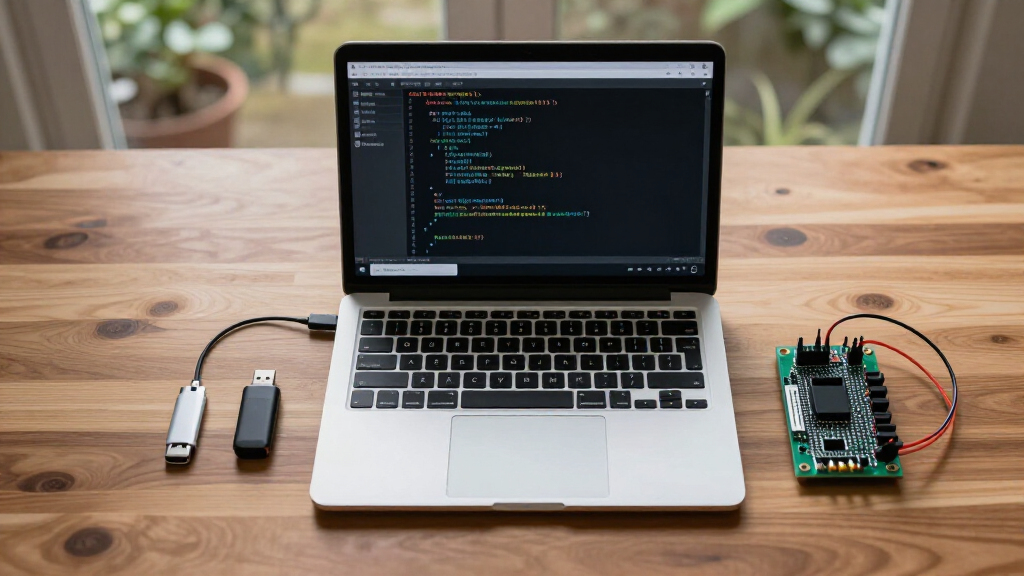
The project creator, who goes by the username ‘Thoreau’ online, built the interpreter from scratch, designed to run directly on UEFI firmware. Unlike typical interpreters that require an OS, this implementation boots as a standalone UEFI application, making it compatible with a wide range of modern PCs that support UEFI. The interpreter features line numbers, immediate mode, simple graphics, string handling, and arrays—emulating the environment of vintage BASIC interpreters from the 1980s.
The developer states that the goal was to create a small, straightforward environment that captures the essence of classic BASIC programming. The code is open source, with the project hosted on GitHub, inviting others to experiment or improve upon it. The interpreter runs directly from a UEFI bootable USB or EFI partition, requiring no additional OS installation.
While the project is still in early stages, initial tests show that it can successfully boot on several UEFI-compatible machines, offering a fully functional BASIC environment. The developer emphasizes that this is primarily a proof of concept, aiming to demonstrate the feasibility of running simple interpreters directly on firmware without an OS layer.
Potential for Retro Computing on Modern Hardware
This development matters because it demonstrates a novel way to run vintage programming environments on current hardware, bypassing the need for traditional operating systems. It opens possibilities for hobbyists, educators, and enthusiasts interested in retro computing, embedded systems, or minimalistic environments. By enabling direct booting of a BASIC interpreter, it preserves a piece of computing history and offers a platform for experimenting with old-school programming techniques on modern devices.
Moreover, this project could inspire further developments in UEFI-based applications, especially for educational tools, embedded systems, or security research, where lightweight, OS-free environments are advantageous. It also highlights the flexibility of UEFI firmware as a platform for custom software, which is increasingly relevant as traditional BIOS-based systems become obsolete.
Products Worth Considering

Oral-B iO Series 7 Deep Clean + Protect Rechargeable Electric Toothbrush, Black, with 2 Brush Heads and Charging Travel Case

Philips Sonicare ProtectiveClean 5300 Rechargeable Electric Toothbrush with 3 Brush Heads, Black

Philips Sonicare DiamondClean 9300 Electric Toothbrush, 2 Brush Heads, Black
As an affiliate, we earn on qualifying purchases.
Background on UEFI and Retro Programming Projects
UEFI (Unified Extensible Firmware Interface) has become the standard firmware interface for modern PCs, replacing the older BIOS. It provides a flexible environment for booting operating systems and running pre-boot applications. While most UEFI applications are used for OS boot loaders or diagnostics, some developers explore using UEFI as a platform for standalone programs.
Retro computing projects have gained popularity among hobbyists, often involving emulators or hardware modifications. Running vintage programming environments like BASIC directly on modern hardware is rare, mainly due to the complexity of creating UEFI applications that can operate independently of an OS. This project stands out as an example of leveraging UEFI’s capabilities for such purposes.
Historically, BASIC interpreters were common on early personal computers, often stored in ROM or loaded from floppy disks. They provided accessible programming environments for beginners and hobbyists. The idea of running a BASIC interpreter directly from firmware echoes these early systems but adapted to the modern UEFI standard, which is designed for flexibility and security.
“My goal was to create a simple, vintage-style BASIC environment that boots directly on modern UEFI hardware, without relying on an operating system.”
— Thoreau (developer)
Technical Limitations and Compatibility Questions
It is not yet clear how broadly compatible the interpreter is across different hardware platforms or UEFI implementations. Some machines may face challenges related to firmware security settings, secure boot configurations, or hardware-specific limitations. The stability and performance of the interpreter on various systems remain to be fully tested, and further development may be needed to improve robustness and usability.
Additionally, the scope of the interpreter is currently limited to basic features, and extending it to support more complex graphics or larger programs could present technical hurdles. The developer has not yet released detailed benchmarks or compatibility lists, so the universality of this approach is still uncertain.
Future Development and Community Involvement
The developer plans to improve compatibility, add features, and refine the user experience based on community feedback. They also intend to document the process more thoroughly to facilitate adoption by other hobbyists and developers. Future updates may include support for more advanced graphics, file I/O, or integration with other UEFI applications.
Community engagement will likely play a key role in testing across various hardware configurations, identifying bugs, and proposing enhancements. The project’s open-source nature invites contributions that could expand its capabilities or adapt it for educational or embedded applications.
In the near term, the developer aims to publish detailed instructions for building and running the interpreter on different systems, along with a roadmap for potential feature additions.
Key Questions
Can this BASIC interpreter run on any UEFI-compatible PC?
It is designed to work on UEFI systems, but compatibility may vary depending on firmware settings and hardware specifics. Testing on different machines is ongoing.
Does this require disabling secure boot?
Likely, yes. Many UEFI applications need secure boot disabled or properly signed to run without restrictions. The developer is exploring options for secure boot compatibility.
Can I modify or extend the interpreter?
Yes, the project is open source on GitHub, allowing others to contribute, modify, or extend its features.
What are the practical uses of this project?
Primarily educational, for hobbyists interested in retro programming environments, embedded systems, or exploring UEFI applications without an OS.
Will this run on UEFI firmware in UEFI shells or only from bootable media?
Currently, it is intended to boot from media like a USB drive or EFI partition, but future versions might support direct UEFI shell execution.
Source: hn