The best portable monitors for developers balance useful workspace with easy setup, clear text, and a form factor you can actually carry. I’d put the Dell Pro 14 Plus P1425 first for a straightforward, work-focused second screen, while the ForHelp 15.6-Inch 1080p stands out as a practical value pick and the InnoView 16-Inch 240Hz 2K suits developers who also want a sharper, faster display for gaming. The main tradeoffs are screen size versus portability, a single extra display versus a multi-screen extender, and standard resolution versus higher-refresh or higher-resolution models. Compatibility and power needs matter too: a USB-C port does not always support video output. Read on for the full comparison and guidance on choosing a monitor that fits your laptop, workflow, and travel habits.

Get business pricing on monitors, keyboards and dev gear
- Business-only prices and quantity discounts
- Tax-exempt purchasing
- Multiple users, one account, clear invoices
Key Takeaways
- The Dell Pro 14 Plus P1425 is the work-first choice: its 14-inch format is better aligned with a compact developer setup than the larger gaming and triple-screen options.
- Most of the lineup favors familiar 15.6-inch FHD screens: this keeps text and code workspace consistent, but the models differ in cover design, connectivity, and whether they add one display or multiple panels.
- Multi-screen extenders trade simplicity for workspace: the triple-screen models can help with parallel tasks, but they add bulk and require more careful checks for laptop fit and connection support.
- Higher refresh and resolution serve different priorities: the InnoView 16-Inch 240Hz 2K offers a more performance-oriented display, while the 27-inch InnoView 4K is a less travel-friendly choice for developers who want a larger desktop-style screen.
- Value depends on the whole setup, not just the panel: included covers, supported video connections, power requirements, and the number of usable screens can matter more to a developer than headline display specs.
| 15.6-Inch FHD Triple-Screen Laptop Monitor Extender |  | Best for Maximum Coding Workspace | Screen size: Two 15.6-inch displays | Resolution: 1920 × 1080 per display | Display technology: IPS LCD | VIEW LATEST PRICE | See Our Full Breakdown |
| ForHelp 15.6-Inch 1080p Portable Monitor with USB-C and Mini HDMI |  | Best Value for a Simple Second Screen | Screen size: 15.6 inches | Resolution: 1920 × 1080 | Display technology: IPS LCD | VIEW LATEST PRICE | See Our Full Breakdown |
| KYY 15.6-Inch 1080p Portable Monitor with Cover | 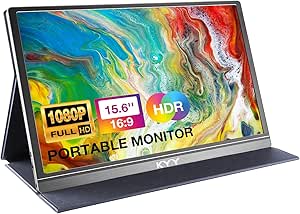 | Best for Portrait-Friendly Coding | Screen size: 15.6 inches | Resolution: 1920 × 1080 | Display type: IPS LCD | VIEW LATEST PRICE | See Our Full Breakdown |
| MNN 15.6-Inch FHD Portable Monitor |  | Best for a Flexible Work Setup | Screen size: 15.6 inches | Resolution: 1920 × 1080 | Display type: IPS LCD | VIEW LATEST PRICE | See Our Full Breakdown |
| 14.2-Inch FHD Portable Laptop Screen Extender |  | Best Compact Laptop-Mounted Extender | Screen size: 14.2 inches | Resolution: 1920 × 1080 | Display technology: IPS LCD | VIEW LATEST PRICE | See Our Full Breakdown |
| InnoView 15.6-Inch Dual Portable Monitor, 1080p |  | Best for a Two-Screen Mobile Workspace | Screen size: Two 15.6-inch panels | Resolution: 1920 × 1080 per panel | Display type: IPS LCD | VIEW LATEST PRICE | See Our Full Breakdown |
| Vixtan 14-Inch Triple Laptop Screen Extender, FHD IPS Portable Monitor |  | Best for Compact Multi-Screen Work | Screen size: 14 inches | Resolution: 1920 × 1080 | Display panel: IPS LCD | VIEW LATEST PRICE | See Our Full Breakdown |
| InnoView 27-Inch Dual-Mode 4K UHD Gaming Monitor |  | Best for a Desk-Based Developer Who Also Games | Screen size: 27 inches | Resolution and refresh rate: 4K UHD at 120Hz; FHD at 288Hz | Display type: IPS | VIEW LATEST PRICE | See Our Full Breakdown |
| Anyuse 15.6-Inch FHD IPS Portable Monitor |  | Best Lightweight Everyday Pick | Screen size: 15.6 inches | Resolution: 1920 × 1080 | Display type: LCD IPS | VIEW LATEST PRICE | See Our Full Breakdown |
| InnoView 16-Inch 240Hz 2K Portable Monitor |  | Best High-Resolution Performance Pick | Screen size: 16 inches | Resolution: 2560 × 1600 | Aspect ratio: 16:10 | VIEW LATEST PRICE | See Our Full Breakdown |
| cocopar 15.6-Inch Portable Monitor, 1080p FHD, 60Hz, IPS, USB-C and HDMI |  | Best for Flexible Desk and Travel Setups | Screen size: 15.6 inches | Resolution: 1920 × 1080 | Panel and refresh rate: IPS LCD, 60 Hz | VIEW LATEST PRICE | See Our Full Breakdown |
| ARZOPA Z1FC 16.1-Inch 144Hz Portable Gaming Monitor |  | Best for Developers Who Also Game | Screen size: 16.1 inches | Resolution: 1920 × 1080 | Panel and refresh rate: IPS LCD, 144 Hz | VIEW LATEST PRICE | See Our Full Breakdown |
| InnoView 15.6-Inch FHD Portable Monitor with Protective Case |  | Best for Portrait-Oriented Work | Screen size: 15.6 inches | Resolution: 1920 × 1080 | Panel and refresh rate: IPS LCD, 60 Hz | VIEW LATEST PRICE | See Our Full Breakdown |
| Dell Pro 14 Plus P1425 14-Inch Portable Monitor |  | Best for Compact, Text-First Work | Screen size: 14 inches | Resolution and aspect ratio: 1920 × 1200, 16:10 | Display type and refresh rate: LED, 60 Hz | VIEW LATEST PRICE | See Our Full Breakdown |
| ZUMWALT P7 15.6-Inch FHD Laptop Screen Extender, Dual Portable Monitors |  | Best for Maximum Multitasking | Display setup: Two 15.6-inch displays | Resolution: 1920 × 1080 per display | Panel and refresh rate: IPS LCD, 60 Hz | VIEW LATEST PRICE | See Our Full Breakdown |
| portable monitors for developer | Screen size | Resolution | Brightness | Weight |
|---|---|---|---|---|
| 15.6-Inch FHD Triple-Screen La | Two 15.6-inch displays | 1920 × 1080 per display | 300 nits | 3.9 lbs |
| ForHelp 15.6-Inch 1080p Portab | 15.6 inches | 1920 × 1080 | 300 cd/m² | 1.52 lb |
| KYY 15.6-Inch 1080p Portable M | 15.6 inches | 1920 × 1080 | 300 cd | 1.7 pounds |
| MNN 15.6-Inch FHD Portable Mon | 15.6 inches | 1920 × 1080 | 300 nits | 1.5 pounds |
| 14.2-Inch FHD Portable Laptop | 14.2 inches | 1920 × 1080 | 300 nits | 1.87 lbs |
| InnoView 15.6-Inch Dual Portab | Two 15.6-inch panels | 1920 × 1080 per panel | 300 cd/m² | 3.1 pounds |
| Vixtan 14-Inch Triple Laptop S | 14 inches | 1920 × 1080 | 300 nits | 3.0 pounds |
| InnoView 27-Inch Dual-Mode 4K | 27 inches | — | 500 nits | 9.5 pounds |
| Anyuse 15.6-Inch FHD IPS Porta | 15.6 inches | 1920 × 1080 | 300 cd/m² | 1.4 pounds |
| InnoView 16-Inch 240Hz 2K Port | 16 inches | 2560 × 1600 | — | — |
| cocopar 15.6-Inch Portable Mon | 15.6 inches | 1920 × 1080 | 280 cd/m² | 1.5 lb without cover; 2.4 lb with cover |
| ARZOPA Z1FC 16.1-Inch 144Hz Po | 16.1 inches | 1920 × 1080 | 300 cd/m² | 1.42 kg |
| InnoView 15.6-Inch FHD Portabl | 15.6 inches | 1920 × 1080 | 250 cd/m² | — |
| Dell Pro 14 Plus P1425 14-Inch | 14 inches | — | 400 cd/m² | — |
| ZUMWALT P7 15.6-Inch FHD Lapto | — | 1920 × 1080 per display | — | 4 lb (1.8 kg) |
More Details on Our Top Picks
15.6-Inch FHD Triple-Screen Laptop Monitor Extender
For developers who want code, documentation, and a running app visible at once, this extender adds two 15.6-inch Full HD IPS screens to a compatible laptop. Its freestanding stand sets it apart from the 14.2-Inch FHD Portable Laptop Screen Extender, which adds just one screen but weighs less and is easier to pack. The stand also avoids loading the laptop lid, a useful distinction for machines with thin or flexible displays.
The tradeoff is a larger, heavier setup: at 3.9 pounds, it is less appealing for daily commuting than the ForHelp or MNN portable monitors. Compatibility also needs checking before purchase, since video output is required and some Mac configurations need a separately obtained H5 cable. I’d choose it for a desk-based mobile workstation, not for a minimal travel kit.
Pros:- Adds two displays for a three-screen coding workspace
- Freestanding stand does not attach to or load the laptop lid
- Full HD IPS panels with picture-adjustment modes
- Includes a carry bag and supports USB-C or HDMI
Cons:- At 3.9 pounds, it is substantially heavier than single-screen portable options
- Requires compatible video output, and some Mac setups need a separate H5 cable
- Two additional screens take more space to set up and carry
Best for: Developers with compatible 12–17.3-inch laptops who regularly need separate screens for code, documentation, and testing.
Not ideal for: Frequent commuters or Mac users who cannot confirm video-output and H5 cable compatibility before buying.
- Screen size:Two 15.6-inch displays
- Resolution:1920 × 1080 per display
- Display technology:IPS LCD
- Refresh rate:60 Hz
- Brightness:300 nits
- Weight:3.9 lbs
- Connectivity:USB-C and HDMI
- Laptop compatibility:12–17.3 inches; video output required
Our verdict“Choose this extender when multitasking across three screens matters more than keeping your developer travel kit light.”
ForHelp 15.6-Inch 1080p Portable Monitor with USB-C and Mini HDMI
The ForHelp is a practical pick for developers who need a straightforward second screen for an IDE, terminal, or reference material. Its 1.52-pound body is lighter than the KYY, while the matte 15.6-inch IPS panel helps limit distracting reflections during work under office lighting. USB-C and Mini HDMI also give it a fallback connection when a laptop’s USB-C port cannot send video.
That flexibility still depends on the right port: a one-cable USB-C connection requires DisplayPort Alt Mode, so check the laptop specification first. The magnetic cover doubles as a stand, but offers only two viewing angles; the MNN adds portrait support, which can be handier for long logs or documentation. ForHelp makes more sense for a basic, portable coding display than for developers who frequently change screen orientation or need fine stand adjustment.
Pros:- Lightweight 1.52-pound design for carrying with a laptop
- Matte Full HD IPS display with wide viewing angles
- USB-C and Mini HDMI support different host connections
- Included cover protects the panel and serves as a stand
Cons:- USB-C video requires a host device with DisplayPort Alt Mode
- Cover stand is limited to two viewing positions
- No listed portrait-orientation support
Best for: Developers who want a lightweight 15.6-inch companion display for a laptop and can verify USB-C video or use Mini HDMI.
Not ideal for: Developers who need adjustable stand positions, frequent portrait use, or a one-cable setup on a laptop without DisplayPort Alt Mode.
- Screen size:15.6 inches
- Resolution:1920 × 1080
- Display technology:IPS LCD
- Screen finish:Matte
- Brightness:300 cd/m²
- Refresh rate:60 Hz
- Weight:1.52 lb
- Connectivity:2 USB-C ports and 1 Mini HDMI port
Our verdict“Pick the ForHelp for a light, uncomplicated coding side screen, but choose the MNN if portrait orientation matters more.”
KYY 15.6-Inch 1080p Portable Monitor with Cover
The KYY earns its place for developers who switch between landscape coding and portrait-oriented reading. Its 15.6-inch matte IPS screen supports both orientations, making long API references, logs, or documentation easier to arrange than on the ForHelp, whose included cover offers only two stand angles and no listed portrait mode. USB-C and Mini HDMI also let it work with a range of laptops, provided the USB-C port supports video.
At 1.7 pounds, it remains portable, though the ForHelp is lighter and the MNN offers similar basics at a slightly lower listed weight. The magnetic cover doubles as a stand, but its limited positioning may frustrate anyone who needs precise height or tilt adjustment. This is a sensible flexible screen for mixed coding and reading tasks, not a substitute for a more ergonomic desktop monitor.
Pros:- Supports landscape and portrait orientations
- Matte Full HD IPS display with 178-degree viewing angles
- USB-C and Mini HDMI provide connection flexibility
- Magnetic cover protects the panel and acts as a stand
Cons:- USB-C single-cable use requires a compatible video-output port
- Cover stand provides only two viewing positions
- Heavier than the ForHelp portable monitor
Best for: Developers who want one portable screen for landscape coding and portrait reading of documentation, logs, or long files.
Not ideal for: Developers who prioritize the lightest possible carry or need a stand with several tilt and height adjustments.
- Screen size:15.6 inches
- Resolution:1920 × 1080
- Display type:IPS LCD
- Screen finish:Matte
- Brightness:300 cd
- Refresh rate:60 Hz
- Weight:1.7 pounds
- Connectivity:USB-C, Mini HDMI, and 3.5 mm audio
Our verdict“Choose the KYY if portrait document viewing is part of your coding workflow and a simple cover stand is sufficient.”
MNN 15.6-Inch FHD Portable Monitor
The MNN is a well-rounded choice for developers who want a portable screen that can shift between coding, reading, and travel setups. Its Full HD matte IPS display pairs USB-C with HDMI, while the included cables reduce the chance of needing to pack a separate video lead. It also supports portrait and landscape orientations, giving it an advantage over the ForHelp when logs or documentation benefit from a taller layout.
At 1.5 pounds, it is slightly lighter than both the ForHelp and KYY, although the difference is modest. Its USB-C one-cable setup still requires Thunderbolt 3 or USB-C DP Alt Mode, so HDMI may be the more dependable route on some laptops. The included cover acts as a stand, but the listed information does not specify a broad adjustment range. Developers seeking carefully adjustable positioning may prefer a separate stand.
Pros:- Lightweight 1.5-pound design with a protective smart cover
- Supports portrait and landscape display orientations
- USB-C and HDMI connections, with cables included
- Matte Full HD IPS panel with HDR support
Cons:- One-cable USB-C video requires Thunderbolt 3 or USB-C DP Alt Mode
- The cover stand may not provide enough positioning flexibility for ergonomic setups
- At 60 Hz, it is aimed at coding and general work rather than high-refresh gaming
Best for: Laptop developers who want a light 15.6-inch screen with included cables and the option to work in portrait orientation.
Not ideal for: Users whose laptops lack USB-C video output and who want to avoid HDMI cabling, or anyone needing a highly adjustable stand.
- Screen size:15.6 inches
- Resolution:1920 × 1080
- Display type:IPS LCD
- Screen finish:Matte
- Brightness:300 nits
- Refresh rate:60 Hz
- Weight:1.5 pounds
- Ports:2 USB-C and 1 HDMI
Our verdict“Choose the MNN for a lightweight, orientation-flexible coding display with useful connection options and included cables.”
14.2-Inch FHD Portable Laptop Screen Extender
For developers who want extra workspace without carrying a full-size 15.6-inch panel, this 14.2-inch screen extender is the compact pick. It adds or mirrors a display and supports portrait mode, while the listed 0.27-inch thickness and 1.87-pound weight keep the kit slimmer than the triple-screen extender. Driver-free setup across Windows, macOS, ChromeOS, Linux, and Android is useful for developers who move between different machines.
That convenience comes with a smaller screen and a narrower laptop fit: it is specified for 14–17.3-inch laptops, unlike the 12-inch-and-up compatibility listed for the triple-screen model. Its USB-C or HDMI and USB-A setup still depends on available ports, so it is not a universal one-cable solution. The stated 0–226-degree adjustment range also differs from the 178-degree viewing-angle specification, making the exact positioning range worth confirming before purchase.
Pros:- Slim 0.27-inch profile and 1.87-pound weight
- Supports extended, mirrored, and portrait display modes
- Driver-free setup and support for several operating systems
- Adjustable viewing angle and USB-C or HDMI connection options
Cons:- Smaller 14.2-inch workspace than the ForHelp, KYY, and MNN monitors
- Compatibility is limited to 14–17.3-inch laptops
- Setup requires compatible ports, and the listed adjustment range is unclear
Best for: Developers with 14–17.3-inch laptops who want a slim, single-screen extender and need compatibility across several operating systems.
Not ideal for: Owners of smaller laptops, developers who need a larger 15.6-inch work area, or buyers who cannot verify the required ports.
- Screen size:14.2 inches
- Resolution:1920 × 1080
- Display technology:IPS LCD
- Brightness:300 nits
- Refresh rate:60 Hz
- Weight:1.87 lbs
- Thickness:0.27 inches
- Laptop compatibility:14–17.3-inch laptops
- Connectivity:USB-C or HDMI and USB-A
Our verdict“Pick this extender for a compact, cross-platform second screen if your laptop falls within its specified size range.”
InnoView 15.6-Inch Dual Portable Monitor, 1080p
For developers who want two extra panels without carrying separate monitor stands, this foldable InnoView turns a laptop setup into a three-screen workspace. Its pair of 15.6-inch 1080p IPS displays can extend, mirror, or splice content, so code, documentation, and a running application can each have room. Compared with the lighter Anyuse 15.6-Inch FHD IPS Portable Monitor, it offers far more workspace but weighs 3.1 pounds and needs a stronger power supply. Windows users get driver-free setup; Mac users should check the driver requirement for extended display before buying. The foldable build helps with transport, but two panels still make this a bulkier choice than a single portable screen, and the 30 W or higher power requirement limits how casually it can run from a laptop.
Pros:- Two 15.6-inch panels create substantial extra workspace
- Extension, splicing, and copy modes support different workflows
- Windows setup does not require drivers
- Foldable design makes the dual-panel unit easier to pack
Cons:- Mac extended display requires driver installation
- The 3.1-pound weight is considerable beside a laptop
- Needs a 30 W or higher power supply
Best for: Windows developers who regularly travel with a laptop and need separate panels for code, documentation, and debugging
Not ideal for: Mac developers who want driver-free extended displays, or frequent travelers prioritizing the lightest possible kit
- Screen size:Two 15.6-inch panels
- Resolution:1920 × 1080 per panel
- Display type:IPS LCD
- Refresh rate:60 Hz
- Brightness:300 cd/m²
- Connections:USB-C and HDMI
- Weight:3.1 pounds
- Power requirement:30 W or higher
Our verdict“Choose this foldable dual-screen setup if extra coding workspace matters more than a light, simple travel kit.”
Vixtan 14-Inch Triple Laptop Screen Extender, FHD IPS Portable Monitor
The Vixtan is aimed at developers who want more than one extra display but need a setup sized around a laptop. Its 14-inch FHD IPS panel attaches to laptops from 13 to 17.3 inches, while the rotating stand supports portrait orientation—a practical fit for long code files or logs. Against the InnoView 15.6-Inch Dual Portable Monitor, this is the more compact attachment, though its stated 3-pound weight is not especially light for a travel bag. USB-C, USB-A, and HDMI connections plus driver-free setup make it flexible across operating systems, but MacBook M1, M2, and M3 owners should note the one-screen limitation without a DisplayLink adapter. The 100% sRGB gamut is a useful extra for visual work, though the main appeal here is portable multi-screen productivity, not color-critical design.
Pros:- Portrait and 180-degree rotation help with code, logs, and reference material
- FHD IPS screen lists 100% sRGB coverage
- USB-C, USB-A, and HDMI offer flexible connectivity
- Driver-free setup and compatibility across several operating systems
Cons:- M1, M2, and M3 MacBooks support only one screen without a DisplayLink adapter
- May need a separate 5V/3A or higher power adapter if flickering or dimness occurs
- At 3 pounds, it is heavier than a simple single-screen portable monitor
Best for: Laptop developers who want an attached screen with portrait rotation and use Windows, ChromeOS, Linux, or compatible Mac setups
Not ideal for: MacBook M1, M2, or M3 owners who need multiple extended displays without an added DisplayLink adapter
- Screen size:14 inches
- Resolution:1920 × 1080
- Display panel:IPS LCD
- Brightness:300 nits
- Color gamut:100% sRGB
- Connectivity:USB-C, USB-A, HDMI
- Laptop compatibility:13–17.3-inch laptops
- Weight:3.0 pounds
Our verdict“Pick the Vixtan for a laptop-attached, rotatable extra display, provided your computer supports the number of screens you need.”
InnoView 27-Inch Dual-Mode 4K UHD Gaming Monitor
This 27-inch InnoView is the outlier in a portable-monitor roundup: at 9.5 pounds, it suits a movable desk setup better than a daily commute. Its 4K mode gives developers room for detailed interfaces, multiple windows, and sharp text, while the FHD high-refresh mode can serve gaming after work. That flexibility distinguishes it from the InnoView 16-Inch 240Hz 2K Portable Monitor, which is much easier to carry and keeps a higher pixel density in a smaller format. The adjustable stand, VESA mounting, and two USB-C ports make this model adaptable to a home office, but it needs a power adapter and its 27-inch footprint is a poor match for tight travel setups. I’d choose it when desktop-sized code space matters more than portability.
Pros:- 4K UHD mode provides detailed workspace for code and multiple windows
- FHD mode supports refresh rates up to 288Hz
- Adjustable stand and VESA compatibility allow flexible desk placement
- Two USB-C ports, HDMI, and a headphone jack support varied devices
Cons:- At 9.5 pounds, it is cumbersome for frequent travel
- Requires a power adapter
- Its 27-inch size is less practical for compact or temporary workspaces
Best for: Developers who move a large monitor between workspaces and want 4K coding space plus a high-refresh gaming mode
Not ideal for: Commuters, backpack travelers, or developers who need a compact monitor powered simply from their laptop
- Screen size:27 inches
- Resolution and refresh rate:4K UHD at 120Hz; FHD at 288Hz
- Display type:IPS
- Brightness:500 nits
- Color gamut:100% sRGB
- Ports:2 USB-C, 1 HDMI, 3.5mm audio jack
- VESA compatibility:100 × 100 mm
- Weight:9.5 pounds
Our verdict“Choose this model for a portable-in-name, desk-first setup when a large 4K workspace and gaming modes matter more than easy travel.”
Anyuse 15.6-Inch FHD IPS Portable Monitor
For a developer who wants one extra screen without adding much to a backpack, the Anyuse keeps the tradeoff straightforward: a 15.6-inch, 1.4-pound panel with Full HD resolution and common USB-C or Mini HDMI connections. It is much easier to carry than the InnoView 15.6-Inch Dual Portable Monitor, though it provides only one additional display rather than two. HDR, low-blue-light support, and built-in speakers add flexibility for mixed work and media use, but the description does not specify a contrast ratio, so I would not choose it based on image performance claims alone. USB-C video requires a compatible source device; that check matters for developers whose laptops have USB-C ports without video output. This is the simpler, lighter option for coding on the move, not a substitute for a multi-screen workstation.
Pros:- Light 1.4-pound design is easier to carry than multi-panel extenders
- 15.6-inch Full HD IPS display provides a useful single-screen workspace
- USB-C and Mini HDMI support compatible laptops and other devices
- Built-in speakers and multiple display modes add everyday flexibility
Cons:- USB-C connection requires video output support from the source device
- The product data does not specify a contrast ratio
- A single panel offers less multitasking space than the dual-screen InnoView
Best for: Developers who carry a laptop daily and need a light, single-screen extension for code, terminals, or documentation
Not ideal for: Developers who need two extra displays, rely on USB-C without video output, or require detailed contrast specifications
- Screen size:15.6 inches
- Resolution:1920 × 1080
- Display type:LCD IPS
- Refresh rate:60 Hz
- Brightness:300 cd/m²
- Ports:2 USB-C, 1 Mini HDMI
- Weight:1.4 pounds
- Warranty:2 years
Our verdict“Choose the Anyuse if a light, single portable screen is more useful to your routine than a heavier multi-display setup.”
InnoView 16-Inch 240Hz 2K Portable Monitor
The InnoView 16-inch balances a developer-friendly resolution with a refresh rate aimed beyond ordinary coding: its 2560 × 1600, 16:10 display provides more vertical room for editors and browser panes than a standard 16:9 Full HD screen. That makes it a more focused mobile work choice than the InnoView 27-Inch Dual-Mode 4K UHD Gaming Monitor, which has a much larger desktop footprint but is less suited to carrying. The 240Hz capability and FreeSync may appeal to developers who also play fast-paced games, though the source device must support the stated refresh rate. Two USB-C ports and HDMI simplify connections, and the matte panel helps limit reflections. Brightness is listed as 300 cd without a per-area unit, so I would not rank it for especially bright environments; its strength is sharp, portable 16:10 space.
Pros:- 2560 × 1600 resolution gives code and interface elements more detail than FHD
- 16:10 aspect ratio provides extra vertical workspace
- Two USB-C ports and HDMI support straightforward device connections
- Matte IPS screen, FreeSync, and built-in speakers serve work and play
Cons:- The source device must support 240Hz to use the stated maximum refresh rate
- Brightness is listed as 300 cd without a per-area unit
- High refresh capability may matter less to developers focused only on coding
Best for: Developers who want a sharper-than-FHD portable screen with extra vertical workspace and also value high-refresh gaming
Not ideal for: Buyers who need a clearly specified brightness level or whose laptop cannot output the monitor’s 240Hz refresh rate
- Screen size:16 inches
- Resolution:2560 × 1600
- Aspect ratio:16:10
- Refresh rate:240 Hz
- Display type:IPS
- Color gamut:100% sRGB
- Connectivity:2 USB-C ports, 1 HDMI port
- Screen finish:Matte
Our verdict“Pick this InnoView for a portable, high-resolution coding screen that also supports high-refresh gaming when the source device can drive it.”
cocopar 15.6-Inch Portable Monitor, 1080p FHD, 60Hz, IPS, USB-C and HDMI
The cocopar 15.6-inch monitor suits developers who want a straightforward second screen that can move between a desk and a travel bag. Its USB-C and HDMI inputs accommodate different laptop setups, while the included cover stand and VESA mounting holes offer more placement options than the InnoView 15.6-inch model, which relies on its protective cover for support. The Full HD IPS panel gives code and documentation broad viewing angles, though its 280 cd/m² brightness is less suited to bright rooms than the Dell Pro 14 Plus P1425’s 400 cd/m². The key connection caveat is that USB-C video needs a compatible DisplayPort Alt Mode or Thunderbolt device. It is also light without its cover, but the complete setup weighs 2.4 pounds, so its travel advantage narrows once packed.
Pros:- 15.6-inch Full HD IPS panel with 178-degree viewing angles
- USB-C and HDMI connectivity suit varied laptop setups
- Cover stand and VESA compatibility provide flexible placement
- Two-year warranty
Cons:- USB-C video requires a compatible DisplayPort Alt Mode or Thunderbolt device
- Brightness of 280 cd/m² is modest for bright workspaces
- Weight rises to 2.4 pounds with the cover
Best for: Developers who want a conventional 15.6-inch second screen with both USB-C and HDMI options, plus the flexibility to use a cover stand or VESA mount.
Not ideal for: Developers working in bright spaces or carrying the monitor with its cover every day who need higher brightness or the lightest complete setup.
- Screen size:15.6 inches
- Resolution:1920 × 1080
- Panel and refresh rate:IPS LCD, 60 Hz
- Brightness:280 cd/m²
- Color gamut:85% sRGB
- Connectivity:2 USB-C ports, HDMI, 3.5 mm audio
- Weight:1.5 lb without cover; 2.4 lb with cover
- Mounting and included accessory:VESA-compatible; cover stand
Our verdict“Choose the cocopar for a versatile, mountable 15.6-inch coding screen, but favor the brighter Dell P1425 for sunlit work areas.”
ARZOPA Z1FC 16.1-Inch 144Hz Portable Gaming Monitor
The ARZOPA Z1FC is the motion-focused pick here: its 144Hz refresh rate makes scrolling, animation previews, and gaming look smoother than on the 60Hz cocopar or InnoView screens. For code, the benefit is less decisive; its 16.1-inch 1080p panel gives a little more physical workspace, but not a sharper pixel grid than the smaller Full HD options. The 106% sRGB gamut and built-in kickstand make it a flexible desk companion, and two USB-C ports plus Mini HDMI cover common connections. At 1.42 kg, though, it is heavier than the Dell P1425, while its 300 cd/m² brightness falls short of Dell’s 400 cd/m². No adaptive sync is listed, so the high refresh rate alone does not guarantee tear-free gameplay.
Pros:- 144Hz refresh rate delivers smoother motion than the lineup’s 60Hz panels
- 16.1-inch IPS screen with 106% sRGB gamut
- Built-in adjustable kickstand
- Two USB-C ports and Mini HDMI
Cons:- Full HD resolution across 16.1 inches offers no extra text sharpness over smaller 1080p monitors
- No adaptive sync or FreeSync support
- Heavier than the 14-inch Dell Pro 14 Plus P1425
Best for: Developers who split portable-screen time between coding and fast-motion gaming and want a high refresh rate without giving up an IPS panel.
Not ideal for: Code-first travelers seeking a lighter, sharper text workspace, or gamers who require adaptive sync support.
- Screen size:16.1 inches
- Resolution:1920 × 1080
- Panel and refresh rate:IPS LCD, 144 Hz
- Color gamut:106% sRGB
- Brightness:300 cd/m²
- Contrast ratio:1000:1
- Connectivity:2 USB-C ports, 1 Mini HDMI
- Weight:1.42 kg
Our verdict“Pick the ARZOPA if smooth motion matters for gaming alongside development, but choose the Dell P1425 for a lighter, brighter coding-focused display.”
InnoView 15.6-Inch FHD Portable Monitor with Protective Case
The InnoView 15.6-inch FHD has a useful distinction for developers who keep logs, documentation, or long code files in a vertical layout: it supports portrait and landscape orientations. Its protective cover doubles as an adjustable stand, giving it a practical setup without an extra accessory, while two full-function USB-C ports and HDMI make it adaptable to different laptops. Compared with the cocopar, it offers the same 15.6-inch Full HD format but lower brightness at 250 cd/m² and a shorter 18-month warranty. The stated 1200:1 contrast ratio is a plus for image separation, yet the panel’s limited brightness can be a bigger everyday constraint in a bright office. HDMI use also needs a separate power cable, and inadequate device power may cause flicker or restarts.
Pros:- Supports portrait and landscape orientations
- Protective cover doubles as an adjustable stand
- Two full-function USB-C ports plus HDMI
- 1200:1 contrast ratio
Cons:- 250 cd/m² brightness is lower than the cocopar and Dell P1425
- HDMI use requires a power cable that is not included
- May flicker or restart if the connected device supplies insufficient power
Best for: Developers who frequently read long code files or documentation in portrait orientation and want a cover that also serves as a stand.
Not ideal for: People who work in bright rooms or need a dependable HDMI setup without arranging separate power.
- Screen size:15.6 inches
- Resolution:1920 × 1080
- Panel and refresh rate:IPS LCD, 60 Hz
- Brightness:250 cd/m²
- Contrast ratio:1200:1
- Connectivity:2 full-function USB-C ports, 1 HDMI port
- Power consumption:18 watts
- Weight and included accessory:2.7 lb; protective cover and stand
- Warranty:18 months
Our verdict“Choose this InnoView for portrait coding and document work, but pick the cocopar if brighter output and a longer warranty matter more.”
Dell Pro 14 Plus P1425 14-Inch Portable Monitor
The Dell Pro 14 Plus P1425 is the most compact choice for developers who would rather carry a lighter display than maximize screen area. Its 1920 × 1200 resolution and 16:10 aspect ratio provide more vertical room for code than the 16:9 Full HD ARZOPA Z1FC, while its 0.65 kg weight makes it easier to move between offices. At 400 cd/m², it is also the brightest option in this group, a practical advantage in well-lit rooms. The tradeoff is a smaller 14-inch canvas and USB-C-only connectivity, so it offers less connection flexibility than the cocopar’s USB-C and HDMI combination. Its glossy finish may reflect nearby lights, and the 60Hz refresh rate is aimed at ordinary work rather than the smoother motion offered by the ARZOPA.
Pros:- 1920 × 1200 resolution and 16:10 layout add vertical workspace
- 400 cd/m² brightness is the highest listed here
- Lightweight 0.65 kg design
- Three-year warranty
Cons:- 14-inch screen is smaller than the 15.6-inch and 16.1-inch alternatives
- USB-C is the only listed connectivity option
- Glossy finish can reflect surrounding light
Best for: Developers who travel with a laptop, prefer extra vertical code space, and value low carry weight and a bright screen.
Not ideal for: Developers who need a large coding canvas, HDMI input, or a matte screen for reflection-prone spaces.
- Screen size:14 inches
- Resolution and aspect ratio:1920 × 1200, 16:10
- Display type and refresh rate:LED, 60 Hz
- Brightness:400 cd/m²
- Contrast ratio:1500:1
- Response time:7 ms
- Connectivity:USB Type-C
- Weight and finish:0.65 kg; glossy
- Warranty:3 years
Our verdict“Choose the Dell P1425 for a bright, lightweight screen with extra vertical space, unless you need a larger panel or HDMI.”
ZUMWALT P7 15.6-Inch FHD Laptop Screen Extender, Dual Portable Monitors
The ZUMWALT P7 takes a different approach from the single-screen cocopar and Dell: it adds two 15.6-inch displays to a compatible laptop, making side-by-side code, terminal output, and documentation possible without constantly switching windows. Its IPS panels are Full HD, matte, and rated for 280 nits, while landscape, mirrored, and portrait modes let developers adapt the layout to a task. That workspace comes with a substantial portability cost: the unit weighs 4 pounds before counting the laptop, far more than the cocopar or Dell. Setup also needs more checking than with a conventional portable monitor; compatibility varies by device, and some laptops require an additional H5-T cable and driver. The included power adapter, cables, and bag help, but this is better for mobile desks than frequent light travel.
Pros:- Adds two 15.6-inch Full HD IPS displays to a compatible laptop
- Landscape, mirrored, and portrait display modes
- Matte panels with 178-degree viewing angles
- Includes cables, power adapter, and carrying bag
Cons:- Four-pound weight is substantial compared with single portable monitors
- Some laptops require an additional H5-T cable and driver installation
- Connection and compatibility requirements vary by device
Best for: Developers with compatible 13- to 17.3-inch laptops who regularly need three screens for code, terminals, and reference material.
Not ideal for: Frequent travelers who prioritize a light bag, or users unwilling to check device compatibility and install a driver when required.
- Display setup:Two 15.6-inch displays
- Resolution:1920 × 1080 per display
- Panel and refresh rate:IPS LCD, 60 Hz
- Brightness and finish:280 nits; matte
- Viewing angle:178 degrees
- Response time:2 ms
- Weight:4 lb (1.8 kg)
- Ports:1 HDMI port, 1 USB port
- Compatibility:Windows, Mac, Chrome, and Switch; fits 13–17.3-inch laptops
Our verdict“Choose the ZUMWALT P7 when expanding a compatible laptop into a multi-screen coding station matters more than keeping your travel kit light.”

How We Picked
I ranked these monitors around the needs of developers who use a laptop away from a fixed desk: readable text, a useful amount of workspace, straightforward connections, manageable size, and practical support for different work locations. I gave more weight to products that make sense as dependable coding companions than to gaming-focused specifications alone. I also distinguished single-screen monitors from laptop extenders, since extra panels can help with documentation, terminals, and chat but add setup and packing complexity.
The order reflects the balance of those factors rather than a single specification. A work-oriented 14-inch monitor leads for its fit with a mobile coding setup; straightforward 15.6-inch FHD options follow as broadly useful alternatives. Multi-screen extenders, high-refresh displays, and the 27-inch 4K model rank according to how well their specialized benefits offset their extra bulk, narrower use case, or greater setup demands. I also treated connectivity as a practical question: buyers should confirm that their laptop’s USB-C port supports video and check what power and cables each setup requires.
Factors to Consider When Choosing Portable Monitors For Developers
Choosing a developer monitor is less about maximizing specifications and more about matching the screen to your work pattern. I’d start with the laptop and the places you work, then decide whether a second screen or several panels will make your tasks easier to manage.
Choose a screen layout that fits your workflow
A single portable monitor is usually the simplest way to keep an editor open beside documentation, a terminal, or a video call. A dual- or triple-screen extender can give you more simultaneous views, but it occupies more space and can make a laptop harder to position comfortably. Before choosing multiple panels, identify which windows you genuinely need visible at once; adding screens does not automatically improve focus. Check the extender’s attachment method and dimensions against your laptop, including its lid and bezel design. If you often work at small café tables or move between desks, a single screen may be the more useful upgrade even if it offers less total workspace.
Match resolution and size to the text you read
Developers spend long stretches reading code, logs, and documentation, so text clarity and comfortable scaling matter more than a gaming headline. A 15.6-inch FHD panel offers a familiar balance of workspace and carry size, while a smaller screen can be easier to pack but may feel cramped with several windows open. Higher resolution can create a sharper image or more usable desktop area, but the result depends on scaling, application support, and your eyesight. Do not assume that a larger display is automatically better for travel: it may call for a larger bag and a sturdier surface. If possible, compare the screen dimensions and resolution with your laptop’s display and preferred text size before buying.
Check USB-C video support, power, and cable needs
USB-C describes a connector, not a guarantee that video will pass through it. Confirm that your laptop’s specific port supports DisplayPort Alt Mode or another compatible video output before relying on a one-cable setup. Some portable screens can also connect over HDMI, but that may require a separate power cable and can leave more items to pack. Think through where the monitor will draw power when your laptop is running on battery, since powering an extra display can shorten unplugged work time. A monitor with more connection choices can be useful across work and personal devices, but only if those ports match the equipment you already own.
Treat refresh rate and gaming features as optional for coding
For coding, office work, and reading, a high refresh rate is rarely the deciding factor; legible text, stable connections, and comfortable screen placement usually matter more. A faster panel becomes more appealing if the same monitor will also serve for gaming or fast-moving visual work. Higher resolution and refresh can bring different tradeoffs in system support, power use, and the need to adjust settings. Check that your laptop can output the resolution and refresh rate you intend to use through the selected connection. If your main workload is software development, avoid paying for performance features that do not improve your everyday tasks.
Account for portability beyond the screen diagonal
Diagonal size alone does not tell you how convenient a monitor will be to carry. A cover, stand, cable set, or multi-panel frame adds weight and bulk, and the shape may fit awkwardly in a bag designed for a laptop. Consider how often you will move the monitor and whether you have a reliable surface to support it at your destination. An included protective cover can make a basic screen easier to pack, while a larger display may be better suited to a car commute or a semi-permanent desk. Compare the packed dimensions and support method, not just the screen size, before choosing.
Pay for features that solve a real work problem
Spending more can make sense when a better display, sturdier work setup, or specialized layout will improve your regular routine. A developer who needs code, a terminal, and reference material visible at once may benefit from a multi-screen extender; someone who mainly needs documentation beside an editor may not. A larger or higher-resolution screen is more compelling for a fixed home-office setup than for daily transit. Before buying, compare what comes in the box and confirm whether you will need extra cables, a stand, or a power source. The best value is the monitor that works smoothly with your devices and gets used often, not the one with the longest feature list.
Frequently Asked Questions
Will any USB-C port on my laptop connect to a portable monitor?
No. USB-C is the connector shape, and some ports support charging or data without carrying a video signal. Check your laptop specifications for DisplayPort Alt Mode, Thunderbolt, or another supported video output, and compare that with the monitor’s connection requirements. If your laptop lacks compatible USB-C video, an HDMI connection may work if both devices support it, though you may need a separate power connection. Confirm the exact ports before buying so a simple one-cable setup does not become an unexpected limitation.
Is a dual- or triple-screen extender worth it for software development?
It can help when your work regularly involves switching between an editor, terminal, documentation, and communication tools. The benefit is less window shuffling, but the cost is a larger, more complex setup that may not fit every laptop or workspace. Consider whether your laptop can drive the number of external displays the extender requires, and check how it attaches and stands. If you usually work in one application at a time or move between small desks, a single portable monitor is likely easier to live with.
Should I choose a 2K or 4K portable monitor for coding?
Higher resolution can make text look sharper and may allow more content on screen, but the practical result depends on display size, scaling, and application settings. It may also ask more of your laptop and connection than an FHD display. For a compact mobile setup, an FHD screen can be a sensible choice if its size and text scale already suit your work. Choose 2K or 4K when you have a clear need for finer detail or more workspace and have checked your laptop’s video output and preferred scaling.
Can a portable monitor run from my laptop’s battery?
That depends on the monitor, laptop, and connection arrangement. Some setups can receive power through USB-C, while others need a separate power source; supplying power to an external display can also draw down the laptop battery faster. Check the monitor’s power requirements and whether your laptop’s port can provide the needed power while sending video. For long sessions away from outlets, plan for a charger or power bank that meets the monitor’s requirements rather than assuming the laptop will power everything comfortably.
Is a 14-inch screen too small to use as a developer’s second display?
Not necessarily. A 14-inch monitor can be a good match for a compact laptop and a travel-first setup, especially when the extra screen is mainly for documentation, chat, or a terminal. It will offer less physical space than a 15.6-inch panel, so side-by-side windows may feel tighter and text scaling may need adjustment. Think about the applications you plan to keep open and how far the screen will sit from you. If you regularly need several large panes visible at once, a larger display or multi-screen setup may suit you better.
Conclusion
For most developers who want a straightforward mobile work companion, I’d choose the Dell Pro 14 Plus P1425 as the best overall, particularly when a compact work-first screen matters. The ForHelp 15.6-Inch 1080p is my best value direction for buyers who want a conventional FHD second screen, while the InnoView 16-Inch 240Hz 2K is the best premium-style pick for developers who also value a faster, sharper display. Beginners should start with a simple single-screen model such as the KYY 15.6-Inch or MNN 15.6-Inch rather than managing a multi-panel setup. Choose a triple-screen extender only if your laptop supports the required displays and you regularly benefit from several windows at once; pick the 27-inch InnoView 4K for a larger, less travel-focused workspace. Before deciding, confirm laptop video compatibility, power needs, and how the screen will fit in your bag and at your usual work surface.